
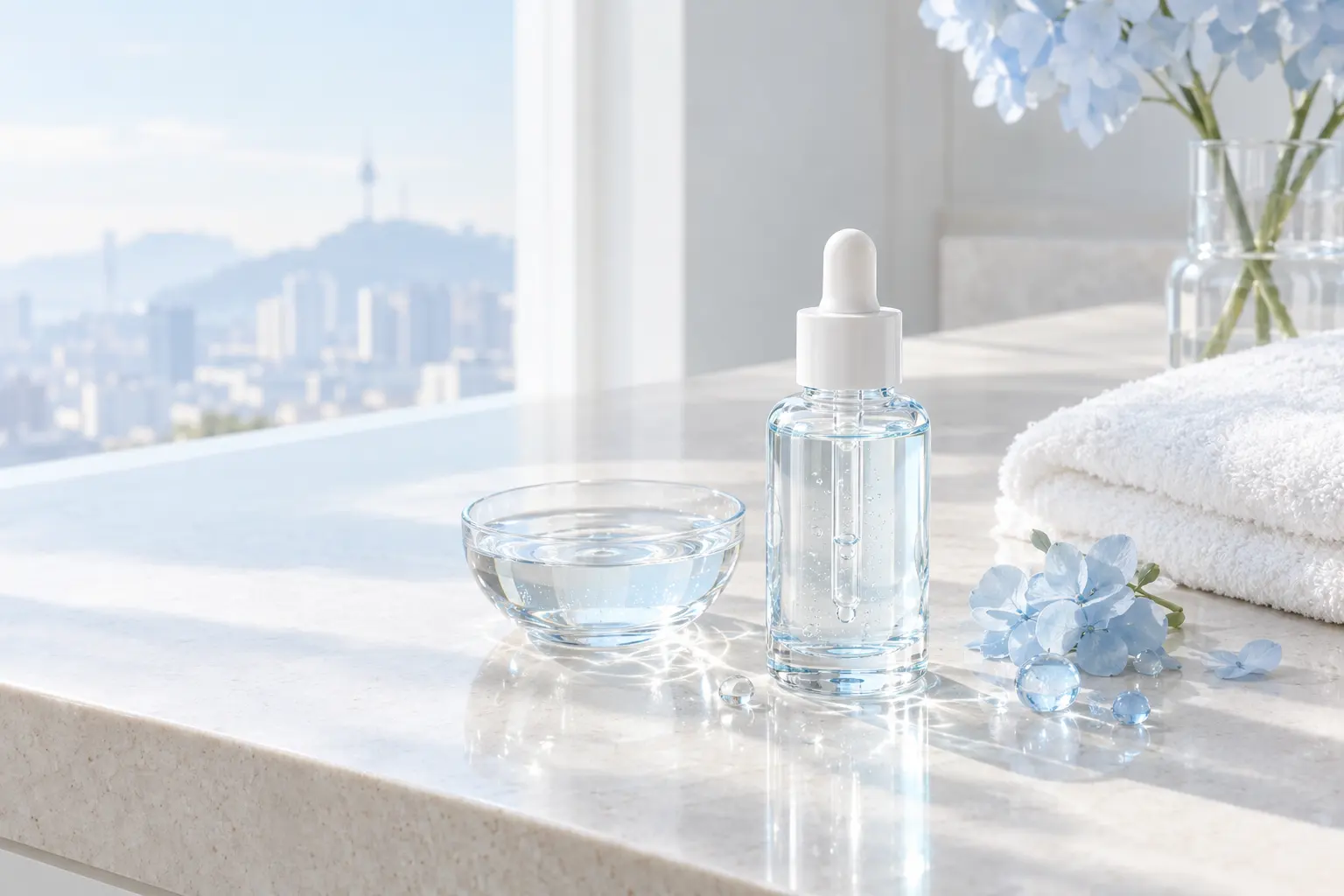
Need a Torriden DIVE IN Serum guide that answers the useful question first: is this the right hydration product, or do you really need a cream? The short answer is clear. This 50ml serum makes the most sense as a light, leave-on moisture layer for skin that feels tight or dehydrated, especially when you want something that can sit under the rest of your routine.
Its five hyaluronic-acid materials, panthenol, and allantoin give the formula a convincing hydration identity, but a serum is still a serum. It does not automatically provide the richer surface protection of a cream, and it should not be treated as a cure for acne, eczema, persistent redness, or another diagnosed condition. The right decision depends less on the number of hyaluronic-acid forms than on what your skin feels like after cleansing and what you need the product to do next.
What the Torriden DIVE IN Serum actually is
A hydration layer, not a complete treatment
Torriden DIVE IN Serum is a 50ml facial serum positioned around lightweight hydration. The product page identifies five hyaluronic-acid materials, panthenol, and allantoin as its key ingredients, and lists normal, combination, and dry skin among its intended skin types [1]. That makes its clearest job cosmetic moisturization: adding water-binding ingredients to a routine so skin feels less tight and looks fresher.
The distinction matters because “hydrating” is often used loosely in skincare. A humectant-led serum can improve the feel of surface dehydration, but it does not replace every other category of product. Skin that is merely thirsty after cleansing may respond well to a light serum. Skin that is rough, flaky, cracked, or uncomfortable for much of the day usually needs a moisturizer with more emollient or occlusive structure.
The supplied product listing describes a lightweight formula with a dropper bottle. Separately, the manufacturer’s page lists glycerin, betaine, trehalose, beta-glucan, ceramide NP, cholesterol, madecassoside, and botanical extracts alongside the headline ingredients [1]. Those supporting ingredients make the formula more than a single-ingredient hyaluronic-acid water step. Still, the product format should guide your expectations: an ingredient list can suggest a role, but it cannot turn a watery serum into an ointment.
This is also why the serum is a reasonable choice for people who dislike heavy layers. You can add hydration without committing to a rich finish at every step, then decide whether your skin needs a cream afterward. That flexibility is the product’s strongest practical advantage.
If you are ready for a targeted hydration step, the serums and essences collection is the natural place to compare formats.
Best initial expectation: softer-feeling, better-hydrated skin when the serum is used as part of a complete routine—not dramatic correction of every skin concern.
How the five hyaluronic-acid forms change the hydration story
What “5D” explains—and what it does not
The five hyaluronic-acid materials listed for DIVE IN Serum are sodium hyaluronate, hydrolyzed hyaluronic acid, sodium acetylated hyaluronate, sodium hyaluronate crosspolymer, and hydrolyzed sodium hyaluronate [1]. In plain English, this is a blend of different hyaluronic-acid forms rather than one identical material repeated five times.
That variety can be useful from a formulation perspective. Hyaluronic acid is valued for its hygroscopic hydration properties, and topical research indicates that molecular weight affects how it behaves at and within the skin [2]. Larger polymers and crosslinked materials can contribute to a surface film, while hydrolyzed or smaller materials behave differently in a formula. Those are real formulation distinctions, but they are not a guarantee of a particular result from this serum.
The mistake is turning those distinctions into a literal map of five skin layers. The current product page does not disclose the concentration of each listed form, and the label does not establish that the serum sends water into five anatomically separate levels of skin. “5D” is best read as a multi-formula approach, not proof of deep dermal delivery or permanent plumping.
Hyaluronic acid also works within a routine rather than in isolation. A humectant can attract water, but the finished experience depends on the rest of the formula, your skin condition, and what you apply afterward. If you use the serum on damp skin and follow with a moisturizer when you are dry or exposed to low humidity, you are making better use of its role than if you expect one watery layer to provide all-day protection by itself.
Panthenol and allantoin support the product’s comfort-focused identity because the manufacturer lists both among its key ingredients [1]. Neither ingredient changes the serum into a treatment for dermatitis or irritation. “Soothing” here should mean a cosmetic comfort goal, not a medical promise.
- Five forms: a formulation strategy for combining different hyaluronic-acid materials.
- Panthenol: a catalog-listed moisturizing and comfort-support ingredient.
- Allantoin: a catalog-listed conditioning ingredient.
- Practical limit: ingredient presence does not reveal concentration or guarantee a particular result for every user.
The defensible conclusion is modest but useful: the multi-form HA concept supports a hydration-focused purchase, while the exact benefit still depends on your skin and the rest of your routine.
Who should buy this lightweight hydration serum?
Use your after-cleansing skin test
Choose Torriden DIVE IN Serum if your face feels tight after cleansing but you do not want a heavy layer. It is also a logical option when makeup or sunscreen tends to sit better over light hydration, or when you want to add moisture without replacing your existing moisturizer. Combination and oily skin may prefer this type of step because it is less substantial than a cream, although the product information does not establish non-comedogenicity or acne-treatment performance.
Dryness and dehydration are not identical problems. Dehydrated skin can feel tight while still producing oil. Dry skin may need more lipids and occlusion to reduce water loss. If your main complaint is a temporary lack of bounce or discomfort after washing, the serum is worth considering. If your concern is ongoing flaking around the nose, fissures, or rough patches that return quickly, the serum alone is the wrong bet.
Collected Korean-user feedback on this exact 50ml serum repeatedly describes it as a light, fast-absorbing daily hydrator that layers well under makeup and suits oily, sensitive, or dehydrated skin. The same feedback includes useful reservations: very dry users often wanted a richer cream, some found the result basic rather than dramatic, and frequent users felt the 50ml bottle finished quickly. These are subjective experiences, not clinical proof, but they sharpen the purchase decision.
Imagine three routine situations:
- If you have oily cheeks and a tight forehead: use the serum as a light hydration layer, then keep richer moisturizer mainly for the areas that need it.
- If you have normal skin and want makeup-friendly hydration: the serum may be a practical single treatment step before moisturizer and sunscreen.
- If you have persistent flaking: start with a cream or use the serum underneath one. Do not make a light serum carry the entire barrier routine.
The product’s stated suitability for sensitive skin should not be treated as a guarantee. Its ingredient list includes witch-hazel leaf extract and several plant extracts, and any cosmetic formula can provoke a reaction in an individual user. The right question is not “Is this universally gentle?” but “Does this formula suit my known sensitivities and current skin condition?”
DIVE IN Serum vs toner vs cream: choose the format first
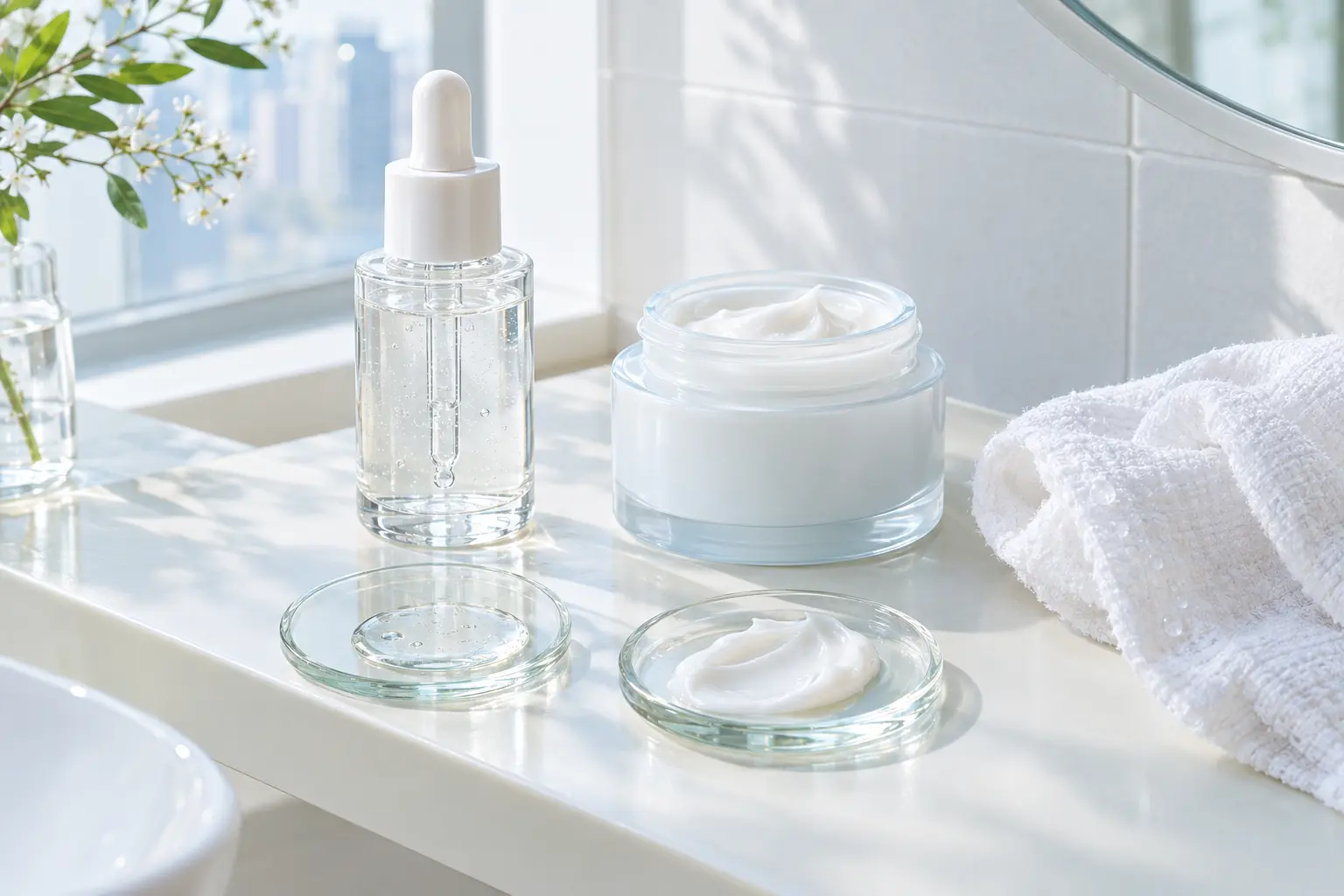
The easiest way to overspend on hydration is to buy several products from one line without deciding what each step is supposed to accomplish. The DIVE IN toner, serum, and cream all sit in the same hydration family, but they solve different routine problems. The toner is a generous 300ml first-step format; the serum is a more targeted 50ml leave-on step; the cream is an 80ml moisturizer intended to help lock in hydration.
None of these choices is automatically “better.” The toner can make sense if you enjoy a generous watery prep step or want more volume for regular use. The serum makes more sense when you want a focused hydration product and fewer layers. The cream becomes the more important purchase when moisture loss, flaking, or cold weather is the main concern.
| Format | Best fit | Main tradeoff | How to think about it |
|---|---|---|---|
| DIVE IN Toner, 300ml | Watery first step and generous quantity | Less targeted than a serum | Choose when you like a prep layer and want substantial volume. |
| DIVE IN Serum, 50ml | Lightweight daily hydration | Less occlusive than a cream | Choose when tightness and dehydration are the main issues. |
| DIVE IN Cream, 80ml | Dryness that needs a more substantial finish | May feel like more product than oily skin wants | Choose when the serum does not last comfortably on its own. |
| Serum plus cream | Dehydrated skin with surface dryness | More steps and more product | Layer when you need both water-binding hydration and a stronger seal. |
The supplied DIVE IN Cream catalog entry describes it as a moisturizer for oily or dehydrated skin and lists a vegan, fragrance-free, and paraben-free formula. Those catalog claims may make it the more sensible companion for someone whose skin remains dry after serum use. They do not mean the cream is automatically right for every reactive user, so your known sensitivities still matter.
For persistent dryness, dermatology guidance for nummular eczema recommends a fragrance-free cream or ointment applied to damp skin rather than relying on a lighter product alone [4]. That guidance is especially relevant if your skin is cracking, itching, or repeatedly developing inflamed patches. For a broader comparison of moisturization decisions, see this barrier cream skincare guide.
Format rule: buy the serum for light hydration, the cream for lasting comfort, and both only when your skin genuinely needs both jobs.
How to use Torriden DIVE IN Serum without over-layering
A simple order that respects the formula’s role
Start with cleansing, then apply the serum before your moisturizer. The manufacturer instructs users to apply an appropriate amount evenly to the face and lightly pat it into the skin [1]. Applying it while skin is still slightly damp is a sensible hydration technique because moisturizer applied to damp skin can help trap water; the serum should not be treated as the final protective layer when your skin is dry or the air is cold.
- Cleanse without leaving skin uncomfortably stripped. If your face already feels tight immediately afterward, changing the cleanser may help more than adding extra serum.
- Apply the serum in a thin, even layer. Use enough to cover the face comfortably, but do not keep adding drops in the hope that more product will equal more hydration.
- Follow with moisturizer when needed. Oily skin may prefer a lighter finish; dry skin will often need the DIVE IN Cream or another suitable moisturizer.
- Finish with sunscreen in the morning. Hydration and UV protection are separate steps.
The common mistake is stacking every product in the DIVE IN range because the ingredients sound compatible. The toner and serum can both be used, but the catalog does not establish that using both produces superior hydration. If you already use a toner and your skin feels comfortable, the serum may be unnecessary. If you want fewer steps, skip the toner and keep the serum as the more targeted purchase.
The same restraint applies to masks. Torriden’s own product page suggests layering the serum and placing a DIVE IN Multi Pad over it for three to five minutes, but that is an optional brand tip, not a requirement for everyday use [1]. A routine should be judged by comfort, consistency, and the result you can maintain—not by the number of layers.
For a simple morning routine, use cleanser, serum if needed, moisturizer if needed, and sunscreen. At night, use cleanser, serum, and moisturizer. If you are introducing several new products, introduce the serum on its own first so you can identify what your skin is responding to.
If your routine includes exfoliating pads, avoid assuming that more hydration cancels out overuse of exfoliation. This guide to Korean exfoliating pads versus scrubs can help you decide whether that step belongs in your routine at all.

Is DIVE IN Serum suitable for sensitive skin?
The answer needs more care than the product label’s gentle positioning. Panthenol and allantoin are sensible ingredients for a comfort-focused formula, but their presence cannot guarantee that every reactive face will tolerate the serum. The full ingredient list also includes witch-hazel leaf extract and several botanical extracts [1]. Plant-derived does not mean reaction-proof, and “for sensitive skin” is not a personal medical assessment.
The FDA explains that cosmetics can cause allergic reactions, which may appear as itchy, red rashes or contact dermatitis, and advises consumers to read ingredient panels rather than rely only on terms such as “hypoallergenic” or “fragrance-free” [5]. That does not mean this serum is unsafe. It means your own history matters more than a broad suitability claim.
A cautious introduction makes sense
- Check the current ingredient panel if you have known allergies or a history of reacting to botanical extracts.
- Introduce one new product at a time rather than changing the whole routine together.
- Try a small-area test on calm skin, not on a currently inflamed patch.
- Stop if you develop persistent burning, swelling, itching, or a rash.
An informal home test cannot diagnose allergic contact dermatitis. If reactions recur, clinical evaluation and formal patch testing are more useful than repeatedly applying products to an already irritated face. Seek urgent medical attention for severe swelling, breathing difficulty, or other serious symptoms.
There is also a difference between temporary stinging and a product that is fundamentally wrong for you. A short-lived sensation may come from a compromised barrier or from another product used immediately beforehand, but repeated discomfort is a reason to stop and simplify. Do not keep layering cream over a burning serum to force the routine to work.
For calm, mildly dehydrated skin that usually tolerates skincare, this is a reasonable hydration experiment. For active dermatitis, open cracks, or recurrent unexplained rash, a simple barrier moisturizer and professional advice take priority over a new serum. The product can support a cosmetic routine; it should not be presented as treatment for a skin disease.
When the DIVE IN mask or sunscreen is the better choice
Different hydration moments need different formats
A daily serum and a sheet mask are not interchangeable. The supplied DIVE IN Low Molecular Hyaluronic Acid Mask catalog entry describes a 27ml sheet-mask format containing hyaluronic-acid materials, panthenol, and allantoin on a cellulose sheet. Its design creates a temporary, close-contact treatment format. That can be useful when you want a periodic moisture-focused step before an event or after a day when skin feels especially parched, but it does not remove the need for a normal moisturizer.
Collected Korean-user feedback on the exact mask describes abundant essence, immediate moisture, and a cooling or comforting experience for some users. The reservations are just as relevant: some users found the finish slippery or slow to absorb, and very dry skin did not always find it rich enough. Treat those comments as individual experiences, not as a guaranteed result.
Choose the serum when you want a repeatable daily layer. Choose the mask when you prefer an occasional treatment format and do not mind a wetter, more involved step. If you are prone to congestion or dislike residue, a serum may be easier to fit into the routine. If you enjoy sheet masks and want temporary surface hydration, the mask has a clearer reason to exist.
Sunscreen is a separate decision altogether. The serum does not provide a stated sun-protection function in the supplied product information, so it cannot replace a broad-spectrum sunscreen. The supplied catalog lists the Torriden DIVE IN Watery Moisture Sun Cream with SPF50+ and PA++++, while the Torriden DIVE-IN Mild Suncream is described as a mineral sunscreen featuring zinc oxide. Choose between those products according to your sunscreen preferences, not according to which one sounds more hydrating.
This is the routine logic:
- Daily dehydration: serum, followed by moisturizer when needed.
- Occasional moisture boost: sheet mask, then moisturizer if your skin still feels dry.
- Morning UV protection: sunscreen after skincare, regardless of whether you use the serum.
The masks and treatments collection is useful if you are comparing a periodic sheet-mask purchase with a daily serum. Pick the format you will actually use consistently.
Final verdict: is Torriden DIVE IN Serum worth buying?
Yes—if your decision is specifically about a lightweight hydration layer. Torriden DIVE IN Serum has a coherent formula story: five listed hyaluronic-acid forms, glycerin and other humectants, panthenol, allantoin, and additional conditioning ingredients [1]. The product’s 50ml size and dropper format also suit a targeted serum step rather than a whole-body moisturizer or a generous toner ritual.
The case becomes weaker when you expect it to solve persistent dryness by itself. A serum is presented as a lightweight hydration layer, so it is not the same format as a richer cream. Dermatology guidance for nummular eczema emphasizes fragrance-free creams or ointments applied to damp skin [4]. That does not make the serum a poor product. It simply places it in the correct category.
Here is the buying decision in practical terms:
- Buy the serum alone if you have normal, combination, oily, or mildly dehydrated skin and want a light layer under moisturizer or sunscreen.
- Buy the serum with a cream if your skin feels tight and dry, especially in cold or low-humidity conditions.
- Choose the cream first if you have persistent flaking, cracking, or roughness and currently own no reliable moisturizer.
- Choose the toner instead if your priority is a generous watery first step and you do not need a more targeted serum format.
- Choose the mask instead if you want occasional moisture care rather than another daily leave-on product.
The strongest reason to purchase DIVE IN Serum is not the promise of five-dimensional penetration. It is the combination of a lightweight format and a sensible hydration-focused ingredient profile. The strongest reason to skip it is equally straightforward: if your skin needs a richer barrier layer, another watery product will not fix that mismatch.
Before ordering, decide what happens after the serum. If the answer is “nothing, and my skin is already flaky,” choose a cream. If the answer is “moisturizer when needed, sunscreen in the morning, and a routine I can repeat,” the serum is a defensible addition. You can also browse the wider skin-care collection if your actual concern is broader than dehydration.
That is the useful Torriden DIVE IN decision: buy for light hydration, layer for lasting comfort, and keep medical or persistent skin problems outside the promises of a cosmetic serum.
Frequently Asked Questions
Can Torriden DIVE IN Serum replace moisturizer?
It can be enough for some oily or mildly dehydrated routines, but it is not a dependable replacement for moisturizer when skin is persistently dry. The serum is a humectant-focused layer, while a cream generally supplies more emollient or occlusive structure. If your skin still feels tight after the serum dries, follow with a moisturizer such as Torriden DIVE IN Low Molecule Hyaluronic Acid Cream.
Is Torriden DIVE IN Serum good for oily or acne-prone skin?
Its lightweight hydration profile may be more comfortable than a heavy cream for oily or combination skin. However, the supplied product information does not establish non-comedogenicity or acne-treatment efficacy. Use a modest amount, avoid unnecessary heavy layers, and judge the formula by your own response.
Can I use Torriden DIVE IN Serum every day?
The product is positioned as a leave-on facial serum for routine hydration, so daily use is a reasonable cosmetic approach if your skin tolerates it. Apply it after cleansing and follow with moisturizer when needed. Introduce it on its own if you are sensitive or changing several products at once.
Does the five-dimensional hyaluronic acid reach five skin layers?
No such literal conclusion is supported by the product description. “5D” refers to five listed hyaluronic-acid forms, including sodium hyaluronate, hydrolyzed hyaluronic acid, sodium acetylated hyaluronate, sodium hyaluronate crosspolymer, and hydrolyzed sodium hyaluronate [1]. Different forms can behave differently in a formula, but the label does not prove delivery to five anatomical layers or permanent plumping.
Should I use the DIVE IN toner and serum together?
You can, but you do not need both to have a complete hydration routine. The toner is the larger 300ml first-step format, while the serum is the more targeted 50ml hydration layer. If your routine feels crowded, choose the format that solves your main problem rather than layering both because they share a product family.
Is Torriden DIVE IN Serum suitable for sensitive skin?
The product is marketed as gentle and contains panthenol and allantoin, but that does not guarantee tolerance for every reactive user. Its ingredient list also includes witch-hazel leaf extract and several botanical extracts. Read the current label, introduce it cautiously on calm skin, and stop if persistent burning, itching, swelling, or rash develops.