
Finding the best Korean sunscreen for sensitive skin starts with a question most product pages skip: sensitive how? Skin that stings within seconds, skin that feels tight and flaky by noon, and skin that breaks out in small itchy bumps along the hairline are three different problems. They point to three different formulas.
Here is the short answer. If you react to many products, or you once had a rash you blamed on sunscreen, start with a mineral formula such as AESTURA Derma UV365 Barrier Hydro Mineral Sunscreen. If your skin is mainly dry, you tolerate chemical filters and you dislike a white film, a hydrating chemical serum is a reasonable trade. If the trouble is recurring itchy bumps, the sunscreen is only part of the answer. The sections below help you work out which group you are in, explain what each label line means, and show where each of the six options fits.
What “Sensitive Skin” Means When You Choose a Sunscreen
“Sensitive” on a sunscreen box is a marketing description, not a regulated skin type. To choose well, translate it into the reaction you actually get. Most sun-care complaints fall into one of three patterns, and each pattern changes which part of the formula matters most.
Pattern one: reactive skin
Redness, burning or itching appears quickly, sometimes even after products you have used before. You may have a known allergy to a fragrance, preservative or UV filter, or a diagnosed condition such as rosacea or eczema. For you, the active ingredients are the first thing to screen, because they are the one part of a sunscreen that cannot be left out.
Pattern two: barrier-dry skin
Your skin rarely flares dramatically. It feels tight, looks dull, and stings a little when anything goes on after cleansing. This usually points to a depleted moisture barrier rather than a true allergy. Here the filter type matters less than whether the base hydrates, and how it feels after the second or third layer of the day.
Pattern three: bump-prone skin
Small bumps that all look alike cluster on the forehead, hairline or jaw. They often itch and seem worse in heat and humidity. This can look like acne, but it can also be a yeast-driven folliculitis that does not respond to the usual acne approach. Here, how heavily the formula seals the skin and which oils and lipids are in the base matter most.
Keep two points in mind before you shop. First, you can belong to more than one pattern; dry skin with occasional bumps is common. Second, stinging from a new sunscreen is not automatically the filter’s fault. Solvents, film-formers, fragrance and plant extracts in the base can irritate just as easily. That is why the full ingredient list matters as much as the “mineral” or “chemical” headline on the front.
Mineral vs Chemical Sunscreen for Sensitive Skin: What Actually Differs
The American Academy of Dermatology draws the line simply: if the active ingredient is titanium dioxide, zinc oxide or both, the product is a physical sunscreen, and if it contains neither, it is chemical [1]. Formulas that combine actives from both groups are called hybrids [1]. Dermatologists recommend physical sunscreens, also called mineral sunscreens, for people with sensitive skin [1].
The usual explanation is that minerals bounce light away while chemicals absorb it. Reality is less tidy. The AAD notes that chemical, physical and hybrid sunscreens all form a protective layer that absorbs UV rays, and physical sunscreens also reflect them [1]. So the mineral case for sensitive skin is not mainly about how the filter handles light. One practical reading of the dermatologists’ advice is that a mineral formula limits you to two familiar actives, so there are fewer filters to screen if you suspect a reaction.
That matters most for reactive skin, because the non-mineral group is large. The FDA’s list of commonly used actives names more than a dozen non-mineral filters, from avobenzone and homosalate to octocrylene and oxybenzone [2]. The agency also says there is evidence that at least some sunscreen actives are absorbed through the skin, and it has asked industry for safety data [2]. That review concerns whole-body safety, not skin sensitivity, and absorption is not the same as harm. Still, it helps explain why some readers prefer a short, familiar list of actives.
If a doctor has told you that you react to a specific UV filter, the mineral route removes that whole category from the equation. That is the strongest reason to choose it.
What mineral formulas can cost you
- Visible residue: mineral films can look pale on the skin, and the visibility varies by formula and skin tone. The AAD notes that a tinted sunscreen matched to your skin tone can help avoid the white cast some sunscreens leave [1].
- Texture: spreading insoluble particles evenly often takes a richer base, which some people find heavy.
- Under-application: a thick feel tempts you to use less, and using less lowers protection.
What chemical formulas can cost you
- More actives to screen: each filter is another possible trigger if you already know you react to one.
- Market variation: the same product name can carry different filter lists in different countries, so the tube in your hand is the only reliable reference.
Neither type is unsafe for sensitive skin by default. A well-made chemical sunscreen worn generously protects you better than a mineral one you skimp on because it feels like paste. As the AAD puts it, the best sunscreen is the one you will use again and again [1].
The Mineral Default: AESTURA Derma UV365 Barrier Hydro Mineral
AESTURA is Amorepacific’s dermatology-focused brand. This sunscreen launched in Korea on March 20, 2023, for sensitive skin whose weakened barrier reacts more strongly to UV stress [7]. The brand describes it as a mineral-only formula that forms a thin film on the skin [7]. Its signature addition is an ingredient the brand calls Barrier Moisture Ceramide, meant to support a stressed barrier while adding hydration [7].
The figures on the listing come from the brand’s own human testing. After a single use, Amorepacific reports a 71% improvement in barrier function and a 98% improvement in temporary redness [7]. It also reports that skin moisture rose 316% immediately after application [7]. The company says it completed skin-irritation, human eye-irritation and non-comedogenic tests, along with a 24-hour wear test and a test of how well the film holds up under mask friction [7]. According to the brand, more than 12,000 sensitive-skin panelists tried it before launch [7].
Read those figures for what they are. They are company-run results measured over hours, not independent trials. A 98% improvement in temporary redness describes a short-term measurement, not a treatment for rosacea or any other condition. The list of tests is still useful, because it shows the brand anticipated two common mineral complaints: rubbing off under a face mask, and stinging near the eyes.
Who it suits
- Pattern-one skin: you react easily or suspect a specific chemical filter, and you want to remove that variable.
- A barrier in recovery, for example after over-exfoliating, when you want SPF50+ PA++++ and some hydration in one step.
- Anyone whose eyes water with sunscreen and wants a product that was eye-irritation tested.
Who should look elsewhere
If you have a deeper skin tone or dislike any brightening on the skin, test it along your jaw in daylight before you commit. The tube is 40ml, smaller than the 50ml options here, and at a full teaspoon per application it will not last long. There is also a nuance in the launch copy. The brand says the film reflects UV immediately to keep it from being absorbed into the skin [7]. Dermatology guidance notes that physical filters absorb UV as well as reflect it [1]. That does not make the product weaker. It means even coverage and a generous amount matter as much with a mineral formula as with any other.
The Best Korean Sunscreen for Sensitive Skin, Matched to Your Reaction
Here is how the six sunscreens in this edit line up against the three reaction patterns. Filter types are as each manufacturer describes them. For the SKIN1004 serum, a published ingredient list confirms the filters [8]. For the others, check the filter list printed on the box.
| Product | Filter type (as stated) | Label protection | Best fit | Watch for |
|---|---|---|---|---|
| AESTURA Derma UV365 Barrier Hydro Mineral Sunscreen (40ml) | Mineral | SPF50+ PA++++ | Reactive or barrier-damaged skin | Possible pale film; smallest tube |
| SKIN1004 Madagascar Centella Hyalur-Cica Water Fit Sun Serum (50ml) | Chemical, non-nano | SPF50+ PA++++ | Dry skin, makeup wearers | Some Korean users report eye stinging or shine |
| DR.CEURACLE CICA Regen Vegan Sunscreen (50ml) | Chemical | SPF50+ PA++++ | Dry-to-normal sensitive skin that prefers a gel-cream | Several botanical extracts in the base |
| La Theorie 0% Fatty Acid Sunscreen (2 × 50ml) | Small-particle filters; check type on label | SPF 50+ PA+++ | Itchy, bump-prone skin; everyday commuting | One UVA grade below the others |
| La Theorie Sunscreen Protection Factor SPF50+ PA++++ | Fatty-acid-free claim; check filters on label | SPF50+ PA++++ | Oilier, bump-prone skin under makeup; outdoor days | Stated matte finish may not suit very dry skin |
| Dr.PEPTI UV Plus Tone-Up Sunscreen (50ml) | Hybrid | SPF50+ PA++++ | A tinted, brightening base | Tint must suit your tone; not filter-avoidant |
Three ways to use the table
Say your cheeks turn red and hot within minutes of most new products, and you once had an itchy rash after a sunscreen you never identified. That is pattern one. Start with AESTURA, and accept some visible residue as the cost of learning your triggers.
Now say your skin rarely breaks out but feels like paper by mid-afternoon, and mineral sunscreens have made you look grey in photos. The SKIN1004 serum or the Dr.Ceuracle gel-cream is the sensible trade. You accept organic filters in exchange for a base you will actually apply generously, which is where most real-world protection is lost.
Third case: tiny, itchy bumps cluster along your hairline, flare every summer and ignore your acne spot treatment. See a dermatologist first. Then use one of the La Theorie formulas as a less occlusive option while you get a diagnosis, choosing the PA++++ version if you spend long hours outdoors.
Dr.PEPTI UV Plus Tone-Up sits slightly apart from the rest. It suits you if sensitivity is a secondary concern and you want a sunscreen that doubles as a light complexion base. Because it is a hybrid, it is not the right choice if you are trying to avoid chemical filters entirely.
Dry, Reactive Skin That Hates White Cast: The Chemical-Serum Trade
If your sensitivity is mostly dryness and tightness, a chemical-filter serum can feel kinder than a mineral cream. It spreads thin and needs little rubbing, and less friction is a real comfort for a fragile barrier. The trade-off is that you rely on organic filters, so this route makes sense once you know you tolerate them.
SKIN1004 Madagascar Centella Hyalur-Cica Water Fit Sun Serum
A published ingredient list for the SPF50+ PA++++ version names four organic filters: diethylamino hydroxybenzoyl hexyl benzoate, ethylhexyl triazone, methylene bis-benzotriazolyl tetramethylbutylphenol and diethylhexyl butamido triazone [8]. Oxybenzone and octocrylene do not appear on that list [8]. The same list shows centella asiatica extract at 9,800 ppm, plus niacinamide and several forms of hyaluronic acid, with sodium hyaluronate at 10 ppm [8]. The retailer copy calls it a non-nano chemical formula suited to dry or sensitive skin and recommends a patch test before use [8].
Two details deserve a sensitive-skin reader’s attention. The hyaluronic acid amounts are tiny, so the moisture you feel probably owes more to the overall base, which also lists glycerin, propanediol and butylene glycol, than to the headline acid. Our guide to Korean hyaluronic acid serums explains why counting acid types tells you little. The base also carries a long run of plant extracts, including birch, ginkgo, green tea, broccoli sprout and rocket leaf, which matters if botanicals have bothered you before. Formulas can differ between market versions, so check the list on your own tube.
Collected Korean-user feedback on this exact serum is consistent on the positives: users repeatedly describe a light, lotion-like spread, strong moisture, little white cast and good behaviour under base makeup, along with quick absorption and a convenient pump. The reservations are specific and worth taking seriously. A minority report eye stinging, including one dry-skin user who found it severe, and some find the untinted finish shiny or oily without makeup on top. One oily-skin reviewer liked the feel but disliked the scent enough not to repurchase, and a few note that the pump empties quickly.
Taken together, it fits pattern-two skin that wears makeup and wants a dewy base. If you are oily, or your eyes water easily, it is a weaker match.
DR.CEURACLE CICA Regen Vegan Sunscreen
Dr.Ceuracle describes this as a chemical-filter sunscreen with a gel-cream texture and a non-sticky finish. It is built around what the brand calls a Cica Barrier Complex, made with centella asiatica extract and TECA. The brand adds Polyquaternium-51 for hydration, plus hardy kiwi, hibiscus and lotus flower extracts, and the formula is vegan.
It makes sense if you want the centella approach in a gel-cream rather than a serum, or if a pump serum runs out too quickly for you. Its filter list was not available for this edit, so read the box if you are screening specific filters. Apply it as the last skincare step before makeup; our Korean skincare routine order explains why sunscreen comes after your moisturizer, not before it.
Itchy Bumps and Fungal Acne: Where a 0% Fatty Acid Sunscreen Fits
DermNet lists occlusion from emollients and sunscreens among the risk factors for Malassezia folliculitis [6]. The other listed risk factors include a hot, humid climate, high sebum production, heavy sweating, antibiotic use and immunosuppression, including steroid use [6]. The condition appears as small, uniform, itchy papules and pustules, mainly on the upper back and chest, but also on the forehead and hairline, chin and neck [6]. It does not produce blackheads or whiteheads, which is one way it differs from ordinary acne [6].
The biology explains why formulators pay attention to lipids. Malassezia are lipid-dependent and lipid-loving yeasts that live on normal skin [5]. They take up sebum lipids and adjust their lipase and phospholipase enzymes when skin conditions change [5]. In folliculitis samples, one species showed high lipase activity during the summer months, which may be promoted by components of sweat [5].
What a 0% fatty acid claim does, and does not, do
La Theorie builds both of its sunscreens around this logic. The brand says the 0% Fatty Acid Sunscreen leaves fatty acids out to reduce an environment where microbes such as Malassezia can multiply. It is aimed at skin with small clustered papules and recurring, itchy bumps on the face, chest or back. It pairs SPF 50+ PA+++ with niacinamide for brightening and adenosine for wrinkle care, uses small-particle UV filters, and is described as easy to rinse off. This listing is two 50ml tubes, which suits steady daily use while you watch how your skin responds.
The rationale fits the biology, but none of the research gathered for this article shows that a fatty-acid-free sunscreen prevents or treats Malassezia folliculitis. Treat it as removing one possible aggravating factor, not as treatment. DermNet notes that the diagnosis is confirmed with skin scrapings or similar tests, because bacterial folliculitis and steroid acne can look very similar [6]. Treatment is antifungal, and recurrence is common even after it works [6].
One label point is easy to miss. “Fatty acid” is a specific ingredient class. A product can be free of it and still contain oils, esters or waxes. If your dermatologist has given you an ingredient-avoidance list, read the full INCI rather than relying on the front-of-pack claim.
For long outdoor days, La Theorie’s separate Sunscreen Protection Factor SPF50+ PA++++ carries the same fatty-acid-free positioning with one higher UVA grade. The brand states a matte finish that absorbs within about 15 minutes, which makes it the better La Theorie choice for oilier, bump-prone skin under makeup.
Reading a Korean Sunscreen Label: SPF, PA and How Much Is Enough
Korean sunscreens print two numbers, and they measure different things. Korea’s Ministry of Food and Drug Safety describes SPF as protection against UVB, which reddens skin, and PA as protection against UVA, which darkens it [4]. In 2016 the ministry expanded the UVA scale from three grades to four [4]. Under those bands, PA+ means a UVA protection factor from 2 to under 4, PA++ from 4 to under 8, PA+++ from 8 to under 16, and PA++++ 16 or above [4].
The ministry’s guidance is based on lifestyle. It suggests SPF15–30 with PA+ or PA++ for days spent mostly indoors or with light outdoor activity [4]. It suggests SPF50+ with PA+++ or PA++++ for long exposure to strong UV, such as hiking or a day at the beach [4].
By that guide, La Theorie’s PA+++ two-pack already falls within the outdoor range, one grade below the PA++++ options. For a commute and an office day, that gap is unlikely to decide anything. For a full day outside, choose PA++++. As a floor, the AAD recommends SPF 30, which blocks about 97% of UVB rays, and notes that no sunscreen blocks 100% [1].
The amount problem
The AAD advises at least one teaspoon for the face, roughly enough to cover the length of your index and middle fingers [1]. Many people apply only 20–50% of the amount needed to reach the SPF on the label [1]. For sensitive skin this matters twice. A texture that feels uncomfortable invites thin application, and thin application quietly turns SPF50+ into far less protection.
Hours on the box vs hours in the sun
La Theorie’s 0% Fatty Acid listing mentions UVB protection for up to eight hours. Read that as a manufacturer’s duration claim, not a reason to skip reapplying. The AAD advises reapplying about every two hours outdoors, and after swimming or sweating [1]. The FDA notes that no sunscreen is waterproof, and that water-resistant products must state whether they last 40 or 80 minutes [2].
Tints, visible light and imported formulas
The AAD notes that tinted sunscreens contain iron oxide, which research shows helps protect skin from visible light that can worsen dark spots, particularly in darker skin tones [1]. Dr.PEPTI UV Plus Tone-Up Sunscreen advertises protection against blue light and infrared along with a rosy tint. The sources here do not establish those claims, and a tone-up tint is not necessarily iron oxide. If visible-light protection is your reason to buy, look for iron oxides on the ingredient list.
The FDA also points out that some countries regulate sunscreens differently, for example as cosmetics, and advises reading the label of any sunscreen bought abroad to understand how it differs [2].
How to Start a New Korean Sunscreen Without a Flare
Even the right formula can go wrong if you introduce it carelessly. Sensitive skin often reacts to change itself, so the goal is to make the sunscreen the only new variable.
A practical introduction plan
- Keep the rest of your routine fixed. Do not start a new sunscreen in the same week as a new acid, retinoid or cleanser, or you will not know which product caused a reaction.
- Patch-test first. Apply a small amount to the side of the jaw or behind the ear for several days before using it on your full face. Use the area near your eyes last, since that is where stinging shows up.
- Apply the full amount from day one. Testing with a thin layer tells you little, because you will be wearing a full teaspoon later.
- Layer it last. Sunscreen goes after your moisturizer and before makeup. If your skin is very dry, a simple cream from the moisturizers range underneath can reduce the urge to under-apply.
- Stop if it escalates. Brief warmth that fades is different from hives, swelling or blistering. If you notice any of those, wash the product off and seek medical advice.
Storage and shelf life
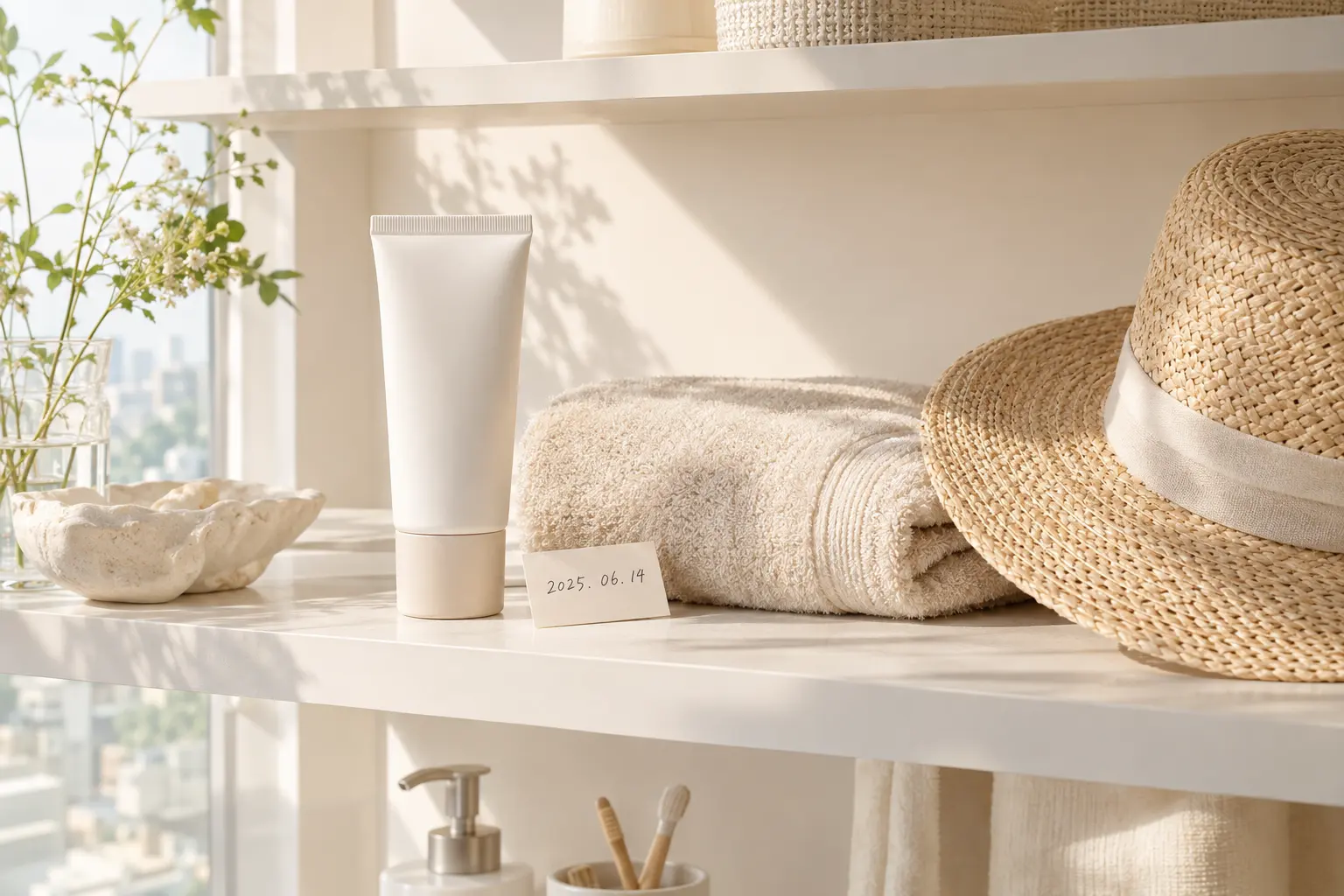
The FDA recommends keeping sunscreen containers out of direct sun, for example by wrapping them in a towel or keeping them in the shade during long periods outdoors in the heat [2]. A sunscreen without an expiration date should be treated as expired three years after purchase [2]. Write the purchase date on the tube, which is especially useful with a two-pack like La Theorie’s. The FDA does not recommend sunscreen for infants under six months and advises asking a doctor first [2].
Your next decision is simple. Work out which reaction pattern describes you, choose the matching formula, and give it two weeks of full-amount use before you judge it. If bumps persist whichever sunscreen you use, take that as the signal to book a dermatologist, not to buy another bottle.
Frequently Asked Questions
Is mineral sunscreen always better for sensitive skin?
Not always, but it is the sensible starting point if you react to many products. Dermatologists recommend mineral sunscreens for sensitive skin, and a mineral formula also limits you to zinc oxide or titanium dioxide, which leaves fewer actives to screen if you suspect a reaction. The base can still irritate, and a heavy texture can lead you to apply too little. If you tolerate chemical filters and mainly struggle with dryness, a well-formulated chemical serum can work just as well.
What does PA++++ mean on a Korean sunscreen?
PA rates UVA protection, the part of sunlight linked to tanning and skin aging. Under Korea's grading, PA++++ means a UVA protection factor of 16 or higher, the top of four grades. PA+++ covers 8 to under 16. Korea's regulator suggests PA+++ or PA++++ with SPF50+ for long, intense outdoor exposure.
Can sunscreen cause fungal acne?
Sunscreen does not cause it directly, but occlusion from sunscreens and emollients is listed as a risk factor for Malassezia folliculitis, alongside heat, humidity, sweating and some medications. The condition looks like small, uniform, itchy bumps without blackheads or whiteheads. It needs a dermatologist's diagnosis and is treated with antifungals. A fatty-acid-free sunscreen can remove one possible trigger, but it is not a treatment.
Do I need SPF50+ every day if my skin is sensitive?
The AAD's minimum is broad-spectrum SPF 30. Many people apply far less than the amount used in testing, so a higher SPF gives you a margin for under-application. Korea's regulator suggests SPF15–30 for mostly indoor days and SPF50+ for long outdoor exposure. For sensitive skin, a formula you will apply generously matters more than the extra number.
Do “hypoallergenic” or “low-irritation” claims mean a sunscreen was independently tested?
Not necessarily. Among the six sunscreens here, only AESTURA documents its tests, and those are brand-reported human-application and irritation tests rather than independent trials. The other listings describe gentleness without published test details in the sources reviewed for this article. Treat such claims as shortlisting signals, then confirm them with your own patch test.