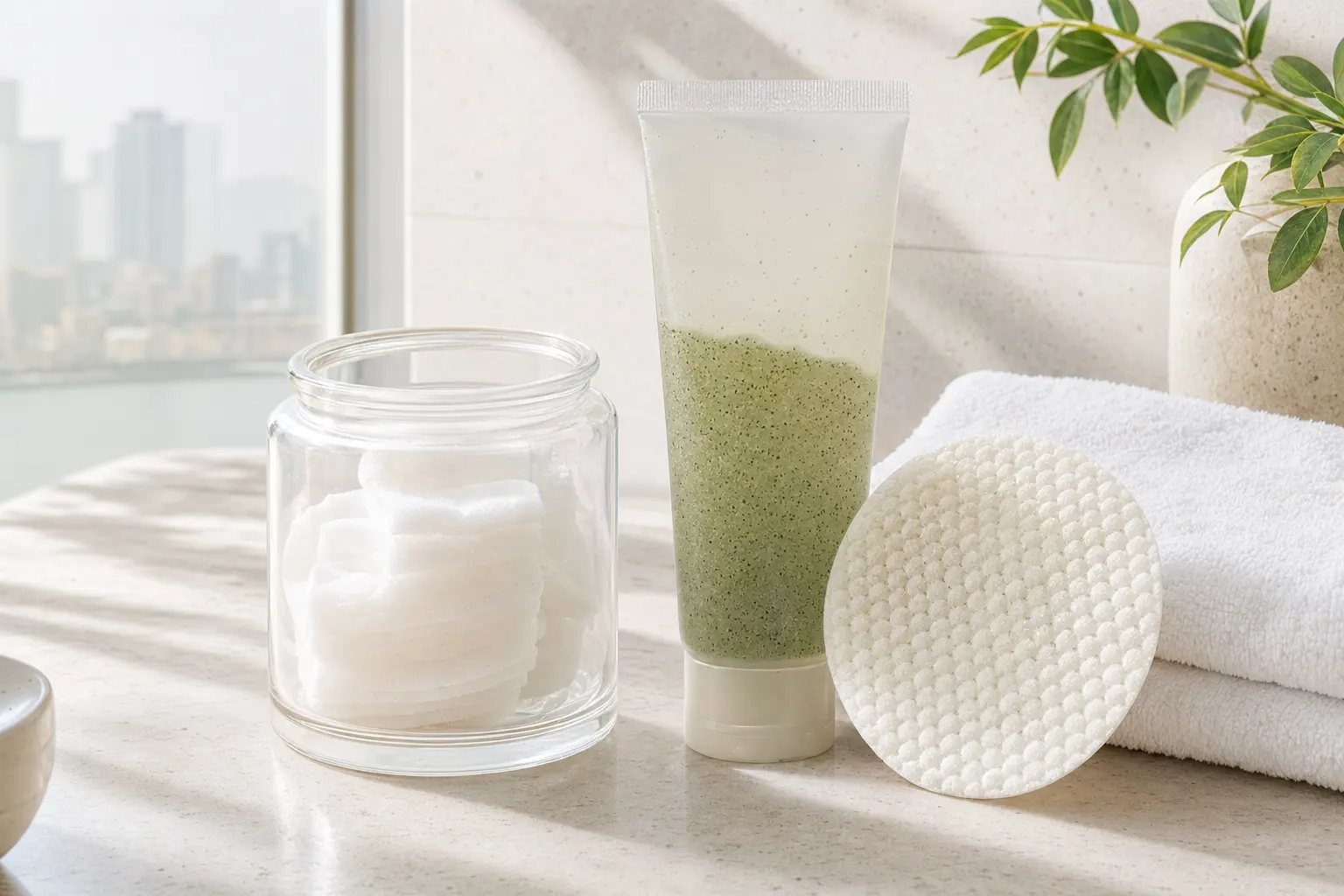
Korean exfoliating pads vs scrubs is not really a contest between two universal winners. The useful question is which kind of exfoliation gives your skin enough smoothing without adding friction, irritation or unnecessary complexity.
For many facial routines, a smooth, clearly labeled pad may be easier to control than a massage scrub, but pad texture and wiping pressure still determine the total load. A scrub can have a place, particularly on intact body skin or when you prefer a short rinse-off step, but massage pressure becomes part of the formula.
Korean exfoliating pads vs scrubs: the real mechanism
Two formats, several types of exfoliation
At-home exfoliation generally falls into mechanical and chemical methods. Mechanical exfoliation uses a pad, brush, sponge or scrub to physically remove dead skin cells, while chemical exfoliation uses ingredients such as alpha hydroxy acids and beta hydroxy acids to loosen or dissolve them [1]. That distinction is useful, but it is not a perfect label for every Korean product.
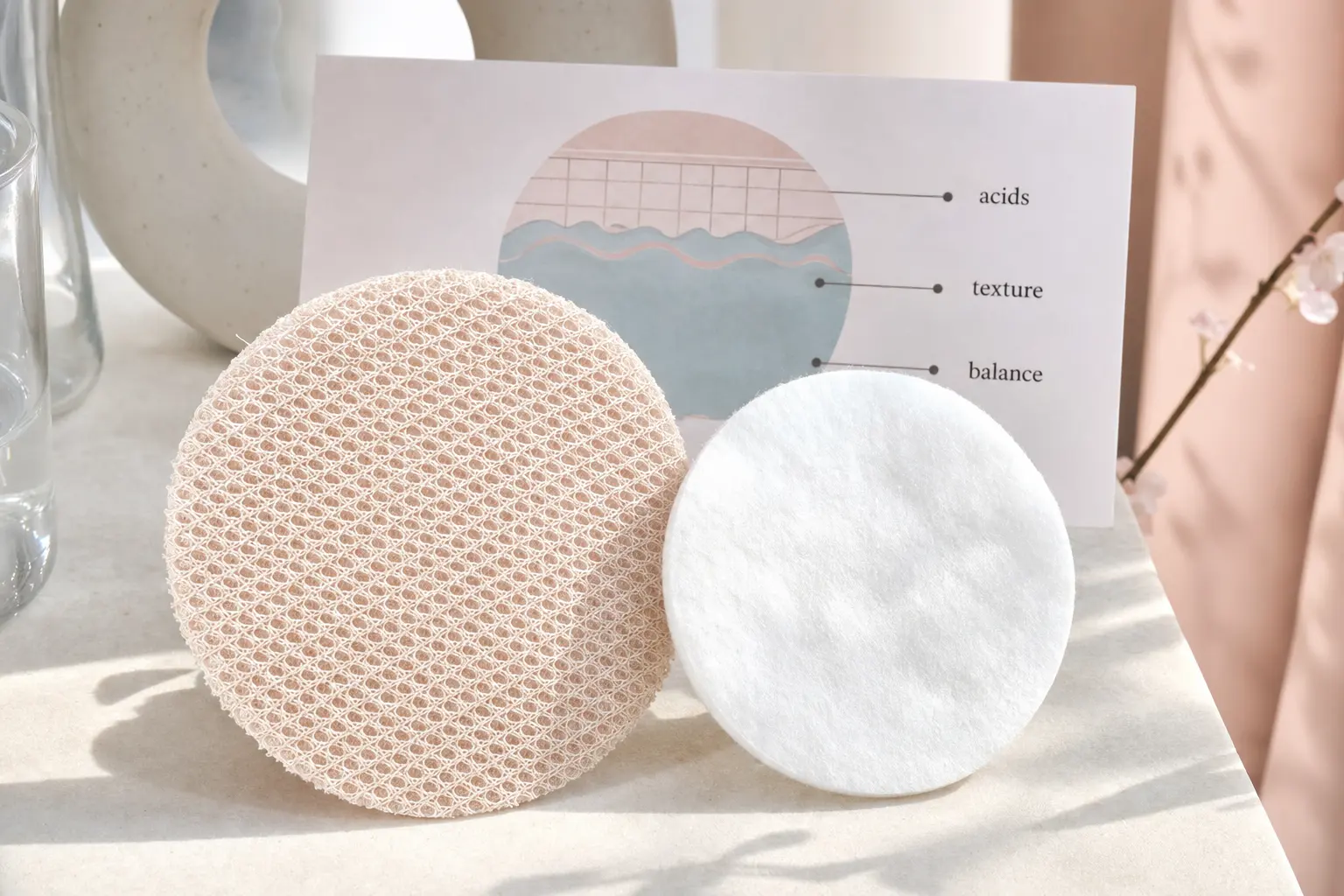
A pre-soaked pad may deliver acids or enzymes while the fabric adds a small amount of wiping. A smooth pad may be mostly a liquid-delivery format; a dual-textured pad adds a more obvious physical component. A scrub-gel asks you to massage and rinse, so the amount of pressure and the length of the massage influence how much friction your skin receives.
The first decision rule is simple: choose by total exfoliating load, not by the word pad or scrub on the front of the package. Count the chemical ingredients, fabric texture, massage, rinse requirement and recommended frequency together.
| Format | What is documented | Best starting use | Main tradeoff |
|---|---|---|---|
| Pre-soaked facial pad | Liquid formula plus wiping; ingredients vary | Convenient facial texture care | Pad does not reveal acid strength or fabric friction |
| Acid or enzyme pad | Chemical exfoliants, sometimes with textured fabric | Shoppers wanting a no-rinse active step | More ingredients mean more variables to manage |
| Massage scrub-gel | Rubbing followed by rinsing | Occasional use on suitable, intact skin | Pressure and duration are easy to overdo |
| Spicule pad | Spicule material plus an exfoliating acid complex | Experienced shoppers seeking a more involved treatment | Higher-complexity format, not a gentle default |
That is why a smooth, clearly labeled pad can be the more manageable starting point for facial texture care, while a massage-based scrub is better treated as occasional. This is a practical risk-management choice, not a claim that every pad performs better. No evidence supplied here directly compares the listed products in a randomized trial.
Choose by skin type, current routine and friction
When less rubbing is the smarter choice
Dry skin may feel rough and flaky, sensitive skin may sting or burn after product use, and acne-prone skin can become more uncomfortable when already inflamed. The American Academy of Dermatology says people with dry, sensitive or acne-prone skin may prefer a mild chemical exfoliant because mechanical exfoliation can be too irritating for some skin types [1]. This is category guidance, not proof that one featured product is safe or effective for every skin type.
If your skin is currently calm but uneven in texture, a pad may be easier to control than a scrub that requires circular massage. That depends on the pad: rough fabric, repeated passes and firm pressure can turn it into a substantial mechanical step. If your skin is visibly irritated, sunburned, cut or peeling from another product, postponing exfoliation is the more sensible decision.
Audit the rest of the routine
Before choosing, make a short list of what is already touching your face. Retinoids, retinol and benzoyl peroxide can make skin more sensitive or prone to peeling, and exfoliating alongside them may worsen dryness or breakouts [1]. This does not mean you can never use an exfoliant; it means the same evening should not become an experiment in stacking every active step.
- Dry or reactive: prioritize low friction, conservative frequency and a moisturizer afterward.
- Oily or congested-looking: look for a documented BHA-containing format, but do not infer clinical pore improvement from the ingredient list alone.
- Inflamed acne: avoid aggressive scrubbing. An exfoliant is not a substitute for acne care, and irritation can make the routine harder to manage.
- Already using strong actives: separate exfoliation from those products unless the exact label or a clinician gives you a different plan.
If your concern is recurring acne rather than occasional rough texture, a Korean acne patch guide may be more relevant than adding another exfoliating step. The decision should solve the problem you have, not simply add a more forceful sensation.
Where the MEDIHEAL Yulpi pad fits
A straightforward daily-use positioning
MEDIHEAL Yulpi Exfoliating Smoothing Pads contain 60 pre-soaked thick cotton pads and feature Korean chestnut-shell, or Yulpi, extract. The catalog positions them for gentle daily exfoliation, smoother-looking texture and use with sensitive skin. Those are product and label claims rather than independent clinical validation, so they are best read as the intended routine role, not a guarantee.
This is the most natural choice among the listed products when your priority is convenience and a simple facial step. The pads arrive pre-soaked, so there is no massage-and-rinse process, and the catalog describes the essence as mild. The practical advantage is consistency: a controlled wipe can be easier to repeat than a scrub session that invites extra pressure.
Still, “daily” should not become a command to use the pad through burning, persistent redness, peeling or stinging. The suitable schedule is the one supported by the current label and tolerated by your skin. If your face reacts to the fabric, the essence or the frequency, reduce use or stop rather than trying to scrub more lightly over an already uncomfortable area.
Who should choose it?
Imagine you have normal-to-dry skin, want a fresh-feeling texture step and dislike rinsing a gel from the sink. This format is a logical first consideration because its documented construction is a thick, pre-soaked cotton pad and its stated purpose is gentle daily exfoliation. It is less logical if you are specifically looking for a clearly quantified acid formula or a pore-focused multi-acid treatment; the supplied catalog does not provide an acid concentration, pH or mechanism for the chestnut-shell extract.
Think of the Yulpi pad as the simpler end of the facial-pad spectrum, not as proof that “natural” means irritation-free. Ingredient identity alone does not establish tolerability for every person. Patch testing and a restrained first use remain sensible, especially when your routine already contains products that increase sensitivity.
Acid, enzyme and no-rinse pads for texture concerns
Why the Milba Lab formula is a different decision
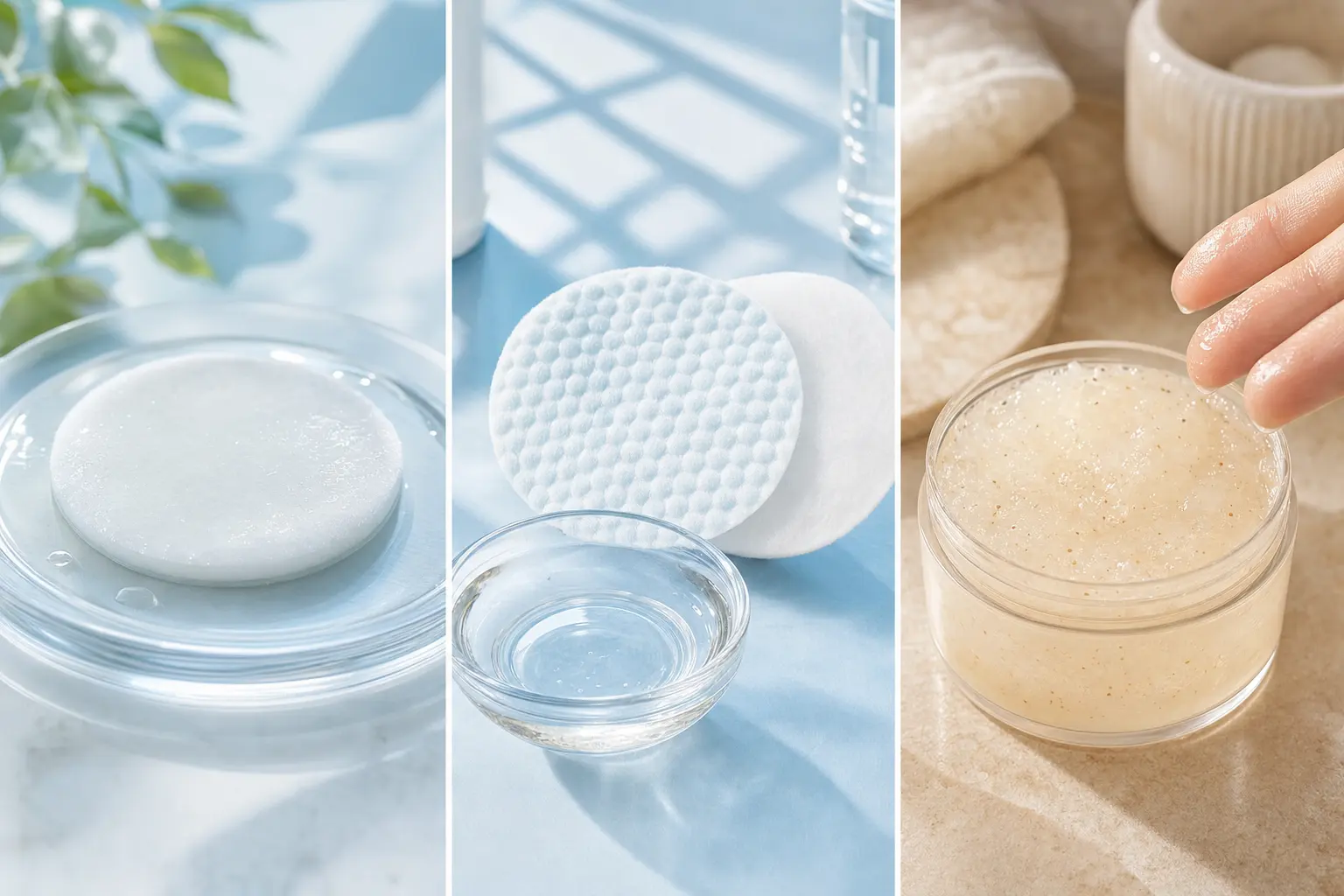
Milba Lab Jeju Fig Facial Exfoliating Peeling Toner Pad is documented as a 60-pad, 180-gram product with a dual-textured pad, AHA and BHA, fig extract or enzymes, hyaluronic acid, niacinamide and centella. It is designed as a no-rinse step after cleansing. The catalog also describes pore-clearing, brightening and texture-refining benefits, but those outcome claims should not be treated as independent proof that the exact product will reduce pores, blackheads or uneven pigmentation.
The important distinction is complexity. AHA and BHA provide a chemical-exfoliation route, fig enzymes add another exfoliating concept, and the dual texture introduces wiping. That combination may appeal if your main concern is a rough, congested-looking surface and you want an efficient toner-pad format. It also means you have more variables than with a basic pre-soaked pad, and the catalog does not provide acid concentrations, pH or controlled tolerability data.
For that reason, the product is better matched to a shopper who wants an active no-rinse step and is prepared to use it cautiously than to someone seeking the simplest possible introduction to exfoliation. A BHA-containing product should be tested on a small area, used according to its label and stopped if irritation or prolonged stinging occurs [8].
How to decide if the extra activity is worth it
- Choose this type of pad when acids and a no-rinse format matter more to you than keeping the ingredient profile simple.
- Do not use the dual texture as an excuse to press harder. The liquid formula and wiping already contribute to the total exfoliating load.
- Keep the first routine uncomplicated: cleanse, use the pad as directed, then moisturize.
- Do not judge pore care by one immediate smooth feeling. A cosmetic ingredient claim is not the same as a clinical comparison with a scrub.
If you use AHA-containing products, sun awareness matters. FDA guidance says topical AHA cosmetics may increase sensitivity to the sun while in use and for up to one week after stopping, with sunscreen, protective clothing and limited sun exposure recommended [6]. For practical routine planning, browse sunscreen advice for daily use before making an acid pad a regular daytime habit.
When a Korean face scrub makes sense
Massage is part of the product
Dr. Melaxin Peel Shot Face Exfoliating Scrub Gel is an 80-milliliter scrub-gel with kojic acid and turmeric extract. The supplied directions specify application to a clean, dry face while avoiding the eye area, gentle circular massage for one to two minutes, thorough rinsing with lukewarm water and use two to three times weekly. Those instructions make technique central: the product is not a leave-on toner pad, and the amount of rubbing changes the experience.
The catalog presents kojic acid for brightening and turmeric for additional care, alongside claims about dissolving dead cells and softening sebum plugs. These are stated product benefits, not independent evidence that the gel clinically reduces hyperpigmentation or removes every type of congestion. The sensible reason to choose it is the rinse-off scrub-gel format and the tactile massage step, not the promise of a stronger result simply because it feels more active.
Facial skin deserves a light hand. General dermatology guidance recommends gentle, small circular motions for about 30 seconds when using a scrub or chemical exfoliant, followed by lukewarm water and moisturizer [1]. The product’s own one-to-two-minute directions take priority for that exact formula, but more pressure is not a shortcut to better exfoliation. Cleveland Clinic also warns that abrasive salt and sugar scrubs can create small tears in the skin barrier and increase irritation; that evidence concerns those granules generally and does not establish the particle composition of this gel [7].
Face versus body: do not transfer the use case
Dr. MELAXIN Pill Shot Body Scrub is a separate 200-milliliter spray-type body product with kojic acid and turmeric. Its directions say to shake, spray, massage in circular motions, rinse with warm water and use two to three times weekly on areas such as elbows, knees, legs and back. Despite its “no-scrub” positioning, massage is still required, so it remains a physical-contact product.
That body positioning is useful for shoppers who want a spray for larger or harder-to-reach areas, but it should not be generalized to the face. If your concern is facial sensitivity, choose a facially labeled product and keep body convenience separate from facial suitability. A Korean body-care routine can help you plan the scrub, treatment and SPF steps without treating a body spray as a face product.
Spicule pads: a higher-complexity facial option
Why the BP pad should not be your default comparison winner
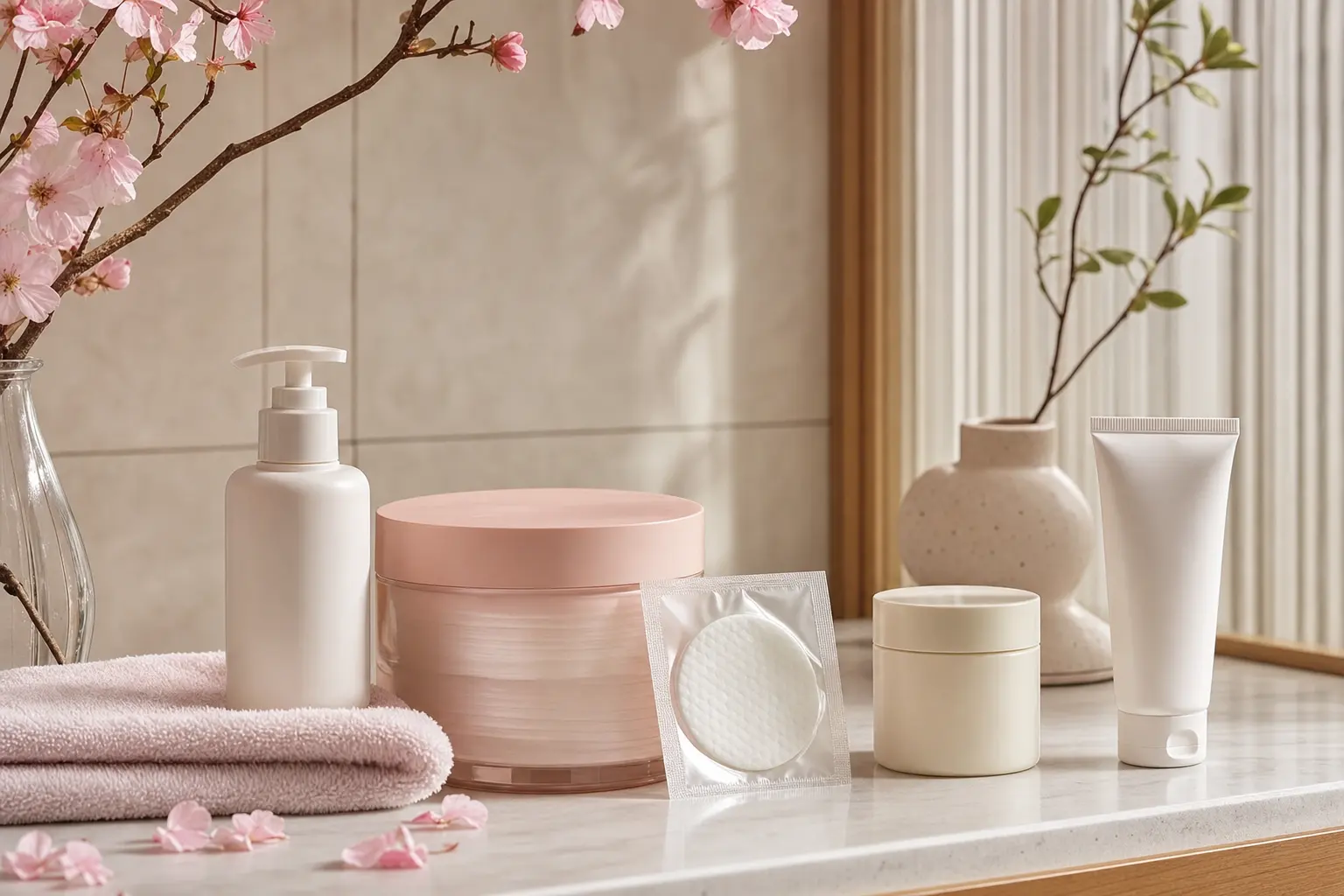
The supplied catalog lists Dr.Melaxin Bio Spicule BP Exfoliating Pad as a 70-pad, 165-milliliter product. The manufacturer page documents a dense spicule mesh pad and an AHA, BHA, PHA and LHA complex stated at 1.5% [4]. The catalog positions it for pore refinement, smoother texture, brightening and wrinkle-improvement care, while the manufacturer page describes it as an exfoliating softening pad.
That construction is more involved than a standard pre-soaked cotton pad. You are considering spicule material, several exfoliating acid categories and wiping in one product. The manufacturer claims do not establish that the spicules penetrate to the dermis, stimulate collagen, shrink pores or outperform a simpler pad. The most useful editorial conclusion is narrower: this is a higher-complexity exfoliating treatment, not an automatic upgrade for beginners or sensitive skin.
General dermatology guidance says not to exfoliate open cuts or wounds or sunburned skin [1]. Apply that boundary here, and follow the current product label for any additional warnings. Do not combine the BP pad casually with another scrub, cleansing brush or acid treatment. A sensation that signals activity is not a reliable measure of long-term suitability.
Who might consider it?
Suppose your skin is intact, your routine is already uncomplicated and you specifically want a spicule-and-acid format rather than a basic toner pad. The BP product may fit that preference, provided you follow the current label and accept that its added mechanisms create added management. It is not the obvious pick for someone who describes their skin as reactive, uses several peeling products or simply wants a gentle daily wipe.
Compare the BP pad with the Milba Lab pad by asking what you actually need. The Milba Lab product emphasizes a dual-textured, no-rinse pad with AHA, BHA and fig-related ingredients. The BP pad adds spicule material and a four-acid-category complex. More components may sound more advanced, but they do not remove the need for a cautious schedule or prove a superior cosmetic result.
Build an exfoliation routine without stacking irritation
A practical order of operations
Start with the product label, your skin condition and the rest of your routine. Cleanse as directed, apply only one exfoliating format in the same routine, and follow a rinse-off product with the instructed rinse. A no-rinse pad should not be followed immediately by a scrub-gel simply because both products feel different.
After exfoliation, moisturizer is a useful supporting step because exfoliation can be drying; the AAD recommends applying moisturizer immediately afterward [1]. If an exfoliating product contains AHA, plan sun protection carefully. FDA guidance recommends sunscreen, protective clothing and limited sun exposure while using an AHA product and for a week after stopping [6]. Similar caution is sensible for the listed AHA-containing facial pads, while the exact product label remains the authority for use instructions.
- One exfoliant at a time: do not combine the Milba Lab pad, face scrub-gel and BP pad in one routine.
- Separate strong active nights: retinol, retinoids and benzoyl peroxide can increase sensitivity or peeling, so stacking them with exfoliation may worsen dryness or breakouts [1].
- Use light contact: a pad needs controlled passes, not pressure; a scrub needs gentle massage, not vigorous polishing.
- Pause for warning signs: persistent redness, burning, swelling, itching or prolonged stinging means the routine needs reassessment.
Frequency is not a competition. The more aggressive the combined exfoliation, the less often it generally needs to be done [1]. A product marketed for daily use still has to be reduced or stopped if your skin is not comfortable. If you are unsure about a skin condition or repeated irritation, professional medical advice is more appropriate than adding a stronger exfoliant.
Where SPF fits
Exfoliation does not replace sunscreen, and sunscreen does not make an overly aggressive routine safe. Think of daytime protection as part of the same decision, especially when an AHA-containing pad is used regularly. For shoppers choosing between several facial treatments, the best product is the one you can use according to its directions while maintaining the rest of the routine.
Three shopper situations and the final buying rule
Situation one: you want a simple texture step
Imagine normal-to-dry skin, no active irritation and a dislike of rinse-off products. Start with the simplest facial pad that matches your preference, such as MEDIHEAL Yulpi Exfoliating Smoothing Pads. Its documented appeal is practical: pre-soaked thick cotton pads, a stated gentle daily-use position and chestnut-shell extract. Keep contact light and do not treat the “daily” description as a reason to ignore discomfort.
Situation two: your main concern is a congested-looking surface
Imagine combination or oily skin that wants an active, no-rinse step. Milba Lab Jeju Fig Facial Exfoliating Peeling Toner Pad is the more relevant format because its catalog documents AHA, BHA, fig extract or enzymes, a dual texture and no-rinse use. The tradeoff is a higher ingredient and friction load than a basic pad. Introduce it cautiously, avoid same-night scrubbing and use sun protection when following an AHA-containing routine.
Situation three: you want a treatment sensation
Imagine intact skin and a preference for a rinse-off massage or spicule format rather than a gentle maintenance step. The Dr. Melaxin face scrub-gel gives you a defined massage-and-rinse routine, while the Dr.Melaxin Bio Spicule BP Exfoliating Pad adds spicule material and multiple acid categories. Neither should be selected just because it sounds stronger. Choose the face scrub when you want a conventional massage step and can control pressure; consider the BP pad only when you understand that its more complex construction demands more caution.
The final rule is straightforward: for routine facial texture care, choose the lowest-friction product that clearly fits your concern and follow its label frequency. Move toward the face scrub when rinse-off massage is genuinely what you want, not because friction equals effectiveness. Keep the body spray on the body. Treat the spicule pad as an advanced-format option rather than a universal replacement for a simple pad.
That approach leaves room for preference without letting packaging language decide for you. Compare the exact ingredients, fabric or massage method, frequency and skin area, then make the purchase that your routine can sustain. You can browse the wider skin-care selection once that decision is clear.
Frequently Asked Questions
Are Korean exfoliating pads better than scrubs?
Neither format is inherently better. Pads can deliver acids or enzymes, while scrubs provide a rinse-off massage step that depends heavily on pressure and duration. For facial texture care, a smooth, clearly labeled pad may be the more manageable starting point, especially when skin is dry, sensitive or acne-prone, but the pad’s texture still matters.
Which is better for clogged pores: a pad or a scrub?
A BHA-containing pad has a more directly documented pore-oriented mechanism than a plain abrasive scrub, but the listed formulas do not provide enough concentration, pH or clinical comparison data to rank them. Milba Lab Jeju Fig Facial Exfoliating Peeling Toner Pad contains AHA and BHA according to the catalog, while the BP pad combines several acid categories with spicule material. Choose cautiously and do not assume a stronger sensation means better pore results.
Can I use an exfoliating pad and scrub on the same day?
It is better not to stack them casually. Using a pad and a massage-based scrub together increases the total exfoliating load, particularly when the pad contains acids or textured fabric. Start with one format, follow its label, moisturize afterward and separate it from retinoids, retinol or benzoyl peroxide unless a qualified professional advises otherwise.
Can I use the MEDIHEAL Yulpi pads every day?
The catalog positions MEDIHEAL Yulpi Exfoliating Smoothing Pads for gentle daily exfoliation, but that claim does not override your skin’s response or the current label. If you notice burning, persistent redness, peeling or stinging, reduce frequency or stop. The product’s stated sensitive-skin suitability is a brand claim, not independent proof for every user.
Are face scrubs suitable for acne-prone skin?
Acne-prone skin may find mechanical exfoliation too irritating, so forceful polishing is not a sensible default. The American Academy of Dermatology recommends considering skin type when selecting an exfoliation method and says some acne-prone users may prefer a mild chemical exfoliant [1]. If your concern is ongoing acne rather than occasional roughness, seek appropriate acne guidance instead of escalating mechanical exfoliation.
Should I use sunscreen after an AHA exfoliating pad?
Yes, sun protection is a sensible part of an AHA routine. FDA guidance says topical AHA cosmetics may increase sun sensitivity during use and for up to one week after stopping, and recommends sunscreen, protective clothing and limited sun exposure [6]. Follow the product label as well, since formulas and directions differ.