
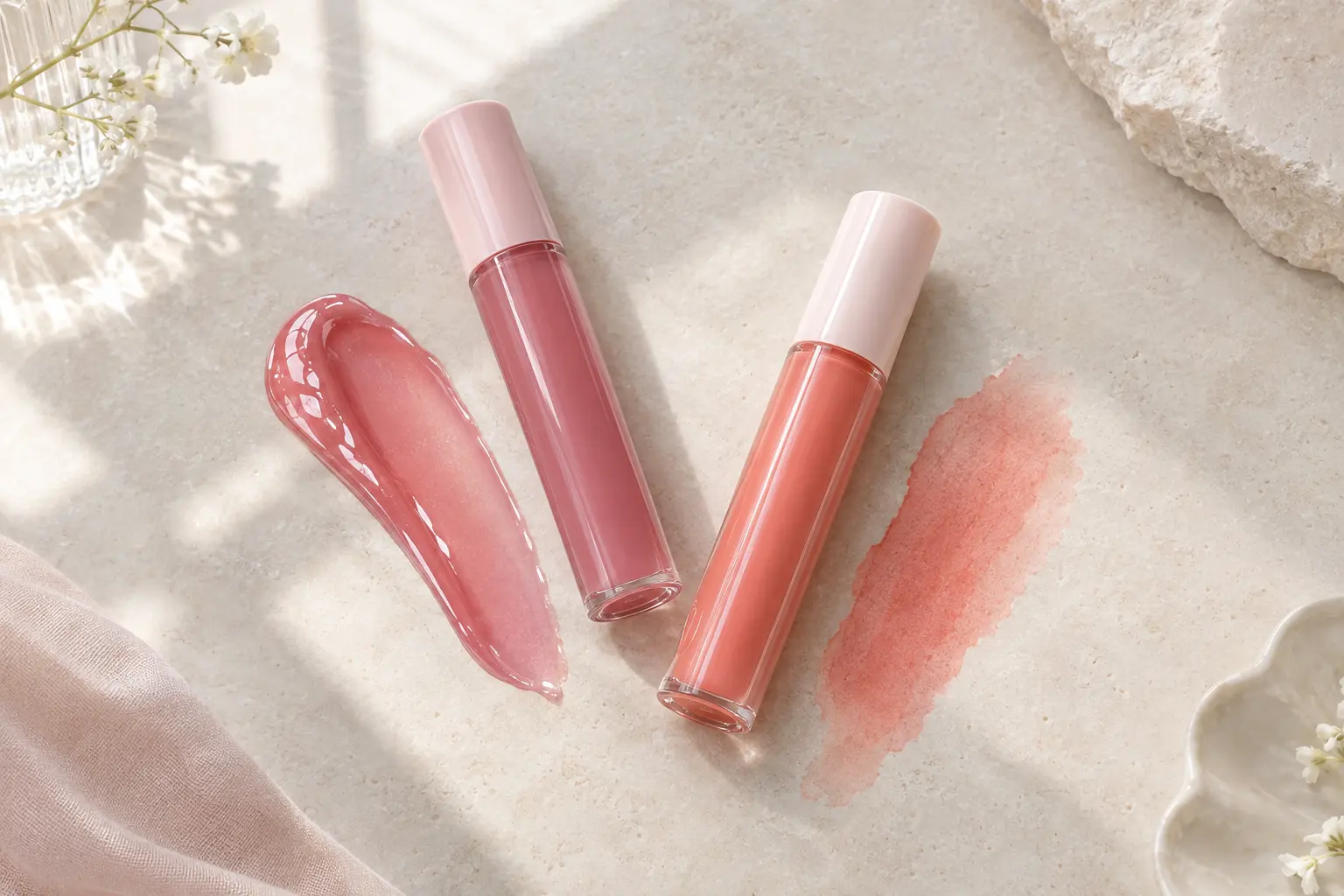
Any honest Korean lip tint long-lasting comparison has to start with an awkward fact. Nobody has published an independent, instrument-measured wear test for the two JUNGSAEMMOOL LIP-PRESSION tints most shoppers weigh against each other. Both are sold as long-wear. Both come in a 4 g size. So the real question is not which one lasts longest. It is which kind of lasting you want, and how much you need to know about what is in the tube.
The short version: if you want a glassy shine and a full, shade-by-shade ingredient list you can check against known sensitivities, the Glow Lasting Tint is the easier buy. If you care most about color that sinks in and reads like a watercolor stain under a clear wet layer, the Water Lasting Tint fits that brief. The catch is that its full ingredient list was not publicly readable at the time of writing. The rest of this piece explains why that difference matters more than any hour count.
What “Long-Lasting” Really Means on a Korean Lip Tint
In general formulation terms, most long-wear tints hold their color in two ways at once. The first is staining: soluble dyes color the very top layer of the lips, so less is left on the surface to smear. The second is a film of oils, silicones and polymers that sits on top. The film carries the shine and largely decides how much color ends up on your cup.
Red No. 227, which appears in every published Glow Lasting shade list, is one example of the dye side. The Korea Cosmetic Association’s ingredient dictionary lists it as Fast Acid Magenta, CI 17200, a monoazo dye used as a colorant [5]. Dye-based color is the usual reason a tint can fade toward a soft flush rather than lifting off in patches the way a pigment-heavy lipstick can, though how far that holds for any one tint is untested.
The film side is where formulas have changed most. A Korean beauty magazine report from July 2026 described a move toward hybrid lip products that stay fixed without transfer while keeping a glowy finish [8]. The same report described the old route to staying power, matte fixing formulas, as one that made wearers put up with dryness and stiffness [8]. Both JUNGSAEMMOOL tints sit on the glossy side of that shift, so don’t judge them like a matte liquid lipstick.
Why there is no hour count here
Hour claims on lip products almost always come from the brand. None of the sources behind this comparison includes an independent wear test for either tint. Wear also depends heavily on you: how often you drink, whether you eat oily food, whether you wear a mask, and how dry your lips tend to be. Ranking these two by hours would be made-up precision.
Here is what you can compare reliably:
- Stated finish: glass-like shine versus a watery polish layer over color.
- How the color is described: buildable tint versus color that sinks in and slowly deepens.
- What is disclosed: a full ingredient list for each shade versus an ingredient count with no published list.
- Practical details: applicator, shade range and how long it keeps after opening.
The industry uses the words “tint” and “stain” loosely. Read them as hints about how a product behaves, not as technical categories. The ingredient list and the finish description tell you far more.
Glow Lasting vs Water Lasting: The Long-Wear Tint Comparison Side by Side
Side by side, the two LIP-PRESSION tints look like siblings with different priorities. They share a brand, a 4 g size and a five-shade range. The differences lie in finish, in how the color is meant to build, and in how much you can check before you buy.
| What you’re comparing | LIP-PRESSION Glow Lasting Tint | LIP-PRESSION Water Lasting Tint |
|---|---|---|
| Finish (brand description) | Glass-like shine without stickiness | Clear “water polish” layer over color |
| Color behavior | Buildable tint; brand says the glow builds with each layer | Watercolor-like color that slowly deepens after application |
| Applicator | Not described by the brand or retailers | “Easy-fessional iron tip” described as closing without gaps |
| Shades | Soft Beige, Pinky Mauve, Fall In Red, More Deep Plum, Dolce Rose | Coral Drizzle, Dew Scarlet, Mist Orchid, Pink Rill, Rose Wave |
| Ingredient disclosure | Full list published for each shade | No full list found publicly; read the carton |
| Keeps after opening | 12 months | Check the open-jar symbol on the pack |
The finish rows are worth a closer look. The brand’s official mall calls the Glow Lasting Tint a glow tint that creates a glass-like shine without stickiness [1]. A Korean retailer quotes the Water Lasting Tint’s tagline as a watery-shine layer tint that rises over color that sinks in [3]. Put simply, Glow Lasting leads with shine, while Water Lasting leads with stain and adds a clear wet layer on top.
That difference changes what “lasting” looks like by mid-afternoon. With a shine-first formula, the first thing you’ll notice wearing off is the gloss, and you’ll judge it by whether the glass effect survives. With a stain-first formula, you’ll judge it by whether the color left on your lips still looks even after the wet layer is gone.
The disclosure gap
The official mall publishes a complete ingredient list for each of the five Glow Lasting shades [1]. For Water Lasting, a third-party ingredient database counts 33 ingredients in the Dew Scarlet shade but doesn’t show what they are [4]. This isn’t a mark against the formula. It just means the printed carton is your only reliable reference.
If you’ve never reacted to a lip product, the gap is a small inconvenience. If you have, it can decide the purchase. Checking a list before you buy is far easier than working out a reaction afterward.
Inside the Glow Lasting Tint: Reading a Water-First Formula
The Glow Lasting ingredient list explains its texture claims better than the marketing does. Every published shade list begins with purified water, followed by diphenyl dimethicone, bis-diglyceryl polyacyladipate-2, diisostearyl malate, octyldodecanol and hydrogenated polyisobutene [1]. That order matters, because ingredients are listed from highest to lowest concentration. This is a water-based product carrying a meaningful share of oils, not an oil gloss with a little water added.
What each group of ingredients does
- Diphenyl dimethicone is a phenyl silicone. Formulators use this type of silicone for shine and slip, so it likely does much of the work behind the glass-like look.
- Bis-diglyceryl polyacyladipate-2, diisostearyl malate and hydrogenated polyisobutene are emollients often used in lip products for cushion and gloss. Hydrogenated polyisobutene in particular is a familiar gloss base.
- Polysorbate 60, sorbitan isostearate and cetyl PEG/PPG-10/1 dimethicone are emulsifiers. They keep oil and water blended into one stable texture.
- Hydroxyethyl acrylate/sodium acryloyldimethyl taurate copolymer is a polymer thickener. It helps a watery base hold its body.
- Squalane and tocopherol appear later in the list. Read them as supporting conditioning and antioxidant ingredients, not headline actives.
This structure fits how an international retailer describes the product: a water tint with oil particles wrapped in moisture that looks glossy without stickiness [2]. The product listing describes it as an “oil-in-water” formula with a “Triple Layer Coating.” Treat the coating name as the brand’s term for its finish. No public technical explanation of the three layers was available.
The fragrance line
Fragrance appears in every published Glow Lasting shade list [1]. Many people never notice it. But if you already know fragrance bothers your lips, that line matters more than any finish claim. The safety section below explains why.
What buyers on the brand’s mall say
The brand’s Korean mall showed 24 reviews, 23 rated very satisfied and one satisfied [1]. In the visible reviews, buyers of Pinky Mauve and Soft Beige praised the color and smooth application, and one noted that it goes on thin while still showing full color. One buyer posted the same review under both a Soft Beige set and a Dolce Rose set praising the wear, so that is a single opinion rather than several. These are self-selected comments on the seller’s own page. Read them as useful color and texture impressions, not a wear test.
Who it suits: you want a glossy, glassy finish that doesn’t feel sticky, you’d like to read the full ingredient list for your exact shade before buying, and you’re happy to retouch the shine during the day. Who should think twice: anyone who reacts to fragrance or to one of the dyes named in the safety section, and anyone who wants a dry, transfer-proof matte finish.
Water Lasting Tint: The Stain-First Option and Its Unknowns
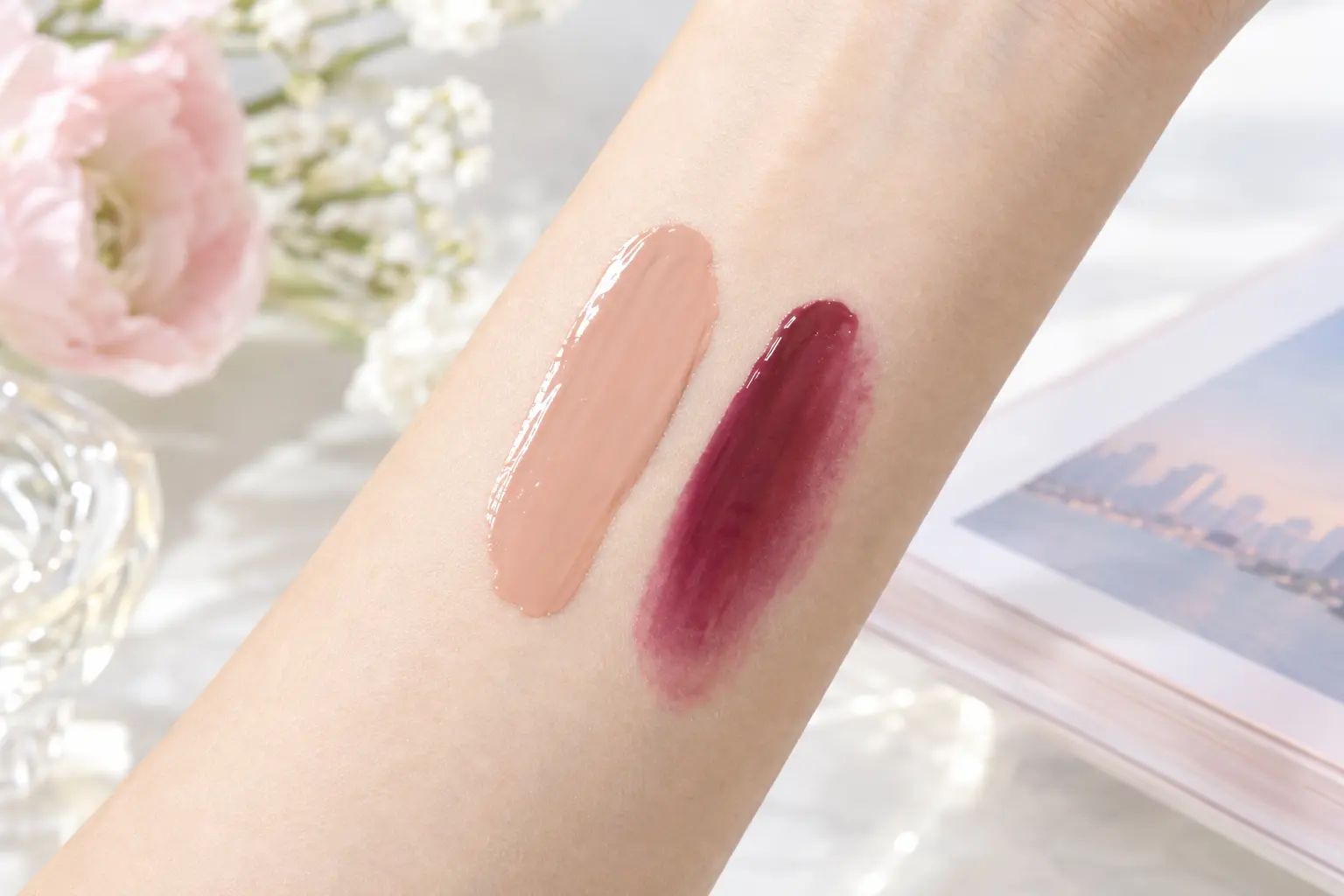
The Water Lasting Tint is built around a different idea: color that sinks in first, with shine added on top. The brand describes the color as slowly deepening after application and ending in a clear “water polish” finish, which it calls a Water Light Coating. The color is described as watercolor-like, and the formula as moisture-rich and resistant to smudging.
In practice, that description points to a tint you build gradually. You’ll judge it by how even the stain looks, not by how much gloss it holds. If your issue with glossy tints is that the color vanishes along with the shine, this approach targets that problem directly, at least on paper.
The applicator detail
The product listing highlights an “Easy-fessional iron tip” that closes without gaps and is meant to give smoother, more even application. The brand hasn’t published technical details. Even so, the stated purpose matters for a stain-first product. Uneven application tends to show more on a stain than on a gloss, because a stain records where it landed. A precise, clean-closing tip is the kind of feature that helps with that.
What the sources don’t establish
- No publicly readable full ingredient list was found, so this article makes no claims about specific Water Lasting ingredients.
- The 33-ingredient count for Dew Scarlet comes from a third-party database that doesn’t publish the list [4]. Ingredient lists can also differ between shades.
- No independent evidence shows how its wear compares with Glow Lasting.
- The product listing names five shades (Coral Drizzle, Dew Scarlet, Mist Orchid, Pink Rill and Rose Wave) but doesn’t describe their undertones in detail.
Who it suits: you want color that still looks deliberate once the shine is gone, you like a clear wet finish rather than a heavy gloss, and you can read the carton’s ingredient list before opening. Who should think twice: anyone who needs to screen ingredients before buying and has no way to see the carton first.
How Shade Formulas Differ, and Why That May Change How They Fade
The Glow Lasting shades are not identical formulas, and the published lists show exactly where they differ. The lists for Soft Beige, Dolce Rose and Pinky Mauve include titanium dioxide, aluminum hydroxide and ammonium polyacrylate [1]. The lists for Fall In Red and More Deep Plum include none of these [1]. Titanium dioxide is a white pigment that US regulators permit in products for general use, including lipsticks [6].
No one has published shade-level wear data for either line. What follows is reasoning from the ingredient lists, not a measured result.
A white pigment makes a color more opaque and milky, which fits the retailer’s description of Soft Beige as a warm milky beige [2]. In general terms, insoluble pigment sits on the lip surface, while soluble dye can color the lip itself. So the milky shades may rely a little more on a surface film, and the deeper shades more on dye. Whether that actually changes how each one fades on your lips is untested.
- Milky or nude shades (Soft Beige, Pinky Mauve): their lists include a white pigment, so they may leave a softer, more opaque film. A film that sits on top is the part most exposed to eating, drinking and rubbing, which is why these shades could fade differently from the deep ones. How they actually fade on your lips has not been tested.
- Deep or vivid shades (Fall In Red, described as a vivid ruby red, and More Deep Plum, an orchid plum [2]): their lists name dyes but no titanium dioxide. Without a white pigment, the color depends on dye, so whatever remains later in the day may read as translucent color rather than an opaque film. Again, no wear test confirms how this plays out.
- Cool rose (Dolce Rose [2]): its list includes titanium dioxide, so the same pigment reasoning as the milky shades applies, even though the shade reads cool rather than nude.
Dye differences between shades
The colorants also differ from shade to shade. Soft Beige lists Yellow No. 4 alongside Yellow No. 5, Red No. 227 and Blue No. 1 [1]. Dolce Rose adds Red No. 102 [1]. If you know you react to a particular dye, this is exactly why “same product line” doesn’t mean “same ingredients.” The international retailer also notes that ingredients can vary between options and that the packaging is the most current source [2].
Nobody has published shade-level ingredient data for Water Lasting, so the same principle applies but you can’t check it ahead of time. Treat each Water Lasting shade as its own formula and read that shade’s carton.
Long-Wear Lip Tints on Sensitive Lips: What to Check First
This is the one place where safety outranks finish. A dermatology reference written by a dermatologist identifies lipsticks and lip-care products as the most common cause of allergic contact cheilitis (inflamed lips) in women [7]. The same reference says these reactions mainly affect the vermilion margin, where the red of the lip meets the surrounding skin [7]. If tint has ever left you with a dry, itchy or scaly outline, that pattern is worth taking seriously.
Matching the label to known triggers
The reference lists fragrance mix among the perfume and flavoring allergens reported in lip products [7]. It also names diisostearyl malate, a fatty ester used for cushion and texture, and vitamin E among the components reported in such cases [7]. The Glow Lasting lists include fragrance, diisostearyl malate and tocopherol [1].
Be clear about what that means. These are ingredients reported in case literature. It doesn’t predict that this tint will cause a reaction, and most wearers of products containing them have no problem. It’s a checklist for people who already have a known sensitivity, ideally confirmed by a dermatologist.
The colorant limits
Korea caps Red No. 227 at 3% in products meant for the lips [5]. The FDA’s color-additive table limits D&C Red No. 33, the US name for the same CI 17200 dye, to 3% or less in lipstick products [6]. These are regulatory limits for formulators. They don’t tell you how much a given tint contains, but they do show that this dye is regulated specifically for lip use in both markets.
Label cautions and what to do if lips react
The official label advises consulting a specialist if redness, swelling or itching appears during or after use, including after sun exposure [1]. It also says not to apply the product to areas with wounds [1]. Sun exposure is a useful reminder that lips get UV too. If your face routine is already built around reactive skin, our guide to matching sunscreen filters to sensitive skin uses the same label-reading habits.
- Stop using the tint at the first sign of a reaction. Don’t layer another product over the irritation to cover it.
- Try not to lick your lips. The reference notes that lip-licking in response to dryness can keep irritation going even after you stop the original product [7].
- If it keeps happening, ask about patch testing. The reference recommends testing your own products as well, because in many cases people react only to their own items [7].
Applying a Stain-Plus-Shine Tint So It Wears as Intended
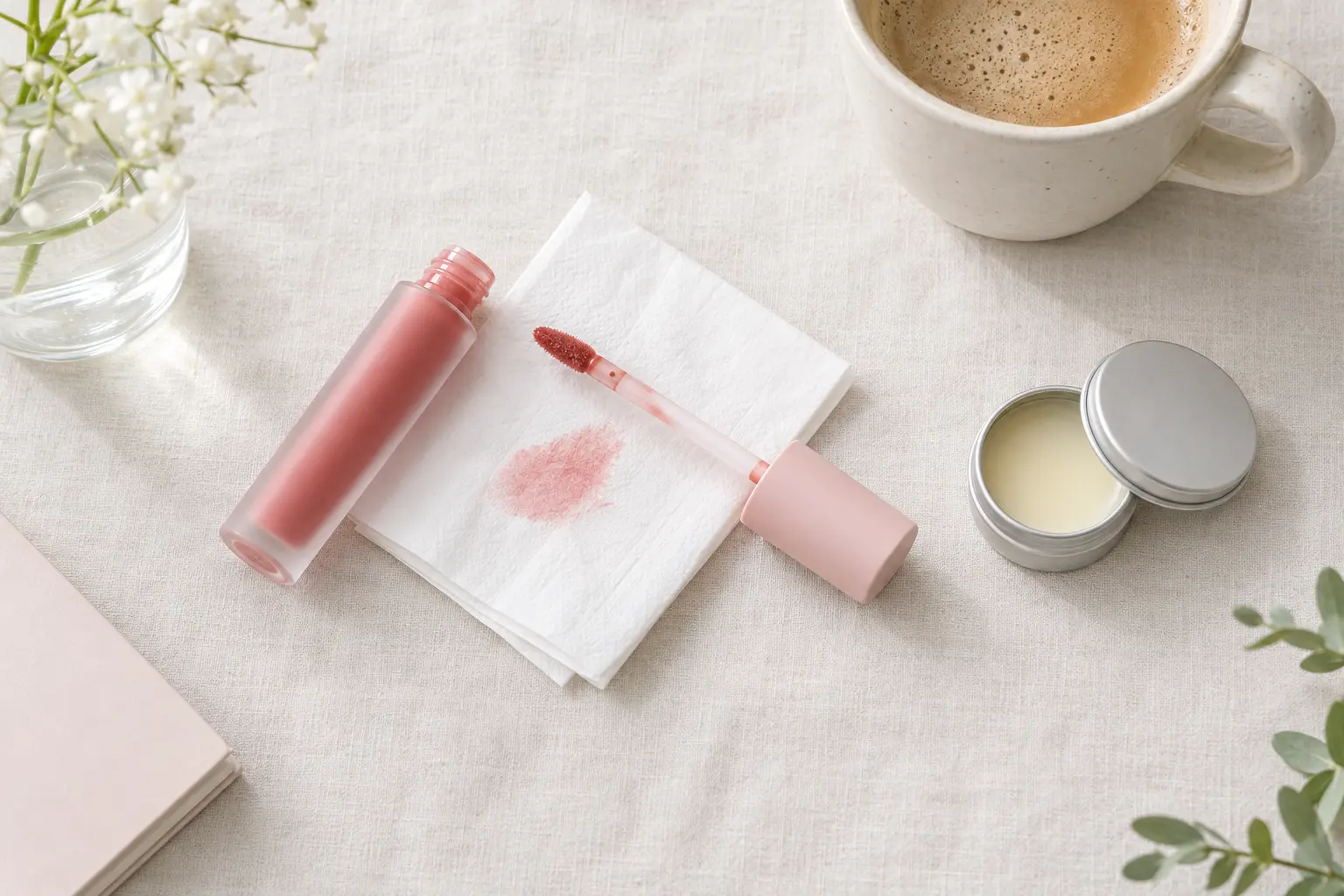
Technique is one of the few wear factors you control, and the retailer’s main direction is simple. The retailer’s directions for Glow Lasting say to apply a thin layer to the lips [2]. In general, a thick coat leaves more product sitting on the surface that has to wear off, and that surplus is a common source of patchiness, especially with stain-led products.
A sequence that respects the formula
- Finish your skincare first. Let your skin-care steps settle before you reach for lip color, so moisturizer or face oil doesn’t drift onto your lips.
- Start with clean, dry lips. If you used a rich balm earlier, blot it off. Leftover oil can stop dye from settling evenly.
- Apply one thin layer to the center of the lips and press your lips together lightly, or spread it with a fingertip toward the edges. A diffused edge tends to look more natural as it fades than a sharp line.
- Give the stain a moment before adding more. Water Lasting is described as slowly deepening, so judge the color after it settles, not the second it goes on.
- Build in thin passes. For Glow Lasting, the brand says the glow builds with each layer. Two thin passes give you more control than one heavy one.
Retouching without patchiness
When the shine fades, you don’t need to start over. If the stain still looks even, a thin pass of the same tint brings the finish back. If the color has worn away in the center but stayed at the edges, blot the area before reapplying. Otherwise the lip edge can build up darker with each retouch.
If your lips feel dry
Glossy long-wear formulas aim to avoid the tightness of old matte formulas, but lips vary. If yours feel dry after several hours, a thin layer of plain lip balm on top is a common fix. It will soften the finish and may lift some color, so treat it as a comfort step, not a wear booster. Follow the product label wherever it differs from this general advice.
Choosing Between Glow and Water Lasting: Three Situations
Without a wear test, the right choice is the tint whose way of lasting matches your day. Here’s the decision rule in practice, using three example situations.
Situation one: long workdays with coffee and a mask
Say your lips spend hours under a mask or touching a mug, and you rarely have time to retouch. What you need from a tint here is color that still looks even after the shine is gone. The Water Lasting Tint’s stain-first description, with color that sinks in under a watery top layer, matches this need more closely on paper. Before opening it, read the carton’s full ingredient list, since it isn’t easy to find elsewhere.
Situation two: you’ve reacted to lip products before
Say you’ve had an itchy lip border after a fragranced balm, or a dermatologist has confirmed a specific allergen. Disclosure matters more than finish for you. Glow Lasting’s published list for each shade lets you check before you buy. If fragrance is your known trigger, though, that same list tells you to skip it, because fragrance appears in every published shade. In that case, neither tint is clearly safer for you based on the available evidence. Hold off until you can read the Water Lasting carton.
Situation three: an evening look that needs real shine
Say you want the glass-like finish that photographs well, and you don’t mind touching it up after dinner. Glow Lasting is the more direct fit, because shine is the main thing it’s designed to deliver. The lists for Fall In Red and More Deep Plum don’t include titanium dioxide [1]. If you want a more see-through glass effect, those two are a reasonable starting point, though that is reasoning from the lists rather than a tested result. For a softer, milkier look, start with Soft Beige.
When the tube arrives
- Check the dates. The brand’s mall lists example batches, such as Pinky Mauve made on 2025-08-18 with a use-by date of 2027-12-26 [1]. Note your own batch date and the 12-month open-life [1].
- Store it properly. The label says to keep it out of reach of children and away from direct sunlight [1].
- Judge it fairly. Give it a few normal days before deciding. One day with an oily lunch doesn’t tell you much.
If neither finish fits, the next step is to change the category, not just the shade. You can compare other lip textures in our beauty and personal-care selection once you know whether you value shine, stain or disclosure most.
Frequently Asked Questions
Which JUNGSAEMMOOL lip tint lasts longer, Glow Lasting or Water Lasting?
No independent, measured comparison exists, so any claim that one lasts longer would be guesswork. Both are sold as long-wear tints in a 4 g size. The real difference is the kind of wear. Glow Lasting leads with a glass-like shine, while Water Lasting leads with color that sinks in under a clear watery layer. Choose the finish that matches how you actually wear lip color.
Does the Glow Lasting Tint transfer?
An international retailer describes it as giving a long-lasting glowy coating without transferring. That's a marketing claim, not a measured result. Transfer also depends on how thickly you apply it and what you eat or drink. Thin layers that have time to settle give any glossy tint its best chance.
Is a long-lasting Korean lip tint drying?
Glossy hybrid tints are designed to avoid the tight, dry feel of older matte fixing formulas, but lips differ. If yours feel dry after several hours, a thin layer of plain balm on top is a common fix. Expect it to soften the finish and possibly lift some color. If dryness comes with itching or scaling at the lip border, stop using the product, because that pattern can point to a reaction rather than simple dryness.
Do the five Glow Lasting shades have the same ingredients?
No. The brand's published lists differ by shade. Soft Beige, Pinky Mauve and Dolce Rose include titanium dioxide, while Fall In Red and More Deep Plum don't. The dyes vary as well: Soft Beige adds Yellow No. 4 and Dolce Rose adds Red No. 102. Always check the list for the exact shade you're buying.
Are these tints suitable for sensitive lips?
The brand lists Glow Lasting as suitable for all skin types, but no tint suits every sensitive person. Glow Lasting contains fragrance and diisostearyl malate, both of which appear in dermatology literature on lip-product allergies. That doesn't mean they'll cause a reaction for you. If you have a confirmed sensitivity, compare it against the shade's list or the Water Lasting carton, and stop at the first sign of redness, swelling or itching.
How long does the tint keep after opening?
The brand recommends using Glow Lasting within 12 months of opening. Its mall also lists example batches with use-by dates, so note your tube's manufacture date when it arrives. For Water Lasting, check the open-jar symbol on the pack. Keep either tint away from direct sunlight, as the label instructs.