A Ryo hair loss shampoo guide needs one correction before it gives you buying advice: the two listed Root:Gen products are not both shampoos. The supplied EmpressKorea catalog contains a scalp essence and a treatment, so the useful decision is where your concern begins.
If the priority is direct scalp application, the essence is the more relevant format. If your hair looks fine, limp, tangled, or easily weighed down, the Women’s Treatment has the clearer role. That distinction prevents the most common mistake: expecting a treatment-format product to address the scalp in the same way as a scalp-applied essence, or treating cosmetic care as a guaranteed follicle-regrowth solution.
What this Ryo hair loss shampoo guide can actually recommend
Search language often compresses several different products into one phrase. Someone looking for a hair-loss shampoo may really want less visible shedding in the shower, a cleaner-feeling scalp, more crown volume, softer lengths, or reassurance that a widening part is being addressed. Those are different jobs, and a product can be relevant to one without solving the others.
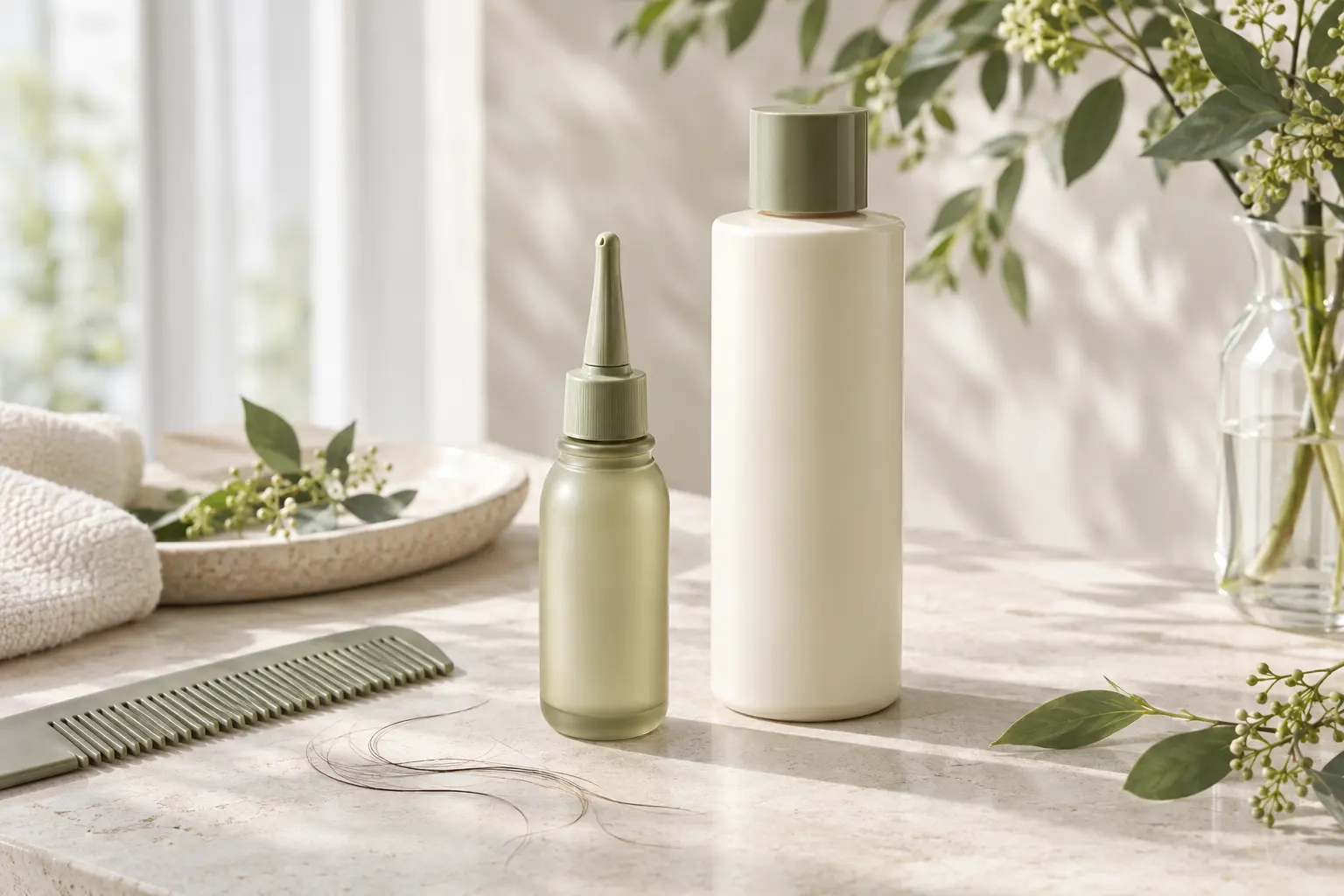
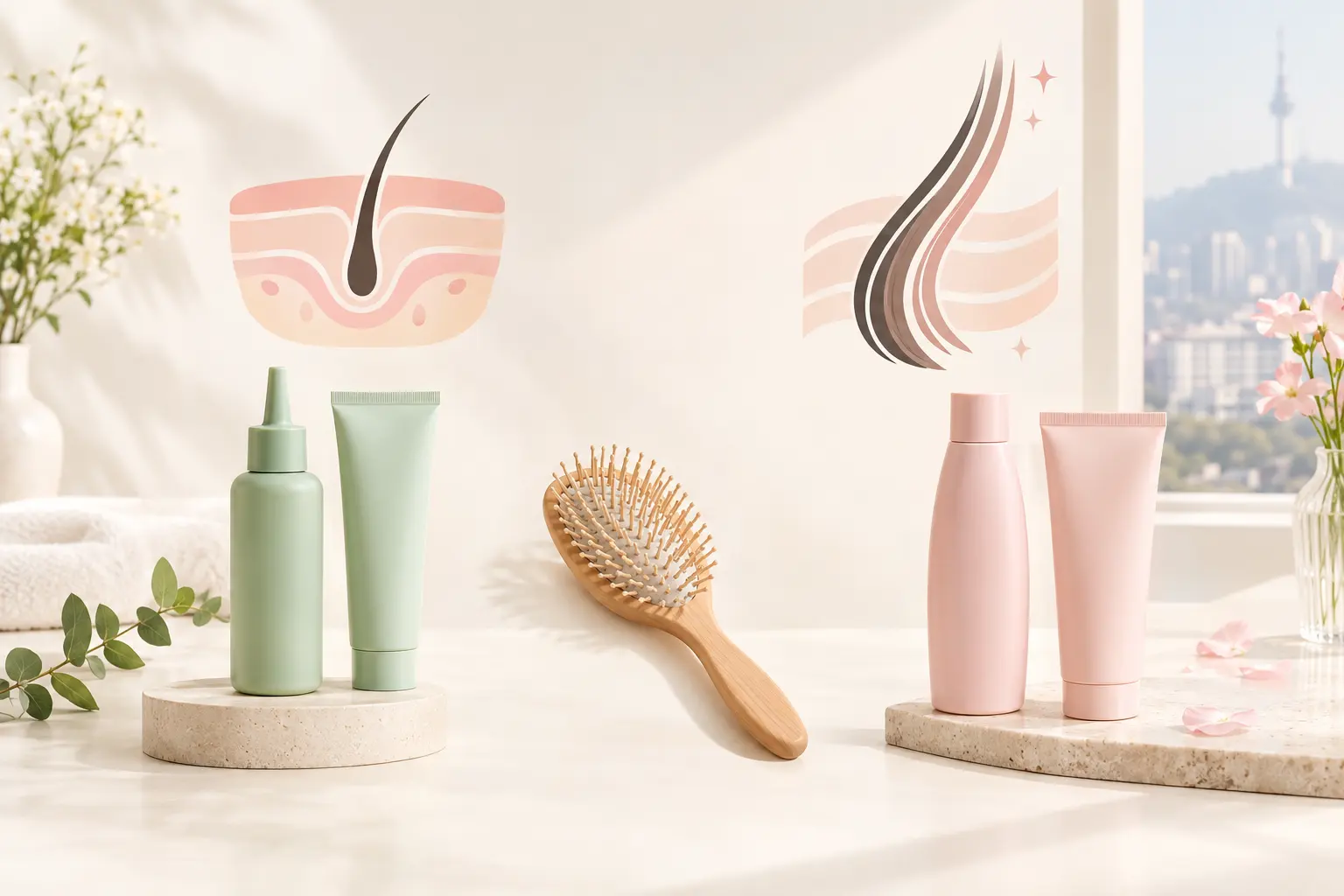
The supplied EmpressKorea catalog contains two Root:Gen options. Ryo Root:Gen Hair Loss Care Scalp Essence 80mL is a scalp-applied product with a precision massage applicator. RYO Root Gen For Women Hair Loss Care Treatment 515ml is a treatment-format product intended for the hair-care step. The official Ryo catalog lists Root:Gen products in shampoo, treatment, and scalp-essence formats [1]. Separately, the supplied catalog for this article contains the two products named above.
That makes the first decision less dramatic and more useful. Ask where the problem appears:
- Scalp concern: choose the scalp-applied essence format.
- Fine or fragile-looking lengths: consider the treatment.
- Possible medical hair loss: use cosmetic care as support, not as a diagnosis.
The American Academy of Dermatology explains that hair-loss shampoos may help hair retain moisture, look fuller, or experience less breakage, but they cannot regrow hair or prevent hair loss from worsening [3]. That category-level guidance does not test either Ryo product. It does, however, set a sensible boundary for the claims you should accept.
In practical terms, the catalog does not give you a single winner for every concern. It gives you two routine tools with different contact points. The right purchase is the one whose format matches the part of the hair-care problem you can actually observe.
Scalp essence versus treatment: the format decides the job
Scalp-applied and treatment-format products occupy different points in a routine. The essence is directed to the scalp and massaged evenly according to its listed directions. The Women’s Treatment is positioned as a hair-conditioning step. Neither format is automatically superior; the better choice depends on whether your priority is the scalp surface or the hair fiber.
The direct-scalp option
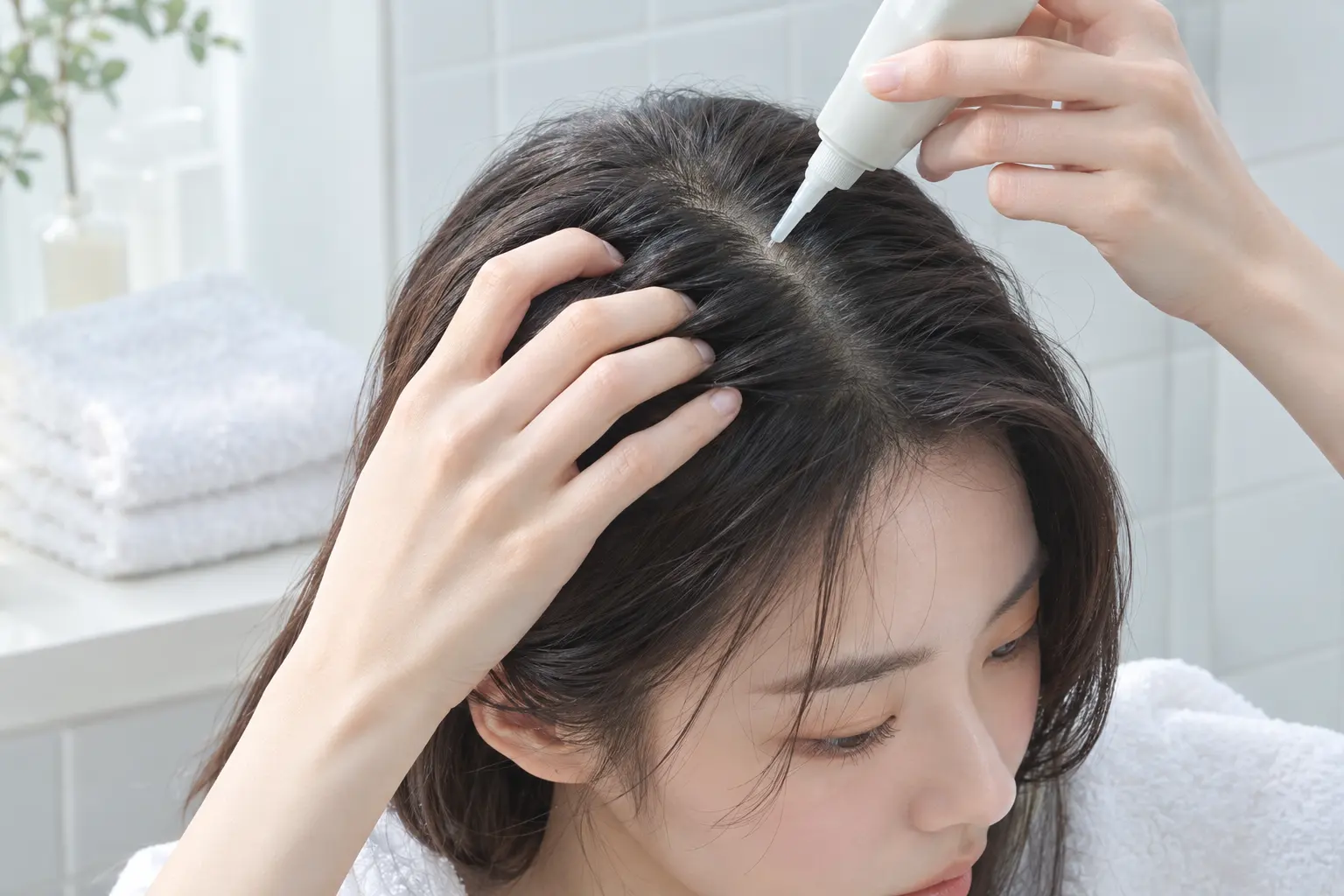
The Scalp Essence has an 80mL size and a precision massage applicator designed to deliver the product directly to the scalp rather than broadly over the hair. Its listed use is straightforward: apply an appropriate amount to the scalp and massage evenly [2]. This construction makes sense when you want to target the scalp without deliberately spreading the product through the lengths or when your concern involves itch, dandruff, dryness, or an oily-feeling scalp.
The catalog describes the essence as dermatologically tested, vegan-certified, and suitable for scalp-focused care. Those are product attributes, not proof that every cause of hair shedding will respond. Its catalog claim of improvement in dandruff, itchiness, and hair-loss symptoms over four weeks should remain an attributed product claim rather than a promise of follicle regrowth.
The conditioning option
The Women’s Treatment is a 515mL product marketed for women’s hair-loss-care routines, lightweight volume, and non-greasy softness. Its role is most plausible when hair looks thinner because the lengths are fine, flat, rough, or prone to tangling. Conditioning may improve manageability and make handling gentler, but that is different from stopping follicular shedding.
Use this rule: if you want a scalp step, start with the essence; if you want a hair-length step, start with the treatment. If you want both jobs, they may be complementary, but do not transfer the evidence or claims of one formula to the other.
This distinction also helps with shopping language. A product can sit in a hair-loss-care collection without being a shampoo, and a treatment can support the appearance of fine hair without being a medical intervention. Read the routine position before reading the promise.
Which Root:Gen product fits your actual hair concern?
“Thinning hair” is an appearance description, not a diagnosis. It can refer to a widening part, increased shedding, reduced crown volume, breakage, finer new growth, or lengths that collapse because of styling choices. Before buying, identify what you can observe without assuming the cause.
| Your main observation | More relevant format | Reasonable expectation |
|---|---|---|
| Itch, dandruff, or a scalp-centered concern | Ryo Root:Gen Hair Loss Care Scalp Essence 80mL | Targeted cosmetic scalp care and massage application |
| Fine-looking lengths that tangle or feel fragile | RYO Root Gen For Women Hair Loss Care Treatment 515ml | Softness, manageability, and lightweight conditioning |
| Hair that looks flat after rich products | Women’s Treatment as the conditioning step | Cosmetic volume support without assuming regrowth |
| Sudden patches, pain, inflammation, or rapid shedding | Professional assessment before relying on either | Identify the cause and choose treatment appropriately |
Imagine a reader whose scalp feels itchy and whose flakes are visible, but whose lengths are otherwise comfortable. The essence is the closer match because the application is scalp-directed. Adding a treatment might improve softness, but it would not replace the scalp-focused step.
Now imagine hair that is uniformly fine-looking, catches on the brush, and loses shape at the crown, while the scalp feels normal. The Women’s Treatment is a plausible first choice because its catalog positioning emphasizes lightweight volume and non-greasy softness. It may make existing hair look more manageable; it should not be sold as proof that follicles have become denser.
A third situation changes the recommendation entirely: a clearly defined bald patch, sudden heavy shedding, scalp soreness, eyebrow loss, or persistent rapid change. Cosmetic products can still be part of a gentle routine, but the priority is assessment. Female-pattern hair loss is progressive for many women, and similar-looking changes can have different causes, so diagnosis matters [3].
Notice the wording of the decision. It is not “the essence is stronger” or “the treatment is weaker.” The products address different visible problems. Choosing by format is more reliable than choosing by the most dramatic hair-loss wording on the label.
What is in the Ryo Root:Gen scalp essence?
The Scalp Essence has a more purposeful ingredient story than a generic hair fragrance mist. Its listed formula includes alcohol denat., menthol, glycerin, piroctone olamine, ginseng-derived ingredients, green-tea ingredients, rosemary, bergamot, lavender, ceramide NP, and phytosphingosine [2]. That list explains why the product is positioned as scalp care, but an ingredient list alone cannot establish treatment for androgenetic alopecia, alopecia areata, or another medical cause.
The useful reading of this ingredient list is practical rather than dramatic. The formula includes piroctone olamine, glycerin, menthol, fragrance, and aromatic oils. Those details help shoppers consider personal tolerance without assigning a treatment mechanism that the product page does not establish. A scalp product containing fragrance materials and aromatic oils may not suit someone who already knows that scented products trigger reactions.
The listed essence includes fragrance, bergamot, lavender, and rosemary materials. If you have eczema-prone skin, a history of contact reactions, or a reactive scalp, patch-test cautiously and stop if burning, rash, or worsening irritation appears. If a reaction persists or is severe, seek medical advice rather than trying to push through it.
How to make the applicator useful
- Part the hair enough to expose the scalp instead of spreading the product over the lengths.
- Use the applicator to target the scalp, following the current product label directions.
- Massage evenly but avoid aggressive scratching, especially if the scalp is already irritated.
- Keep the routine consistent enough to judge comfort and usability, without interpreting short-term sensation as proof of regrowth.
The catalog describes the essence as mild and dermatologically tested, and it claims clinically shown improvement in dandruff, itchiness, and hair-loss symptoms in four weeks. Treat that as the supplied product claim, not as independent clinical validation or a guarantee for every user. The formula’s strongest defensible identity here is a direct scalp-care product with a targeted applicator.
If your interest is mainly in hydration and barrier support for the face rather than the scalp, keep the categories separate. A guide to the best Korean essence for dry skin addresses a different routine decision and should not be used to infer hair-care performance.
What the Women’s Treatment can do for fine-looking lengths
The Women’s Treatment is best understood as a treatment-format conditioning product with a hair-loss-care positioning. Its catalog describes lightweight volume, non-greasy softness, quick absorption, low-molecular-weight protein ingredients, and a bergamot-lavender scent. It is also listed as vegan-certified, with a 90.8% natural-origin index calculated under ISO 16128, 95% biodegradable ingredients, and a 9-free claim. These statements describe formulation or sourcing characteristics; they do not prove hair regrowth.
That distinction matters because fine hair can look thinner for more than one reason. Breakage, tangling, static, roughness, and heavy residue can all change the visible shape of the hair. A conditioning product may improve slip and manageability, allowing you to handle the hair more gently. That cosmetic improvement should not be confused with a change in follicle density.
Why lightweight conditioning may be the better cosmetic choice
Fine-looking lengths often need enough conditioning to detangle but not so much that the roots lose shape. The Women’s Treatment is marketed around that balance: softness and volume without a greasy feel. “Quick-absorbing” and “lightweight” are catalog descriptions, not guarantees for every hair type, so the amount and placement still matter.
- Use the treatment as the hair-conditioning stage, following the current label directions.
- Prioritize the lengths where tangling and roughness occur.
- Keep expectations cosmetic: easier handling and a fuller-looking finish are different from new follicle growth.
- Consider the scent before buying if you prefer fragrance-free hair care.
The bergamot-lavender profile may make the routine more pleasant for some shoppers and less appealing for others. Scent can influence whether a routine feels usable, but it is not a strengthening mechanism. If you are buying because your hair feels thin and limp, the product earns consideration for its conditioning and volume positioning, not because fragrance signals efficacy.
The catalog’s natural-origin, biodegradable, vegan, and 9-free descriptions may matter to shoppers making formulation choices. They should remain separate from the question of whether the product treats hair loss. A purchase can satisfy a texture, sourcing, or routine preference without proving a medical result.
How to build a sensible Root:Gen wash-day routine
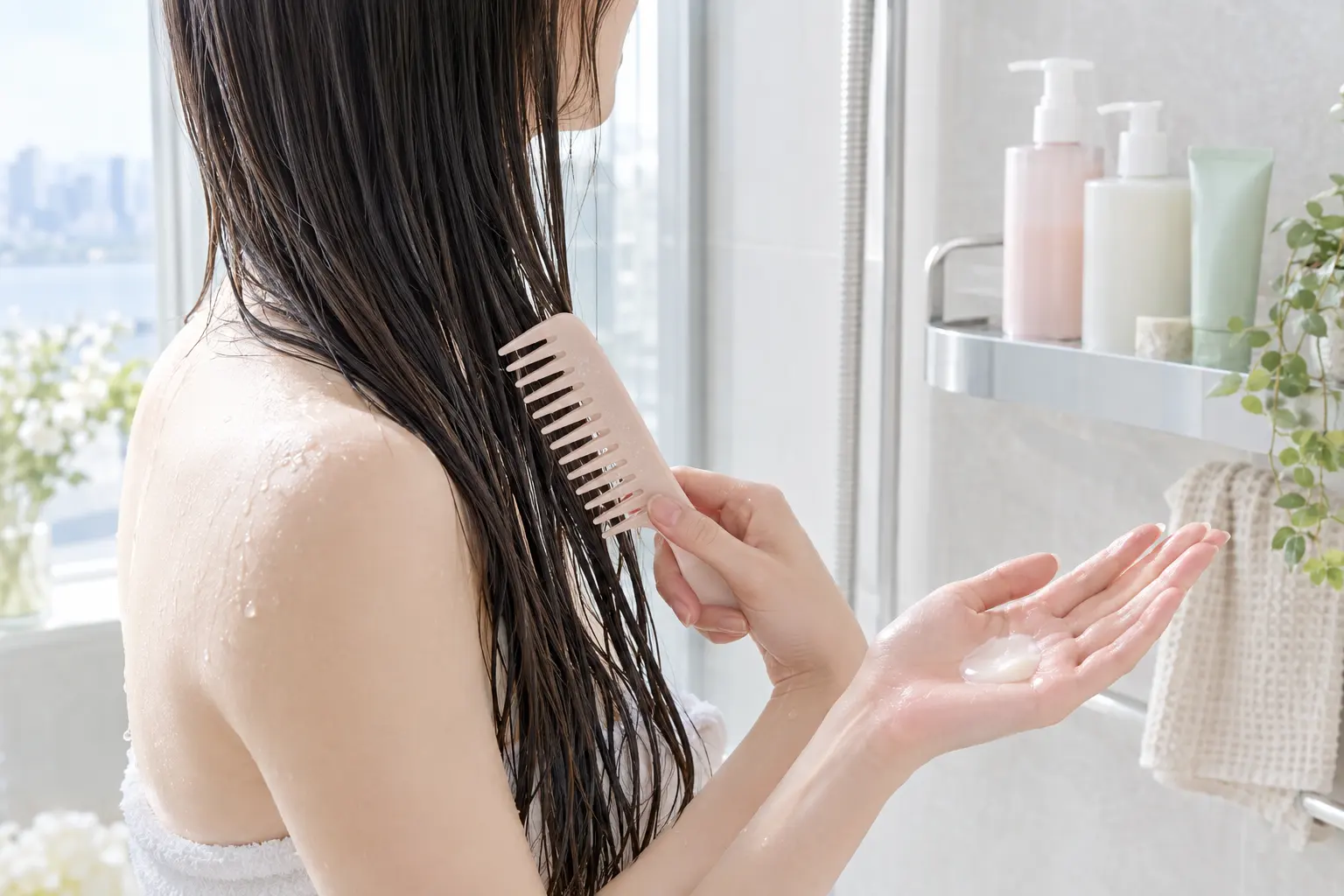
A good routine separates scalp care from hair conditioning. Start by deciding whether you are using one product for a defined reason or layering both because the packaging suggests they belong together. Complementary formats can be useful, but more products do not automatically mean better results.
If the scalp is your priority
- Cleanse according to your existing routine and avoid scrubbing the scalp aggressively.
- Expose the scalp in sections and apply the Scalp Essence with its precision applicator.
- Massage evenly with light pressure, following the current product label.
- Use the treatment only if the lengths need conditioning; keep the jobs distinct.
This approach is most coherent for a reader who notices itch, dandruff, dryness, or a scalp-centered concern alongside ordinary fine-looking hair. It also makes it easier to judge whether the essence is comfortable. If you apply several new products at once, irritation or heaviness becomes harder to trace.
If the lengths are your priority
Use the Women’s Treatment as the conditioning stage after cleansing, following its label directions and concentrating on the hair that needs softness and detangling. Avoid turning a treatment-format product into a scalp tonic simply because it sits in a hair-loss-care collection. Its documented positioning is closer to manageability, lightweight volume, and softness than to a scalp intervention.
One common mistake is measuring success only by the amount of hair seen in the drain. Shedding varies and can be difficult to interpret without a baseline. Instead, track practical signs such as combing comfort, tangling, visible breakage, scalp comfort, and whether the hair looks weighed down after drying. These observations will not diagnose hair loss, but they can tell you whether the cosmetic routine suits your hair.
For fragrance-sensitive shoppers, introduce one scented product at a time. For anyone experiencing a reaction, stop the suspected product and get medical guidance if symptoms continue. The FDA advises discontinuing hair-cleansing products and contacting a healthcare provider when problems such as hair loss, itching, rash, or other reactions occur [7].
Technique matters more than elaborate layering. Keep scalp application precise, keep treatment use focused on the hair that needs conditioning, and give each product a clear job. If you are comparing hair products mainly by scent, the broader Korean perfume shampoo guide is a more suitable companion read than a regrowth-focused article.
Four-week claims, Korean functional cosmetics, and realistic expectations
Korean hair-loss-care language can sound stronger than ordinary cosmetic language because South Korea recognizes functional cosmetics that include products intended to help alleviate hair-loss symptoms. The Ministry of Food and Drug Safety states that these products are subject to evaluation or reporting, with safety and effectiveness or function data requirements [5]. That regulatory category is meaningful, but it is narrower than a diagnosis, a prescription, or proof that a product reverses established baldness.
The distinction protects your buying decision. MFDS explains the Korean functional-cosmetics category generally; the supplied materials do not independently verify the regulatory status or clinical evidence of each EmpressKorea listing. Do not convert “symptom care” into “regrows hair,” and do not assume that a cosmetic functional category is equivalent to evidence for medical treatment of a particular diagnosis.
The Scalp Essence catalog states that it was clinically shown to reduce dandruff, itchiness, and hair-loss symptoms in four weeks. The supplied information does not provide the study design, sample size, comparator, population, or details needed to generalize that claim to every buyer. It also does not transfer the claim to the Women’s Treatment.
What you can reasonably monitor
- Whether the essence feels comfortable on your scalp.
- Whether scalp-centered concerns such as itch or visible dandruff appear improved, as described by the product claim.
- Whether the treatment makes fine-looking lengths easier to detangle and less weighed down.
- Whether your hair routine causes more breakage through rough brushing or heavy styling.
Do not set a four-week regrowth deadline. Hair biology is slower and more complicated than a cosmetic product page can communicate. If the part is widening or thinning is progressing, seek a dermatologist’s assessment; the AAD notes that different causes can resemble female-pattern hair loss and require different treatment [3].
Think of Root:Gen as routine support: scalp care for the essence, conditioning and appearance support for the treatment. That is a useful role, provided the product is not asked to do a medical job it has not demonstrated.
This framing also prevents a common shopping error: using regulatory language as a substitute for personal diagnosis. A functional-cosmetic category can explain how a product is positioned in Korea, but it cannot tell you why your hair is changing or which intervention is appropriate.
The final buying decision: three situations, three answers
Picture a shopper with a comfortable scalp, fine hair, and a crown that loses shape quickly. The best first match is the Women’s Treatment because the immediate routine problem is lightweight conditioning and manageability. The purchase makes less sense if the shopper expects it to stop shedding at follicle level; that expectation should change the decision toward professional evaluation rather than toward a stronger cosmetic promise.
Now picture someone with an itchy, flaky scalp who wants a product that can be applied precisely without coating every strand. The Scalp Essence is the more relevant choice. Its 80mL format and direct applicator align with that job, while its listed ingredients include piroctone olamine and aromatic materials that make tolerance worth considering [2]. If the scalp is inflamed, painful, or persistently irritated, a cosmetic product should not delay medical advice.
Finally, consider someone who notices a smooth bald patch or sudden handfuls of hair. Neither featured product should be the first and only answer. Hair loss has multiple possible causes, and the right treatment depends on identifying the cause; a cosmetic routine can remain gentle and supportive while assessment takes priority.
A practical decision rule
- Buy the Scalp Essence when direct scalp application, itch, dandruff, or scalp comfort is your central concern.
- Buy the Women’s Treatment when fine-looking lengths need softness, detangling, and lightweight volume support.
- Consider both only when you genuinely need separate scalp and length steps.
- Pause and seek assessment for rapid, patchy, painful, inflamed, or persistent hair loss.
This is the honest answer behind the search phrase. There is no reason to reject Root:Gen simply because the listed products are not interchangeable shampoos. There is every reason to choose by format, keep cosmetic claims in proportion, and avoid allowing a polished hair-care routine to obscure a changing scalp or a progressing loss pattern.
For shoppers continuing their EmpressKorea search, the Beauty and Personal Care collection is the natural next stop for adjacent routine products. Choose the category only after deciding whether your next purchase needs to touch the scalp, condition the lengths, or address a separate beauty concern.
The next sensible decision is therefore specific: identify the location of the concern, select the matching format, and set a clear boundary for when cosmetic care is no longer enough. That approach is more useful than choosing whichever product uses the strongest hair-loss wording.
Frequently Asked Questions
Is the Ryo Root:Gen Scalp Essence a shampoo?
No. It is a scalp-applied essence with an applicator for direct scalp use, not a cleansing shampoo. The supplied product directions say to apply an appropriate amount to the scalp and massage evenly [2]. Use it as a scalp-care step rather than expecting it to wash the hair.
Can the Ryo Women’s Treatment stop hair shedding?
There is not enough product-specific evidence in the supplied materials to make that promise. The treatment’s defensible role is conditioning, softness, lightweight volume, and improved manageability for fine-looking lengths. Those cosmetic benefits are different from treating the follicle or stopping a medical hair-loss condition.
Can the Scalp Essence replace medical hair-loss treatment?
No. The essence should be treated as cosmetic scalp care unless product-specific evidence establishes a medical treatment effect. The AAD explains that hair-loss shampoos can improve moisture, fullness, or breakage without regrowing hair or preventing worsening loss [3]. Ask a qualified healthcare professional which options are appropriate for your situation.
Is the Women’s Treatment suitable for fine hair?
Its catalog positioning is built around lightweight volume, non-greasy softness, and fine-looking hair. That makes it a reasonable option when the lengths need conditioning without a heavy finish, although individual results depend on hair type and amount used. Its scent profile is bergamot and lavender, so fragrance preference is also part of the choice.
When should I see a dermatologist about hair loss?
Arrange an assessment for rapid shedding, bald patches, scalp pain or inflammation, eyebrow loss, or persistent thinning. The AAD notes that other causes can resemble female-pattern hair loss, so a dermatologist’s assessment is important [3]. Do not use a cosmetic product as a reason to postpone evaluation.