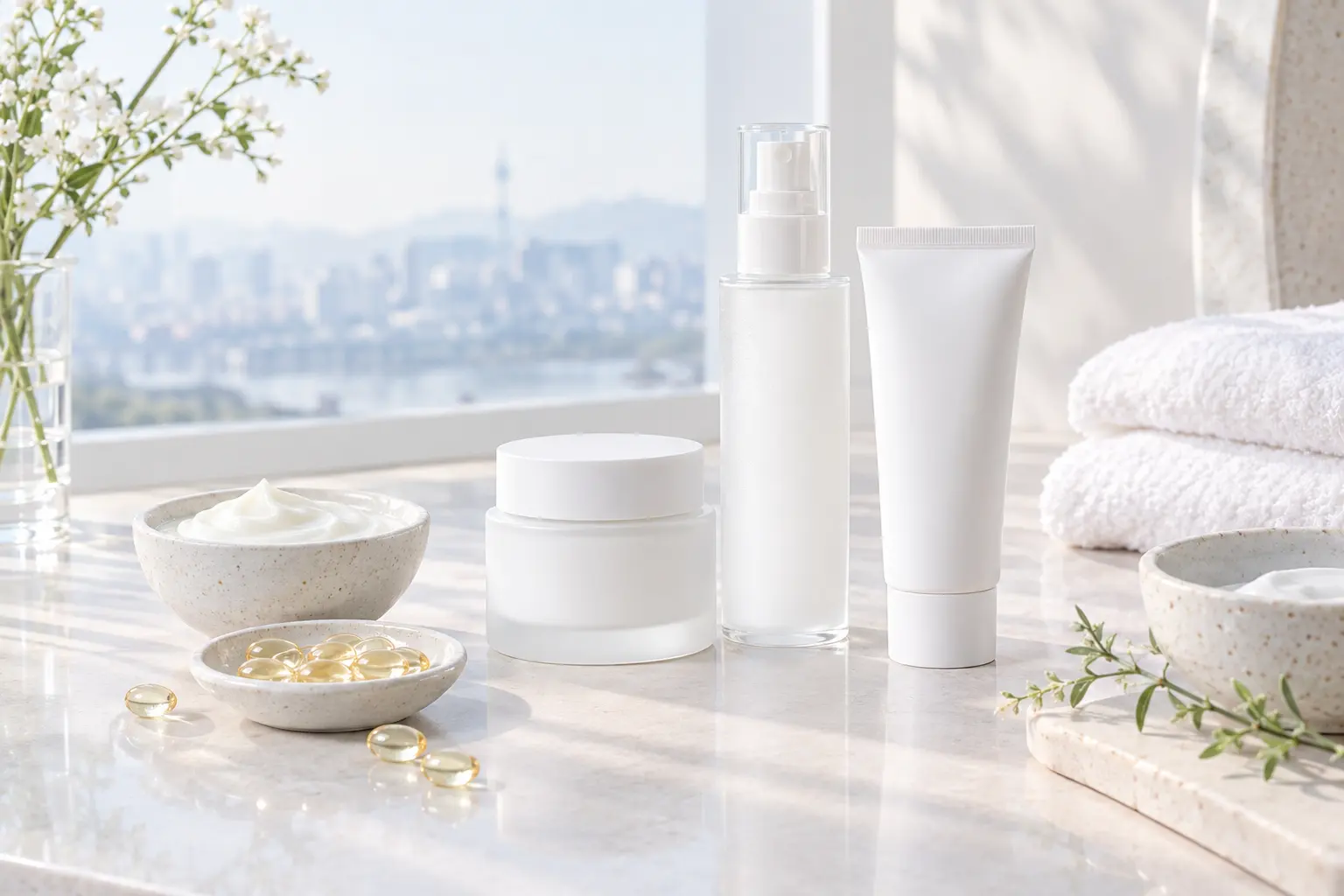
Choosing between AESTURA Atobarrier products is a texture decision disguised as a barrier-care decision. This Aestura barrier cream skincare guide compares the standard Cream, Hydro Soothing Cream, and Cream Mist so you can buy the format your skin will actually use.
The useful answer is straightforward: choose the standard Cream when tightness, roughness, and flaking keep returning; choose Hydro Soothing Cream when dehydration comes with oiliness or discomfort from dense textures; choose the Mist when you need portable reapplication. None should be treated as a cure for a skin disease.
What barrier skincare can realistically do
The skin barrier is not a single invisible shield that a cream can permanently rebuild overnight. The outermost skin layer contains corneocytes surrounded by lipids, including ceramides, cholesterol, and fatty acids. That lipid arrangement helps retain water and limits the movement of external irritants into the skin. A review of ceramide-containing formulations found support for improved hydration and barrier function, while also calling for larger, stronger comparative studies. [1]
That distinction matters when reading the phrase barrier repair. For a cosmetic moisturizer, the practical meaning is usually better water retention, less surface dryness, and improved comfort. It does not mean that a product treats eczema, rosacea, infection, allergy, or every cause of redness. Claims that a cosmetic product treats or prevents disease can move into drug territory under United States labeling rules. [2]
The first question is not “Which has the most ceramides?”
Ask what your face feels like several hours after cleansing, and what kind of finish you can tolerate. Persistent tightness points toward a more substantial leave-on cream. Dehydration with shine or an aversion to dense textures points toward a lighter emulsion or gel cream. A mist is a convenience format for reapplication, not automatically a smaller version of a jar cream.
- Dry and flaky: prioritize sustained emollient and occlusive support.
- Oily but dehydrated: prioritize lightness and routine adherence.
- Occasionally uncomfortable: consider targeted application rather than coating the whole face.
- Reactive or diagnosed skin: keep cosmetic expectations modest and seek professional care for persistent or severe symptoms.
The decision rule for the rest of this article is simple: buy the richest format that solves your dryness without making daily use unpleasant. A cream left unopened because it feels too heavy is less useful than a lighter moisturizer applied consistently.
That rule also prevents a common mistake: treating a barrier product as a contest in which the heaviest finish must win. Moisturization has to fit your cleansing habits, climate, makeup, sunscreen, and tolerance for shine. The right product is the one that gives enough comfort without creating a new reason to skip the routine.
AESTURA Atobarrier formats compared at a glance
The three relevant products occupy different places in a routine. The standard AESTURA Atobarrier 365 Cream is an 80ml facial cream built around high-density ceramide capsules and a substantial blend of moisturizing materials. Hydro Soothing Cream is also 80ml, but AESTURA positions it as a lightweight gel moisturizer with instant cooling. The 120ml Cream Mist uses an emulsified spray format with 10,000 ppm ceramide.
Those distinctions are more useful than treating every product in the line as interchangeable. The standard Cream is designed to finish a routine. Hydro Soothing Cream is also a finishing moisturizer, but its lighter positioning makes it more attractive for combination or oily skin. The Mist is designed for dry areas and repeated use during the day, including over makeup according to its catalog positioning.
| Product | Best starting point | What stands out | Main tradeoff |
|---|---|---|---|
| AESTURA Atobarrier 365 Cream 80ml | Dry, tight, rough, or sensitive-feeling skin | High-density ceramide capsules plus squalane, dimethicone, cholesterol, fatty acids, and ceramide NP | May feel too rich for oily skin or warm conditions |
| AESTURA Atobarrier 365 Hydro Soothing Cream 80ml | Oily, combination, dehydrated, or overheated-feeling skin | Lightweight gel-cream positioning, cooling feel, ceramide and lipid support | Available evidence does not establish superiority over the standard Cream |
| AESTURA Atobarrier 365 Cream Mist 120ml | Daytime dryness, travel, office air-conditioning, or localized discomfort | 10,000 ppm ceramide and a fine emulsified mist format | Does not establish the same sustained occlusion as a full cream |
Use the table as a starting filter, not a promise about how your face will behave. Skin type labels are broad. A person with oily skin can still need a richer cream after over-cleansing, while a dry-skinned person may prefer a light layer in humid weather.
The format also affects how much control you have. A jar cream lets you vary the amount by zone and by season. A mist makes rapid reapplication easier, but its spray pattern and finish may be less predictable for someone who wants precise placement. A gel cream sits between those choices: it remains a complete moisturizing step while emphasizing a lighter sensory profile.
If you are still comparing routine categories, EmpressKorea’s moisturizers collection is the most relevant place to browse around this decision. The important point is to choose by the problem you are solving, not by the most impressive duration claim.
Why the standard AESTURA barrier cream is the default for dryness
The standard AESTURA Atobarrier 365 Cream has the clearest case for persistent facial dryness because its documented formula includes glycerin, betaine, squalane, fatty acids, dimethicone, cholesterol, ceramide NP, phytosphingosine, and sphingolipids. [4] This is a description of the formula, not proof that each listed ingredient produces a particular result in every user.
The formula architecture still gives a useful reason to consider it when skin feels tight long after application. Ceramides are part of the intercellular lipid system discussed in barrier research, while cholesterol and fatty acids are also relevant lipid categories. The combination makes more sense for sustained dryness than a product chosen solely because it feels refreshing at first contact.
What the manufacturer testing does and does not say
AESTURA reports 120-hour moisturization, an immediate doubling of hydration, and a twofold improvement in damaged-barrier measurements within 10 minutes from a company-described study involving 32 women with dryness and sensitivity. [4] These are product-test results from a defined group, not a guarantee that every face will remain hydrated for 120 hours or show the same change.
The Cream also contains high-density ceramide capsules, and the official page presents the capsule technology as a way to keep ceramide-containing materials in contact with the skin barrier for longer. That is the manufacturer’s formulation explanation, so it should be read as product information rather than independent confirmation of superior performance against every other moisturizer.
Collected Korean-user feedback on the exact 80ml Cream repeatedly describes dependable moisture for dry or sensitive-feeling skin, particularly in cooler weather. The reservations are equally useful: oily or blemish-prone users sometimes report a heavy finish, bumps, or itching, while combination-skin users often prefer a small amount or seasonal use.
That makes the standard Cream a strong default, not a universal winner. Apply a thin layer if you want to use it under makeup, or concentrate it on uncomfortable areas when the rest of your face does not need the same richness. If your skin is persistently flaky and tight, the tradeoff of a denser feel is usually more acceptable than repeatedly reapplying a product that disappears too quickly.
Best fit: choose this product first when your dominant complaint is ongoing dryness, roughness, tightness, or nighttime moisture loss.
When Hydro Soothing Cream is the smarter choice
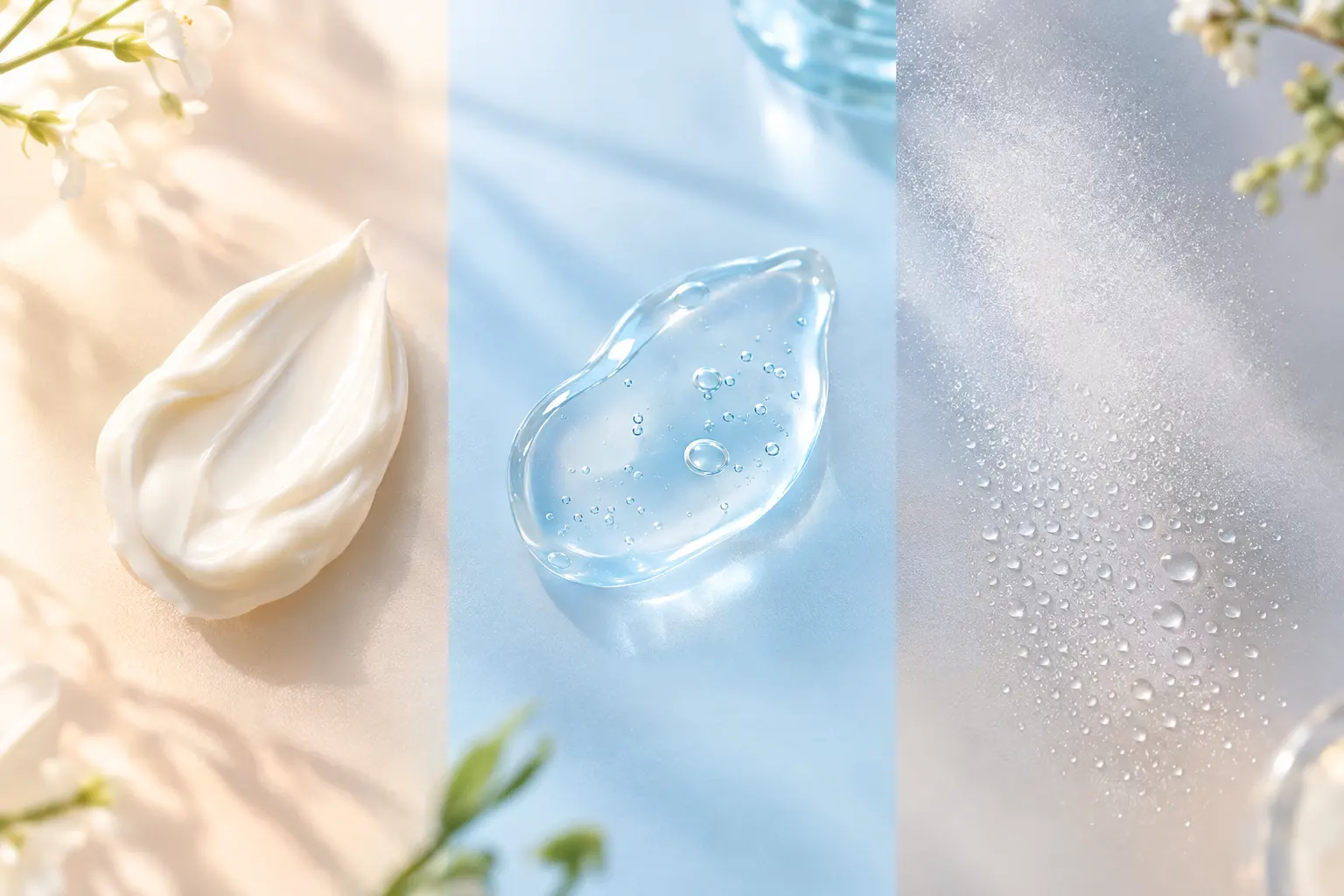
Hydro Soothing Cream is the more texture-conscious option. AESTURA positions it as a lightweight gel moisturizer for oily, dehydrated, combination, sensitive, or stressed-feeling skin, with a cooling sensation and a ceramide-based lipid system. Its listed ingredients include glycerin, dimethicone, squalane, betaine, ceramide NP, cholesterol, sphingolipids, sodium hyaluronate, and beta-glucan. [5]
The practical advantage is not that it has been proven better than the standard Cream. The available product evidence does not establish that comparison. Its advantage is fit: if a dense finish makes you skip moisturizer, a lighter product may deliver more real-world value because you can use it morning and night without negotiating with the texture.
AESTURA reports 72-hour hydration and a twofold barrier improvement after one use from a test involving 30 women who self-described as oily, dehydrated, and sensitive, with visible pores. [5] The sample and design limit how broadly that result can be generalized. Treat the claim as product-specific testing, not as a prediction for every oily or acne-prone face.
Three signs to start with the Hydro version
- Your cheeks feel dehydrated, but your forehead or nose becomes shiny quickly.
- You dislike rich creams during warm weather or under sunscreen and makeup.
- You want a moisturizer with a cooling, lighter sensory profile rather than a cushiony cream finish.
Hydro Soothing Cream is still a moisturizer, not a treatment for heat-related skin disease or inflammation. “Cooling” describes the sensory experience and product positioning; it should not be interpreted as medical relief. The same logic applies to its non-comedogenic testing: that is useful context, but it does not guarantee that an individual will never develop congestion.
The Hydro formula is also described as fragrance-free on its product page. [5] That product-specific description should not be generalized to every item in the Atobarrier range, particularly when comparing formulas sold in different markets.
If your main concern is dehydration rather than severe flaking, this is the better first purchase. If it leaves you tight after a few hours, use a thin layer of the standard Cream only where needed rather than abandoning barrier care altogether.
The Cream Mist is a reapplication tool, not a jar replacement
The Cream Mist solves a different problem: how to add moisture when applying a conventional cream is inconvenient. AESTURA’s documentation describes a fine mist containing 10,000 ppm ceramide, with an emulsifying process intended to combine ceramide and moisture without shaking. It can be sprayed on dry or weakened areas as needed. [6]
That makes the 120ml format useful for office air-conditioning, travel, dry climates, or the uncomfortable period between morning skincare and evening cleansing. It also suits people who want to refresh dry areas over makeup without rubbing a cream across the face. The format is convenient, but convenience should not be confused with equivalence. A spray may add a comfortable film while still providing less sustained occlusion than a properly applied leave-on cream.
Collected Korean-user feedback on the exact 120ml Cream Mist often praises the fine spray, quick moisture, and usefulness over makeup. The recurring caution is that it can feel richer and shinier than a typical watery mist. Some oily-skin users describe a filmy or slippery finish, and some prefer to pat it in with their hands when the spray lands unevenly.
Use the mist when the situation calls for it
- Keep the bottle for daytime top-ups rather than making it your only moisturizer by default.
- Spray onto dry areas according to the product directions, avoiding the assumption that more layers are always better.
- Give the formula a moment to settle, then pat gently if your finish feels uneven.
- Use a full cream at night if your skin remains persistently tight or flaky.
A mist can be enough for maintenance when your skin is only mildly dry, especially if you dislike touching your face during the day. It is less convincing as the sole product for substantial barrier stress. Choose it because you need portable reapplication, not because the word ceramide suggests that every format performs identically.
There is another practical distinction: a mist allows you to respond to a temporary environment without permanently changing the rest of your routine. If your skin is comfortable at home but dry after a long commute or several hours in heated or cooled air, that flexibility may be more valuable than replacing your regular moisturizer.
How to build a simple barrier-focused routine
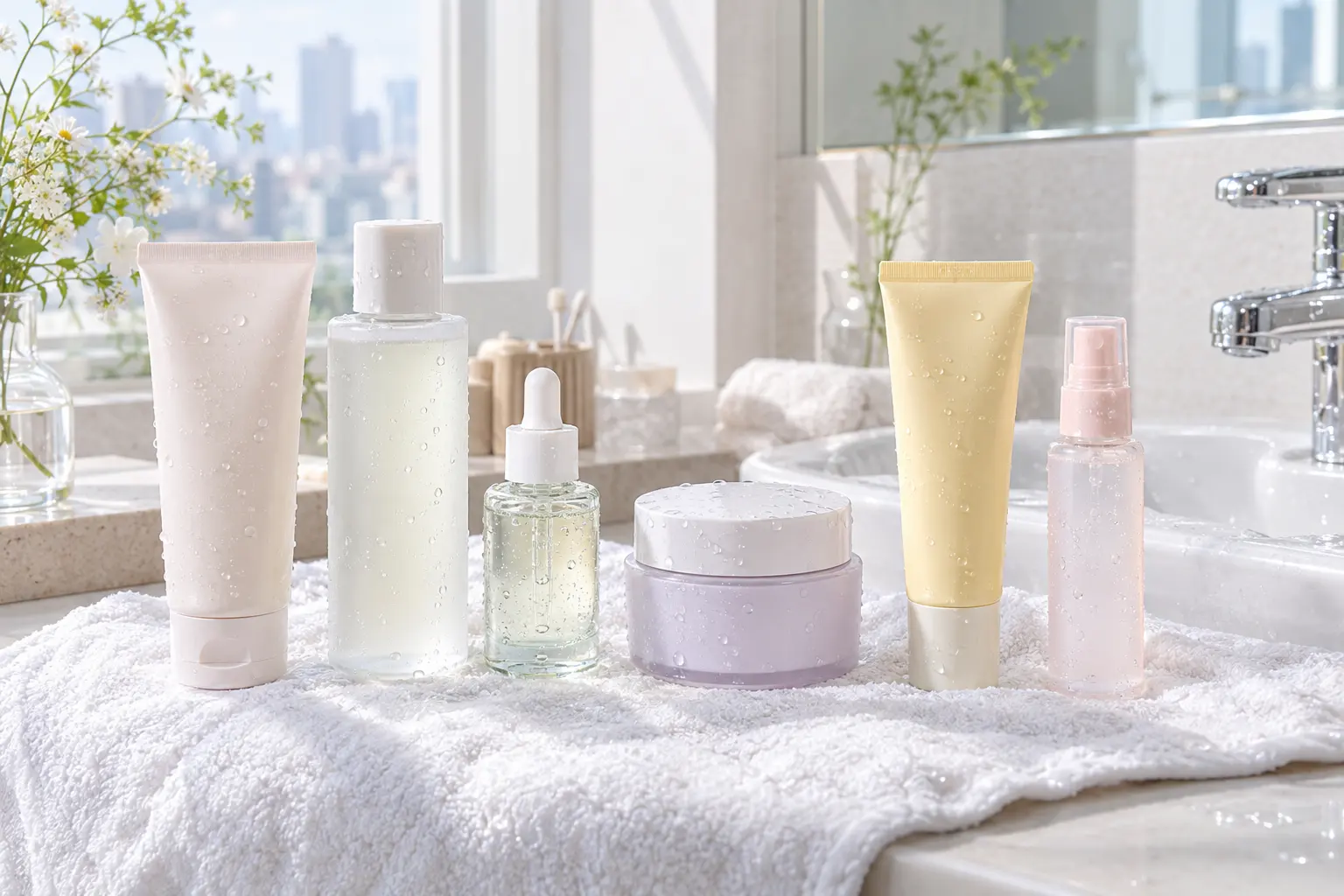
A barrier routine works best when it removes unnecessary decisions. Start with a cleanser your skin tolerates, then apply any hydrating step you already know works, followed by one moisturizer that matches your finish preference. AESTURA’s standard Cream and Hydro Soothing Cream are both positioned for morning and evening use after toner and serum, while the Mist is positioned for use when dryness returns during the day.
Applying moisturizer while skin is slightly damp can help reduce the sensation of immediate tightness. Dermatology guidance recommends moisturizing after washing or bathing, and it favors fragrance-free cream or ointment over lotion for eczema-prone skin. [3] That general guidance does not automatically certify a particular AESTURA formula for every reactive user, so the package ingredient panel remains the final reference for the product in your possession.
A low-complexity sequence
- Cleanse: avoid turning a dry-skin problem into a repeated stripping problem.
- Hydrate: use toner or serum only if it is already comfortable and useful to you.
- Moisturize: choose the standard Cream for persistent dryness or Hydro Soothing Cream for lighter daily wear.
- Reapply selectively: use the Cream Mist on dry areas during the day rather than automatically adding it everywhere.
- Protect in the morning: finish with sunscreen; EmpressKorea’s Korean sunscreen guide can help if that step is still unsettled.
Do not add exfoliating acids, retinoids, multiple brightening serums, and a new barrier cream all at once if your skin is already reactive. When several variables change together, you lose the ability to identify what caused a reaction or what actually helped.
Patch-testing is particularly sensible for reactive skin. Dermatologists recommend applying a normal amount to a small test area twice daily for seven to ten days, then stopping if redness, itching, or swelling develops. [8] A product that has passed manufacturer testing can still be unsuitable for your personal history.
Keep the first trial deliberately boring. Use the moisturizer after cleansing, avoid introducing another active during the same week, and observe whether your skin feels comfortable through the part of the day when dryness normally appears. That approach gives you more useful information than applying a new product in a crowded routine and judging it only by its first few minutes.
Three realistic skin situations and the better pick
Situation one: your face feels tight after cleansing, flakes around the mouth, and becomes uncomfortable overnight. Start with the standard AESTURA Atobarrier 365 Cream. The richer formula and documented combination of humectant, emollient, occlusive, and lipid-related ingredients fit the problem more directly than a mist. Use a modest layer first; more product is not automatically more effective, and excess can interfere with makeup or feel unpleasant.
Situation two: your cheeks feel dry, but your forehead is shiny by midday and rich products make you avoid moisturizer. Start with Hydro Soothing Cream. The choice is based on texture and stated positioning, not a claim that it will outperform the standard Cream. If the lighter formula does not control your tightness, try using the richer Cream only at night or on the dry zones.
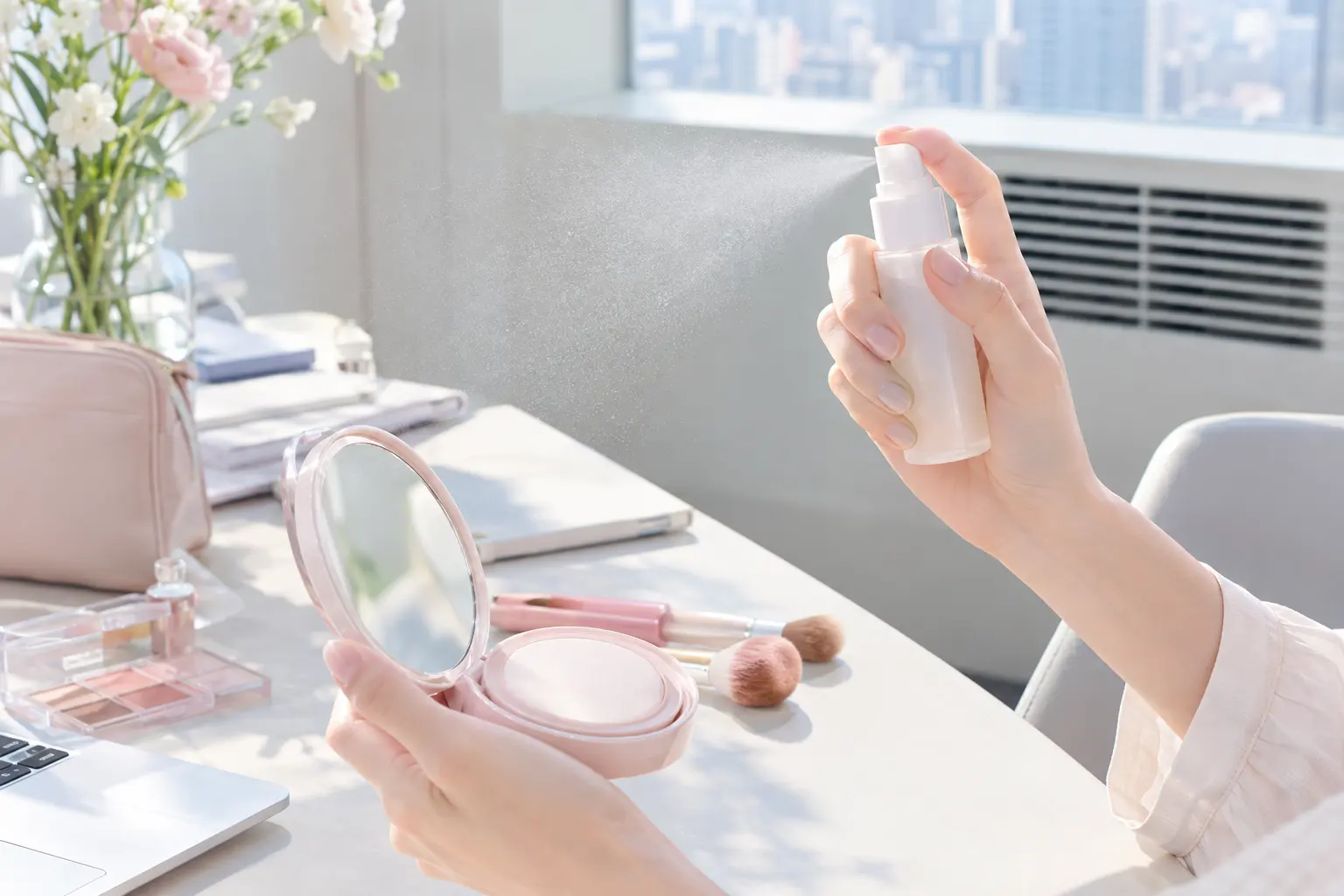
Situation three: your morning routine is comfortable, but office air-conditioning leaves your cheeks tight by afternoon. The Cream Mist is the most practical supporting product. It gives you a portable reapplication format without requiring you to spread a full cream over makeup. If you still experience persistent dryness after several days of consistent use, treat that as a sign that a proper evening moisturizer matters more than additional daytime sprays.
Common buying mistakes
- Choosing the richest formula because barrier care sounds more serious.
- Choosing a mist and expecting it to replace a leave-on cream for severe dryness.
- Assuming ceramides predict the complete texture or pore response of a formula.
- Changing cleanser, toner, serum, cream, and sunscreen simultaneously.
- Reading a company test result as a guarantee of personal results.
The best choice changes with season and routine. A combination-skin user might prefer Hydro Soothing Cream in warm weather and the standard Cream on dry nights. A dry-skin user might use the Cream as the anchor and the Mist only when a heated room or long flight creates extra discomfort.
Amount control is part of the decision, too. A product that feels heavy may become workable when used on the cheeks, around the mouth, or at night rather than across the entire face. Conversely, a light gel may be perfectly comfortable in the morning but insufficient on the areas that repeatedly crack or flake.
If breakouts, itching, swelling, or burning continue after stopping a new product, do not keep escalating the routine. Cosmetic moisturizers can support comfort, but recurrent or severe symptoms deserve individualized medical advice.
What to verify before placing your AESTURA order
The catalog includes two entries for the standard 80ml Cream and two entries for the 120ml Cream Mist. The available product evidence indicates that ID 568297 is the same core 80ml cream format as ID 2872, while ID 579473 is materially the same purchase category as ID 2877. That means you should not treat the duplicate entries as four separately evidenced formulas.
For the standard Cream, the current official ingredient list and product page provide the strongest reference for formula details. For Hydro Soothing Cream and the Mist, catalog descriptions are useful for format and positioning, but complete independently verified ingredient information may vary by market or listing. Check the current package panel if a specific ingredient, fragrance status, or allergy concern affects your purchase.
The standard Cream page lists less than one percent synthetic fragrance. [4] The Hydro page describes its formula as fragrance-free. [5] These are product-specific statements, not a family-wide assumption.
A final pre-purchase checklist
- Is your main problem persistent dryness, lightweight dehydration, or daytime reapplication?
- Would a rich finish encourage you to moisturize, or make you skip the product?
- Do you need a full finishing cream, or only a portable top-up?
- Have you checked the current ingredient panel for your market and batch?
- Are you buying one of the duplicated catalog entries without mistaking it for a different formula?
Do not infer that every product in the Atobarrier family is fragrance-free, non-comedogenic, or interchangeable with the standard Cream. Even when two products share a line name, their texture, ingredient list, and intended routine role can differ. This is why the label and the exact product listing matter more than a broad family reputation.
For most shoppers with genuinely dry, sensitive-feeling facial skin, the standard AESTURA Atobarrier 365 Cream is the defensible starting point. Hydro Soothing Cream earns the recommendation when texture and oiliness are the barriers to consistency. The Cream Mist earns its place as a useful companion for reapplication, not as a universal substitute.
Once the moisturizer decision is settled, keep the rest of the routine restrained. If you want to compare other facial treatment categories without overloading your barrier routine, browse EmpressKorea’s serums and essences selection selectively rather than adding several new actives at once.
Frequently Asked Questions
Is AESTURA Atobarrier 365 Cream good for very dry skin?
It is the strongest starting option among the listed AESTURA products when the main concerns are persistent tightness, roughness, flaking, or nighttime dryness. Its official ingredient list includes glycerin, squalane, dimethicone, cholesterol, fatty acids, and ceramide-related ingredients. Apply a sensible amount, because a richer formula can feel heavy when overused.
Should oily skin choose AESTURA Cream or Hydro Soothing Cream?
Hydro Soothing Cream is the more logical first choice when oily skin is also dehydrated and dislikes dense textures. The standard Cream can still suit oily skin during periods of barrier stress, but use a thin layer or reserve it for dry areas and nighttime. This is a texture-fit recommendation, not proof that Hydro Soothing Cream is clinically superior.
Can AESTURA Cream Mist replace a moisturizer?
It can provide convenient daytime moisture, but the available evidence does not establish that it offers the same sustained occlusion as a leave-on cream. Use it for reapplication, localized dryness, travel, or dry indoor air. If your skin remains persistently tight or flaky, keep a full cream in the routine.
Does ceramide skincare repair the skin barrier permanently?
Ceramide-containing moisturizers have research support for improving hydration and barrier function in some dry-skin contexts, but the effect depends on the complete formulation and the individual. Cosmetic barrier care generally means supporting moisture retention and comfort, not permanently changing the skin or treating a disease. Persistent rash, severe itch, oozing, or infection-like symptoms need professional assessment.
How should you patch-test an AESTURA moisturizer?
Apply the product to a small area twice daily for seven to ten days, using the amount and thickness you would normally use. Stop if redness, itching, swelling, or another reaction develops. If the reaction is severe or does not settle, seek medical advice rather than adding more skincare.