
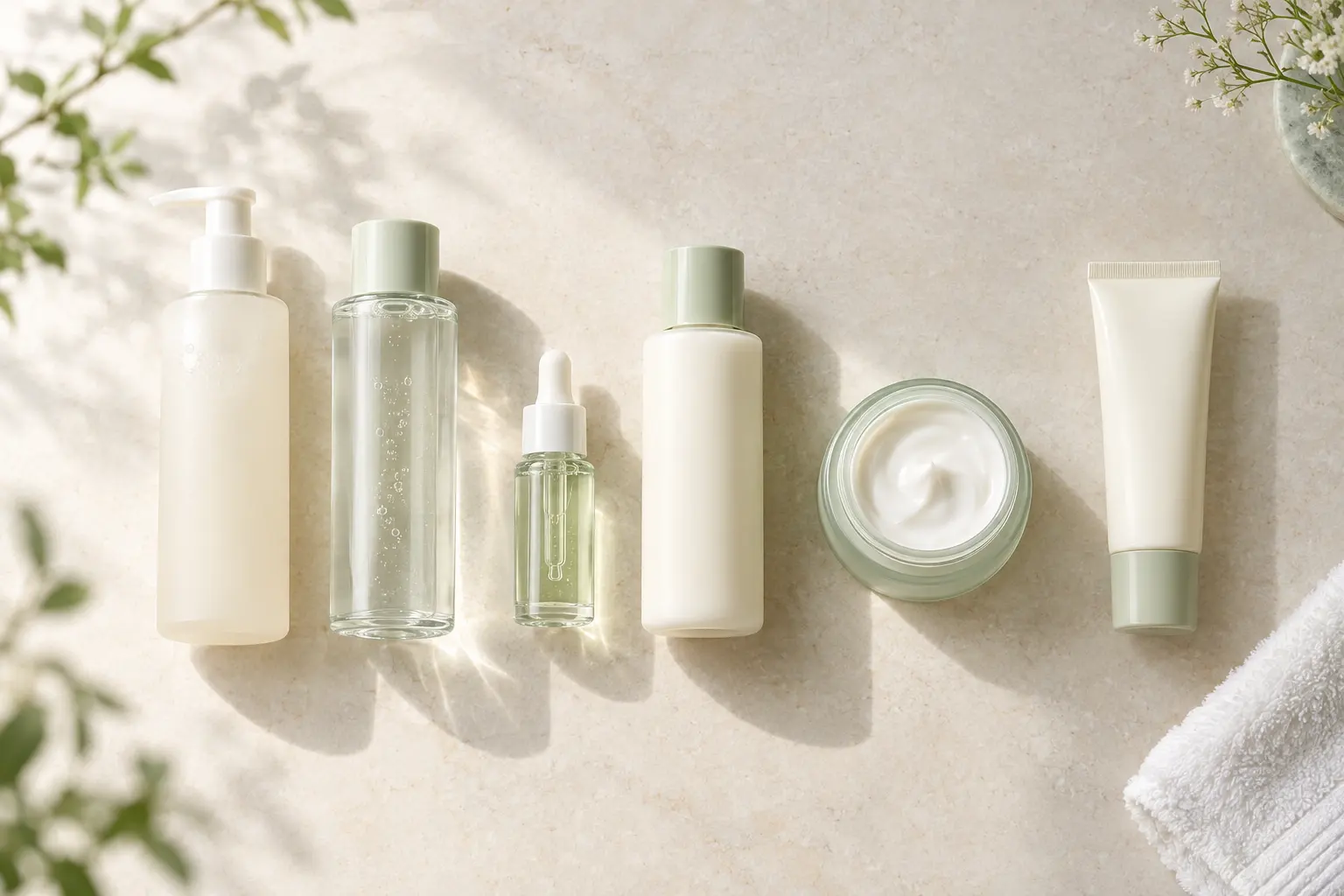
The Korean skincare routine order looks intimidating mostly because it is presented as ten compulsory steps. It isn’t ten steps. It is four jobs — cleanse, treat, moisturize, protect — and every toner, essence, ampoule and cream you own belongs to one of them.
So the real dilemma is not memorising a sequence. It is deciding which products deserve a place in it, and what happens to the order when you add an ampoule to a coordinated set or stir a powder into a serum. The position taken here: get the four jobs in the right order, sort by texture inside each job, and add a step only when it fills a role nothing else in your routine is doing. What follows shows where that rule holds, where a label overrides it, and which products fit which slot.
The Korean Skincare Routine Order, Reduced to Four Jobs
Dermatologists describe the basic sequence as washing your face, applying any medication or treatment, then applying moisturizer and/or sunscreen, with makeup afterwards if you wear it [1]. That is the skeleton. Korean routines keep it intact and subdivide the middle into finer layers.
What governs those finer layers is texture. One dermatology practice’s layering guide sums it up as thinnest consistency to thickest, or liquid to oil, with the ingredients that most need to reach the skin going on first and the ones meant to sit on the surface going on last [6]. That is the logic behind a watery toner preceding an ampoule, an ampoule preceding a lotion, and a cream closing things out.
The full sequence, with the optional steps marked
- Cleanse. An oil or balm first on the days that call for it, then a water-based cleanser.
- Toner (optional).
- Essence (optional).
- Ampoule or serum — your concentrated treatment.
- Eye cream (optional).
- Lotion or emulsion.
- Cream (often night only, or for drier skin).
- Sunscreen, mornings only.
Steps two to five all belong to the treat job. Six and seven are moisturize. Seen that way, an eight-line list collapses back into four decisions, and you can drop any optional line without disturbing the order of what remains.
Why sequence changes results
A dermatologist quoted in that same guide makes the point that skin’s job is to keep things out, and that only a very small amount of a key ingredient penetrates even when a product is well formulated and well applied [6]. Put a rich cream on first and a watery ampoule on top, and the ampoule sits on a film built to slow the movement of water. You have paid for a concentrate and parked it on the wrong side of the barrier.
Two things override the texture rule. A medication or prescribed treatment goes on right after cleansing, whatever it feels like [1]. And a product’s own directions beat any generic chart: when a brand designs a toner, ampoule and cream to be used in sequence, that sequence is the instruction. Read the usage panel properly once for anything you buy, because it settles most ordering questions faster than an article can.
One more principle before the details. Using too many products may irritate the skin, particularly when more than one of them is an anti-aging product [1].
Cleansing First: When a Double Cleanse Earns Its Step
Double cleansing is the step most associated with Korean routines and the one most often done on autopilot. The mechanism is simple. An oil or balm dissolves oil-soluble films such as sunscreen and makeup, and a water-based cleanser then lifts away what the oil has loosened.
How much difference the oil makes depends on what you are removing. An analysis of a 2020 Journal of Cosmetic Dermatology study reports that rinsing with water alone left about 54% of applied sunscreen on the skin, a single foaming cleanse about 15.6%, and a cleansing oil about 13.4% [4]. For the water-resistant formulas in that study, the oil step was necessary because the cleanser alone could not finish the job [4].
Read those figures carefully. For an everyday sunscreen, the gap between one foaming wash and an oil is narrow. For a water-resistant one, it is the whole point.
The cost of the second wash
Surfactants do not discriminate between sunscreen and skin. The same analysis notes that surfactant contact pulls out the intercellular lipids — ceramides, cholesterol and free fatty acids — that hold water in the stratum corneum [4]. Skin surface pH normally sits between about 4.7 and 5.9, and cleansers that push it toward alkaline slow the enzymes that rebuild the barrier overnight [4].
On days without a water-resistant or heavily silicone-based sunscreen, and without makeup layered on top, a single fragrance-free, low-pH cleanser is often enough [4]. That gives a workable rule:
- Water-resistant SPF, long-wear or heavy makeup: oil or balm first, then one brief water-based cleanse. Once, not twice.
- Ordinary daily sunscreen, no makeup: one low-pH cleanser and stop.
- Morning: keep it minimal. Nothing from the previous evening needs dissolving.
None of the products discussed below is a cleanser, so this is a separate purchase decision. If your skin is reactive, the surfactant type and fragrance matter more than the word gentle on the front. Our guide to choosing a Korean cleanser for sensitive skin by its label covers what to look for.
The reason to settle cleansing before anything else: when a wash leaves skin tight, the temptation is to compensate with extra hydrating layers. The fix belongs upstream, at the sink.
Toner, Essence, Ampoule: Ordering the Watery Middle
This is where most confusion lives, because three or four products look nearly identical in the palm of your hand.
Toner is optional, and its type matters
Toners were originally created to return skin’s pH to normal after harsh soaps, and with better-balanced modern cleansers a toner is not a required step for someone whose skin is healthy without one [6]. Current toners can instead act as a delivery system for antioxidants, vitamin B derivatives and even toning acids [6]. So the useful question is what yours does. A hydrating toner is preparation. A toner containing exfoliating ingredients is a treatment that happens to have a toner’s texture, and you should count it as one.
The ODYSSEY LIGHTHOUSE Skincare Gift Set Toner 140ml+Lotion 110ml is a good illustration. Its toner is described as formulated with two antioxidant ingredients, soothing agents and gentle exfoliators, and it is paired with a nourishing lotion; by the texture rule, the toner goes first and the lotion second. The set carries a neroli, amberwood and musk fragrance, which is a large part of its appeal and also a clear reason to pass if you avoid scented leave-on products. The listing does not name the exfoliators or their strength, so read the ingredient list before pairing it with another exfoliating step.
Essence before ampoule
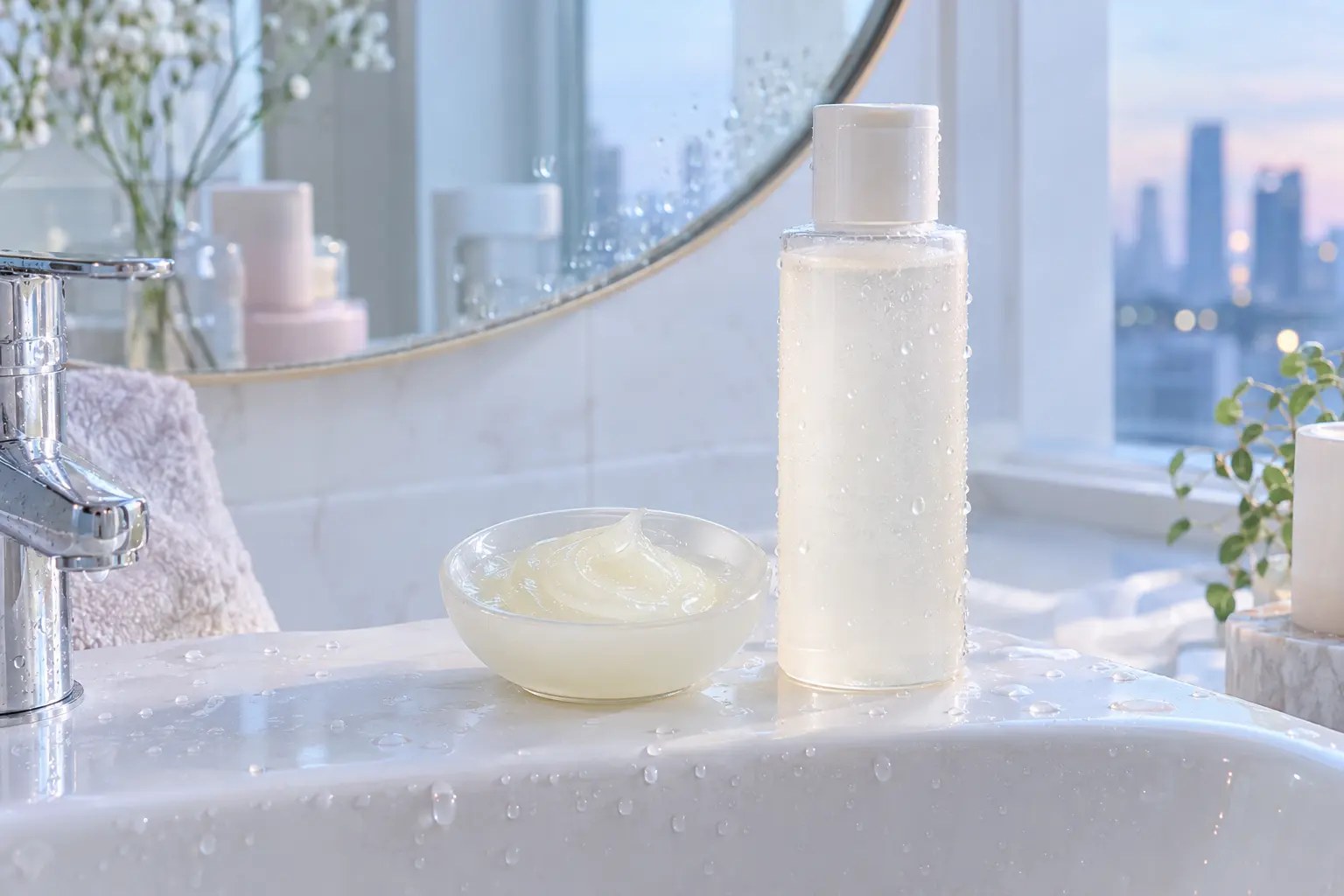
If you use both a toner and an essence, the toner goes first, and multiple watery boosters follow the same thinnest-to-thickest rule [6]. Serums are concentrated treatments, which is why they are best kept as close to the skin as possible [6]. An ampoule is the Korean category name for a concentrated serum-type product, so it goes after the watery layers and before any lotion or cream.
A separate ampoule is a format, not a guarantee of a stronger result. It earns its place when your base routine is stable and one concern is still unaddressed.
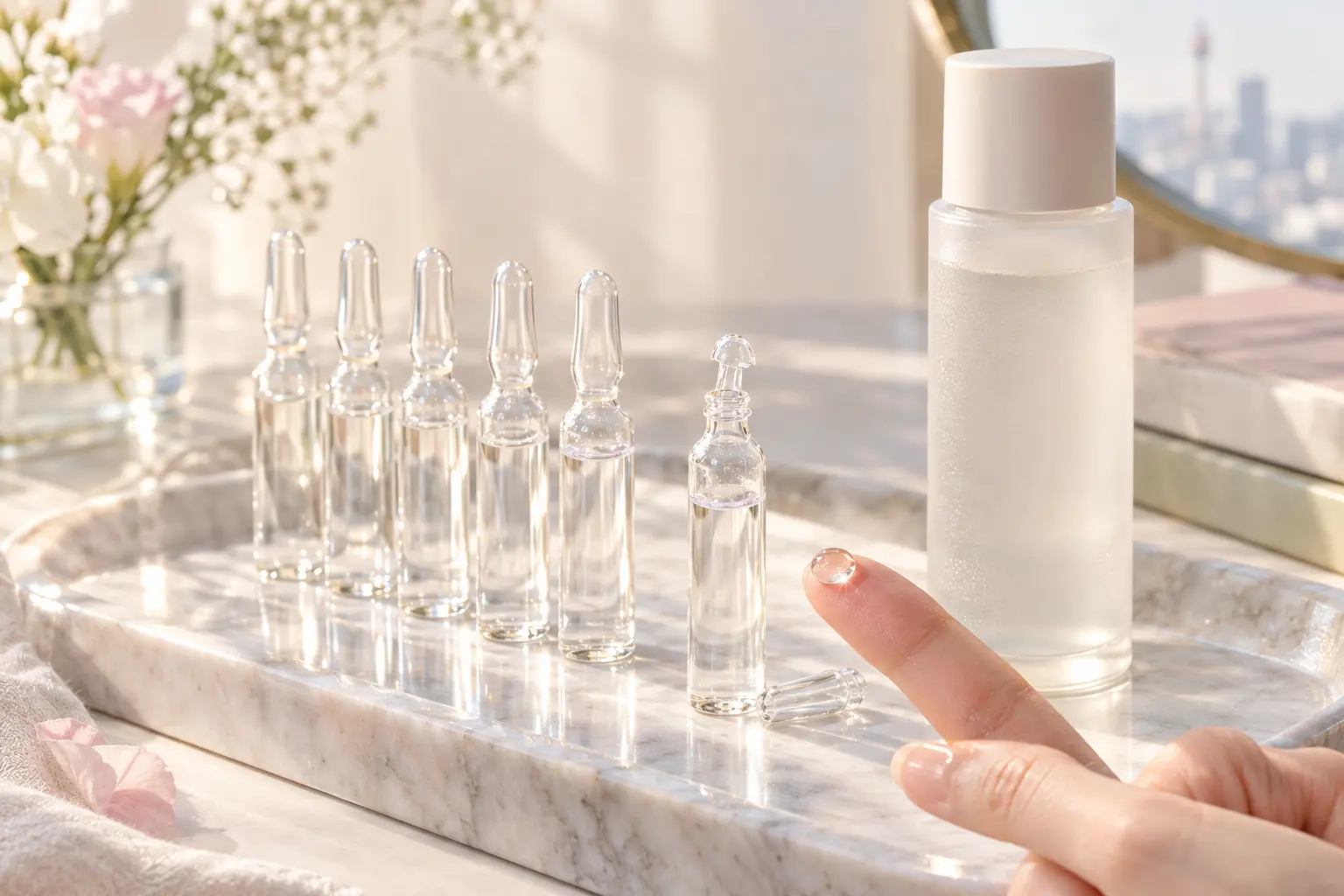
The Metregen Brightening Skincare Ampoule 2ml x 20 fits that description. It comes as twenty 2 ml ampoules, and the brand describes a blend of plant stem cell extracts — ginseng callus culture extract, damask rose and green tea — aimed at moisture, elasticity, brightness and texture. Those are the brand’s claims; no independent testing of the formula is published with the listing. It suits a reader with a settled toner-and-moisturizer routine who wants one concentrated step and prefers small portions to a single large bottle. It is a poor fit if you already run two or three treatment serums, where it would add to an overlap rather than fill a gap.
If your routine has no treatment step at all yet, it is worth comparing formats in the serums and essences range before committing to one.
Set or Single Step? Matching Products to Routine Slots
A coordinated set is meant to take the ordering question off your hands, because its pieces are sold to be used together. Single products give you more control and hand you the sequencing work. Neither is better in the abstract. The right choice depends on how much of a routine you already have.
| Product | Routine slot | Stated focus | Suits | Think twice if |
|---|---|---|---|---|
| PYUNKANG YUL Moisture Skincare Set | Post-cleanse hydration set | Hydration and oil-moisture balance; milk vetch root extract | Building a first routine; dry, sensitive or imbalanced skin | You want targeted brightening or firming claims |
| Cellinon Renew Centa Luminous Lifting Skincare Set | Post-cleanse lifting set (triple routine) | Radiance and firmness; placenta protein complex and peptides | Replacing a whole routine around dullness and loss of firmness | You already use other anti-aging treatments |
| ODYSSEY LIGHTHOUSE Skincare Gift Set Toner 140ml+Lotion 110ml | Toner, then lotion | Antioxidant toner with gentle exfoliators; scented | A short two-step routine; fragrance lovers; gifting | You avoid fragrance or already exfoliate |
| Metregen Brightening Skincare Ampoule 2ml x 20 | Ampoule step | Brightening and moisture; plant stem cell extracts | Adding one concentrated step to a stable base | Your treatment tier is already crowded |
| mixsoon 3 Types of Powder | Mixed into a serum | Amino acid, collagen and vitamin powders for a DIY boost | Customising a serum you already own | You want a ready-made, no-mixing product |
| O HUI The First Geniture For Men Moisturizer 110 ml | Moisturizer step | Hydration and firmness for men’s skin | A single moisturizing step | You want a full multi-step set |
For someone starting from nothing, the PYUNKANG YUL Moisture Skincare Set is the most straightforward entry. Its listing describes a minimalist hydration routine built on milk vetch root extract, with gentle formulations aimed at soothing, strengthening and restoring oil-moisture balance for dry, sensitive or imbalanced skin. The listing does not itemise the individual pieces, so take the sequence from the packaging when it arrives. If no order is printed, the texture rule does the work: the most watery piece first, the richest last.
The appeal is structural as much as anything. A minimalist set keeps the number of formulas low, which keeps you well clear of the too-many-products problem dermatologists warn about, and every piece shares one stated purpose. That purpose is moisture. What the set does not offer is a targeted brightening or firming claim, so a reader chasing either of those will be buying the wrong tool.
If you already own a toner and cream you are happy with, a whole set mostly duplicates them. In that case a single ampoule or booster is the more economical move, because it fills the one slot you have left empty.
Firming Sets and the Problem With Stacking Actives
The Cellinon Renew Centa Luminous Lifting Skincare Set sits at the other end from a minimalist hydration routine. Its listing describes a triple luminous lifting routine powered by a placenta protein complex and peptides, presented as whitening and wrinkle-improving functional skincare, with stated aims of radiance, moisture, elasticity and smoother texture. Those are the manufacturer’s claims, and no independent clinical trial is attached to them.
Peptides, in general terms, are short chains of amino acids that cosmetic formulas use in support of firmness claims. The headline ingredient is the less familiar one, so if an ingredient’s origin matters to you for ethical or dietary reasons, check the full ingredient list for how the placenta protein complex is sourced. The packaging is also where the order of the pieces is printed. Follow it rather than re-sorting the set by feel.
Why a full set should not be topped up
Dermatologists caution that using more than one anti-aging product can irritate the skin, and that this often makes the signs of aging more noticeable [1]. A coordinated lifting set already is a complete treatment tier, with every piece aimed at the same goals. Adding to it creates three separate problems:
- Overlap. A second brightening or firming product pursues aims the set already claims, so you add another formula without adding a new function.
- Attribution. If your skin turns tight or reactive, you cannot tell which product is responsible, and the only way to find out is to strip the routine back and start again.
- Sequence. Every extra layer wedged between the set’s pieces changes the surface the next piece lands on, which is not how the routine was put together.
If you want to combine it with something else, these rules keep the order clean:
- Run the set as written first. Use it alone long enough to judge how your skin tolerates it.
- Alternate, do not layer. If you also own the Metregen ampoule, use it in a routine where the set is resting, on a different day or at a different time of day.
- Keep exfoliation separate. Do not add an exfoliating step on top of the set. If you use one, give it its own night.
This set suits a reader whose main complaints are dullness and loss of firmness and who would rather adopt one coordinated regimen than assemble separate products. It is the wrong starting point if you are using a prescribed skin treatment. In that situation, a board-certified dermatologist is the person to ask about what can sit alongside it [1].
Powders and Boosters: Where a Mix-In Goes
A powder has no position of its own. It takes the position of whatever you dissolve it in.
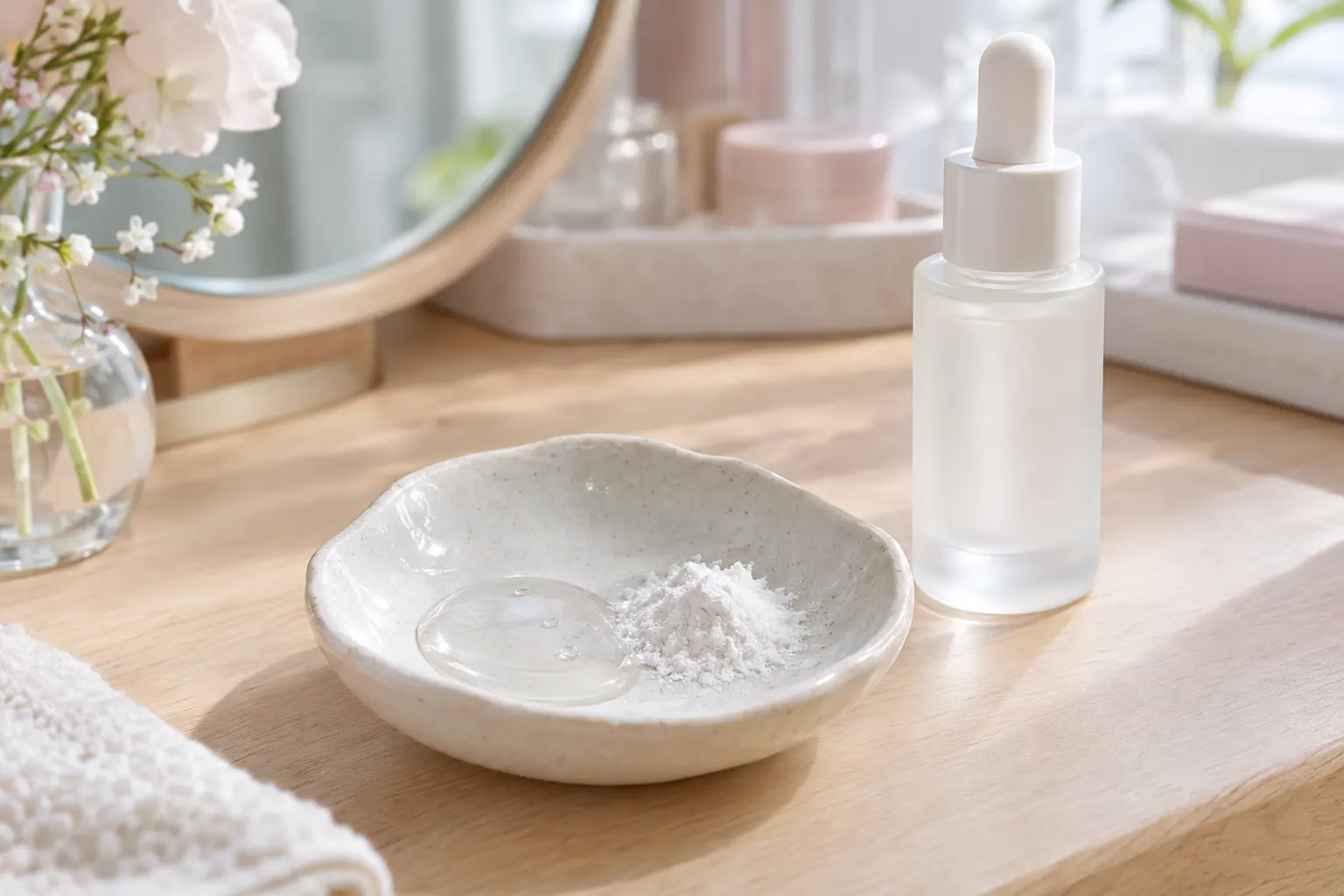
The mixsoon 3 Types of Powder (Amino Acid Powder+Collagen Powder+Vitamin Powder) is sold as a DIY booster. The amino acid powder is described as 100% pure amino acids, rich in L-serine, and compatible with a hyaluronic acid serum. Mixed into a watery serum, it goes on at the serum step: after toner and essence, before lotion and cream.
What the powders are doing
The brand attributes moisture retention and elasticity benefits to L-serine and points to its natural moisturizing properties. The practical reading is that this is a hydration-supporting booster layered onto a humectant serum, which is a sensible pairing. Treat the collagen powder the same way, as a moisturizing ingredient, since the listing gives no detail that would support a stronger structural claim. For the vitamin powder, check the label for exactly which vitamin and form it contains. That determines how it behaves alongside the rest of your routine.
The trade-offs of mixing your own
The advantage of a dry format is that the ingredient stays dry until you need it. The moment you dissolve it, that advantage ends. So the discipline matters more than the product:
- Mix only what you will apply in that sitting, and follow whatever mixing directions come with the kit.
- Use clean, dry hands, and keep water out of the container.
- Do not increase the amount in search of a faster result. A more concentrated mix is not a better one, and an undissolved powder is simply grit on your face.
- If a vitamin mix stings or the product changes colour or smell, stop using it.
This kit suits a reader who already owns a hyaluronic acid serum they like and enjoys adjusting a routine without buying another bottle. It does not suit anyone who wants a finished formula with nothing to measure, or anyone already running a multi-step treatment set. Added to the Cellinon routine, for example, it would be one more treatment layer with no clear gap to fill.
Morning Versus Night: What Changes in the Sequence
The four jobs stay in the same order at both ends of the day. What changes is the emphasis: the morning routine is about protection, and the evening one is about treatment [6].
Morning: short, and finished with sunscreen
A mineral sunscreen should be the last step in a daytime routine, applied after moisturizer [6]. Makeup, if you wear it, comes after that [1]. None of the products covered here is a sunscreen, so if your shelf has a toner, an ampoule and two creams but no SPF, the empty slot is the one to fill first.
Morning is also where a compact routine pays off. A toner, one treatment, a light moisturizer and sunscreen is a complete sequence. The O HUI The First Geniture For Men Moisturizer 110 ml is described as a hydrating and firming moisturizer for men’s skin with a wrinkle-improvement function, targeting pores, elasticity and tone. As a moisturizer, it belongs to the moisturize job: after any watery layers and treatments, and before sunscreen in the morning. That placement is reasoned from its category, so let the directions on the packaging decide if they say otherwise. It suits a man who wants one moisturizing product rather than a lotion-and-cream pair. If you would rather compare textures first, the wider moisturizers range is the place to do it.
Night: treatment, then seal
Heavier night moisturizers create a protective coating that limits water evaporation while you sleep, which is why the right moisturizer is the last step [6]. Moisturizer is best applied while skin is still damp, so there is no benefit in long pauses between hydrating layers [6].
Night is also when ordering mistakes become irritation. Three points from the dermatology guidance are worth holding on to:
- Retinol creams should not be used on the same night as exfoliative treatments [6].
- Exfoliative treatments are meant to be used sparingly, one to three times a week [6].
- The evening treatment is best chosen by what skin needs that night, since too many steps raise the risk of irritation [6].
That last point applies directly to a toner containing exfoliators, like the one in the ODYSSEY set. Decide which nights it is your treatment, and keep other strong products for different nights. For a fuller breakdown of how the two routines differ, see our piece on the Korean morning versus night skincare routine.
Three Starting Points and Your Next Decision
Here is the rule applied to three hypothetical situations.
If you are starting from nothing and your skin feels tight after washing
Fix the cleanser first, then use a hydration-focused set in whatever order its packaging gives, or thinnest to richest if none is printed. The PYUNKANG YUL Moisture Skincare Set is built for exactly that moisture-first brief. Add sunscreen in the morning and nothing else until the routine feels settled.
If you have a toner and cream you like, but your skin looks flat
You have one empty slot, between toner and cream. A single concentrated step such as the Metregen Brightening Skincare Ampoule goes there. Change one thing at a time, so that if your skin objects you know what caused it.
If firmness is your main concern and you are willing to replace your routine
Treat the Cellinon Renew Centa set as your entire treatment tier and put other anti-aging products on the shelf while you use it. The mistake to avoid is keeping the old serums and adding the set on top.
Why the label deserves the final word
Usage directions on Korean cosmetics are set to become part of a formal safety record. On June 10, 2026, Korea’s Ministry of Food and Drug Safety published a guide for preparing cosmetic safety assessment documentation, ahead of a mandatory assessment system planned to phase in from 2028 [8]. Under that planned system, the documentation is to record the product’s usage method, including application area and frequency of use [8]. The guide itself is a guidance document without external legal force [8].
So the directions on a product you buy today are not proof of a completed safety assessment. They are the manufacturer’s intended use, and that is reason enough to follow them rather than improvise on frequency or placement.
What to do next
Lay out everything you currently use and sort it into the four jobs. Then make two decisions:
- Any job holding three or more products is overcrowded. Pick the one that addresses your main concern and rotate or retire the rest.
- Any job that is empty gets filled before you buy anything else. For most people that job is protection.
Once each job has one or two occupants, the order sorts itself: thinnest first, richest last, sunscreen on top in daylight.
Frequently Asked Questions
What is the correct order for a Korean skincare routine?
Cleanse first, then apply toner, essence, ampoule or serum, eye cream, lotion and cream, finishing with sunscreen in the morning. The underlying logic is four jobs — cleanse, treat, moisturize, protect — with products inside each job applied from thinnest to thickest. Every step between cleansing and moisturizing is optional. A prescribed or medicated treatment is the exception to the texture rule and goes on straight after cleansing.
Does an ampoule go before or after serum and essence?
An ampoule goes after toner and essence and before lotion or cream. It is a concentrated serum-type product, so it occupies the same slot as a serum. If you own both an ampoule and a serum, apply the more watery one first, but ask whether you need both in the same routine. In a set that includes an ampoule, follow the sequence printed on the packaging.
Do I really need all ten steps?
No. Dermatology guidance describes a routine of cleansing, any treatment, then moisturizer and sunscreen, and warns that too many products can irritate the skin. The extra Korean steps are subdivisions of the treatment and moisturizing stages. Add one only when it addresses a concern your current products are not covering. A cleanser, one treatment, a moisturizer and a morning sunscreen is a complete routine.
Do I need to double cleanse every night?
Only on nights when there is something for the oil step to dissolve. Research on sunscreen removal found that water-resistant formulas needed a cleansing oil because a cleanser alone left substantial residue. On days with an ordinary sunscreen and no makeup, a single low-pH cleanser is often enough. Keep the second cleanse brief, because surfactants remove some of the skin's own barrier lipids along with the residue.
How long should I wait between skincare layers?
For hydrating layers, there is no need for long pauses. Moisturizer works best applied while skin is still slightly damp, so moving steadily from toner to cream is an advantage. Give each layer a few moments to spread and settle so the next one does not pill. Medicated or prescription treatments are different: follow the timing on the packaging or from your dermatologist.
Where does a mix-in powder go in the routine?
It goes wherever its carrier goes. A powder stirred into a hyaluronic acid serum is applied at the serum step, after toner and before lotion or cream. Mix only the amount you will use straight away, follow whatever mixing directions come with the kit, and keep moisture out of the container. If you already use a multi-step treatment set, a powder booster is usually an unnecessary extra layer.