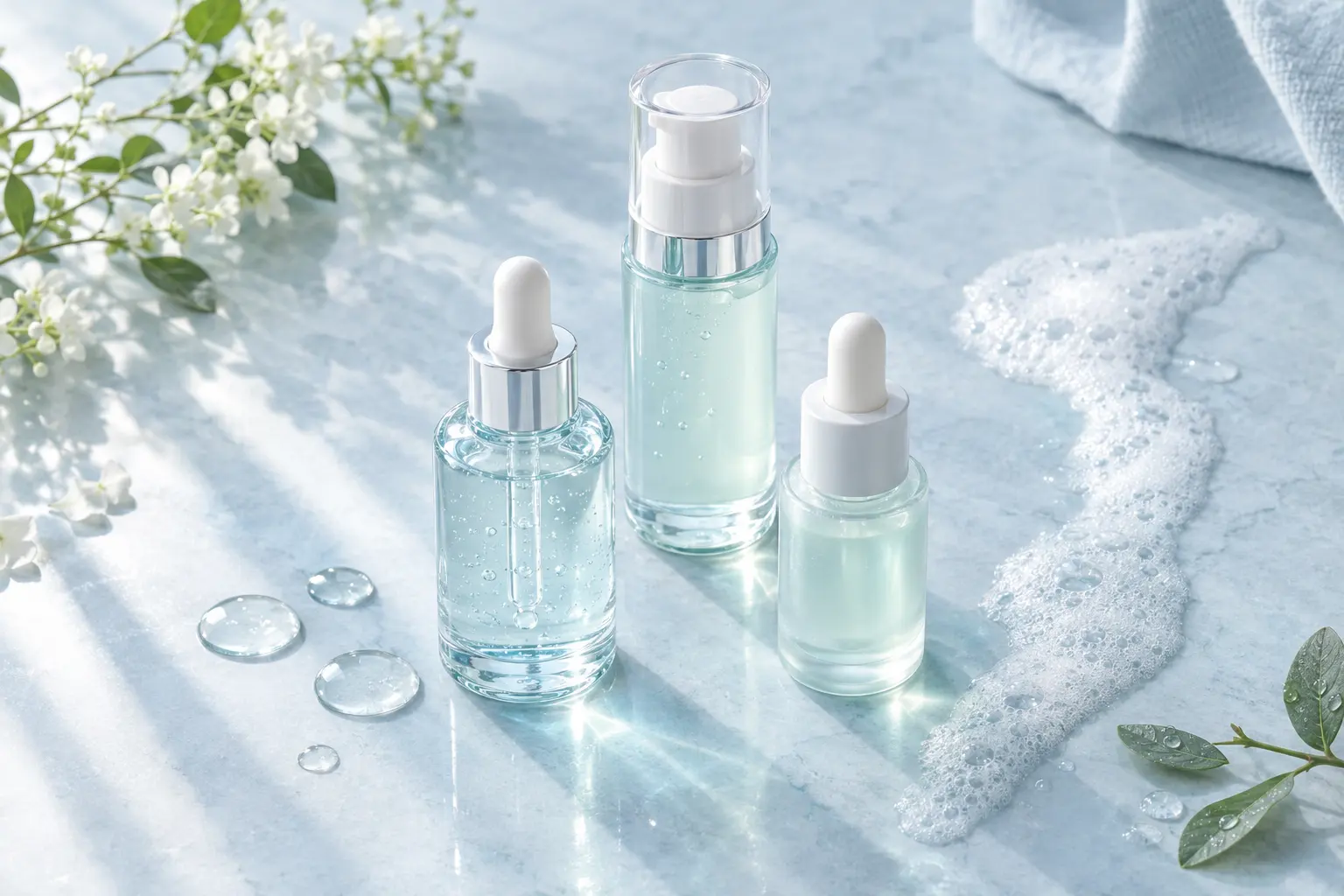
This Korean hyaluronic acid serum guide starts with something most product pages leave out. The number on the bottle tells you very little. “Ten types,” “50,000ppm” and “37.4% complex” each measure something different, and none of them predicts how your skin will feel by mid-afternoon in a heated office.
What does predict it is everything around the hyaluronic acid. That includes the humectants that share the formula, the barrier ingredients that are present or missing, and the format you will actually keep using. So the rule here is simple. Match the formula’s supporting ingredients to your skin’s real complaint, whether that is tightness, reactivity or dullness, and use the HA count as a tiebreaker at most.
Below, six products from the EmpressKorea shelf are sorted by that rule. Two of them contain hyaluronic acid but are not really hyaluronic acid serums at all, and knowing which two will save you money.
Why counting acids is the wrong way to shop Korean hyaluronic acid serums
Multi-HA complexes became a Korean selling point for a sound reason. Hyaluronic acid is not a single ingredient. It is a family of related molecules that differ in size and charge, and blending them is a legitimate formulation strategy. The trouble starts when the count becomes the product’s whole identity.
Look at how one well-documented formula actually breaks down. The European distributor listing for BARULAB’s bubble serum describes it as a serum with 8 types of hyaluronic acid [5]. The same listing gives sodium hyaluronate at 0.06% of the formula [5]. Several of the other hyaluronic forms are listed at 0.0001% or less [5].
None of that makes the serum bad. Hyaluronic ingredients are routinely used at low levels because they bind water so effectively. In that formula, the second ingredient after water is glycerin [5]. Glycerin is a reliable humectant that likely does a large share of the hydrating.
The breakdown does tell you two things. The product name says ten while the distributor says eight, so the count is a marketing label rather than a specification. And the forms listed at parts-per-million levels are hard to credit with doing the heavy lifting.
What to read instead of the count
- The first five ingredients. Water, glycerin, butylene glycol and similar humectants usually set both the texture and most of the moisture.
- What sits beside the HA. Ceramides, panthenol, betaine, centella or soothing extracts change who a product suits far more than one extra hyaluronate does.
- Format and frequency. A bubble serum, a capsule sheet mask and a mix-it-yourself ampoule are three different habits, not three versions of the same thing.
- Your actual complaint. A tight, flaky feeling, stinging after actives and flat-looking skin before an event each call for a different product.
Read a multi-HA claim as a sign that the brand is mixing molecular sizes, which is a reasonable choice. Just don’t pay extra for the eighth or tenth one.
How hyaluronic acid serums hydrate: size, salts and the humectant team
In cosmetic terms, hyaluronic acid is a humectant. It binds water in the outermost layer of skin and leaves a soft, flexible film on the surface. That is the whole job. It hydrates the upper skin, and you see the result as a smoother, plumper-looking, more reflective surface for as long as the hydration lasts.
Molecular weight changes where it sits
The widely used formulation logic runs like this. Large, high-molecular-weight HA stays on top of the skin as a surface moisture film, which explains the immediate cushioned slip you feel on application. Smaller fragments can move into the uppermost layers more easily. These are usually labeled hydrolyzed hyaluronic acid or hydrolyzed sodium hyaluronate, or marketed as “oligo” or “low molecular” HA.
How far those fragments travel depends heavily on their exact size and on the rest of the formula. Read the word “deep” on a hydration serum as a relative claim, not a literal one.
Decoding the hyaluronate names
- Sodium hyaluronate and potassium hyaluronate: salt forms of HA and the most common workhorses on any label.
- Hydrolyzed hyaluronic acid and hydrolyzed sodium hyaluronate: HA broken into smaller fragments, the “low molecular” family.
- Sodium hyaluronate crosspolymer: HA chains linked into a network, designed for a longer-lasting surface film.
- Sodium acetylated hyaluronate: a chemically modified form that is generally positioned for stronger affinity to skin.
- Hydroxypropyltrimonium hyaluronate: a positively charged form that clings to the negatively charged surface of skin and hair.
Anua’s capsule serum is a clear example of a formula that names nearly the whole family. Its published ingredient list includes hydrolyzed hyaluronic acid, sodium hyaluronate, hyaluronic acid, hydrolyzed sodium hyaluronate, hydroxypropyltrimonium hyaluronate, potassium hyaluronate, sodium hyaluronate crosspolymer and sodium acetylated hyaluronate [1]. Once you can read those names, a list like that tells you something real. The brand is deliberately spreading sizes and charges across the formula.
What HA cannot do
Topical HA is not injected HA filler, and no serum here replaces a dermal procedure. Expect hydration and a temporarily plumper surface. Claims about rebuilding deeper skin structure need product-specific clinical evidence that cosmetic pages rarely provide.
One practical consequence matters every day. Humectants hold water but do nothing to stop it evaporating. That is why an HA serum used alone can feel tight a few hours later in dry air, and why the layer you put on top matters as much as the serum itself.
Reading a Korean HA serum label: ppm, percentages and complexes
Korean hydration serums love a big number on the front of the box. The problem is that three products can print three numbers that measure three different things.
- THE LAB by blanc doux Oligo Hyaluronic Acid Hydro Serum lists 50,000ppm of low-molecular-mass hyaluronic acid and 10,000ppm of AQUAXYL™. Because 10,000ppm equals 1%, those figures work out to 5% and 1% on paper.
- APLB Hyaluronic Acid Ceramide HA B5 Ampoule Serum cites a 37.4% HA B5 Cen™ complex, a branded blend of hyaluronic acid, ceramides, vitamin B5 and centella asiatica.
- BARULAB 10-Hyaluronic Acid Blue Aqua Bubble Serum has its individual hyaluronic forms itemized, with sodium hyaluronate the largest at 0.06% [5].
Side by side, the APLB figure looks enormous and the BARULAB figure looks tiny. Neither conclusion holds up. A complex percentage covers every ingredient in the blend, often including the water or glycol the raw material is supplied in, so it cannot tell you how much of the blend is hyaluronic acid.
A ppm claim for a named ingredient can likewise refer to the raw material as delivered to the factory. For HA, that raw material is frequently a dilute solution rather than the pure molecule. The BARULAB numbers are the most transparent of the three precisely because they are small and specific.
Three label habits worth building
- Check the order. Ingredient lists generally run from highest to lowest concentration for the main components. A hyaluronate sitting in the last third of a long list is a supporting player.
- Confirm the box matches the listing. The CU CLEAN-UP serum in this catalog is titled a “10-Fold Hyaluronic Acid” ampoule, while its description refers to a “Hyaluronic 15” complex built from 10 types of ultra-low molecular HA. That probably reflects a packaging update. When the box arrives, check that the formula is the one you meant to buy.
- Know what a badge means. “EWG green” refers to ingredient ratings in a third-party hazard database. It is not a regulatory approval and not a guarantee your skin won’t react. THE LAB also lists “skin irritation test completed,” which means a test was run. That is useful reassurance, not a promise for every skin.
One more term worth knowing: AQUAXYL™ is a trademarked moisturizing ingredient derived from xylitol and related sugars. Its presence in THE LAB’s formula shows the brand is combining different types of humectants rather than relying on HA alone, which is a sensible approach for a watery serum.

Six Korean hyaluronic acid products compared by job
Here is the shelf sorted by the work each product is built to do, not by HA count. The middle column reflects only what each listing or brand source emphasizes. It is not a performance ranking, because no comparative testing between these products exists.
| Product | Format and size | What the listing emphasizes | Best match | Think twice if |
|---|---|---|---|---|
| BARULAB 10-Hyaluronic Acid Blue Aqua Bubble Serum | Bubble serum, 150ml | Multiple HA forms, glycerin, trehalose, soothing botanicals; vegan | Daily hydration for dehydrated skin that dislikes heavy layers | You react to lavender, tea tree or other botanical extracts |
| THE LAB by blanc doux Oligo Hyaluronic Acid Hydro Serum | Watery pump serum, 50ml | Low-molecular-mass HA, AQUAXYL™, hyaluronic complex | A minimal, watery hydration step under any moisturizer | You need barrier lipids, which this listing does not highlight |
| CU CLEAN-UP 10-Fold Hyaluronic Acid Moisture Ampoule Serum | Ampoule serum, 30ml | Multi-type low molecular HA, cypress water, betaine | Trying a multi-HA ampoule in a smaller size | You want a large daily-use bottle |
| APLB Hyaluronic Acid Ceramide HA B5 Ampoule Serum | Ampoule serum, 40ml | HA with ceramides, vitamin B5 and centella | Tight skin that also stings or feels reactive | You only want the lightest possible hydration layer |
| Anua PDRN Hyaluronic Acid Capsule 100 Serum Mask | Sheet mask, 23ml × 10 | PDRN with a hyaluronic capsule formula | Occasional radiance and hydration boosts | You expect it to replace a daily serum |
| DA99 Dissolving Thread Lifting Ampoule | Mix-before-use ampoule, 14ml | Chitosan film, adenosine, niacinamide, HA | A weekly overnight firming-film treatment | You have a shellfish allergy or want an everyday serum |
The table splits into three groups. The first three rows are daily hydrators, and choosing between them mostly comes down to texture preference, bottle size and how much botanical content your skin tolerates. The APLB ampoule stands alone because its stated supporting ingredients target barrier comfort, not just water content.
The last two rows are treatments that happen to contain hyaluronic acid. That is the most common mix-up on this shelf. Someone buys a PDRN mask or a lifting ampoule expecting a daily HA serum and ends up with a once-a-week product and a hydration gap on the other six days.
The decision in one line
Start with one daily serum from the first four rows. Add a treatment from the last two only if you have a specific reason, such as an event, a long flight, or a firmness goal you are willing to schedule around.
For plain dehydration: choosing a light multi-HA serum
Dehydration without irritation is the easiest case. Your skin feels tight after cleansing and fine lines look sharper by evening, but nothing stings and nothing turns red. You need water-binding ingredients and a texture you will apply twice a day without thinking about it.
Picture someone with oily, dehydrated skin in a humid summer. Their cheeks feel taut after washing, yet a rich cream sits on top and looks greasy by noon. They need a serum whose humectants do the work so the moisturizer on top can stay thin.
BARULAB’s bubble serum for frictionless daily hydration
The BARULAB serum suits this situation well on paper. Its distributor listing describes a bubble-foam format designed for friction-free application [5]. The formula combines glycerin and trehalose with its hyaluronic forms and adds green tea water, tea tree, heartleaf and guaiazulene, which the listing positions as soothing and antioxidant ingredients [5]. The suggested use is two to three pumps after cleansing, massaged in, morning and evening [5].
The catalog describes it as a vegan, lightweight formula. Its directions are to apply after toner, pump to create the bubbles, massage into the face and follow with moisturizer. The 150ml bottle is the largest on this shelf, which matters for a step you repeat twice a day.
There is one reservation. The ingredient list also includes lavender flower extract and clary sage extract alongside the tea tree [5]. Most people won’t notice them, but if lavender or tea tree has bothered your skin before, this serum is a poor fit.
When THE LAB or CU CLEAN-UP makes more sense
- THE LAB Oligo Hyaluronic Acid Hydro Serum is the minimalist alternative. Its listing describes a watery serum that is patted on, built around low-molecular-mass HA and AQUAXYL™, with EWG-green ingredients and a completed skin irritation test. If you prefer a plain serum to a bubble format, start here.
- CU CLEAN-UP 10-Fold Hyaluronic Acid Moisture Ampoule Serum comes in a 30ml size and pairs its multi-type HA with cypress water and betaine. Betaine is an amino-acid-derived humectant often used for a softer, less sticky finish. The smaller bottle makes it a lower-commitment trial, though it costs more per use if it becomes a staple.
All three belong to the broader serums and essences category, and all three need a moisturizer on top in dry conditions. None of them is a complete routine on its own.
For tight, reactive skin: HA with barrier backup
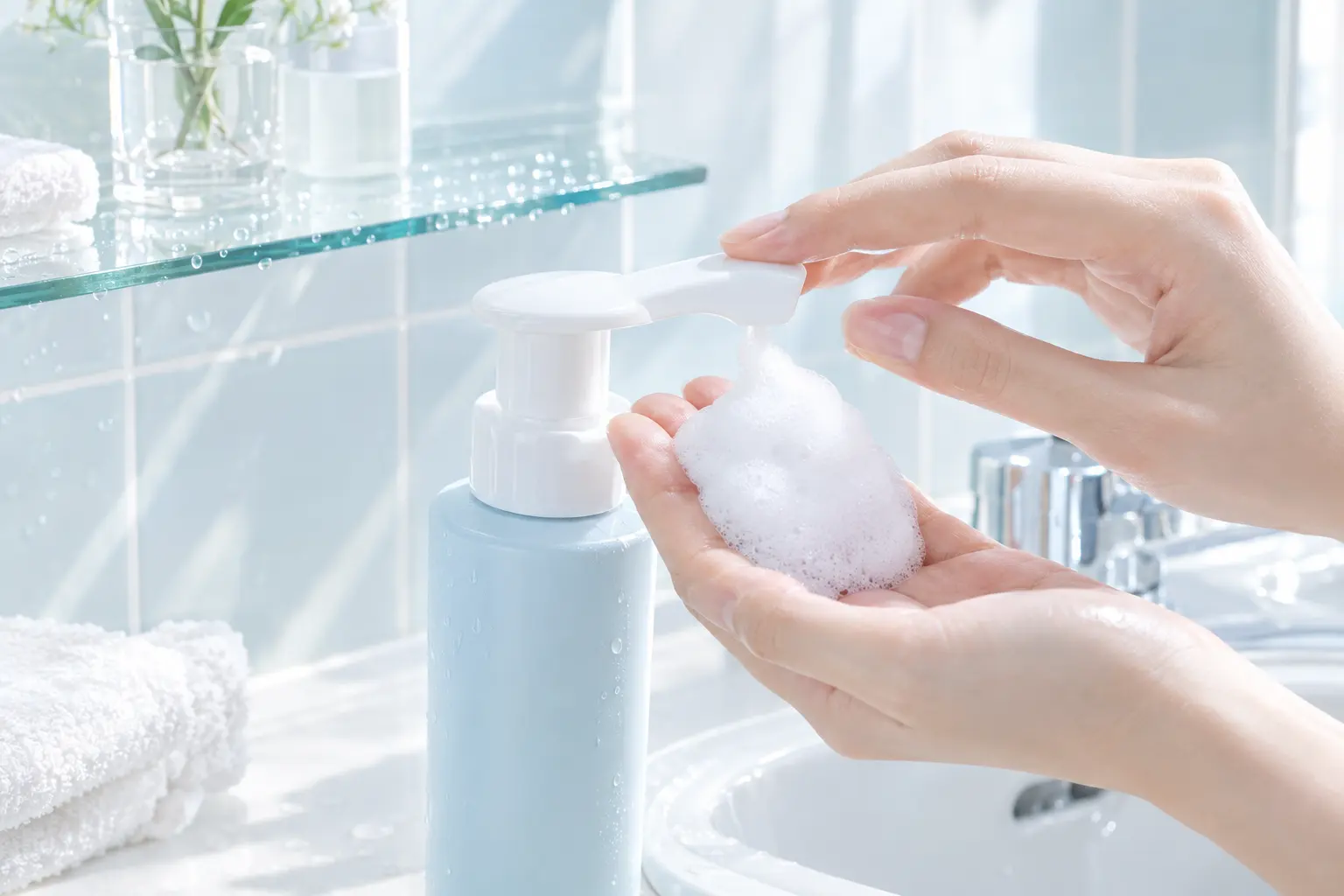
Tightness plus stinging is a different problem. If moisturizer burns briefly, if your cheeks flush after cleansing, or if you recently started a retinoid or an exfoliating acid, more hyaluronic acid alone may not help much. Your barrier is losing water faster than humectants can replace it, so the formula also needs ingredients that support the barrier itself.
That is the case for the APLB Hyaluronic Acid Ceramide HA B5 Ampoule Serum. Its catalog listing describes a 37.4% HA B5 Cen™ complex combining hyaluronic acid, ceramides, vitamin B5 and centella asiatica, aimed at moisture and barrier support for stressed skin. Each supporting ingredient has a distinct job:
- Ceramides are lipids that naturally sit between skin cells in the outer barrier. Topical ceramides are used to help replenish that lipid structure.
- Vitamin B5 (panthenol) is a humectant with a long track record in soothing, comfort-focused formulas.
- Centella asiatica is a staple Korean ingredient for calming the look of stressed, reddened skin.
Imagine someone two weeks into a nightly retinoid whose cheeks now sting when they apply their usual watery serum. A formula that pairs HA with ceramides and panthenol addresses both halves of the problem: water content and the lipid structure meant to hold it in. The listing states the serum is suitable for all skin types, including sensitive and irritated complexions. That is the brand’s positioning, not a comparative tolerance result, so introduce it on its own and watch how your skin responds.
When it is not the right pick
If your skin is comfortable and simply thirsty, the barrier ingredients here are optional. One of the lighter serums in the previous section will cover you, and the APLB ampoule is not automatically a better buy. If stinging persists even with gentle products, or comes with swelling or broken skin, stop adding new products and see a dermatologist. A serum is not a treatment for a skin condition.
The same barrier logic applies below the neck. If you are building a ceramide habit, the ceramide body-care guide explains how those lipids work in body formulas.
Treatments that contain HA: the PDRN mask and the lifting ampoule
Two products on this shelf list hyaluronic acid but should not be your HA serum. Both are scheduled treatments with their own logic, and both are easy to misjudge.
Anua’s PDRN capsule sheet mask
PDRN is the trend ingredient here. On a cosmetic label it usually appears as sodium DNA, and Anua states that the PDRN in its capsule serum is derived from salmon DNA [1]. Keep the delivery route in mind. Injectable PDRN and a topical cosmetic are not interchangeable, and the presence of sodium DNA in a serum or mask does not mean it delivers the effects associated with injected treatments. In the brand’s capsule serum, sodium DNA is the 21st of 34 listed ingredients [1]. That placement fits a supporting role, not a starring one.
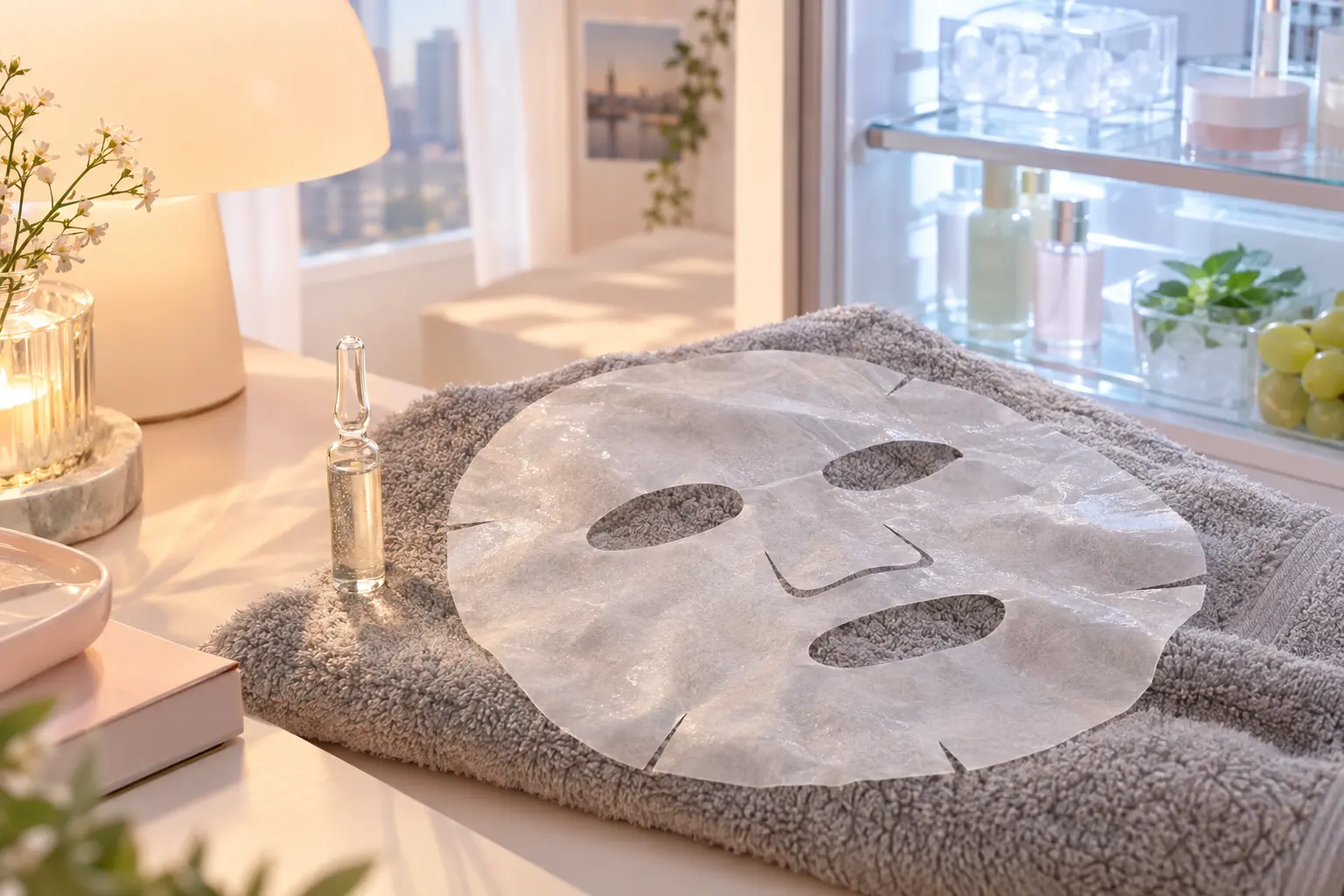
The catalog describes the Anua PDRN Hyaluronic Acid Capsule 100 Serum Mask as delivering the same core ingredients as the brand’s PDRN serum, with a concentrated hyaluronic acid capsule formula in a sheet built to adhere closely to skin. The stated goals are hydration and a luminous “water-glow” on dull, tired skin. A sheet mask’s essence can differ from the serum it borrows its name from, so check the ingredient list on the mask pouch rather than assuming it matches the serum.
Where does it fit? Picture someone heading to an evening event after a long-haul flight. Their skin looks flat and feels parched, and they want a visible, temporary boost without changing their routine. That is the right job for a sheet mask. With ten 23ml sheets in a box, you can use it occasionally, such as before events or during dry spells, without it becoming a daily expense.
If you are weighing sheet masks against other formats, the collagen mask format guide applies the same choose-the-format logic.
DA99’s dissolving-thread lifting ampoule
This is a weekly film treatment, not a hydration serum. DA99’s page describes pressing a button on the cap to release the “melting threads” into the essence, shaking, then refrigerating for at least 24 hours until the mix becomes a soft gel [3]. After mixing, the brand says to keep it refrigerated and use it within one week [3]. You spread the gel over your face, a film forms within about five minutes, and the brand recommends leaving it on overnight and rinsing with lukewarm water the next morning [3].
Several details on the label matter:
- The brand lists the product as fragrance-free [3].
- The full ingredient list includes glycolic acid as well as chitosan, niacinamide and sodium hyaluronate [3].
- DA99 advises anyone with a shellfish allergy to patch-test on the wrist before use [3]. Chitosan is commonly sourced from crustacean shells, so take that warning seriously.
- The brand states that the tight feeling during wear is the normal lifting action, not a lack of moisture [3].
DA99’s page presents its own two-week clinical figures, but these are brand-reported results under its specific protocol. The tight, filming sensation is the point of the product, and someone who dislikes that feeling on their face will not enjoy it. Because it contains glycolic acid, keep that night free of other exfoliating acids or retinoids unless the label says otherwise.
Layering a hyaluronic acid serum morning and night
A good HA serum used in the wrong place in your routine is half wasted. The principle is simple: humectants go on before the products that seal them in.
- Cleanse with something that doesn’t leave skin squeaky and tight. A harsh cleanser creates the dehydration your serum then has to repair.
- Toner, if you use one. BARULAB’s catalog directions place the serum after toner.
- HA serum on skin that is still slightly damp, so the humectants have water to hold in the outer layer.
- Moisturizer to slow evaporation. This step matters most in dry or heated air.
- Sunscreen in the morning.
If you’re unsure how many steps you actually need, this breakdown of Korean routine order covers which steps earn their place. A daily HA serum works morning and night. Treatments such as the DA99 ampoule belong to a dedicated evening, and the morning versus night routine guide explains what should change between the two.
Mistakes that waste the bottle
- Stacking three HA products. An HA toner, an HA serum and an HA cream add up to the same job done three times. Use one good serum and let the other steps do different work.
- Skipping the moisturizer in winter. A humectant layer with nothing over it is the usual reason for the complaint that an HA serum made skin feel drier.
- Treating a mask as a serum. A sheet mask is a boost, not a daily replacement.
- Combining exfoliating nights. Don’t stack a glycolic-containing treatment with other acids or a retinoid on the same evening.
- Introducing everything at once. Start one new product at a time so you know which one is responsible for any reaction.
The one safety note that matters
Patch-test any new product, and stop if redness, itching or stinging develops. BARULAB’s own cautions add that the product should not be used on damaged or broken skin [5]. That advice is sensible for every product here. Label directions always override general routine advice, including this guide.
Your next decision is narrower than it looked at the start. Name your complaint first: thirsty, reactive or dull. That points you to a light multi-HA serum, a barrier-supporting ampoule, or an occasional mask. Choose a daily serum before you even look at the treatments.
Frequently Asked Questions
Is a serum with more types of hyaluronic acid better?
Not necessarily. Mixing several hyaluronic forms is a reasonable way to combine surface hydration with smaller fragments that move into the upper layers. However, many of the listed forms appear at trace levels, and one distributor listing names eight types for a product sold as “10-Hyaluronic.” Judge a serum by its main humectants, its supporting ingredients and its texture, and treat the count as a minor detail.
Can I compare ppm and percentage claims between brands?
Rarely. A complex percentage includes every ingredient in a branded blend, and a ppm figure may describe a raw material that is itself a dilute solution. That makes 50,000ppm, a 37.4% complex and 0.06% sodium hyaluronate three different measurements. The ingredient order and the ingredients listed around the hyaluronic acid are usually more informative than the headline number.
Does topical hyaluronic acid work like filler?
No. A topical serum hydrates the outer layers of skin and gives a temporarily smoother, plumper-looking surface. Injected HA is placed beneath the skin by a practitioner and is a different category entirely. Treat any serum or sheet mask as a cosmetic hydration product, whatever the marketing suggests.
Is a PDRN sheet mask worth it if I already use an HA serum?
Only as an occasional extra. The Anua PDRN Hyaluronic Acid Capsule 100 Serum Mask is positioned for hydration and radiance on dull, tired skin, which makes it useful before an event or after travel. It does not replace your daily serum, and topical PDRN is not equivalent to injectable PDRN treatments. Check the mask pouch's ingredient list rather than assuming it matches the brand's serum.
Why does my skin feel tight after using a hyaluronic acid serum?
The usual cause is a missing sealing layer. Humectants hold water in the skin but don't stop it from evaporating, so in dry or heated air the moisture can leave before your skin benefits. Apply the serum to slightly damp skin and follow with a moisturizer. If you're using the DA99 ampoule, the brand states that tightness during wear is its normal film-forming action.
Who should avoid the DA99 lifting ampoule?
Anyone with a shellfish allergy should be cautious. DA99 advises a wrist patch test first, and chitosan is commonly derived from crustacean shells. It also contains glycolic acid, so avoid pairing it with other acids or retinoids on the same night. If you want an everyday hydrating serum, choose one of the daily options instead, because this product is meant to be used once a week.