
Korean peptide serum how to choose is the question you’re typing into search for a reason: peptides are everywhere, but not every bottle is actually useful. This article gives you clear, actionable criteria so you can buy with confidence.
Peptides can reduce wrinkle appearance, calm skin, or speed post‑procedure repair depending on the type and formula. Read on for precise label checks, pairing rules, a buying checklist, and step‑by‑step routine examples that work with Korean skincare habits and seasonal needs.
Match peptide type to your concern: what each peptide does
Start with your main skin goal. Peptides fall into functional groups and each behaves differently in formula and on skin. Treat the peptide name like the model of a tool: it tells you what the product can actually do. That matters more than marketing copy that says “peptide complex” with no specifics.
Quick primer: four useful peptide classes
Below is a focused comparison to help you match a serum to a need. Use it when scanning ingredient lists: if the brand lists “Palmitoyl Pentapeptide‑4” or “Acetyl Hexapeptide‑8” you know more than if the label just says “peptide complex.”
| Peptide Class | Best for | How it works | Notes |
|---|---|---|---|
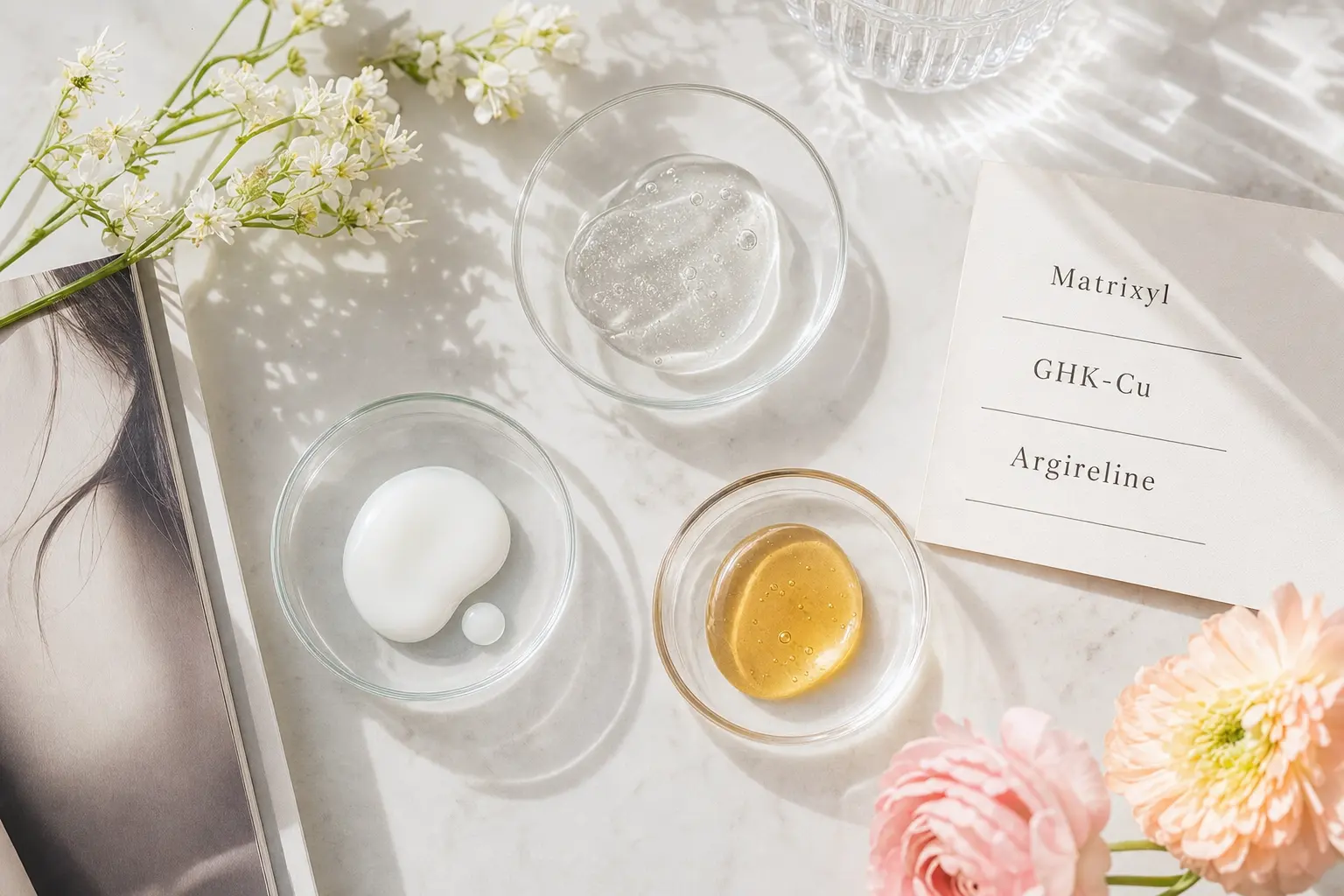
| Signaling peptides (Matrixyl family) | Fine lines, skin firmness | Signal skin to produce more collagen and ECM components | Evidence of wrinkle reduction in controlled trials; look for specific names like palmitoyl tripeptide |
| Neurotransmitter‑modulating (Argireline) | Expression lines (crow’s feet, forehead) | Modulates muscle‑related micro‑movements to soften expression lines | Often used in targeted serums or eye products |
| Copper peptides (GHK‑Cu) | Repair, wound healing, post‑procedure recovery | Copper‑bound tripeptide supports repair pathways and helps extracellular matrix remodeling | Formulation constraints with low pH and strong acids; avoid mixing in the same product |
| Anti‑inflammatory / repair peptides | Sensitive, red or post‑treatment skin | Reduce inflammatory signaling and support barrier recovery | Good paired with ceramides and humectants for hydration |
How to use this: identify your primary concern (lines, expression, repair, redness), then scan the INCI. If you want a visible anti‑wrinkle effect, prioritize serums that clearly list signaling peptides like palmitoyl pentapeptide‑4 (Matrixyl) rather than a vague “peptide complex.” For post‑procedure care or stubborn damage, a product with GHK‑Cu can be appropriate but note the mixing rules later in the article.
Keep in mind that many modern Korean launches favor multi‑peptide blends—this can be smart if the formula balances supportive ingredients (hyaluronic acid, niacinamide, ceramides) and the brand names the peptides. Multi‑peptide strategies grew in popularity across 2025–2026 as the category matured and brands focused on delivery vehicles to help peptides actually reach skin layers [1][6][8].
How to read the label: ingredient order, named peptides, and marketing traps
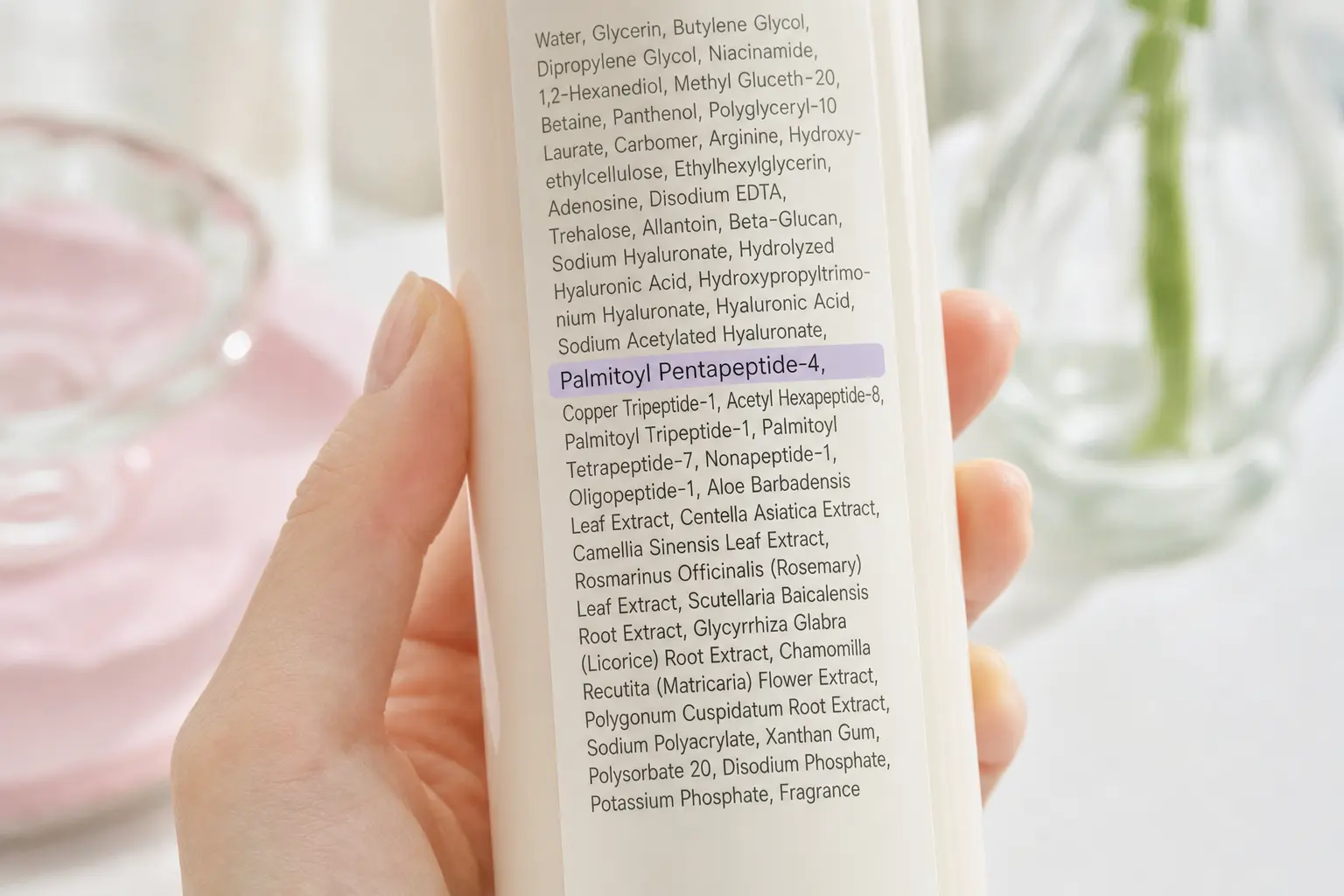
Labels tell the story if you know how to read them. Ingredient lists are ordered by concentration, so a peptide that appears low down is probably present at an immaterial level. Avoid products that promote “peptide complex” on the front but bury unnamed peptides at the end of the INCI.
Checklist for the label
- Specific names: Look for palmitoyl tripeptide‑1, palmitoyl tetrapeptide‑7, acetyl hexapeptide‑8, or GHK‑Cu. Specific names mean the brand discloses what’s actually in the formula.
- Position: If a peptide is meaningful, it will appear in the top third of the INCI. If it’s last, it’s probably a marketing throw‑in.
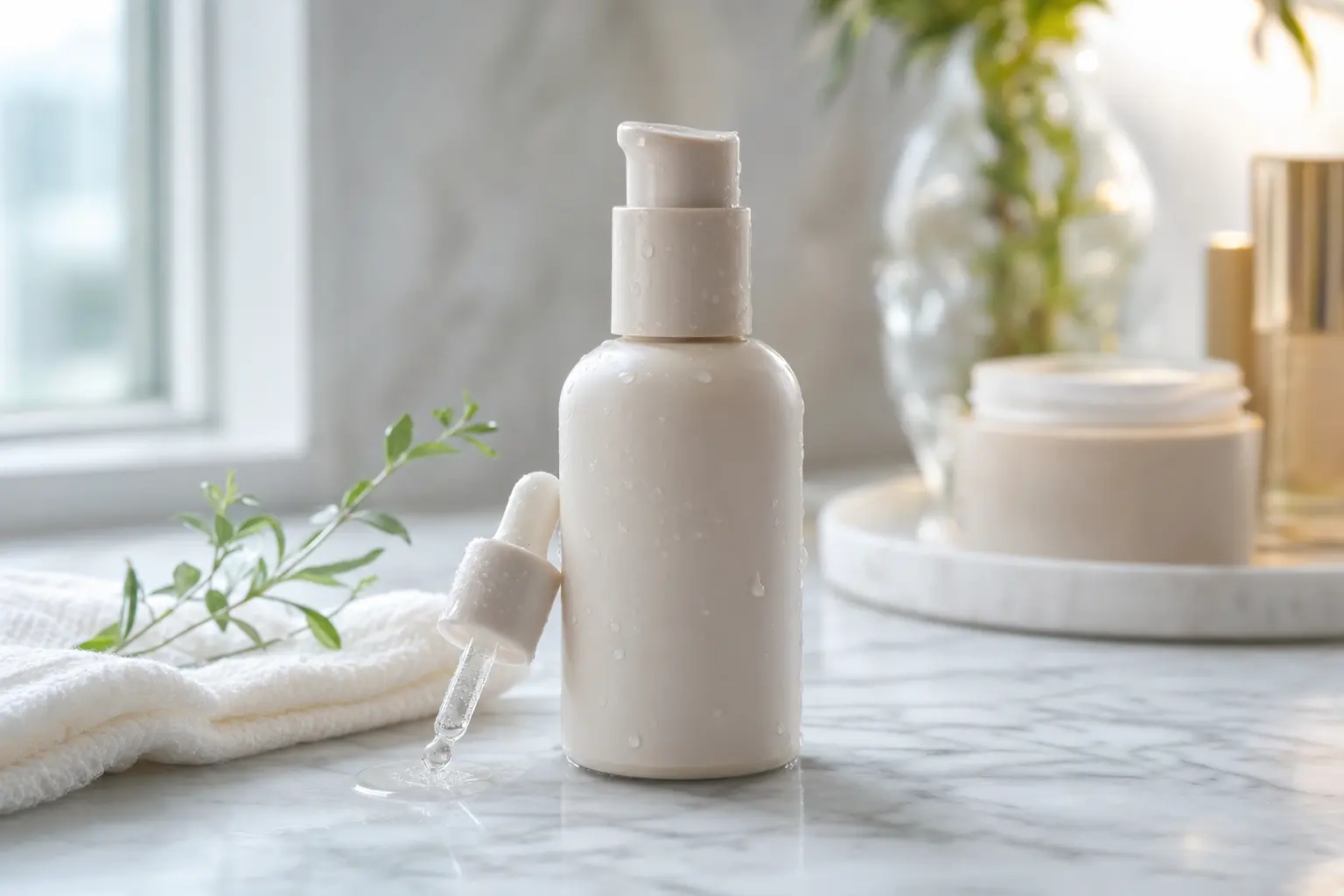
- Packaging: Opaque pump or air‑less dropper reduces light/air exposure and helps peptide stability; jars and clear droppers are red flags for fragile actives.
- Claims vs. facts: Brands sometimes use vague research language—”clinically inspired” or “laboratory‑developed”—but the decisive sign is the ingredient list and any disclosed concentrations.
What to be skeptical of: phrases like “peptide complex” or “bio‑peptides” without follow‑up details. These are often used to imply high‑tech performance while the formula actually contains only trace peptides. A trustworthy product will either list each peptide or state its total peptide percentage.
Also watch for incompatible ingredient promises. For example, copper peptides can be unstable at low pH and are better kept out of highly acidic formulas or combined with certain vitamin C esters unless the brand specifically explains how they stabilized the mix [4]. That explanation can often be found in the product description or technical FAQ on the product page.
When shopping on EmpressKorea, use the Serums & Essences category to narrow options and the Skin Care category for broader comparisons. These category pages let you compare packaging and ingredient transparency quickly: Serums & Essences and Skin Care.
Formulation matters: vehicle, pH, stability, and supportive hydrators
Peptides are short chains of amino acids; their activity depends heavily on the vehicle that delivers them into skin. A good peptide serum pairs the active peptide with a carrier and hydrating backbone that keeps the peptide stable and improves skin penetration. Korean formulations have leaned toward lightweight gel‑serums, emulsion serums, and soothing ampoule textures to marry peptides with humectants and ceramides.
What to inspect beyond the peptide name
- Vehicle: Lightweight gels or low‑viscosity emulsions dissolve peptides well and layer under moisturizers without pilling. If you prefer oil‑rich textures, peptides can still be effective but check whether the brand tested absorption in that vehicle.
- Supportive ingredients: Hyaluronic acid, glycerin, niacinamide, and ceramides help improve the skin barrier and keep peptides doing their job. Look for these near the top of the INCI in peptide serums aimed at visible firming or recovery.
- pH and stability: Copper peptides (GHK‑Cu) lose potency in low‑pH formulas and can be destabilized by strong exfoliating acids. Brands often explicitly say if they’ve stabilized copper peptides—those notes are a good trust signal [4].
- Packaging: Air‑less pumps and opaque bottles preserve peptide integrity. If a formula contains copper peptides, double‑check that the brand warns about acidic pairings.
Hyaluronic acid is a common supportive ingredient because it improves skin hydration and helps peptides feel weightless on the skin. If long‑term firming is your goal, favor serums that combine signaling peptides with humectants and barrier ceramides rather than a peptide isolated in an alcohol‑heavy base.
Practical tip: If the product page doesn’t address pH, vehicle, or peptide positioning, contact customer service or choose a formula that discloses those details. Transparency about formulation is a stronger signal than bold claims. For shoppers who want curated product picks, browse the EmpressKorea Serums & Essences section and compare technical descriptions side by side: Serums & Essences
Layering rules and scheduling: peptides with retinol, vitamin C, and acids
One of the most common questions is whether peptides play well with other actives. Short answer: mostly yes, with some important exceptions and smart scheduling. The Korean approach tends to be conservative—peptides in the morning under sunscreen and stronger actives at night—because that balances protection and repair without unnecessary irritation.
Practical layering rules
- Morning: Gentle cleanser → peptide serum → moisturizer → sunscreen. Peptides in the morning pair well with antioxidant serums, but avoid combining with low‑pH vitamin C in the same layer unless the brand states compatibility.
- Night: Cleanse → targeted retinol or AHA on alternating nights → peptide serum later in the routine or on nights off from acids. Many people find better tolerance when peptides are applied after retinoids once the retinoid has absorbed and the skin is not actively stinging.
- Copper peptides: Do not mix in the same step with strong acids or freshly applied low‑pH vitamin C. Either use copper peptides in the morning and acids at night, or separate them by several minutes and monitor for irritation. Some brands explain how they’ve stabilized copper peptides for dual‑use; prefer those that publish stability data [4].
How to handle layering practically: if you use a concentrated vitamin C serum in the morning, keep peptides for the evening (or vice versa). If you want peptides in the morning, pair them with antioxidant serums formulated at skin‑friendly pH and finish with a reliable sunscreen—see our sunscreen guide for no‑white‑cast options suited to layered Korean routines: Best Korean Sunscreen No White Cast.
Small‑scale testing works: apply one active at a time for two weeks and watch for redness, peeling, or stinging. If you’re introducing both a peptide serum and a retinoid, stagger starts—introduce the peptide first for a week, then add the retinoid on alternate nights and increase frequency slowly. This method reduces reactive flares and helps you see which product is delivering measurable improvement.
Texture, sensorials, and seasonal choices for Korean climates
Texture isn’t just a luxury quirk—it affects how often you’ll use a product and how it layers with the rest of your routine. Korean skincare favors sensorially pleasing textures because they encourage consistent use. That matters: peptides require consistent application over weeks to show benefits.
How textures map to skin type and season
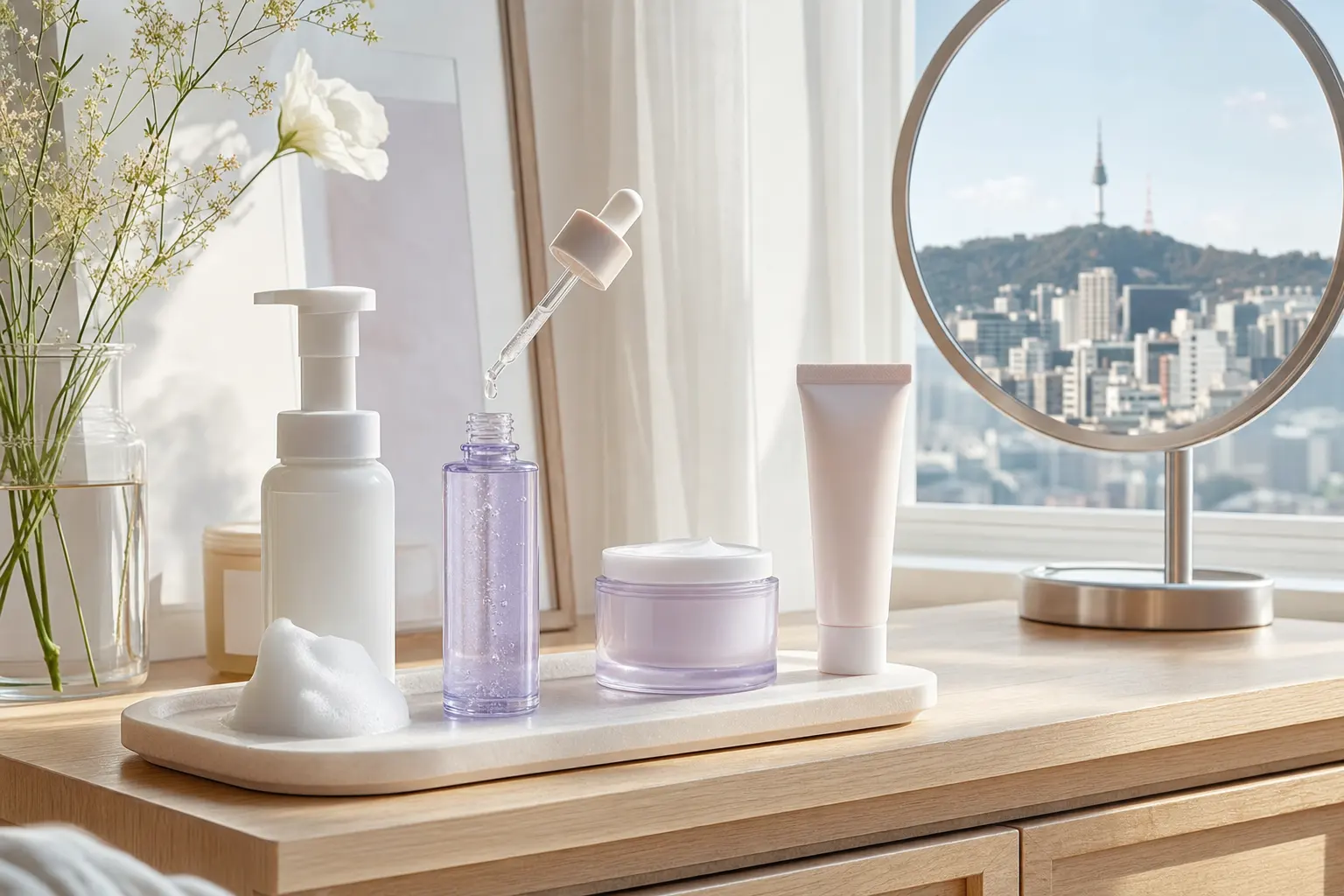
- Gel‑light serums: Ideal for combination and humid summer months. They absorb quickly, layer well under sunscreen, and suit daytime routines in Seoul’s humid summers.
- Light emulsion or ampoule: Good year‑round for normal and dehydrated skin—offers a bit more nourishment without heaviness.
- Rich serums or oil‑blend textures: Best in winter or for dry skin types. These often include occlusive components and thicker humectant blends to lock in peptides overnight.
Sensory cues: a quality peptide serum won’t sting (unless it’s combined with a retinoid or acid) and should spread evenly without leaving a tacky residue. If a peptide serum feels gritty, separates, or leaves an oily film, check the ingredient list for incompatibilities or poor emulsification. Fragrance is a double‑edged sword—pleasant but an avoidable source of irritation for sensitive skin.
Seasonal habit from Korean routines: swap to a lighter peptide gel in late spring and summer, and keep a richer peptide ampoule for winter nights. This keeps the peptide concentration consistent while matching the vehicle to your barrier needs. If you’re unsure which texture will layer best under your sunscreen, pick a lightweight gel—it’s the safest bet for everyday layering and works well under SPF as recommended in morning routines [8].
When shopping on EmpressKorea, filter by texture in the Serums & Essences category to compare sensorial descriptions and select packaging that protects fragile actives: Serums & Essences.
Expectations: how long to see results and what evidence exists
Peptides are neither instant fillers nor miracle actives you’ll notice overnight. Controlled studies on signaling peptides like Matrixyl show measurable wrinkle improvement on multi‑week endpoints, and clinical evidence is stronger when brands disclose concentration and vehicle [3]. Be skeptical of claims that promise changes in days.
Realistic timelines: you can expect subtle changes in skin texture and hydration within 2–4 weeks if the formula includes effective supporting ingredients; visible reduction in fine lines or firmness typically appears after 6–12 weeks of consistent use. Keep in mind that personal factors—baseline skin condition, age, and concurrent actives—will affect timing.
What to look for on product pages
- Clinical data: Brands that cite a study or consumer trial and specify endpoints (e.g., wrinkle depth at 8 weeks) are showing stronger evidence. Even if the study is small, transparency about methods and concentration is useful.
- Concentration clues: Not all brands publish peptide percentages, but if they do, that helps set expectations. Otherwise, use ingredient order as a proxy—peptides near the top are more likely to be clinically relevant.
- Complementary actives: Serums that combine peptides with hyaluronic acid, niacinamide, or ceramides often produce more noticeable improvements because they address hydration and barrier support alongside structural signaling.
Clinical nuance: neurotransmitter‑modulating peptides like Argireline are often used for immediate expression‑softening benefits, but results are generally modest and depend on formulation. Copper peptides are prized for repair and are common in post‑procedure products; they require careful formulation to preserve activity and avoid low‑pH degradation [2][4].
Track progress with photos under consistent light every two weeks and note changes in texture, elasticity, and fine lines. If after 12 weeks you see no improvement, reassess layering, consistency, or whether the product actually lists meaningful peptides in the INCI.
A practical shopping checklist and common mistakes to avoid
Use a checklist when you’re browsing. Peptide marketing is noisy—this step converts curiosity into confident purchasing. Below is a step‑by‑step buying cheat sheet you can use in the product page or in‑store.
Peptide serum shopping checklist
- Identify your goal: firming, expression lines, repair, or calming. Match to peptide class from the first section.
- Scan the INCI: specific peptide names present? Are they in the top third of the list?
- Check packaging: opaque bottle, air‑less pump, or protected dropper. Avoid clear glass bottles with droppers for delicate peptides.
- Read the formula notes: pH, pairing warnings (especially for copper peptides), and supportive hydrators like HA or ceramides.
- Look for transparency: any published concentration or study? If not, is the brand responsive or informative in product FAQs?
- Sensorial & season fit: choose gel for humid months, richer ampoule for winter nights.
Common mistakes shoppers make
- Buying solely on packaging photos or front‑label buzzwords—always read the INCI.
- Mixing copper peptides with freshly applied low‑pH acids or high‑strength vitamin C without checking product compatibility [4].
- Expecting overnight results—peptides need consistent application and often supportive actives to show visible change.
Local shopping note from Seoul trends: Korean brands release peptide drops and seasonal ampoules frequently, often emphasizing texture and delivery technology. That means good options are plentiful, but prioritize transparency over novelty. For quick browsing and curated picks, use the EmpressKorea product categories to narrow by ingredient and packaging: Serums & Essences and Skin Care.
How to introduce a peptide serum: routines, patch tests and troubleshooting
Introducing a peptide serum should be methodical, not impulsive. Treat peptides like clinical support: start small, observe, then increase. Korean routines often favor layering light hydrators first, peptides next, and a moisturizer or sunscreen last—this order optimizes absorption and barrier support.
Step‑by‑step introduction plan
- Patch test: Apply a pea‑sized amount to the inner forearm or behind the ear for 48 hours to watch for delayed irritation.
- Begin with 3× week: Use the peptide serum every other night (or mornings if you prefer daytime use), then increase to nightly after two weeks if there’s no irritation.
- If using retinol: start retinol on alternate nights. When both are tolerated, you can either layer them (retinol then peptide after a short wait) or use peptides on nights off from retinol.
- Morning protection: peptides don’t necessarily increase sun sensitivity, but any anti‑aging routine should include daytime SPF—see our guide for sunscreens that work well under layered routines: Best Korean Sunscreen No White Cast.
Troubleshooting common reactions
- Mild sting or redness: reduce frequency and add a barrier‑support moisturizer. If symptoms persist beyond a week after stopping, consult a clinician.
- Stinging with acids/retinol: separate application times—use acids at night and peptides in the morning, or alternate nights.
- No visible results: confirm the peptide is actually present high in the INCI. If it is and there’s still no progress after 12 weeks, try a different peptide class or combine with complementary actives like niacinamide and HA for barrier support.
Final note: consistency matters more than frequency for many users. Adopting a user‑friendly texture that you’ll reach for every morning or night is the single most practical decision. That’s why Korean brands emphasize pleasant sensorials—better compliance equals better results.
Frequently Asked Questions
Which peptide is best for wrinkles versus expression lines?
For fine lines and structural loss, signaling peptides (Matrixyl family: palmitoyl peptides) are the usual recommendation because they support collagen production. For expression lines, neurotransmitter‑modulating peptides like acetyl hexapeptide‑8 are used to soften micro‑movements. Match the peptide class to the visible concern for best results.
Can I use peptide serums with retinol and vitamin C?
Yes, but schedule smartly. A common Korean approach is peptides in the morning with sunscreen and retinol or acids at night. Avoid applying copper peptides immediately after low‑pH acids or freshly applied strong vitamin C unless the brand confirms compatibility; otherwise separate them by time or alternate nights.
How long before I see results from a peptide serum?
Expect subtle hydration and texture improvements in 2–4 weeks and visible changes in fine lines or firmness in about 6–12 weeks of consistent use. Clinical endpoints in controlled trials are typically multi‑week, so consistent application is essential.
Are copper peptides safe and do they cause photosensitivity?
Copper peptides (GHK‑Cu) are generally safe but can be unstable in low‑pH environments and may be incompatible with strong acids. They are not inherently photosensitizing, but because they support repair, it's best to use them with an SPF in the morning or as directed in evening routines.
How can I tell a peptide product is real and not just marketing?
Look for specific peptide names in the INCI, peptides listed high in the ingredient order, packaging that protects from light and air, and any disclosed formulation details like pH or concentration. Brands that explain stability or publish trial details are more trustworthy than those using vague language like "peptide complex."