
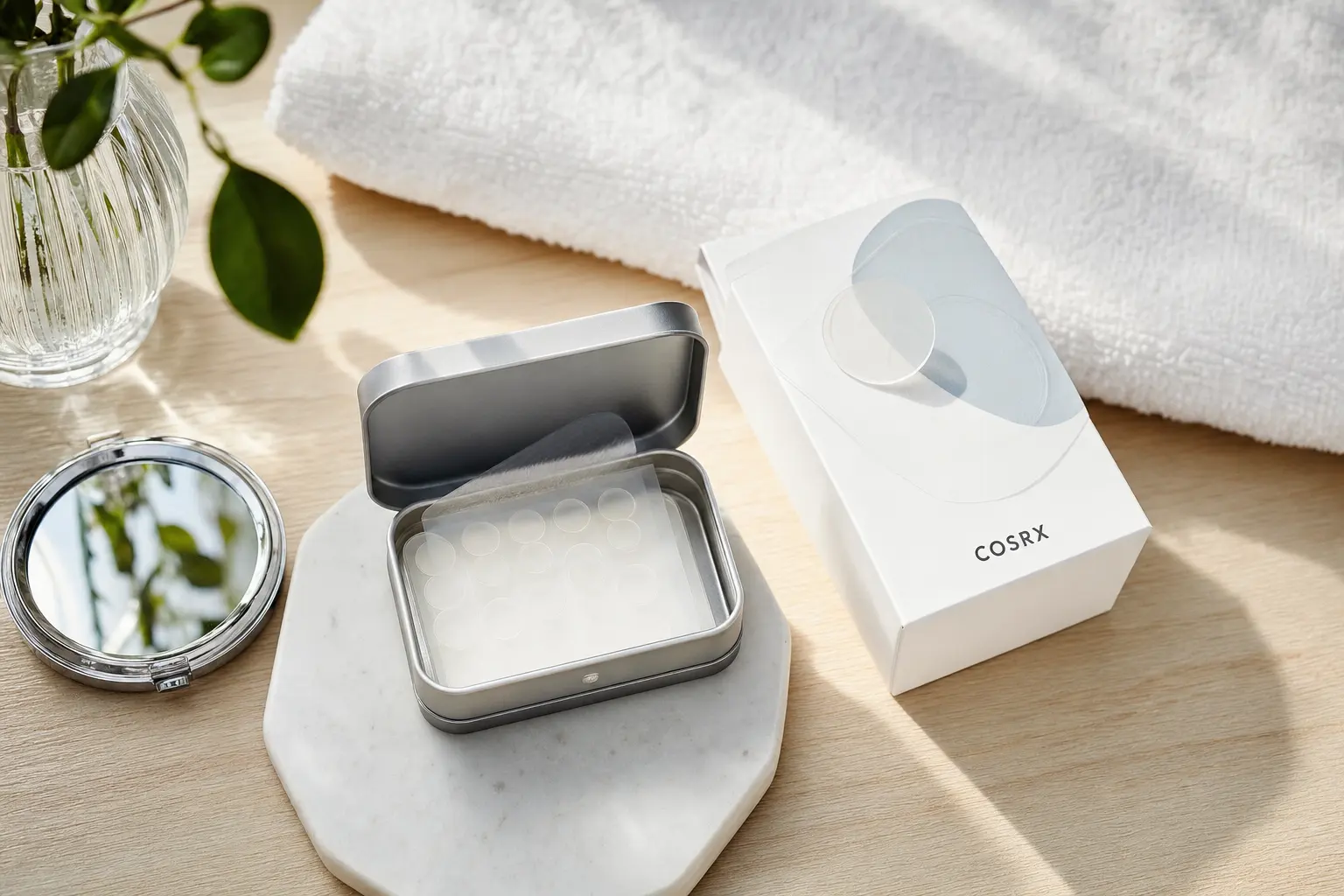
This Korean acne patch guide puts practical decisions first: when a patch will actually speed recovery, which format to pick, and how to avoid sensitivity or a loose edge. Read the short checklist, then follow the step‑by‑step application and shopping tips.
We use Korean market data and COSRX product listings to explain how hydrocolloid patches absorb exudate and when medicated or micro‑dart formats change the rules — including regulatory cautions from Korean authorities. The product recommendations are COSRX picks available on EmpressKorea.
How acne patches work: hydrocolloid action and what they don’t do
Patches succeed because they act like a tiny, sterile bandage: they isolate the lesion from dirt and hands while absorbing fluid and creating a moist healing environment. The most common base in Korean patches is hydrocolloid — a dressing that swells as it soaks up pus and oil, then visibly whitens. That visible whitening is useful: it tells you the patch is doing mechanical work, not magically dissolving blemishes overnight.
Hydrocolloid patch function is simple and evidence‑backed, but the clinical literature is limited to small studies and pilot randomized trials. These trials show faster reduction in redness and size compared with controls in some cases, but larger studies are needed for stronger therapeutic claims [2]. Practically, think of hydrocolloid patches as: cover + absorb + protect.
What hydrocolloid does well
- Absorbs exudate and pus to reduce pressure and swelling.
- Forms a barrier against bacteria and picking that often makes spots worse.
- Works overnight or for several hours; many Korean daytime designs are ultra‑thin for visibility.
What hydrocolloid doesn’t do
- It won’t reliably clear deep nodules or internal cystic acne — these are below the surface and need professional care.
- It doesn’t deliver a large dose of active drugs; most medicated patches use only trace actives unless marketed and regulated as therapeutic [1].
In Korea, innovation focuses on variations of hydrocolloid (thinner sheets, decorative shapes, or medicated hybrids), but remember the base mechanism is mechanical absorption and protection — that’s what you’re buying when you reach for a spot patch at the drugstore [3].
Quick tip: if a patch peels up within an hour it can’t absorb properly; a well‑adhering hydrocolloid should stay put through sleep and light activity.
Which patch type suits my acne: hydrocolloid, medicated, or micro‑dart
Deciding which patch fits your breakout starts with the lesion type: surface whitehead, recent popped spot, inflamed papule, or deep cyst. Korean brands produce several formats, each with pros and limits: plain hydrocolloid for absorption, medicated hydrocolloid with low‑dose salicylic/tea tree for added keratolytic/antiseptic action, and micro‑dart (microneedle) patches intended to deliver actives below the stratum corneum. Regulatory bodies in Korea treat transdermal or penetrative formats differently because they aim to deliver ingredients into the skin [5].
Below is a concise comparison to help match patch type to problem and to set realistic expectations.
| Patch type | Best for | Key limit |
|---|---|---|
| Hydrocolloid | Whiteheads, popped blemishes, surface pus | Won’t reach deep cysts; mechanical action only |
| Medicated hydrocolloid | Stubborn surface spots, mild comedonal congestion | Contains low actives; possible irritation on sensitive skin |
| Micro‑dart / microneedle | Targeted delivery below surface (research/medical use) | Often regulated as higher‑risk; not all are cosmetic |
| Decorative/ultra‑thin daytime | Discreet daytime wear, social contentability | Smaller absorption volume; fashion > function in some shapes |
The commercial trend in Korea through 2025–26 shows hydrocolloid dominating unit sales while medicated and micro‑dart formats grow in value share as consumers seek extra potency or novelty [3]. That mirrors what you’ll see on shelves: a majority of packs are plain hydrocolloid because they’re inexpensive to manufacture and effective for everyday use.
Choosing by practical factors
- Skin sensitivity: pick plain hydrocolloid first; introduce medicated patches slowly.
- Daytime needs: look for ultra‑thin or clear patches designed for makeup wear.
- If a patch claims to ‘deliver’ actives via micro‑darts, check local regulations or approvals — these may be regulated as medical devices, not cosmetics [5].
Summary: for most users the right first pick is a trusted hydrocolloid patch; upgrade to medicated only after testing for irritation, and treat microneedle patches as a different product category because of regulatory and safety differences.
When to use a patch: whiteheads, blackheads, cysts and post‑procedure care
Knowing when to reach for a patch saves time and prevents frustration. For surface whiteheads that have a central visible head or for a freshly popped spot that we want to protect and absorb, a hydrocolloid patch is the go‑to. It reduces exposure to hands and external bacteria while lowering the pressure inside the lesion.
Blackheads are a special case: patches that claim to remove blackheads actually work by sticking to surface debris; a hydrocolloid can help break down and hold some material, but extraction tools or professional care are the usual route for stubborn comedones. Deep cystic acne is not appropriate for patches — those lesions sit under the skin and need dermatologic assessment.
Post‑procedure and wound‑management use
Hydrocolloid dressings are also used after minor dermatologic procedures (like extractions or small icing wounds) to keep the area moist and protected. Several Korean hydrocolloid patches incorporate soothing extracts for repair support; these are formulated to maintain a moist microenvironment that reduces scab formation and supports healing [1].
For everyday, start small: if a spot is raised, tender, and has a visible head, apply a patch. If it is flat, under the skin, or very large and painful, skip the patch and seek professional advice.
Why this COSRX pack is a practical first purchase: the COSRX Acne Pimple Master Patch offers three sizes to cover different lesion diameters and is formulated to absorb oil and impurities while shielding the spot. Its instructions allow up to 8 hours of wear, which fits overnight or daytime use when you need a discreet barrier. This pack is a simple, versatile starter for people who want a dependable hydrocolloid option.
Use notes: choose a patch size slightly larger than the lesion; change when the patch becomes opaque white. If redness worsens or irritation appears, stop using and inspect the skin — medicated steps come later, after ruling out sensitivity.
How to apply acne patches for best results: a step‑by‑step routine
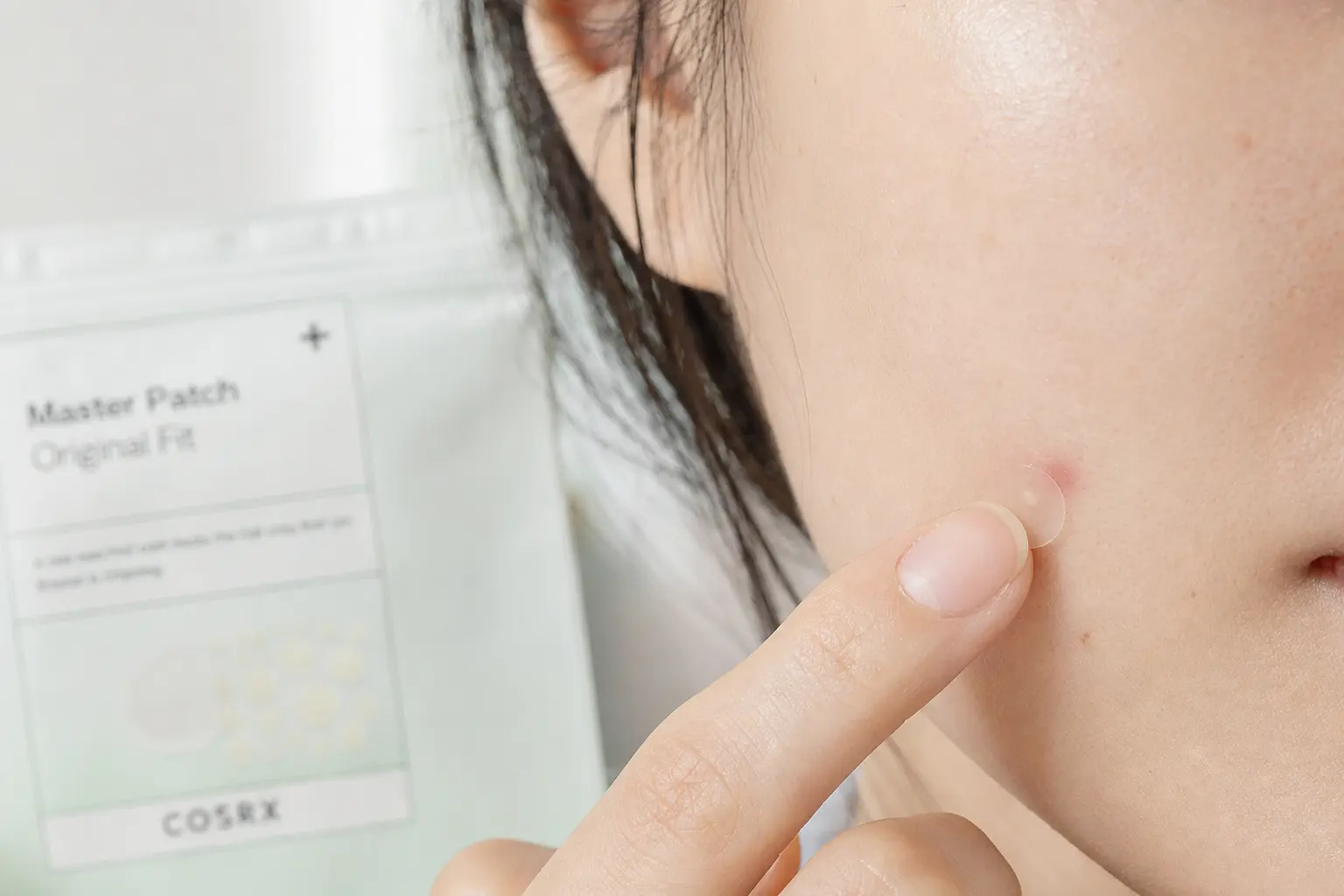
Application technique determines how much benefit you get from a patch. Even the best hydrocolloid fails if it won’t adhere to slightly damp or uneven skin. Start by cleansing and fully drying the target area — oil, sweat, and residual serums can repel an adhesive. If you use a leave‑on treatment like an exfoliating toner, let it fully absorb before applying the patch.
Step‑by‑step application:
- Cleanse: use a gentle cleanser. Pat the skin dry with a clean towel.
- Optional prep: if the area is oily, a light alcohol‑free toner can help; avoid fresh retinoid or acid immediately before applying if you plan a medicated patch.
- Peel and place: remove the clear backing and place the patch centered over the lesion, smoothing from the center outward to avoid creases.
- Wear time: leave on for several hours or overnight. Many Korean hydrocolloid patches are designed to work up to about 8 hours and will turn white as they absorb fluid.
- Removal: gently lift from the edge; cleanse the area and follow with normal skincare. Do not reuse a single patch.
COSRX’s clear hydrocolloid design is thin enough to be used under makeup and through showering, which suits daytime wear or someone who wants an invisible overnight layer. It also includes multiple sizes so you can match the patch to the blemish diameter without excess overlap.
Why this product fits an application‑technique routine: the COSRX Acne Pimple Master Patch (24 Sheets) is formulated as a thin, clear hydrocolloid that seals around acne to protect from bacteria while maintaining moisture balance; it’s explicitly labelled for overnight use and makeup compatibility, which makes it versatile for both bedtime and daytime application [1].
Common application mistakes to avoid: applying onto damp skin, using a patch on a scab or actively bleeding lesion, and stretching the patch while pressing it down which can create gaps. Replace a patch the moment it turns opaque or peels at the edges—these are signs it’s saturated or failing adhesive contact.
Medicated patches and sensitive skin: ingredients, safety and Korean regulatory notes
Medicated hydrocolloid patches add low concentrations of actives such as salicylic acid or tea tree oil to the adhesive matrix. COSRX’s “intensive” Master Patch line, for example, lists salicylic acid and tea tree in low percentages alongside a hydrocolloid dressing — demonstrating how brands combine mechanical and mild chemical action in a single product [1].
That combination can accelerate clearing for surface‑level, mildly inflamed spots, but it also raises the bar for user caution: even low concentrations of salicylic acid can sting on very sensitive skin or interact with recent retinoid use. Test a medicated patch on a small area before widespread use, and avoid leaving medicated patches on for longer than the label recommends.
Regulatory context in Korea
Korea’s Ministry of Food and Drug Safety (MFDS) treats claims about wound healing, drug delivery, or transdermal penetration seriously. Patches that advertise delivery below the skin surface or therapeutic drug effects may be classified outside the cosmetic category and require different approval and labelling[5]. This affects both consumer expectations and product claims: watch the language on packaging and marketing. If a product claims to ‘heal’ or ‘deliver’ ingredients, verify whether it’s classified as a cosmetic or a quasi‑drug/medical device before assuming it’s a simple over‑the‑counter patch.
Practical safety checklist for medicated patches:
- Read the ingredient list for salicylic acid, tea tree, or other actives and note concentration if listed.
- Perform a patch test behind the ear or on the inner forearm for 24 hours before facial use.
- Avoid medicated patches on abraded or freshly exfoliated skin.
Medicated patches can be useful but they’re not a blanket upgrade. If you have reactive or rosacea‑prone skin, consult a professional before regular use, and always follow label wear times and irritation warnings. The combination approach — hydrocolloid plus a low‑dose active — is a pragmatic middle ground, blending physical protection with a mild chemical support for surface unclogging [1].
Daytime wear, makeup and trendy Korean patch styles
Korean consumers have pushed patches beyond night‑only use. As demand for all‑day wearability rose through 2025–26, brands released ultra‑thin, clear, and even decorative shapes aimed at visibility and social sharing, while preserving utility. Retail data shows daytime/invisible thin patches grew to roughly 40% of unit sales as shoppers sought products that could survive light activity and still be discreet [6].
If you want to wear a patch under makeup, choose clear, ultra‑thin hydrocolloid patches that explicitly state makeup compatibility. Smooth application matters: use a small dab of primer around the patch perimeter if your foundation tends to shift adhesives, and press foundation gently onto the patch rather than rubbing.
Small‑format and decorative patches
Decorative shapes — hearts, stars, and seasonal motifs — are largely cosmetic but serve two useful functions: they encourage consistent use (you’re less likely to pick at a cute sticker) and they make daytime wear socially acceptable for younger users. Functionally, a decorative patch with the same hydrocolloid base can still absorb exudate; judge each product by its base material and thickness rather than its cutout shape alone.
Centella‑infused hydrocolloid patches are popular for their combined barrier and soothing intent. If you want a calming option that supports repair and reduces the look of post‑inflammatory marks, choose a centella version over a plain patch — particularly for skin that scars easily.
Recommended centella option for preventative healing: the COSRX AC Collection Acne Patch with Centella Asiatica combines hydrocolloid absorption with centella extract to help support repair and reduce scar appearance while protecting the area from bacteria. It comes in three sizes for flexible spot coverage and is positioned for users who want a protective patch with skin‑soothing ingredients.
Practical daytime routine: cleanse, dry, apply patch, then use a thin, blendable cushion or light foundation over the patch if needed. For more on matching cushions and base makeup to thin coverings, review our Korean Cushion Foundation Shade Guide to check coverage and finish compatibility.
Note: if you rely on patches as a daytime solution, carry extras to replace saturated patches and avoid reusing a single piece.
Common mistakes and troubleshooting in this Korean acne patch guide
People expect quick fixes. The most frequent mistake is applying a patch to a lesion type it can’t reach — deep nodules or cysts. Patches can’t suck inflammation out of deep skin tissue. If a lesion is painful, large, and under the surface, professional assessment is the safer route.
Other common errors are mechanical: applying to damp skin, choosing the wrong size (too small), or removing the patch too early. A patch that peels at the edges or detaches during sleep gives little benefit; place a slightly larger patch than the lesion and smooth edges to maximise seal.
Troubleshooting a patch that won’t stick
- Clean and thoroughly dry the area; avoid serums and sunscreens before application.
- Lightly blot with a tissue to remove excess oil if your skin is very oily.
- Try a different surface — some contours (near the nose, heavy brow area) are harder for adhesive films to fully contact.
Skin reactions are rare but do occur. If you see spreading redness, blistering, or persistent stinging while using a medicated patch, stop using it immediately and consult a clinician. For regular sensitive skin users, plain hydrocolloid patches are the safest starting point.
Clinical note: the evidence base for hydrocolloid dressings is promising but limited to small trials, so don’t overstate therapeutic strength; hydrocolloid primarily absorbs and protects but may speed visible reduction in some small studies [2]. It’s reasonable to use them as an adjunct to routine acne care, not a substitute for systemic or prescribed therapies if you have moderate to severe acne.
Fix‑it checklist: if a patch fails, replace it, clean the area, and reassess the lesion type. For repeated or responding‑poorly breakouts, review your daily routine and consider targeted serums or a consult — for product categories that support spot care, our Masks & Treatments section has compatible options to pair with patches.
Shopping checklist and a pocket kit for on‑the‑go spot care
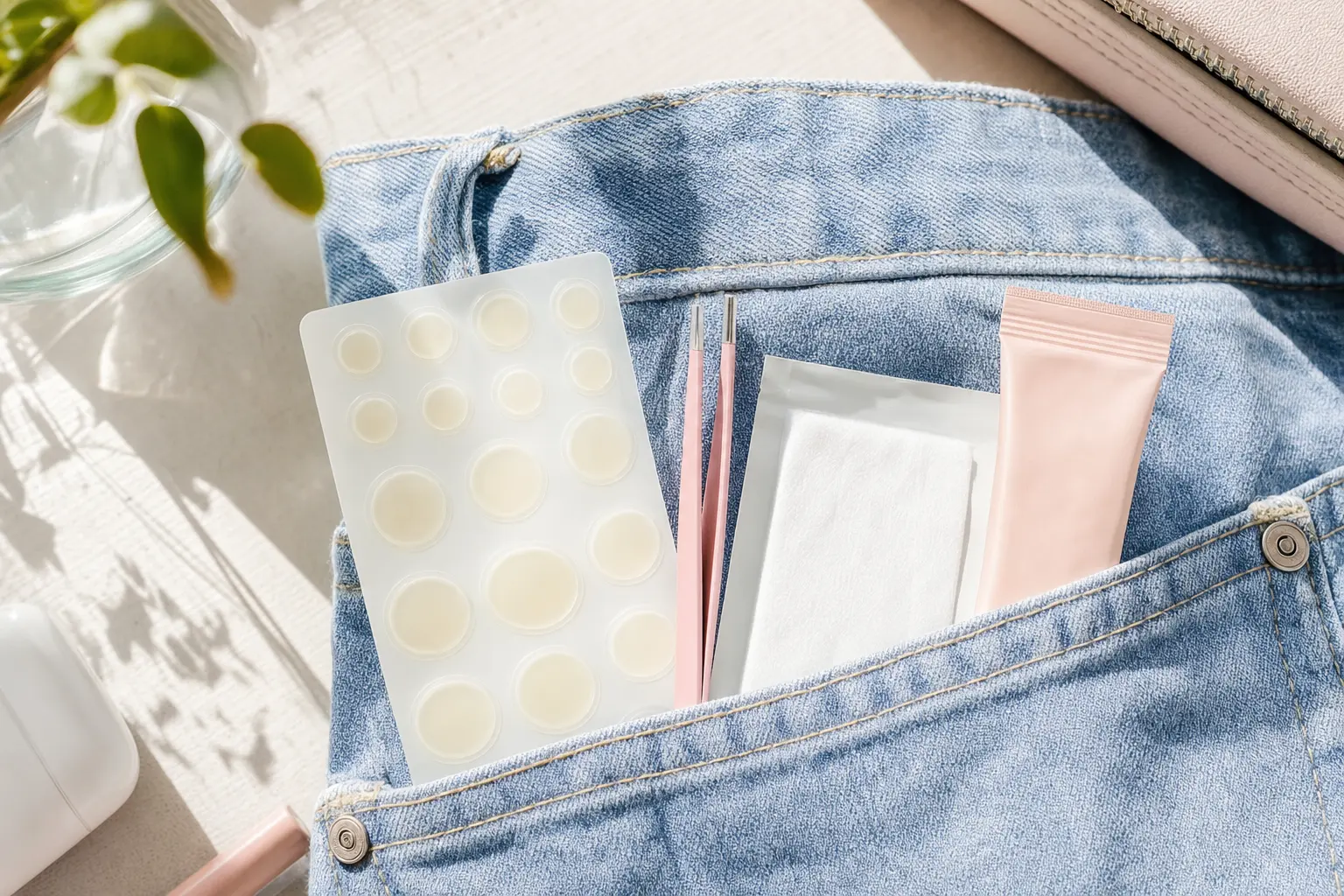
Building a small acne‑patch kit keeps you ready for daily life and travel. Focus on three essentials: a reliable hydrocolloid pack for everyday use, one medicated option for stubborn surface spots (only after patch‑testing), and travel extras like tweezers or a small mirror to place patches cleanly.
What to look for on the label
- Base material: hydrocolloid or hydrogel is what you want for absorption; ingredient lists on Korean products often show cellulose gum, polyisobutene and polyurethane films [1].
- Sizes: packs that include multiple diameters are more versatile for face and body blemishes.
- Wear time: a label that mentions 6–8 hours is realistic for overnight or full‑day use.
- Medicated ingredients: check for salicylic acid or tea tree and note concentration if listed; start with low exposure and patch test.
Packaging and quantity matter. If you travel or need daytime discretion choose ultra‑thin clear sheets; for at‑home overnight repairs, thicker pads with greater absorption volume are fine. Market trends in Korea have pushed retailers to offer both decorative short‑term patches and practical multi‑size packs; buy according to use rather than hype [6].
Where to keep links handy: browse EmpressKorea categories to pair patches with complementary products — the Masks & Treatments and Skin Care sections are good places to find aftercare or spot serums to use once you remove a patch.
Packing list for a basic pocket kit
- One multi‑size hydrocolloid pack (starter)
- One medicated patch sample (after testing)
- Travel tweezers or a clean fingertip applicator
- Small alcohol‑free cleansing wipes
- Spare sachet of lightweight moisturizer or centella ampoule
Final product tip: if you prefer a centella‑soothing option that aims to limit scarring and protect while healing, consider a centella‑infused pack — they’re positioned as protective and repair‑supporting alongside absorption functionality. And if you want more shopping choices, visit the EmpressKorea Cosmetics section to see the range of spot‑care items available.
Frequently Asked Questions
Do acne patches work for whiteheads, blackheads, and cystic acne?
Hydrocolloid patches are most effective on surface whiteheads and freshly popped pimples because they absorb exudate and protect the area. They may help with surface blackhead debris but won’t resolve deep or cystic acne, which requires professional treatment. Small clinical trials support hydrocolloid’s benefit for surface lesions but the evidence base is limited [2].
How long should I leave a patch on and how often should I change it?
Follow the product label, but a practical guideline is to wear a hydrocolloid patch for several hours or overnight — many are rated up to about 8 hours — and replace it when it turns opaque from absorbed fluid. Do not reuse a single patch; change it once saturated or when edges lift.
Are medicated patches with salicylic acid or tea tree safe for sensitive skin?
Medicated patches can be useful but may sting or irritate sensitive skin; concentrations vary and some medicated patches contain low percentages. Patch‑test a small area for 24 hours before facial use and avoid applying to freshly exfoliated or broken skin. Also check for regulatory labelling, as products that claim transdermal delivery may be regulated differently in Korea [5].
Can I wear a patch under makeup or while showering?
Yes, many Korean hydrocolloid patches are designed for daytime wear and are water‑resistant enough for a shower; ultra‑thin clear designs are better under makeup. Smooth the patch solidly onto dry skin and apply cosmetics gently—press foundation onto the patch rather than rubbing to avoid dislodging it.
Are decorative shaped patches effective or just cosmetic?
Decorative shapes often use the same hydrocolloid base and can be functionally effective, but some prioritize look over absorbency. Evaluate by base material and thickness; a decorative patch with true hydrocolloid will still absorb and protect even if it’s shaped for social sharing.