
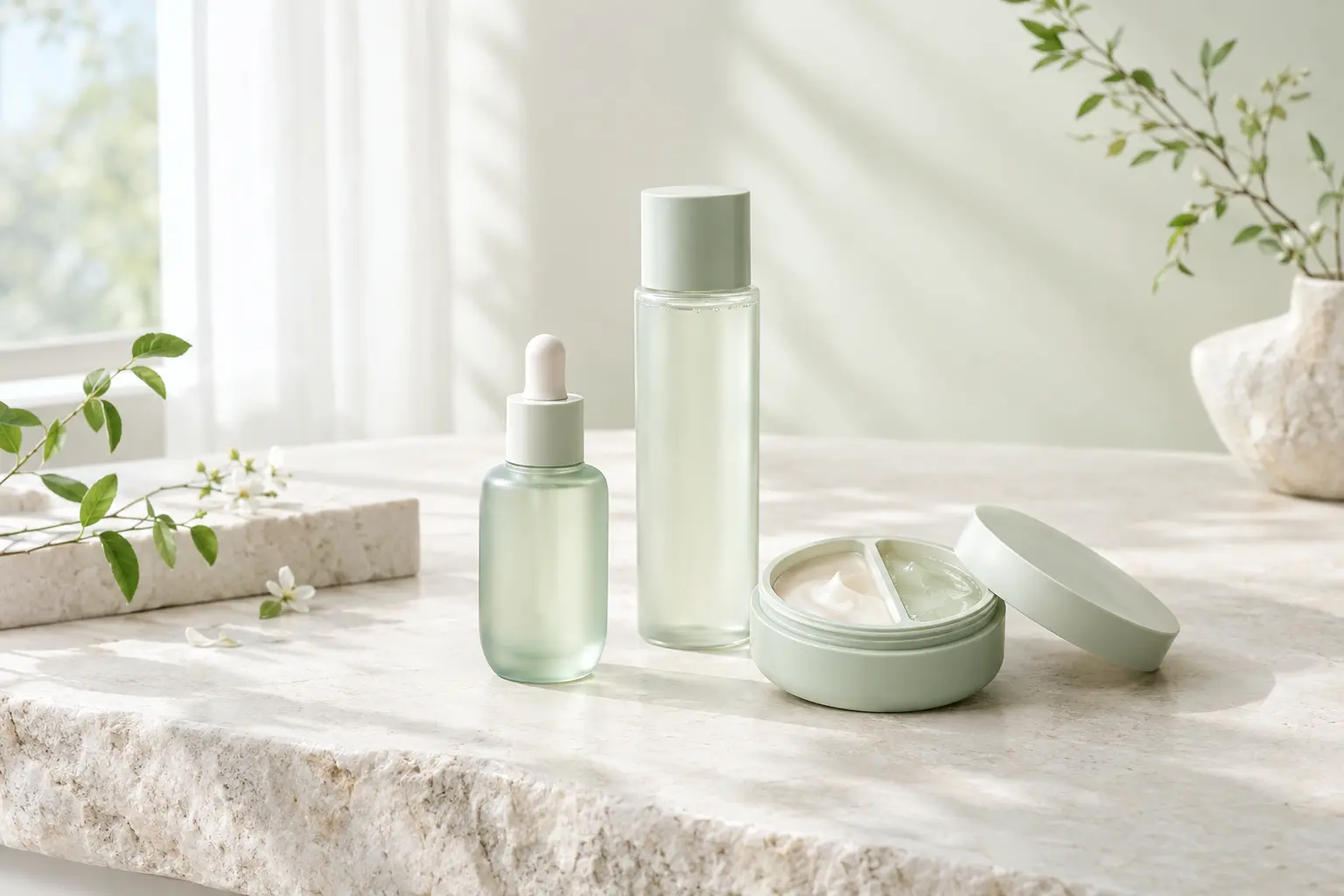
Choosing among Korean serums and essences starts with a practical question: do you need another light layer, a moisturizer, or several new routine steps? These are different purchases, even when their labels promise similar results.
If your cleanser and moisturizer already work for you, start with one separate layer. If you also need a cream, consider a dual formula. The best fit depends on the job you need done, not the length of the ingredient list.
Best Korean serums and essences: choose the job first
Our decision rule: buy a single serum or essence if you already like your cleanser and moisturizer. Choose a dual formula if you want serum and cream in one purchase, and consider a set only if you will use its extras. That keeps a hydration purchase from becoming an accidental routine overhaul.
The options below serve different purposes, so this comparison is about construction and fit rather than a ranking of clinical performance. There is no established head-to-head comparison showing that one featured formula outperforms the others.
| Option | What you get | Reason to consider it | Main trade-off |
|---|---|---|---|
| PURITO Wonder Releaf Centella Serum Unscented | 60 ml separate serum | A centella-focused hydration layer | Some reviewers find the moisture light and the redness benefit hard to see |
| TONYMOLY The Chok Chok Green Tea Essence | 55 ml green tea essence | A separate essence with a high stated extract content | The published ingredient list includes alcohol and aromatic plant oils |
| d’Alba White Truffle Double Serum and Cream | 70 g dual serum and cream | Control over how much of each side to use | Both sides list fragrance |
| d’Alba Half and Half Vegan Double Cream | 60 ml split-tube serum and cream | One dispensing format and catalog-stated vegan certification | Less independent control over proportions |
| Beauty of Joseon Ginseng 3-Piece Set | Cleansing oil, essence water and snail serum | A coordinated three-product routine | You are buying a cleanser as well as two leave-on steps |
If your moisturizer already works and you want one addition beneath it, the PURITO serum is a sensible starting point. If you are replacing both your hydration step and your cream, the d’Alba White Truffle duo earns consideration because its two formulas have distinct roles. A preference for dispensing both together shifts the choice toward the split tube.
Consider the products already on your shelf before browsing the wider serums and essences collection. You do not need both an essence and a serum simply because a routine diagram includes both. If you cannot identify what the second layer adds, keep your money for the product you will actually use.
There is also a difference between seeking an ingredient and seeking a practical result. Green tea may interest you, for example, but a two-part moisturizer may answer your need more directly if your existing routine lacks a cream. Start with the gap, then use the ingredient list to narrow the field.
Finally, count the products you are committing to, not just the number of steps in the name. A set can be a convenient way to purchase a coordinated routine, but it is a less focused choice when only one component appeals to you. A larger bundle is not automatically better value if its extra products will remain unopened.
Serum vs essence: what the names actually tell you
A serum and an essence can both be leave-on skincare, but their names alone do not tell you the concentration of a useful ingredient, how moisturizing a formula will feel, or whether one will outperform the other. Read the particular formula and its directions before assigning either a fixed place in your routine.
As a practical starting point, put a lighter hydration layer on clean skin before a cream. TONYMOLY directs users to apply its essence after cleansing and toning[5]. The featured PURITO serum is also directed for use after toner. Neither direction means you must purchase a separate toner: the useful question is whether another step adds something you actually want.
Look at the formula, not just its front label
- Humectants attract and hold water. Glycerin and sodium hyaluronate appear in the d’Alba Aqua Serum[7].
- Emollients help soften the feel of skin. The d’Alba Intense Cream lists several plant oils and other emollient ingredients[7].
- Botanical extracts are not interchangeable just because both come from plants. The extract, its preparation, amount and surrounding formula matter when interpreting a claim.
A product can contain humectants without offering the same kind of moisture step as a cream. The d’Alba duo makes that distinction visible: its serum and cream are separate formulas rather than one generic moisturizer. If a serum leaves your skin feeling comfortable, a substantial cream may not appeal; if your skin still feels dry, a cream can be the more useful addition.
Percentages need context too. A high percentage of an extract describes the quantity of that extract as supplied in the formula, not the percentage of every desirable compound within the plant. Extract composition and the rest of the formula matter, so a number on the front of a bottle is not a head-to-head effectiveness score.
In US regulation, intended use determines whether a product is a cosmetic, a drug, or both; the term “cosmeceutical” has no legal meaning under the federal law described by the FDA[1]. A technical-sounding category name is therefore not a substitute for evidence about the finished product. Treat words such as “firming” as descriptions of intended cosmetic appearance benefits, not proof that two formulas work equally well.
For shopping purposes, the useful distinction is often flexibility. A separate essence or serum lets you keep a favorite cream and change one step. A combined product saves a separate purchase but commits you to the formulas packaged together. Neither arrangement is inherently more advanced.
It also helps to distinguish the water a product contributes from the way a more emollient formula leaves the skin feeling. A serum and a cream can contain some of the same humectants while still filling different roles. When deciding between them, consider the complete formula and the other products you plan to wear over it.
A centella serum for a light hydration layer
PURITO Wonder Releaf Centella Serum Unscented, 60 ml is the clearest choice here if your priority is a separate centella-based serum rather than a cleanser, a cream or an entire set. Its catalog description highlights centella, allantoin and peptides and positions it as a hydrating, soothing step. The listed directions place it after toner, with the option to use it before base makeup.
Centella is a plant extract often discussed in the context of soothing. A systematic review identified four human clinical trials of centella in wound settings and concluded that more research was needed[8]. Those studies do not establish how this particular unscented serum will perform on everyday facial redness, so treat the product’s soothing language as a formulation goal rather than a guaranteed outcome.
Collected Korean-user feedback describes the unscented serum as a light, quick-absorbing gel with little or no perceived scent. Some reviewers say it feels more like a straightforward hydrating layer than a visible redness treatment, and people with dry skin may want a cream over it. These are individual experiences, not a guarantee of tolerance or a measure of effectiveness.
That distinction changes the buying decision. If you want a light step beneath a moisturizer or makeup, the reported finish is relevant. If you are buying specifically to see an obvious change in redness, the mixed feedback is a reason to keep expectations modest rather than assuming a centella label settles the question.
Who should consider it?
- You already have a moisturizer: add the serum as an optional layer rather than replacing a cream you rely on.
- You prefer a minimal routine: decide whether a separate serum genuinely adds enough for you to keep using it.
- You avoid particular ingredients: use the current ingredient list for the exact unscented product, not the list for a similarly named version.
That last distinction matters. The retrieved page for the original, scented Wonder Releaf serum lists essential oils and fragrance allergens[4]. It is not the ingredient list for the featured unscented version, so it should not be used to declare what the unscented formula contains or to transfer the original product’s test results to it. Reviewers’ reports of no perceived scent are useful as experiences, but they do not replace an ingredient declaration.
For a dry-skin routine, compare this separate layer with a product that includes cream. The serum gives you freedom to keep your existing moisturizer; the trade-off is needing a second product if a light layer alone does not feel sufficient. Some collected reviewers also found that one pump did not cover the whole face, which is worth considering when judging how long the bottle might last in your own routine.
The peptides in the catalog description are another example of why ingredient presence and performance are separate questions. Their inclusion gives you information about the formula’s design, but it does not establish that this unscented product will visibly improve elasticity for every user. Buy it for the light separate step that you want, not for an assumed treatment effect.
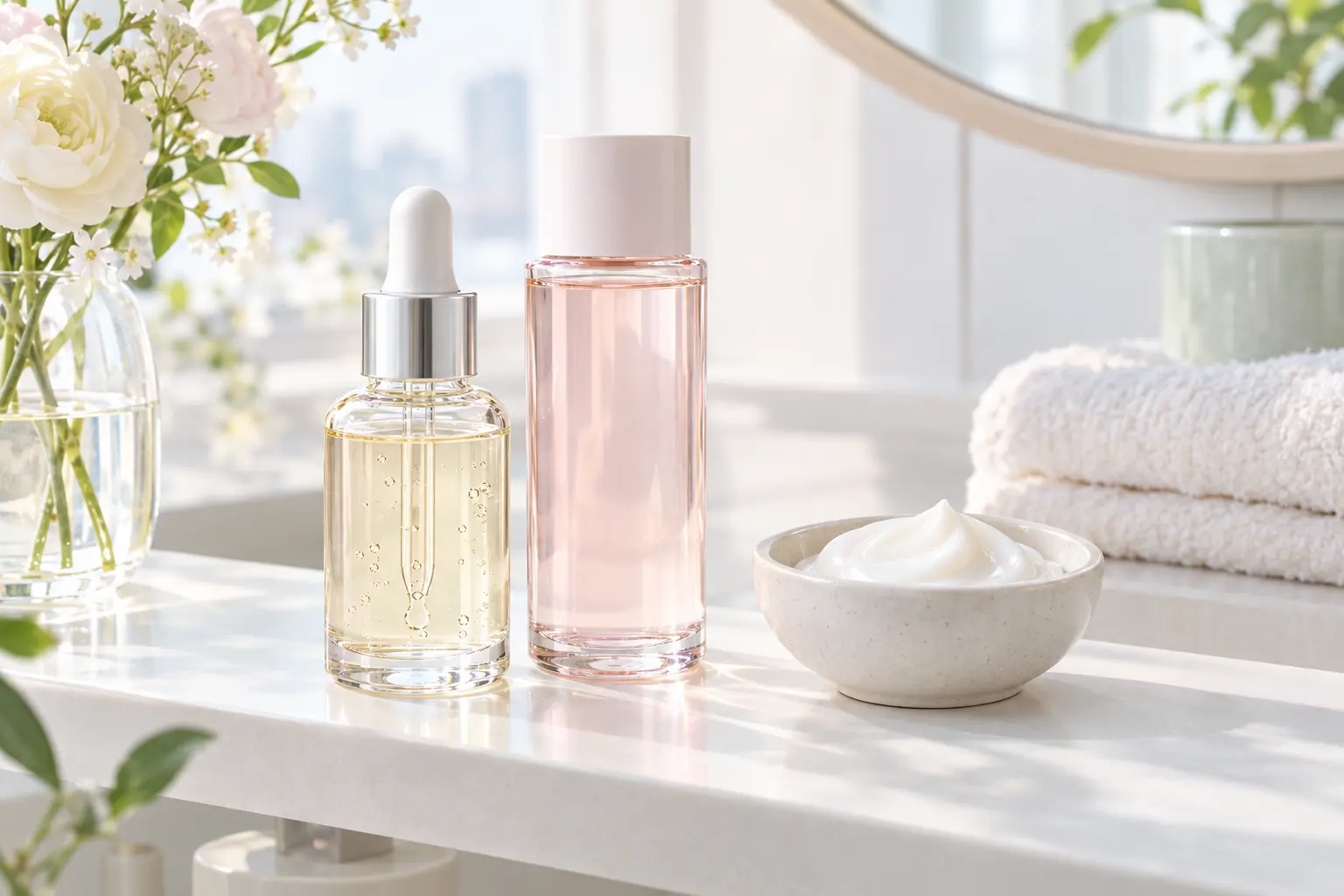
A fermented green tea essence: what 81% means
TONYMOLY The Chok Chok Green Tea Essence, 55 ml suits a different preference: you want a dedicated essence and a formula built around fermented green tea. Its published ingredient list gives Camellia sinensis leaf extract at 81% and also lists cyclomethicone, alcohol, lemon seed oil and rosewood wood oil[5].
The 81% figure is informative, but it is easy to read too much into it. It describes the listed extract in the product, not a measured percentage of isolated green tea antioxidants. It also cannot tell you, on its own, how the complete essence compares with a centella serum or how much moisture your skin will need afterward.
The extract is part of a formula rather than the whole story. The ingredient list also contains an ethylated vitamin C derivative and plant oils[5]. Those names make this more than a simple green tea infusion; they do not establish the finished product’s comparative performance or make it a substitute for treatment of a skin condition.
When the trade-off is worthwhile
Choose this essence if you like the idea of a separate green tea-based step and the published ingredient profile fits your preferences. Follow the brand’s instruction to apply it after cleansing and toning[5]. If you use a cream, the essence can sit earlier in the routine rather than forcing you to abandon a moisturizer that works.
Pass on it if you already know you want to avoid alcohol or the listed aromatic oils. A botanical ingredient can be appealing without making every botanical-containing formula appropriate for every person. Equally, the presence of those ingredients does not establish that everyone will react; it gives an ingredient-conscious shopper a concrete basis for choosing.
Compare it with the PURITO serum by your intended use, not by trying to convert 81% green tea extract into an equivalent centella percentage. They are different formulas with different stated ingredients, and their percentages are not a shared scale of soothing or hydration. If a single light layer is all you want, buying both is optional, not a necessary progression from essence to serum.
For example, if you already own a comfortable cream and want a green tea step before it, the essence fills a clear gap. If your real problem is that you need a moisturizer as well, a combined serum-and-cream product may be a more direct purchase. A high extract percentage is interesting formulation information, but it should not override the more basic question of what you need the product to do.
The same caution applies to fermentation. The brand identifies the green tea extract as fermented[5]. That tells you something about the ingredient’s preparation, not that this finished essence is necessarily more effective than an unfermented product or that it will deliver a particular visible result. Judge the whole ingredient list alongside the routine role.
The published list includes both a vitamin C derivative and an extract associated with antioxidants, but neither detail tells you how the finished formula compares with a dedicated treatment. If the purpose of the purchase is a green tea-based moisturizing step, that distinction keeps the decision clear. If you are expecting a specific change in pigmentation, this ingredient list alone cannot predict it.
Serum and cream in one: adjustable jar or split tube?
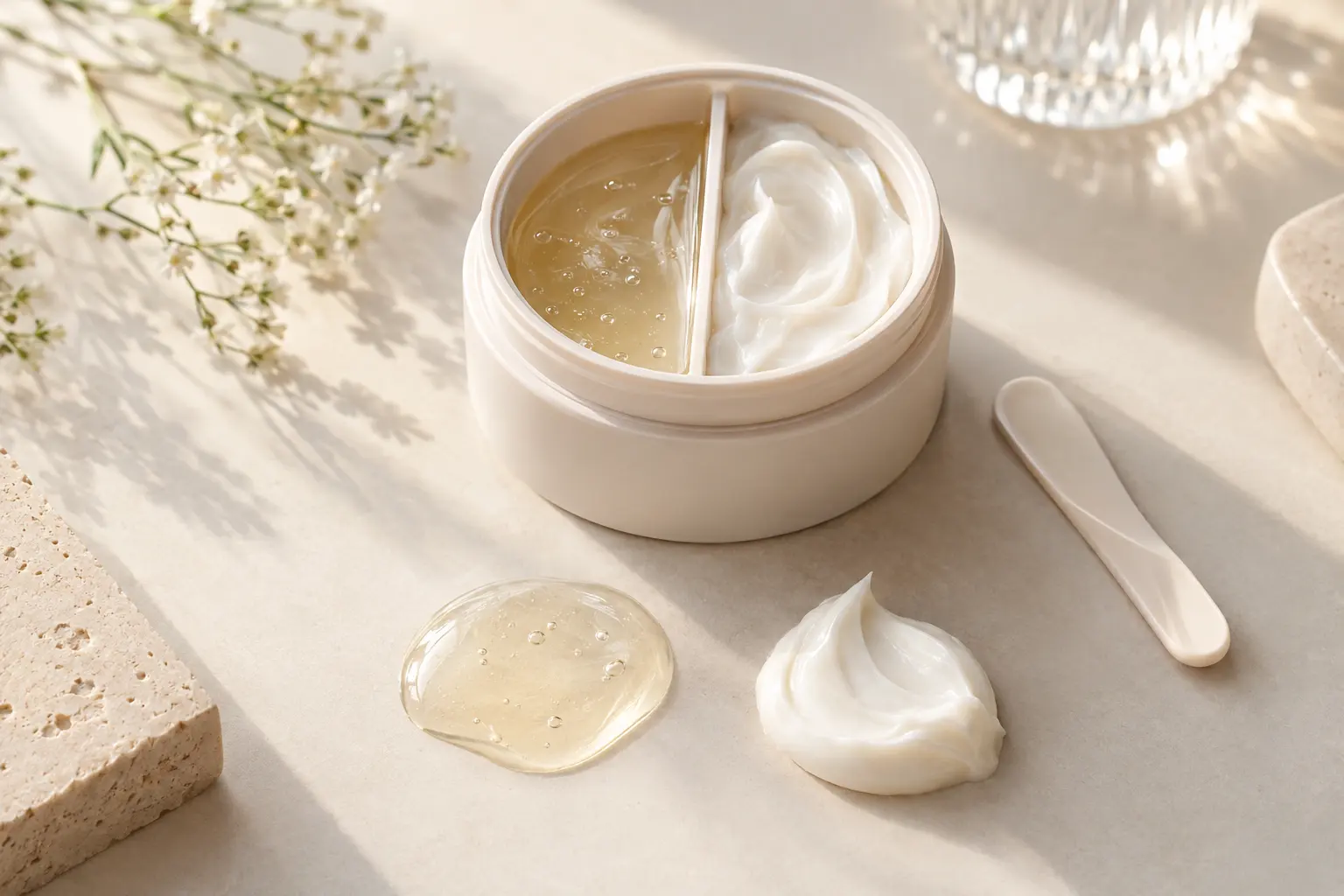
d’Alba White Truffle Double Serum and Cream, 70 g brings two formulas together: an Aqua Serum and an Intense Cream. The catalog describes cica, turmeric and sodium hyaluronate in the serum, with collagen extract and eight plant oils in the cream. The useful feature is not that combining them is proven superior to separate products; it is that you can choose how much of each side to use.
The published ingredient lists show why the sides have different roles. The Aqua Serum contains glycerin, panthenol and sodium hyaluronate, while the Intense Cream includes emollient ingredients and plant oils[7]. Both lists include fragrance[7]. If fragrance is an ingredient you avoid, the two-in-one convenience does not remove that trade-off.
Imagine your forehead feels comfortable with a lighter layer, while your cheeks feel better with more cream. A separately portioned duo lets you adjust the relative amounts by area. Another day, you might prefer both sides together; the point is control, not a promise that a particular ratio will suit every skin type.
How the split tube differs
The d’Alba Half and Half Vegan Double Cream, 60 ml, is the alternative when you prefer a single dispensing format. Its catalog describes a split tube containing a moisture serum with ceramide and eight hyaluronic acids alongside a nourishing cream, dispensed in a set ratio. It also states that the product has V-Label vegan certification.
That construction favors convenience over the same degree of independent portioning. If your main goal is to dispense both formulas together, the tube is the more straightforward concept. If you know you want to vary the proportions substantially, the separately portioned White Truffle duo offers a clearer reason to choose it.
Do not treat “eight hyaluronic acids” as eight times the moisturizing power. The number tells you how the catalog describes the ingredient family, not how the finished tube performs against another formula. Likewise, the presence of collagen extract in the White Truffle cream is a product fact, not proof that applying it rebuilds your skin’s collagen.
Before buying either, ask whether you actually need both components. If your existing moisturizer is a favorite, a separate serum may be less redundant. If you are replacing a cream and want the flexibility of a hydration layer in the same package, a dual product has a stronger case. You can also compare the broader moisturizer selection if cream is the only missing step.
For an ingredient-conscious buyer, the two d’Alba products are not interchangeable simply because both have two formulas. Their catalog descriptions emphasize different ingredients and packaging, and the vegan certification is stated for the Half and Half product. Decide first whether the certification, the dispensing format or independent control of the two sides matters most to you.
Think about replacement, too. When a serum and cream are sold together, you are choosing a package that ties those steps to one purchase. That can simplify shopping if you enjoy both formulas, but separate products may make more sense if you prefer to change only one part of your routine at a time.
Ginseng and snail mucin sets: when the extras make sense
The Beauty of Joseon Ginseng 3-Piece Set is a routine purchase, not just a serum purchase. It includes Ginseng Cleansing Oil, 210 ml; Ginseng Essence Water, 150 ml; and Revive Serum with Ginseng and Snail Mucin, 30 ml. Choose it when you intend to use a cleansing oil and an essence as well as the serum.
The 4-Piece Set adds a 30 ml Revive Eye Cream with ginseng and retinal to those three products. That extra product changes the decision: retinal is a distinct ingredient, so wanting the other three pieces does not automatically mean you need an eye cream too. Consider the larger set only if that specific addition appeals to you and fits your existing routine.
Read the set as separate formulas
- Cleansing oil: the three-piece catalog directions say to apply it to dry skin, massage and rinse with water.
- Essence water: the catalog describes it as a hydrating preparation step after cleansing.
- Snail serum: the catalog identifies ginseng and snail mucin, but their percentages are not reliably established for this product.
- Eye cream: included in the four-piece set, not the three-piece version.
Snail mucin is an interesting cosmetic ingredient, but an ingredient name cannot establish what this particular serum will do for lines or firmness. Research on snail-derived ingredients can involve different species, preparations and finished formulas. Without product-specific evidence, it would be misleading to move a result from one preparation straight onto this set’s serum.
Ginseng has the same practical limitation in this comparison. Its presence makes the set relevant to someone seeking a ginseng-centered routine; it does not prove that the three or four products will deliver the catalog’s broader anti-aging language. In US law, cosmetic products and ingredients generally do not require FDA premarket approval, apart from color additives[1]. A cosmetic marketing claim should not be mistaken for an FDA-reviewed efficacy claim.
If you already have a cleanser you like and only want a new hydration layer, the set asks you to take on an extra product you may not use. If you are building a routine from scratch and want these particular steps, the three-piece set is more coherent. The four-piece set makes sense only when the retinal eye cream is a wanted addition, not simply because it is the larger bundle.
Consider the relative sizes as well as the piece count. The cleanser and essence water are larger purchases than the 30 ml serum; that is useful if you want those steps, less useful if they will sit unopened. The presence of snail mucin also makes the serum an unsuitable choice for someone seeking a routine without animal-derived ingredients.
For shoppers comparing a gift rather than a personal routine, ingredient preferences and existing products matter even more. The guide to skincare gift sets for unknown skin offers a useful way to think about that uncertainty.
The cleansing oil is also a different kind of commitment from the leave-on products. It is designed to be rinsed away, while the essence water and serum remain in the routine afterward. If the appeal is specifically the snail serum, count the cleanser as an additional purchase rather than assuming that its inclusion makes the serum a better fit.
How to build a routine without unnecessary layers
A serum is optional. Start with the products you already know you want to use, then add one of the featured options only if it has a job that is not already covered. More steps provide more opportunities to customize, but they also make it harder to tell which formula you enjoy and which one you would rather remove.
Three workable starting points
- Keep your existing cream: cleanse, apply the PURITO serum or TONYMOLY essence according to its directions, then use your moisturizer. This is the simplest route if the gap is a separate hydration layer.
- Replace both a layer and cream: cleanse, then use the d’Alba White Truffle serum and cream in the amounts you prefer. Published directions describe using the two formulas together or separately at the last skincare step[7].
- Build around a set: use the Beauty of Joseon cleansing oil, essence water and snail serum as their individual directions indicate. Add other products only when they meet a need rather than because a routine feels incomplete without them.
These are templates, not mandatory sequences. A separate toner is not a requirement for buying a serum, and an essence does not need a serum on top to count as a hydration step. If you own both, apply them in the order that fits their directions and your preference; if the combination feels redundant, use one.
Keep the texture decision separate from the ingredient decision. A serum can contain sodium hyaluronate and still be a different proposition from an oil-containing cream. Conversely, a cream can be the more practical purchase even when a serum’s featured botanical sounds more exciting. Your choice should reflect the finished formula and the role it plays in your routine.
When introducing a set, resist opening every new product at once. Starting one at a time makes it easier to identify what you like and what you do not. The set’s cleansing oil is a rinse-off step; the essence, serum and eye cream are separate leave-on products, so each deserves its own place in your decision rather than being judged as a single formula.
If you prefer using fewer products, the adjustable d’Alba duo can take the place of choosing a serum and cream separately. If you prefer control over each purchase, keep the cream you already enjoy and choose one separate serum or essence. The right answer depends on the routine you want to maintain, not on the maximum number of products you can layer.
Review the routine again once you know how the new product fits. If an essence and serum seem to do the same job for you, there is no reason to replenish both automatically. A focused purchase is more useful than a crowded shelf: choose the product that addresses the gap you can name, then give yourself permission to stop there.
For instance, a person who already likes a cleanser and cream may find that the most useful experiment is one leave-on layer between them. Someone replacing a cream has a different decision: the adjustable duo offers two formulas, while a separate essence still leaves the cream purchase to make. Both routines can be simple, but their shopping lists are not the same.
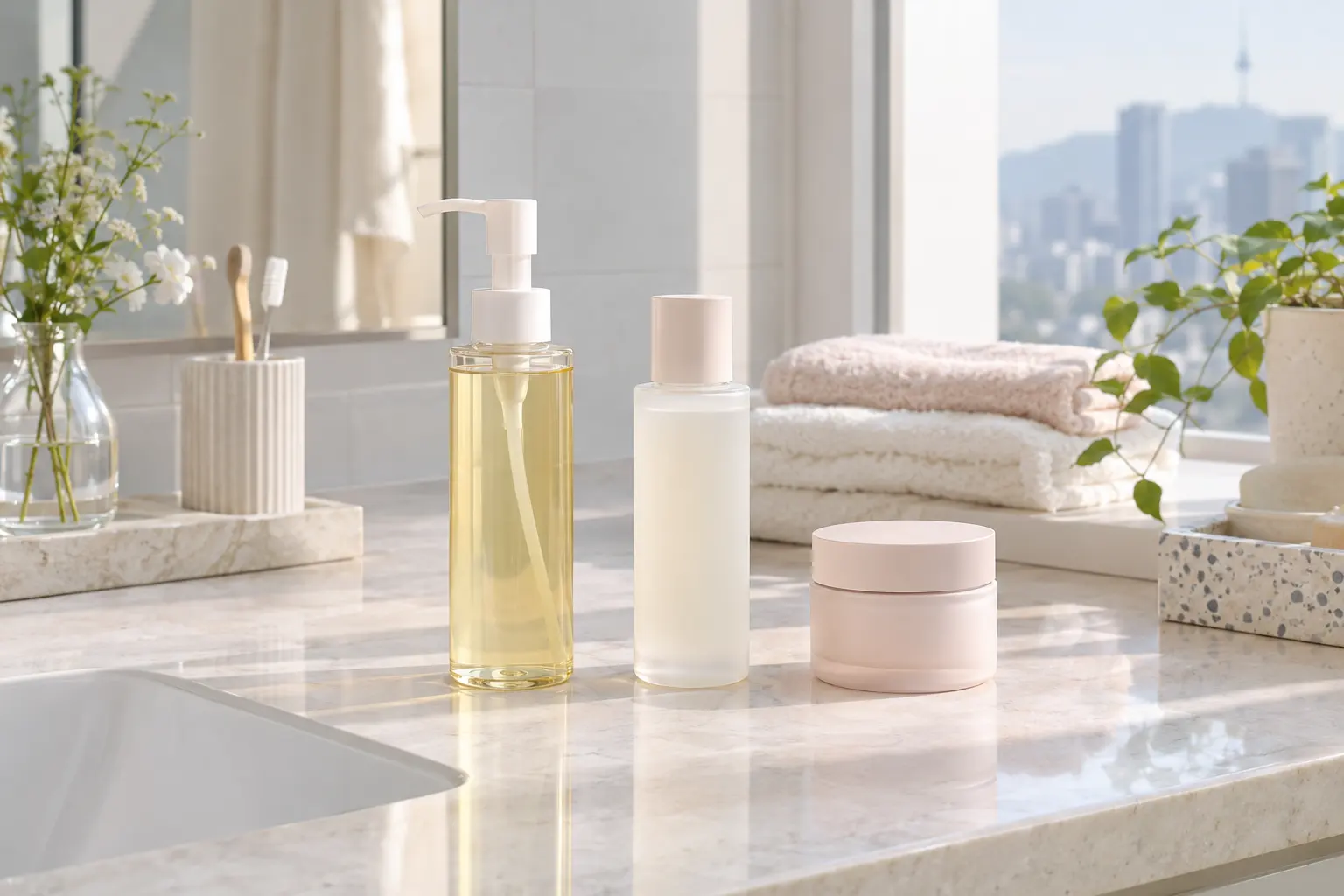
How to judge claims and make the final choice
Read a skincare claim in three parts: the ingredient, the finished formula and the evidence for the result. Centella’s wound-research history is not the same thing as a trial of the unscented PURITO serum[8]. Similarly, the green tea percentage on the TONYMOLY page tells you something about its extract content, not how it compares clinically with a different essence[5].
For d’Alba, a two-part construction is a practical reason to buy; a claim that it outperforms a separate serum and cream would require comparative evidence. Convenience can be valuable in its own right. You do not need to inflate the science to justify a package format that fits your routine.
A short pre-purchase check
- Identify the missing step: a light layer, a cream, or several routine components.
- Read the ingredient list for the exact version: similarly named scented and unscented products are not interchangeable.
- Consider the whole formula: featured extracts sit alongside solvents, emollients and potentially fragrance ingredients.
- Count the extras: a set is worthwhile only if the cleanser or eye cream is something you actually want.
- Follow the current package directions: especially when your intended use differs from a routine example.
Introduce a new product cautiously, particularly if you have a history of reactions. Test it on a small area before wider use; stop if irritation occurs and seek professional advice for a severe or persistent reaction. A test or a “hypoallergenic” label cannot promise that every person will tolerate a formula.
For a straightforward purchase, choose the PURITO serum if you want a separate light layer and its exact ingredient list suits you. Choose the TONYMOLY essence if fermented green tea is the specific formula direction you prefer. Move to the d’Alba duo when the missing piece is not just serum but an adjustable cream step too.
If neither separate layer nor a combined moisturizer answers your need, do not let the category name force a purchase. You may be better served by using up the products already in your routine. The ginseng sets are a different decision again: consider the cleanser and any eye cream as deliberately as the serum, since they are part of what you are buying.
Look at the routine you have today, identify the one gap, and buy for that gap. A compelling ingredient is useful context; the best fit is the product you can place in a routine without inventing a reason to use everything around it.
One final distinction helps when comparing claims: a listed ingredient tells you what is present, while a study of a finished formula asks what happened under specific conditions. Even a favorable result for one version should not be assumed to apply to a differently named formula. That is especially useful when two products share a botanical or belong to the same range.
Frequently Asked Questions
Is a Korean essence better than a serum?
Neither name is a reliable measure of superiority. An essence and a serum can both provide a leave-on hydration step, so compare the finished formula, directions and the role you need filled. If you already enjoy your serum, an essence is optional rather than a required extra.
Can I use an essence and a serum in the same routine?
Yes, if both products fit your routine and you enjoy using them. Follow their individual directions and place a cream afterward if you use one. There is no need to purchase both merely to make the routine look complete.
Does unscented mean I can ignore the ingredient list?
No. Use the current ingredient list for the exact product if you need to avoid a particular substance. Do not substitute the list for a similarly named scented version, and remember that a reviewer's experience of no scent is not an ingredient declaration.
Does 81% green tea extract mean an essence is mostly active antioxidants?
No. The figure describes the listed extract, not the percentage of isolated antioxidant compounds in the finished product. TONYMOLY lists its green tea extract at 81%, alongside other ingredients[5]. That number alone cannot establish a comparative result against another formula.
Is a serum-and-cream duo better than separate products?
Not necessarily. A duo can be convenient, and separately portioned formulas let you adjust how much of each side you use. Separate products give you more freedom to keep a moisturizer you already like. Comparative trials have not established that the featured duo works better than a separate serum and cream.
Should I buy the three-piece or four-piece ginseng set?
Choose the three-piece set if you want the cleansing oil, essence water and snail serum. The four-piece set adds a ginseng and retinal eye cream, so it is the more relevant choice only if you also want that product. If you need just a serum, a set may add steps you will not use.