best korean sunscreen for oily skin should be lightweight, mattifying, and high in UVA protection — all without clogging pores or leaving an obvious cast. This article explains exactly what to look for, how to apply it so makeup doesn’t pill, and a field‑tested routine suited to humid Seoul summers.
Expect precise steps (how much, how long to wait, what to avoid), ingredient signals that matter for acne‑prone skin, and one practical product pick from EmpressKorea that fits oily and combination skin types.
Why Korean sunscreens matter if you have oily skin
Korean sunscreens have shaped modern SPF expectations because of two things: texture innovation and clearer UVA labeling. Many Korean formulas use fluid, gel or serum textures and prominently display PA grades (PA+ up to PA++++), which is useful when you care about pigmentation or melasma as much as UVB burns [1]. For oily skin, that matters: you want broad UVA coverage without heavy oils that sit on the skin and attract shine.
In practice, that means looking for oil‑free gels, hybrid mineral‑chemical blends with micronized zinc, and formulas that contain mattifiers like silica or certain silicones. Dermatologists and editors increasingly recommend gel‑serum textures and light fluids because they absorb excess surface oil while still offering consistent SPF protection [4].
How texture affects control of shine
Texture influences both immediate finish (matte vs dewy) and how the sunscreen interacts with sebum over the day. A dense cream will trap oil and look greasy once your T‑zone activates. A gel or silica‑rich lotion lets oil sit less visibly and reduces pilling under makeup. That’s why Korean lines created hybrid filers and matte bases designed for humid climates.
Below is a quick comparison to help you choose the right texture for oily or combination skin. Pick the row that best matches how you live and what you wear daily; each option lists the tradeoffs so you know what to expect.
| Texture / Format | Finish | Best For |
|---|---|---|
| Gel‑serum | Light, almost dry matte | Oily, acne‑prone, hot climates |
| Fluid / Lotion | Natural to soft matte | Everyday wear, foundation layering |
| Mineral‑chemical hybrid | Matte to natural, minimal white cast | Sensitive but oily, those avoiding full chemical-only filters |
| Stick / Powder for reapply | Ultra matte (localized) | On‑the‑go reapplication over makeup |
| Mist / Spray | Sheer, can be dewy | Body or quick top‑ups; avoid for face if you have heavy makeup |
Use this table as a quick decision tool: if you live in a humid city and you’re oily, start with gel‑serum or a matte fluid. If your skin is oily and sensitive, a micronized mineral hybrid can give protection without irritation.
Ingredients to seek and ingredients to avoid for oily, acne‑prone skin
Choosing the right sunscreen comes down to ingredients and the roles they play. For oily skin, aim for lightweight emollients, mattifiers, and non‑com comedogenic bases. Avoid heavy botanical oils and thick ester emollients that sit on the skin.
Ingredients that help oily skin
- Silica and mattifying powders: absorb surface oil and give a soft matte finish; look for silica, kaolin or similar ingredients.
- Dimethicone and similar volatile silicones: provide a smooth, powdery feel and help sunscreen spread thinly without a greasy film; they reduce friction under makeup.
- Lightweight humectants: glycerin and propanediol keep skin hydrated without heaviness — important because overtly drying sunscreens often trigger rebound oil.
- Niacinamide: controls excess oil production over time and helps with post‑inflammatory hyperpigmentation; common in Korean sunscreens and serums.
- Micronized zinc oxide: in mineral hybrids, it reflects UV while minimizing white cast when particle size is controlled.
Ingredients to avoid or use cautiously
- Heavy plant oils and esters: coconut derivatives, shea butter heavy blends and certain long‑chain esters can exacerbate shine and clog pores.
- Fragrance and high alcohol: alcohol denat can dry skin, causing compensatory oil production; fragrance can irritate acne‑prone skin.
- Sticky copolymers: sometimes used in high‑SPF formulations; they can cause tackiness that traps sebum.
Filter technology matters too. Many Korean sunscreens use advanced chemical filters with strong UVA performance and high PA ratings — an important consideration if pigmentation is a concern. In 2026 the U.S. monograph added bemotrizinol (marketed as Tinosorb S / BEMT) to allowed actives, which will broaden hybrid filter options in the U.S. over the next year, but Korean formulas already offer several filter blends that perform well in humid conditions [2] [8].
Bottom line: read the short INCI on the label — prefer silica or dimethicone bases, avoid heavy oils, and choose non‑comedogenic claims when available. If your skin is reactive, pick mineral hybrids with micronized zinc or stick to clinically formulated gel‑serums.
A precise morning routine for oily skin (how much, when, and how to layer)
How you apply sunscreen matters as much as which one you use. For oily skin, the goal is an even, thin layer that fully covers without creating a greasy mask. Follow these steps every morning; timing is precise because makeup application too soon causes pilling.
Step‑by‑step (exact amounts and timing)
- Start with damp, not dripping, skin: after your water‑based essence or lightweight serum, pat skin so it’s slightly damp. This helps spread thin formulas without a drag.
- Use 1/4 teaspoon for face and neck: that’s roughly a nickel‑sized dollop for the face and a coin‑sized amount for neck/chest if exposed. If your sunscreen is a gel or lightweight lotion, dispense a full 1/4 tsp onto fingertips and warm it briefly between them.
- Press and pat, don’t rub: press the product into the center of the face, then pat outward — forehead, cheeks, nose, chin, and neck. For gel textures, a gentle gliding stroke works after initial patting.
- Wait exactly 2–3 minutes: let films set so silicones and mattifiers settle. Makeup applied immediately often pills; waiting prevents that while keeping skin from feeling dry.
- Apply primer or cushion foundation: if you use a primer or cushion, follow with a mattifying primer only if your skin leans very oily. If you use a cushion, consult a shade guide for matching undertone and finish to avoid a mismatch after sunscreen layering.
For many oily skin types, a product that sits light and dries to a matte finish is best. EmpressKorea’s Te Like That Sun HAYANG 35 O is formulated specifically for oily and combination skin with a fresh matte finish that tames shine while giving SPF35 broad protection — it’s an easy everyday pick when you want minimal residue and reliable control of surface oil.
Why this suits oily skin: it’s designed to be light, matte, and non‑greasy while giving broad protection. Use the exact amounts above and wait 2–3 minutes before makeup for the best non‑pilling result.
If you use hydrating serums, layer them before sunscreen. For heavier daytime serums (peptides or ceramide creams), let them absorb fully so the sunscreen sits on a stable surface and doesn’t mix into a greasy layer. For more on serums and how they pair with sunscreen, see the EmpressKorea guide on Korean Peptide Serum.
Korean Cushion Foundation Shade Guide — Match Undertone, Finish & Number
How to reapply sunscreen over makeup without ruining your finish
Reapplication is non‑negotiable for true sun protection, but doing it over makeup is the trickiest part for oily people worried about cakeyness and shine. The right method depends on how long you’ll be outside and what kind of makeup finish you wear.
On‑the‑go reapplication options
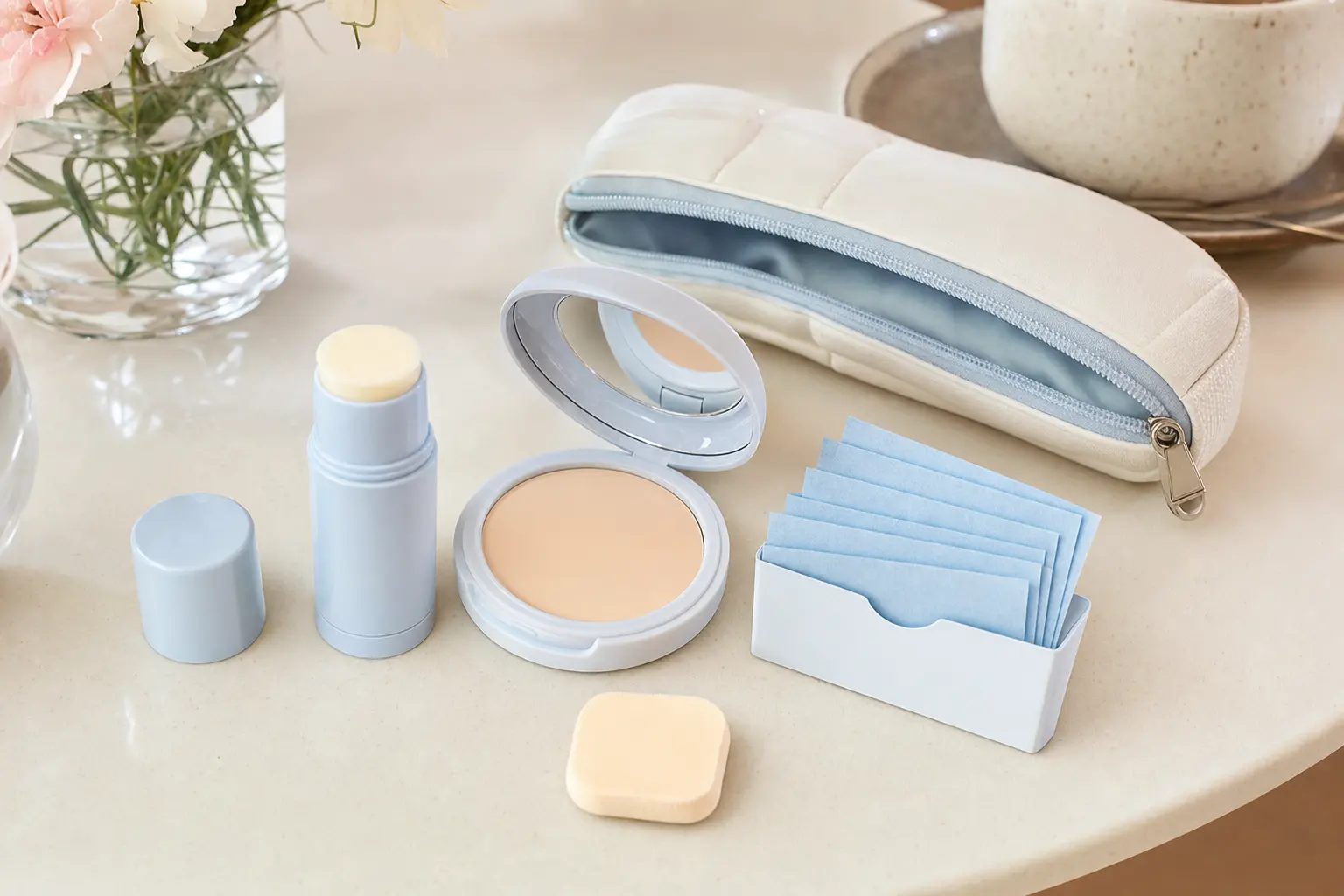
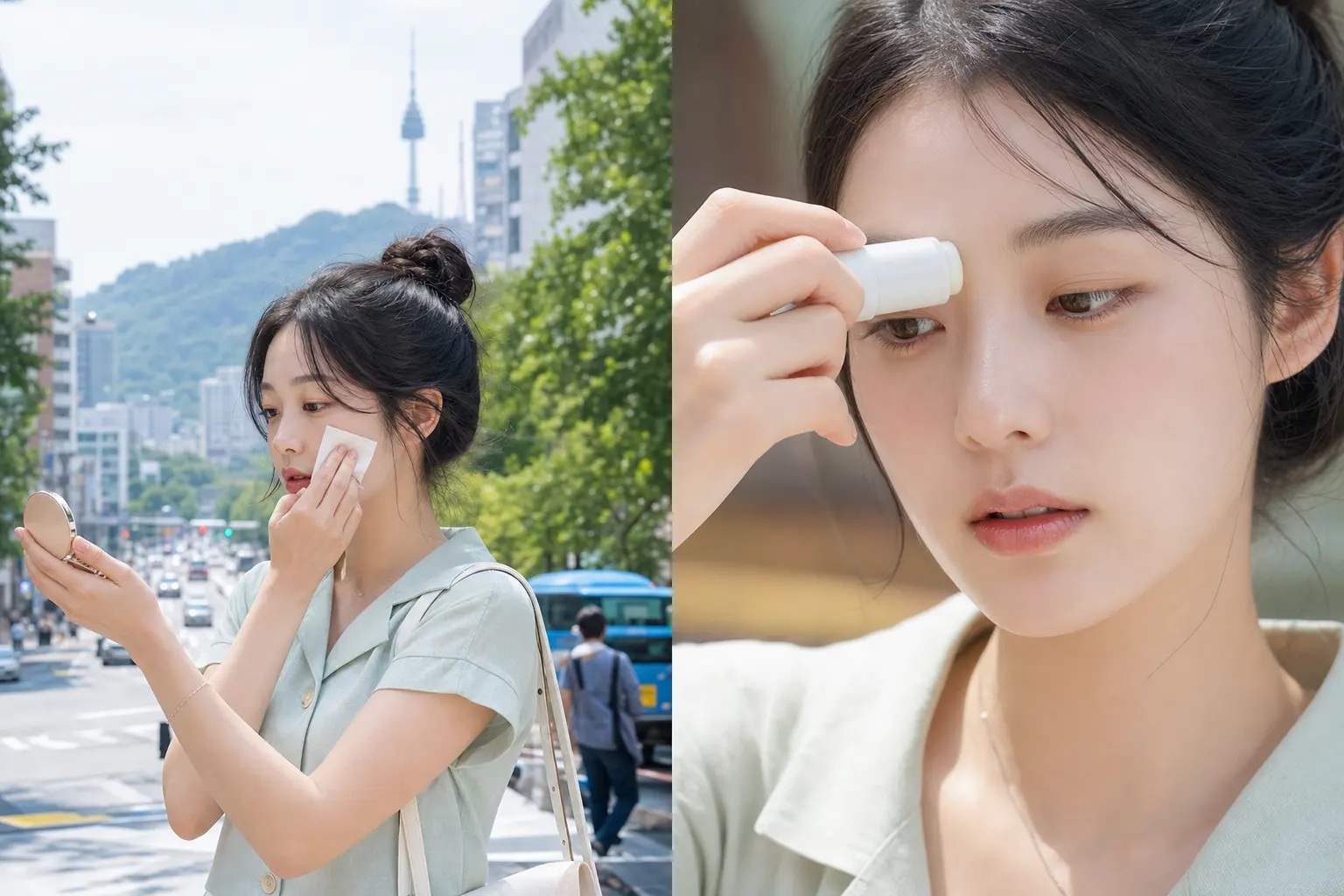
- Sunscreen stick or powder: these are the easiest for quick touchups; they localize application to the oily T‑zone and often contain mattifying powders. Use a light hand — press, blend, then blot with oil‑absorbing tissue if needed.
- Spray or mist: convenient for body and hairline; for the face, mist then lightly pat with a clean cotton pad to avoid moving makeup.
- Liquid sunscreen over makeup: carry a travel gel and dab small dots on cheeks and forehead, then press with a soft sponge; this minimizes dragging.
Practical 60‑second reapply routine
- Blot oil with a blotting sheet — never rub. This removes surface oil so the new product binds to skin.
- Apply sunscreen stick or powder to T‑zone with light strokes. If using a liquid pump, dispense onto the back of your hand and use a small sponge to press product onto skin.
- Pat, don’t brush. Once applied, press with a clean microfiber puff to even out texture and remove any excess product.
What to avoid: reapplying a creamy, oily SPF with your fingers — it will smear makeup and create a patchy finish. Also avoid heavy layering of multiple liquid sunscreens; several thin applications are better than one thick coat that will never set properly.
If you often need on‑the‑go top‑ups, keep a compact powder or stick in your bag and a small pack of blotting sheets. For oily skin, the combination of blotting + stick/powder works best to preserve a matte finish while giving a photoprotective top‑up.
Seasonal and climate tactics — what changes in humid Seoul summers
Humidity and heat change how sunscreen behaves. In Seoul summers, humidity spikes mean products interact with sweat and sebum more aggressively, so you need a formula that keeps skin from looking shiny without becoming overly drying.
Summer tactics
- Use a gel or matte fluid every day: gels dry faster and mix less with sweat; matte fluids give a little more coverage while staying thin.
- Reapply more often: in high humidity and direct sun, reapply every two hours if you’re outdoors. If you’re mostly indoors, a top‑up at lunchtime is a good habit.
- Switch to a lighter sunscreen at nightfall: if you want additional evening protection while commuting, a blot + light powder protects your makeup and reduces the greasy look.
Texture also shifts with climate. A product that feels perfect in winter can feel heavy in July. That’s why many K‑beauty users keep two SPFs: a lightweight gel for peak summer and a slightly richer hybrid for milder months.
Humidity mistakes that create shine
Common missteps: over‑layering hydrating creams before sunscreen (creates a slip surface), applying too much product at once (leads to pilling), and skipping blotting before reapply. Instead, minimize oil at baseline: finish morning routine with a light mattifying step — whether a powder primer or a tiny amount of mattifying serum — and follow the exact wait times in the morning routine section to lock the sunscreen in place.
If you’re shopping seasonal SPF, browse the Skin Care category at EmpressKorea to pick a lightweight gel or matte fluid when you know you’ll be spending time outdoors in heat and humidity.
Acne, sensitivity and when to choose a mineral hybrid
Oily skin and acne don’t automatically mean mineral sunscreen — but if you’ve got active lesions or highly reactive skin, micronized mineral hybrids are a safer starting point. They combine small particles of zinc oxide with chemical filters, giving broad coverage with often less irritation than purely chemical high‑filter formulas.
Signs mineral hybrid might be better for you
- Frequent stinging when you apply chemical sunscreens.
- Active breakouts that flare with fragrance or alcohol.
- Visible sensitivity around the eyes after SPF application.
Mineral hybrids on the market have improved dramatically: micronization reduces white cast and blending gets easier with silicone carriers. They can be formulated with mattifiers and be non‑comedogenic, so you don’t have to accept a greasy finish to avoid irritation.
Layering for acne‑prone skin
For acne‑prone oily skin, layer a light hydrating serum (non‑comedogenic, low in heavy oils) and let it absorb. Follow with your mineral hybrid SPF in a thin, evenly spread layer. If you use topical acne treatments (benzoyl peroxide, retinoids), apply sunscreen after those treatments have absorbed and avoid mixing in heavy creams that could trap acne medication against the skin and cause irritation.
Additionally, choose products with barrier‑supporting ingredients like niacinamide. It doesn’t stop breakouts instantly, but it helps regulate sebum and reduce post‑blemish marks over weeks. For more on serums that pair well under SPF, see our article on Korean Peptide Serum and how to choose one to support daytime routines.
Korean Peptide Serum — How to Choose the Right One
Buying tips, label reading and the PA rating explained
Label reading cuts through marketing. Korean sunscreens use SPF for UVB and PA for UVA — PA uses plus signs (PA+, PA++, PA+++, PA++++) to show increasing UVA protection. For oily skin concerned about pigmentation and long‑term photodamage, PA+++ or PA++++ is recommended because UVA drives brown spots and deeper aging [1].
What to check on the label
- SPF and PA: look for at least SPF30 and PA+++ for everyday, SPF50+/PA++++ if you spend hours in direct sun.
- Texture descriptors: “gel”, “matte”, “lightweight”, “non‑greasy” are useful cues; “cream” or “rich” signals heavier bases to avoid.
- Key ingredient flags: silica, dimethicone, or “mattifying complex” for oily skin; “non‑comedogenic” is a helpful claim when present.
- Mineral vs chemical: “zinc oxide” or “titanium dioxide” indicate mineral content; hybrids will list those plus chemical filters.
Will new U.S. filter approvals change things?
Yes, but gradually. The addition of bemotrizinol (Tinosorb S / BEMT) to the U.S. OTC monograph in June 2026 opens the door for more hybrid filters in U.S. formulations, bringing them closer to many Korean options. That’s relevant if you prefer certain filter profiles, but many current Korean sunscreens already use advanced blends that perform well in humid climates and provide strong UVA protection [2] [8].
When shopping, rely on texture and ingredient cues first. If a label lists mattifiers and a thin fluid texture, it’s probably a good fit for oily skin. If it’s opaque, sticky, or contains heavy oils, skip it. Finally, read the instructions for reapplication — brands differ on recommended frequency and on‑the‑go formats offered.
Common mistakes oily skin types make with sunscreen (and exactly how to fix them)
Oily skin types often sabotage good protection with a few repeated mistakes. Fix these and you’ll get reliable SPF without the shine and without acne flares.
Mistake 1: using too much moisturizer before sunscreen
Why it goes wrong: heavy creams create a slip surface so the sunscreen mixes into a greasy layer that never dries. Fix: use a lightweight humectant serum (glycerin or propanediol) and wait 30–60 seconds before sunscreen. If you need a daytime moisturizer, pick a gel moisturizer from the Moisturizers category to reduce layering bulk.
Mistake 2: rubbing sunscreen in aggressively
Why it goes wrong: vigorous rubbing disrupts the film and causes uneven coverage or pilling with foundation. Fix: use the nickel / coin amounts recommended earlier, and press/pat into skin. For gel textures, a gentle glide after patting is fine.
Mistake 3: skipping reapplication because you fear makeup mess
Why it goes wrong: protection drops off and you get sun damage. Fix: carry blotting sheets and a sunscreen stick or powder for quick localized reapply — blot first, then touch up the oily areas only.
Mistake 4: assuming matte = drying
Why it goes wrong: some matte finishes use high alcohol or drying agents that cause rebound oil. Fix: choose a mattifying sunscreen with silicone or light humectants, not astringent alcohols. Check the INCI for glycerin or propanediol instead of alcohol denat high on the list.
Address these four issues and you’ll keep your skin protected without sacrificing a clean, non‑greasy finish. If you want product options and filtered shopping, the EmpressKorea shop has curated skin care and sun care categories to match your routine needs.
Frequently Asked Questions
Which Korean sunscreen is best for oily and acne‑prone skin?
Pick a lightweight gel or matte fluid with non‑comedogenic claims, mattifiers like silica, and minimal heavy oils. EmpressKorea’s Te Like That Sun HAYANG 35 O is formulated for oily/combination skin with a fresh matte finish and a texture that avoids heavy residue.
Will Korean sunscreens leave a white cast or cause breakouts?
Pure mineral sunscreens can leave a white cast, but many Korean mineral‑chemical hybrids use micronized zinc to reduce it. Breakouts are usually caused by heavy oils or fragrances; choose non‑comedogenic, fragrance‑free formulas and look for silica or dimethicone bases to minimize pore clogging.
Is PA++++ necessary for everyday protection?
PA++++ provides stronger UVA protection, which is helpful if you’re concerned about pigmentation or spend long hours exposed to daylight. For everyday city use, PA+++ with SPF30–50 is often sufficient; prioritize the highest UVA protection you can comfortably wear every day.
How should I reapply sunscreen over makeup during the day?
Blot excess oil first, then use a sunscreen stick or a powder SPF for localized touchups. If you only have liquid SPF, dispense a small amount onto the back of your hand and lightly press onto your skin with a sponge to avoid dragging makeup.
Will new U.S. sunscreen filter approvals affect Korean formulas?
The 2026 addition of bemotrizinol (Tinosorb S / BEMT) to the U.S. monograph will broaden hybrid filter choices in the U.S.; Korean brands already use several advanced filters. The practical effect for consumers is better filter blends in more markets over the next year, but the texture and mattifying tech in Korean sunscreens remain the deciding factor for oily skin now.