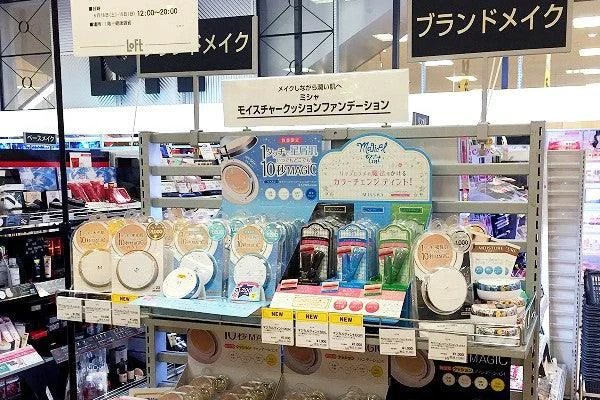
Japan is one of the largest destinations for Korean cosmetics. Korea’s Ministry of Food and Drug Safety reported 2025 cosmetics exports to Japan of about US$1.1 billion, ranking behind the United States and China. That scale supports serious market analysis; it does not prove that one product, distributor or store plan will succeed.
The original profile attributed detailed business facts and quotations to Motohiro Kato of Keisetsusha/Olympia, but no accessible independent primary source was found for the interview, family relationship, store count, visit count or quoted “manual” statement. Those details have been removed rather than repeated as verified reporting.
Start with verifiable market scale
MFDS reports that Korea exported US$11.4 billion in cosmetics during 2025 and that Japan was the third-largest destination at US$1.1 billion. This confirms material demand and cross-border trade.
It does not reveal category-level sell-through, retailer margins, consumer age, online/offline split or repeat purchase. Trade value includes many products and channels. A brand still needs item-level evidence.
Use official trade data to size the opportunity, then obtain current Japanese category, price and channel data for the exact product.
Market-entry sequence
| Stage | Primary decision | Evidence to retain |
|---|---|---|
| Classification | Cosmetic, quasi-drug or another regulated category | Formula, intended use and reviewed claims |
| Local responsibility | Importer/marketing authorization and manufacturing roles | Licenses, contracts and responsible addresses |
| Conformity | Standards for Cosmetics and ingredient limits | Formula specification and safety/quality records |
| Label and claims | Japanese-language permitted presentation | Approved artwork and claim substantiation |
| Customs | HS code, origin and applicable treatment | Classification and commercial documents |
| Channel pilot | Retailer, e-commerce or controlled test | Sell-through, returns, feedback and inventory age |
Classify cosmetic versus quasi-drug
PMDA’s English FAQ says ordinary cosmetics sold in Japan do not require marketing approval, but they must comply with the Standards for Cosmetics. It also notes that products containing active ingredients are generally classified as quasi-drugs and require marketing approval.
Classification depends on intended purpose, ingredients and claims, not the Korean category name alone. A Korean “functional cosmetic” does not automatically map to the same Japanese class.
Freeze proposed Japanese claims early and review formula and claim together. Changing “improves appearance” to a therapeutic promise late in the process can change the regulatory path.
Licensed local roles matter
Commercial import is not the same as a traveler bringing limited items for personal use. MHLW guidance distinguishes business import from personal use and indicates that commercial activity requires the relevant licensed framework.
JETRO’s Japan import guidance describes the need for local manufacturing/marketing and packaging-labeling-storage roles depending on the operating model. Exact requirements should be confirmed with qualified Japanese regulatory counsel and the competent prefectural authority.
A Korean manufacturer should know who takes legal responsibility for release, labeling, quality, adverse events, complaints and recall before shipment.
Conformity with the Standards for Cosmetics
Japan’s Standards for Cosmetics set ingredient prohibitions and restrictions. PMDA directs cosmetic businesses to MHLW materials and notes that Japanese originals control.
Compare the exact formula—not a marketing ingredient list—against current Japanese requirements. Retain raw-material specifications, concentration, impurities, manufacturing controls, stability and microbiological support appropriate to the product.
A formula sold in Korea or another market is not automatically compliant in Japan. Reformulation can affect claims, texture, package compatibility and test evidence.
Japanese labeling is a release requirement
The PMD Act requires specified information on the immediate container or package, including the marketing authorization holder’s name/address, product name, lot number and other designated information. Practical full-label requirements extend through related rules and industry standards.
Create Japanese artwork from a controlled master. Verify product name, purpose, directions, full ingredients, net contents, responsible company, lot, warnings and expiry information where required.
Do not cover critical batch, seal or expiry data with an afterthought sticker. Proofread units, punctuation, allergens, shades and variant-specific instructions.
Claims need Japanese review, not literal translation
Words such as whitening, wrinkle improvement, anti-inflammatory, repair, medical-grade and acne treatment can carry different regulatory implications. Translate the intended consumer message, then review whether that message is permitted for the product class.
Visuals, hashtags, influencer scripts and product names can imply claims even when the package avoids them. Marketing, retailer copy and social content should use one controlled claim matrix.
Evidence must match the exact formula, endpoint, population and use. Korean clinical footnotes may require localization and may not support the same Japanese wording.
Customs and HS classification
Japan Customs classifies beauty, makeup and skincare preparations primarily within HS heading 3304, with separate lines for lip makeup, eye makeup, powders and other preparations. Hair, perfume and other categories use different headings.
The correct code depends on the actual product. Confirm composition, function and package with a customs professional rather than copying a competitor’s code.
RCEP treatment and other tariff rules require origin and documentary analysis. A zero or preferential rate in a table is not automatic without meeting applicable origin and procedural requirements.
Importer economics before retail enthusiasm
Build a landed-cost model that includes ex-factory price, freight, insurance, duty, consumption tax, testing, relabeling, local warehousing, distributor margin, retailer margin, promotion, returns, damages and currency risk.
A product that appears competitively priced in Korea may not sustain a Japanese shelf price after channel margins. Discounting can damage both profitability and brand positioning.
Model full-price, promotional and markdown scenarios. Agree who funds testers, samples, influencer seeding and unsold inventory.
Offline and online channels serve different jobs
Variety shops, drugstores, department stores, specialty beauty retailers, pop-ups and e-commerce each provide different discovery, education, trial and replenishment paths.
Color makeup benefits from shade testing and visual merchandising. Skincare may require ingredient/usage explanation. E-commerce can extend assortment but needs accurate Japanese content, service and delivery.
Do not assume offline is always dominant or online is always cheaper. Test the exact category and target customer with current channel data.
A channel pilot should answer questions
Choose a bounded assortment with distinct roles rather than shipping the entire Korean catalog. Define the pilot period, doors, inventory, price, display, training and promotional support.
Measure sell-through by SKU and store, conversion where available, repeat purchase, return reasons, stockouts, discount dependence and remaining shelf life.
A crowded launch event can create awareness without proving repeat demand. Separate event reach from sustained sales.
Packaging and shade localization
Cute or distinctive packaging may improve discovery, but package appeal is not universal evidence. Test readability, shelf dimensions, tamper evidence, recycling instructions and Japanese consumer handling.
Foundation and concealer shade ranges need actual local demand data. A small range may limit conversion; too many untested shades create slow inventory and expiry risk.
Names, colors and claims should be checked for linguistic and cultural meaning. Localization is not simply replacing Hangul with katakana.
Influencers and retail staff need controlled briefs
Provide exact product identity, permitted claims, use directions, disclosures and prohibited medical language. Distinguish paid, gifted and affiliate relationships under applicable Japanese advertising and platform rules.
Retail staff should know texture, shade, routine role and warnings without diagnosing customers. Training must use the current Japanese package, not an older Korean generation.
Archive the final brief and live posts. Correct material errors promptly.
Quality, complaints and recall readiness
Define batch traceability from Korean manufacturer to Japanese consumer. The local responsible party needs complaint intake, adverse-event escalation, investigation and recall procedures.
Track leakage, pump failure, broken seals, shade mismatch, irritation reports and translation confusion separately. Trend reports need denominators and batch context.
Do not treat social complaints as noise or every complaint as causation. Use a documented quality process.
What could not be verified in the former profile
Public searches did not produce an independent primary record for the former article’s Motohiro Kato interview, claimed family relationship, Olympia store counts, more than 100 Korea visits, precise supply share, future openings, K Beauty Festa details or quoted characterization of Japan.
The absence of a discoverable source does not prove those statements false. It means this article cannot responsibly present them as verified facts. A future restoration would require a dated recording, transcript, official company page or attributable publication.
This correction prevents an unverified personality narrative from standing in for market-entry guidance.
A launch-readiness checklist
- Exact product classification and Japanese claim set reviewed.
- Licensed local responsibilities and contracts documented.
- Formula complies with current Standards for Cosmetics.
- Japanese label and digital copy are controlled and proofread.
- HS code, origin and customs documentation confirmed.
- Landed economics work at realistic margins and returns.
- Pilot assortment, channel, metrics and exit criteria defined.
- Traceability, complaints and recall processes tested.
Japan is a proven K-Beauty market, but entry is operational rather than mystical. A brand wins by making one compliant product easy to understand, buy, use and repurchase—then expanding from verified results.
Before scaling, run a formal post-pilot review with regulatory, quality, finance, sales and customer-service owners. Reconcile shipped, sold, returned, damaged and remaining units by batch; compare actual margin with the model; document every claim or label correction; and decide whether to expand, reformulate, change channel or stop. A disciplined stop decision protects cash and consumers as much as a successful launch does.
Sources
- PMDA: Cosmetics Regulation FAQ
- MHLW: PMD Act, Cosmetic Provisions
- MHLW: Standards for Cosmetics
- JETRO: Cosmetics Import Procedures in Japan
- Japan Customs: Chapter 33 Tariff Schedule
- MFDS: 2025 Korean Cosmetics Export Results
Frequently Asked Questions
Do ordinary cosmetics need marketing approval in Japan?
PMDA says ordinary cosmetics do not require marketing approval, but they must comply with the Standards for Cosmetics and the licensed local manufacturing/marketing framework. Quasi-drugs follow a different approval path.
Can a Korean functional cosmetic use the same claims in Japan?
Not automatically. Classification and permitted claims differ. Review the exact formula, intended use and Japanese wording before launch rather than translating Korean claims literally.
Does Japan require a local importer or responsible party?
Commercial import and sale require appropriate licensed local roles. The exact structure depends on who imports, labels, stores, releases and markets the product; confirm it with Japanese regulatory professionals.
Are Korean cosmetics a meaningful market in Japan?
Yes. MFDS reported about US$1.1 billion in Korean cosmetics exports to Japan in 2025, making Japan the third-largest destination. Product-level demand still requires category and channel testing.
Was the former Motohiro Kato interview verified?
No accessible independent primary source was found for the interview and its detailed personal/business claims. They were removed; restoration would require a dated recording, transcript or official attributable publication.