“Celebrity-approved” is advertising context, not an evidence grade. A public figure may be a paid ambassador, receive free product, appear at an event, mention a personal purchase, or be shown using an item without any verified commercial relationship. These situations are not equivalent.
The original page copied nineteen brand descriptions and storefront blocks while offering no source for its celebrity premise. It also claimed Korean products are gentler and more effective than American products, accused overseas retailers of manipulated expiry dates, and called old cosmetics poison. This guide replaces those statements with a verification method.
Five endorsement situations
| Situation | What it can establish | What it cannot establish |
|---|---|---|
| Paid global ambassador | Official commercial relationship | Independent preference or superior efficacy |
| Gifted product post | Product was provided | Unbiased purchase decision |
| Affiliate link | Endorser may earn from sales | Best value or typical result |
| Unpaid personal mention | Reported individual experience | General safety or repeatable outcome |
| Unverified social image | At most, visual resemblance | Exact identity, use or endorsement |
FTC guidance focuses on the message consumers reasonably receive, including implied claims and material connections.
Find the primary source
Start with the brand’s dated newsroom, campaign page or verified account and the celebrity’s verified account. Record the announcement date, territory, campaign name, exact product and wording.
A fan repost, collage, retailer caption or search snippet can omit sponsorship and product generation. Reverse-image results may attach a current product name to an old campaign image.
If no primary source supports the relationship, describe it as unverified rather than filling the gap with “celeb-approved.”
Material connections must be clear
FTC influencer guidance says material connections such as payment, free products, discounts, employment or family relationships should be disclosed clearly and conspicuously with the endorsement message.
A disclosure hidden after “more,” placed only in a profile, buried among hashtags or contradicted by the overall message may not communicate the relationship effectively.
Disclosure does not make an unsupported product claim true. It tells the audience why the recommendation may carry a commercial incentive.
Honest experience is not scientific substantiation
An endorser may honestly love a cream or tint. FTC health-claims guidance explains that honest testimonials still cannot convey objective benefits the advertiser could not substantiate directly.
“My skin felt comfortable” is a personal observation. “Repairs eczema,” “prevents acne,” or “works for all sensitive skin” communicates broader claims requiring appropriate evidence and, depending on the claim and market, drug compliance.
Before-and-after images need controlled lighting, angle, makeup and time context. A dramatic result cannot be treated as typical without clear evidence of what consumers generally achieve.
Celebrity expertise has limits
Fame does not create dermatology, cosmetic chemistry or makeup-artistry qualifications. An expert endorsement must reflect appropriate expertise and a sufficient examination or testing basis for the claim represented.
A makeup artist can offer valuable application and shade observations without proving medical efficacy. A dermatologist can discuss skin science but still needs relevant evidence for a particular finished product.
Separate qualification, commercial relationship and actual product testing. None should be inferred from a title such as “beauty icon.”
Exact identity before endorsement
Brands renew formulas, change packaging and reuse line names. A celebrity may have endorsed one shade, limited edition or former generation. Match the full title, generation, volume, shade, set contents and market.
Do not transfer an ambassador relationship from one product to every item in the brand. “Face of Brand X” does not mean the person used every cleanser, sunscreen and lipstick.
Save the campaign page and current listing. If they do not match, state the difference.
ETUDE Soon Jung: formula claims need their own support
ETUDE HOUSE Soon Jung 2X Barrier Intensive Cream 60ml is a current moisturizer centered on panthenol, madecassoside and a fragrance-free/minimal-formula position.
Even if a celebrity uses it, “hypoallergenic,” barrier, ingredient and sensitive-skin claims must be evaluated from the current formula, test definition and individual response. FDA does not define hypoallergenic as a guarantee against reactions.
Peripera Ink Velvet: a shade-specific endorsement
Peripera Ink Velvet 4g 1+1 is a current multi-shade lip product. A celebrity image can be useful only when the exact shade, finish and campaign context are known.
Lighting, lip pigment, editing and application thickness change appearance. An endorsed red or pink does not guarantee the same result on another person or prove all options share identical popularity.
ROUND LAB sunscreen: protection requires label use
ROUND LAB Birch Juice Moisture Sunscreen 50ml is currently listed as SPF50+ PA++++. Celebrity visibility cannot replace the tested label, adequate application and reapplication.
Apply sunscreen for protection, not because a public figure has “glass skin.” Makeup photos do not show sunscreen dose or outdoor exposure. Use shade and protective clothing too.
Cosmetic versus drug claims
FDA explains that cosmetic labeling must be truthful and not misleading. A product marketed to treat or prevent disease or affect body structure/function can be regulated as a drug in the United States.
“Hydrates,” “softens,” and “improves the look of fine lines” differ from “treats dermatitis,” “heals wounds,” or “stimulates collagen” as an unqualified physiological promise.
Celebrity language, emojis and visual implication do not avoid claim rules. The overall advertising impression matters.
Authenticity is a supply-chain question
Authenticity assessment should use seller identity, authorized-channel information where available, exact product data, intact packaging, batch/expiry information, secure checkout and a real customer-service route.
A Korean business registration number can help verify a business, but absence from one page is not by itself proof that every overseas retailer is fake. Laws and required disclosures differ by jurisdiction.
Do not accuse a retailer of counterfeit goods or date manipulation without evidence. Report an exact mismatch or suspected counterfeit to the brand, seller and relevant authority.
Freshness and expiry without fear
Old cosmetics are not literally poison by definition. Product safety depends on stability, storage, contamination, formula and use. Expired or deteriorated products should not be used, but the claim should remain precise.
Check printed expiry or period-after-opening marking, batch information, seal and storage. Discard after unusual odor, color, texture, foreign material or an unexpected reaction.
A warehouse is not inherently evidence of staleness. Inventory controls, storage conditions and turnover are the relevant facts.
How to evaluate retailer claims
EmpressKorea’s About page describes Korea-based sourcing and fulfillment, while Shipping and Return pages define transaction terms. Those first-party statements can be checked and should be reported with their scope.
Avoid “best,” “freshest,” or “only authentic source” unless comparative evidence supports every part of the claim. State what can be observed: company identity, origin, product listing, shipping method, tracking and return window.
Save the exact order and contact support promptly for wrong item, damaged seal, inconsistent volume or unexpected package.
Affiliate rankings and “top brands”
A list of nineteen brands often mixes skincare, makeup, tools and body care under one score. It may favor commission, free samples, retailer availability or search traffic rather than product quality.
Ask how brands were selected, whether commercial relationships are disclosed, which exact products were tested and what comparison criteria were used.
A brand can make one product that fits and another that does not. Rankings should not replace category-level comparison.
Campaign imagery is not a product test
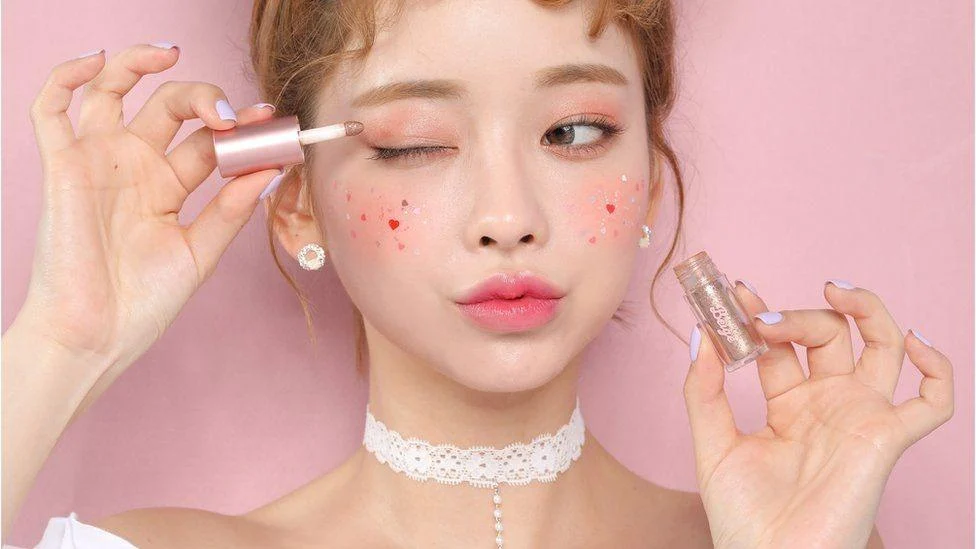
Campaign photographs are created with lighting, styling, makeup, lenses, color grading and retouching. They can communicate a shade story or brand identity, but they cannot show untreated skin response, sunscreen dose, wear duration or the cause of a complexion change.
Behind-the-scenes video may provide more context, yet it still does not establish an unedited clinical baseline. Look for the exact credited makeup products and shades when recreating a look, and treat any missing item as unknown rather than guessing from color.
Before-and-after material needs consistent lighting, distance, expression and timing plus disclosure of other treatments. A celebrity’s appearance is never a substitute for finished-product testing.
Reviews and testimonials need their own integrity checks
FTC’s Consumer Reviews and Testimonials Rule addresses deceptive review practices. A retailer should not buy positive sentiment, suppress negative reviews because of opinion, create fake personas or present insider reviews as independent.
For shoppers, useful reviews name the exact option, purchase or incentive context, duration, routine and observable result. Repeated generic praise, identical wording, impossible timelines and medical conclusions deserve less weight.
A verified-purchase badge can support transaction context but does not prove that the reviewer used the product correctly or that the claimed mechanism is true.
A verification workflow
- Locate the primary dated endorsement source.
- Identify payment, gift, affiliate or employment connection.
- Match exact product, generation, shade, size and market.
- Separate personal experience from objective claim.
- Check evidence and label for the objective claim.
- Verify seller identity, policy pages and received package.
- Introduce the product based on need and tolerance—not fame.
Celebrity discovery can be enjoyable and culturally relevant. The responsible purchase begins after the endorsement: with exact identity, disclosure, evidence, label directions, price and routine fit.
Sources
- FTC: Endorsement Guides—What People Are Asking
- FTC: Disclosures 101 for Social Media Influencers
- FTC: Health Products Compliance Guidance
- FDA: Cosmetics Labeling Claims
- EmpressKorea: About
- Current ETUDE Soon Jung Cream listing
- Current Peripera Ink Velvet 1+1 listing
- Current ROUND LAB Birch Juice Sunscreen listing
Frequently Asked Questions
Does celebrity-approved mean a beauty product works?
No. It may document an honest experience or commercial campaign, but objective safety and efficacy claims require their own appropriate evidence for the exact finished product.
How can I tell whether an influencer post is sponsored?
Look for a clear disclosure with the endorsement itself, such as payment, free product, affiliate commission, employment or another material connection. A hidden hashtag or profile-only disclosure may be insufficient.
Can a celebrity endorsement apply to every product from a brand?
No. Match the exact product, generation, shade, size, campaign and market. A brand ambassador relationship does not establish personal use or endorsement of every item.
Does a Korean business registration prove every product is fresh?
No. It helps identify a business but does not prove each item’s storage or age. Check exact package, seal, batch, expiry or PAO, storage and seller policy.
Are old cosmetics poisonous?
Not by definition, but expired, contaminated or deteriorated cosmetics should not be used. Discard products after unusual odor, color, texture, foreign material or an unexpected reaction.