
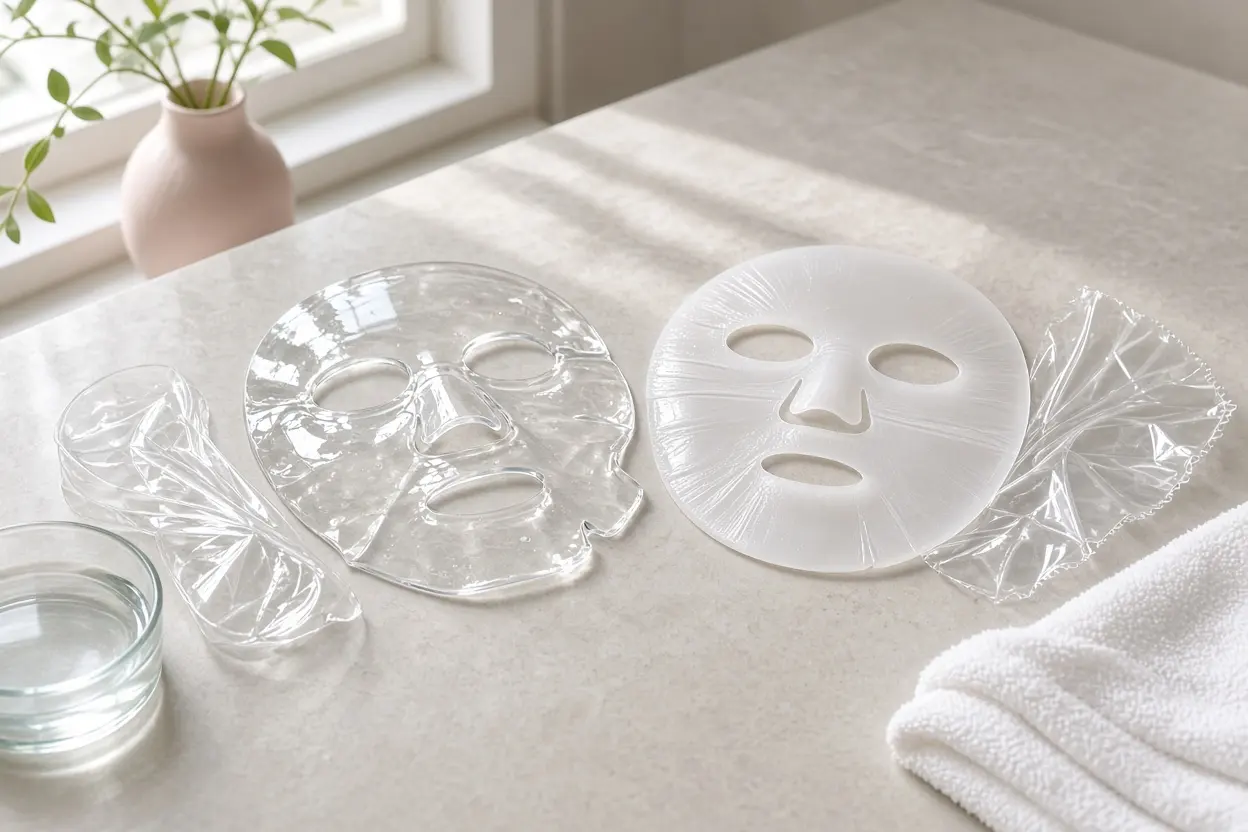
A Biodance collagen mask guide should start with the question most buyers skip: which of the two hydrogel masks fits your skin this week, and what will a four-sheet box realistically do? The Bio-Collagen and Hydro Cera-Nol Real Deep Masks share a format, a sheet weight and the same turn-clear effect, so they are easy to confuse. They are not built for the same problem.
Here is the short answer. Choose Bio-Collagen when your skin is calm but looks flat and dehydrated. Choose Hydro Cera-Nol when it feels tight, flaky or easily irritated. Choose neither if you expect your skin’s own collagen to be rebuilt, because topical collagen works as a surface hydrator, not a replacement part. Below you will find the formulation logic behind that rule, how long to wear these sheets, and what to use instead if lying still for hours under a gel mask is never going to happen.
Hydrogel construction: what a Biodance collagen mask is made of
Most sheet masks are a fabric or fibre carrier soaked in watery essence. You peel it out of the pouch, it drips, and it starts drying at the edges within minutes. A hydrogel mask works differently. The essence itself is set into a gel, so the mask and the formula are the same object.
The catalog describes the Bio-Collagen Real Deep Mask as 34 g of essence that transforms into a transparent hydrogel. Retailer copy for the Hydro Cera-Nol version describes its ampoule as solidified into a hydrogel mask that melts into the skin during use [4].
What holds the gel together
The published ingredient list for Hydro Cera-Nol includes xanthan gum, carob gum, Chondrus crispus, algin, glucomannan and cellulose gum [4]. These are polysaccharide thickeners and gelling agents. Chondrus crispus is the red seaweed that carrageenan comes from, and algin comes from brown seaweed. Together they form a water-holding network firm enough to lift off a backing film in one piece.
That network has practical consequences. The gel clings to contours without running into your eyes. It stays on far longer than a fabric sheet before drying out. And because it covers the skin, it slows evaporation while it is on, which is a large part of why skin feels so saturated afterwards.
Why it turns clear
Brand and retailer copy present the clearing as visible proof that the ingredients are being absorbed [4]. A more cautious reading is that the gel is giving up water, both to your skin and to the air, and its optical properties change as it does. Clarity tells you the mask has released much of its load. It does not measure how much of any ingredient got into your skin.
- What the format gives you: long contact time, a temporary occlusive layer, no dripping and a sheet that stays put on curved areas.
- What it costs you: time (hours, not minutes), some slipping if you sleep on your side, single use only, and a higher price per session than a fabric sheet.
- What it does not change: the chemistry. A gel delivers the same humectants and emollients a serum would. It just keeps them against your skin longer.
Can a collagen mask build collagen? What the evidence supports
This is the claim most worth getting right before you buy. Collagen makes up roughly 70% of the skin’s dry weight, so it is easy to assume that putting collagen on the skin tops it up [5]. It does not work that way.
A 2024 pharmaceutical-technology review notes that collagen is a large-molecule protein unable to cross the epidermal barrier, which is why topical products use hydrolysates, meaning smaller peptide fragments [5]. Hydrolysed fragments are a different ingredient with a different job. Mostly they bind water at the surface and help form a film that slows moisture loss. The same review lists reduced transepidermal water loss (TEWL) among the effects reported for collagen-containing products [5].
Reading “243 Da” sensibly
Biodance markets its collagen as 243 daltons (Da), a unit of molecular mass. For scale, a single glycine amino acid weighs about 75 Da. A fragment of 243 Da is therefore only a couple of amino acids long. At that size it behaves less like the structural protein in your dermis and more like the small water-binding molecules your skin uses to stay supple. That is a useful hydration ingredient, but it is not a building block that reassembles into collagen fibres.
The catalog repeats brand figures for Bio-Collagen: a 34% improvement in elasticity, a 126% increase in cheek moisture, and reductions in pore volume, pore area and pore count of roughly 16–20%. These are brand-supplied results measured on the brand’s own terms. Independent replication has not been found. Treat them as readings of how skin looked and felt immediately after use, not as long-term firming data.
Why the wording matters
US law defines cosmetics as products for cleansing, beautifying, promoting attractiveness or altering the appearance [6]. Products intended to affect the structure or any function of the body fall under the drug definition [6]. The FDA lists claims such as “regenerate cells” as examples that can turn a marketed cosmetic into a drug [6]. When a mask says “visibly firmer”, read it as an appearance claim. Hydrated skin genuinely does look bouncier.
- Reasonable to expect: plumper-looking, smoother, more reflective skin for the rest of the day or the next morning.
- Not established: stimulation of your own collagen, lasting lift, or reversal of lost firmness.
Bio-Collagen Real Deep Mask: the bounce-and-glow pick
Bio-Collagen is the one most people mean when they say “the Biodance mask”. The catalog positions it around firmness, deep hydration and pore care. It is built on the brand’s ultra-low molecular weight collagen in a 34 g hydrogel, and the box holds four sheets. The listing also cites an EWG Green rating, a low-irritation formulation and a screening claim of being free from 19 controversial ingredients.
The pore figures need some context. A well-hydrated surface swells slightly, and light reflects off it more evenly, so pores and fine texture tend to look less obvious for a while after any long, wet treatment. That is a real cosmetic effect and a reason people mask before an event. It is temporary by nature.
Who it suits
- Normal, combination or oily-leaning skin that looks dull or lacks bounce but does not sting or flake.
- Anyone who wants a plumped, reflective finish for the next morning: before a photo, a long-haul flight arrival or a day in full makeup.
- People who want a treatment step without adding another daily product. Four sheets are easy to space across a month.
Who should pause
- Skin that is actively irritated, cracked or tight. The headline story here is collagen, hydration and pores, not lipid replenishment. The Cera-Nol version below is aimed more directly at that need.
- Anyone with a known sensitivity to animal-derived proteins. The catalog does not state where the collagen comes from. Check the box or ask before assuming it is marine or bovine.
- Anyone expecting cumulative firming from a few sheets. The evidence above does not support that, and disappointment is the most common outcome of mismatched expectations.
The editorial verdict: buy Bio-Collagen for how your skin looks the day after, not for what it might do over months. If dull, thirsty-looking skin is your issue and your barrier is otherwise behaving, it is the more logical of the two Biodance masks.
If you are still deciding whether a sheet mask fits your needs at all, compared with a wash-off or peel-off collagen format, our guide to choosing a collagen mask by format covers the trade-offs before you commit to a brand.
Hydro Cera-Nol: the barrier-comfort Biodance mask
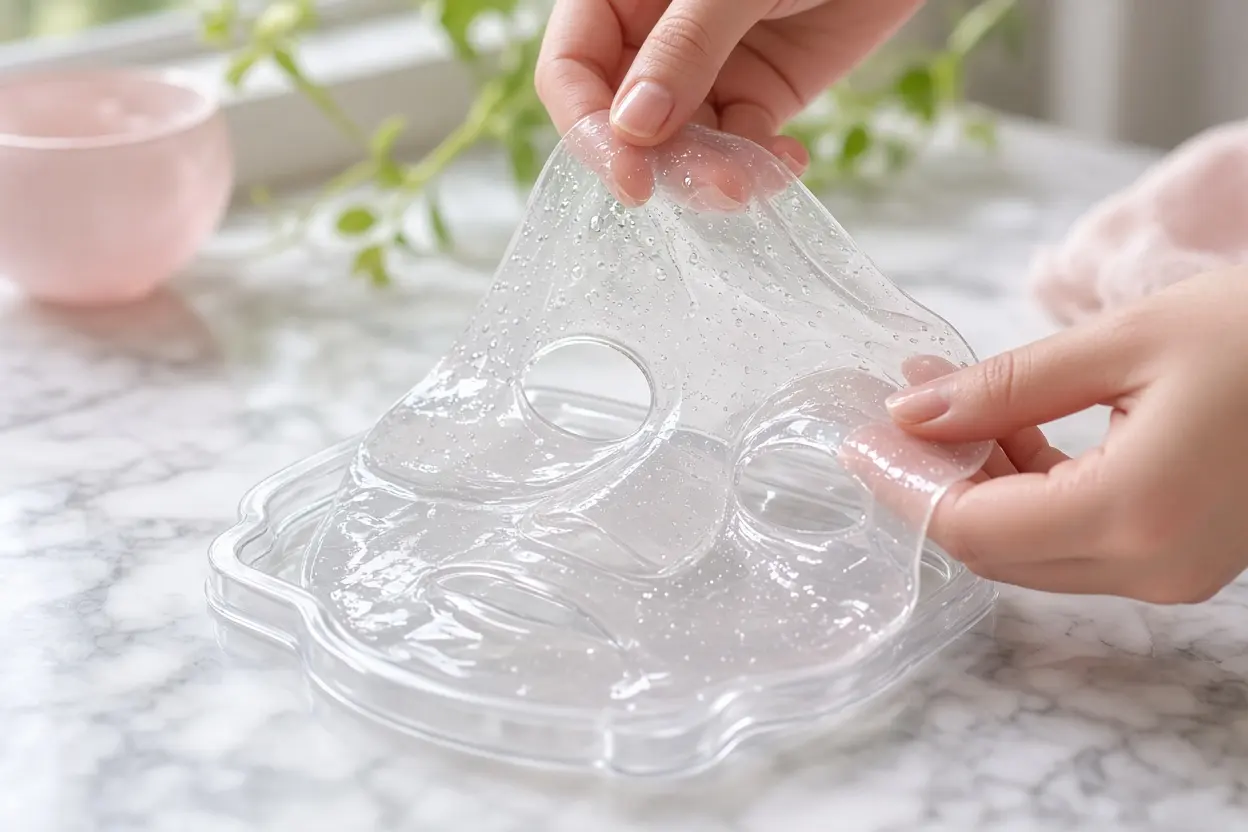
Hydro Cera-Nol looks almost identical, but its formula has a different focus. Retailer copy names D-panthenol, a five-layer ceramide blend and oligo hyaluronic acid as its core, alongside 50,000 ppm of glacial water [4]. In a single sheet of the same 34 g weight, the emphasis moves from bounce to comfort [4].
Why the lipid list matters
The outer layer of your skin is often compared to bricks and mortar. The “mortar” is a lipid mix built largely from ceramides, cholesterol and free fatty acids. Hydro Cera-Nol’s ingredient list includes ceramides NP, NS, AP, AS and EOP, together with cholesterol, phytosphingosine and stearic acid [4]. Several components of that mortar appear in one formula, which is more thoughtful than a single token ceramide.
The list also includes panthenol, betaine, allantoin, dipotassium glycyrrhizate and shea butter, plus emollient esters such as cetyl ethylhexanoate [4]. Panthenol and betaine are humectants. Shea and the esters soften and add slip. The practical result is a mask that should leave skin feeling cushioned rather than just wet, which is what tight, dry or easily upset skin usually wants.
It is not collagen-free
The two masks overlap more than their names suggest. The Cera-Nol list includes collagen extract, niacinamide, adenosine and several forms of hyaluronic acid [4]. So the real choice is between emphases: Bio-Collagen is marketed around collagen and pores, Cera-Nol around ceramides and panthenol.
One point matters if you react easily. The list also includes rose flower water and extracts of iris, coriander, fennel seed, cardamom seed and saffron flower [4]. Botanicals are not automatically a problem, but they are worth noticing if your skin reacts to scented products. The patch-test section below explains why.
Who it suits
- Skin that feels tight after cleansing or flakes around the nose and mouth.
- Dry, heated rooms, long flights and cold-weather stretches when a normal moisturiser seems to disappear by midday.
- Anyone who finds watery fabric masks leave skin feeling more stripped once they dry.
One honest limitation: a weekly mask cannot make up for a harsh cleanser or a missing moisturiser. If barrier discomfort is constant, fix the daily routine first. Use Cera-Nol as reinforcement, not rescue.
Bio-Collagen vs Cera-Nol and the wrapping mask, side by side
With the mechanisms covered, the choice becomes much simpler. The table sets the two hydrogel masks against the one non-sheet collagen mask in this edit. That way you can see where the format, not just the formula, changes the answer.
| Decision point | Bio-Collagen Real Deep Mask | Hydro Cera-Nol Real Deep Mask | MEDI-PEEL Red Lacto Collagen Wrapping Mask |
|---|---|---|---|
| Format | 34 g hydrogel sheet, 4 per box | 34 g hydrogel sheet, 4 per box | 70 ml brush-on, peel-off film with silicone brush |
| Formula emphasis | Low molecular weight collagen, hydration, pore look | Ceramides, panthenol, oligo hyaluronic acid | 300 Da hydrolysed collagen (brand claim), lactobacillus extract, rosehip oil |
| Best-fit skin feel | Calm but flat, dull or dehydrated-looking | Tight, flaky, easily irritated | Skin you want looking smooth for tomorrow’s makeup |
| Time commitment | Hours; follow the box insert | 3–4 hours by day or overnight, per retailer instructions | About 20–30 minutes to dry, according to collected Korean-user feedback |
| Main watch-out | Collagen source not stated in the catalog | Several botanical extracts and rose water | Technique-sensitive application; some users notice no change |
Three situations, three answers
If your combination skin looks grey after a run of late nights and you have an event at the weekend, Bio-Collagen is the better fit. Your barrier is not the problem. Surface water and reflectiveness are. Mask the evening before, or that afternoon if the insert allows it, and keep the rest of the routine unchanged.
If your cheeks sting slightly when you apply moisturiser during a winter of central heating, start with Hydro Cera-Nol. Its lipid and humectant mix targets the feeling you describe. Patch test it first, because skin that already stings is skin that reacts more readily.
If you are rarely home in the evening and know a sheet will sit unused in the drawer, neither hydrogel is the honest pick. A short-contact format suits you better, and the section on time-poor options below covers it.
What would change the call
- A known reaction to scented or botanical-heavy products moves you toward reading both full ingredient lists side by side, not straight to Cera-Nol.
- Very oily, congestion-prone skin may find a rich, emollient-containing gel heavier than it needs. A shorter daytime wear is a reasonable first trial.
- Buying both and alternating is sensible if your skin swings with the seasons. Keep Cera-Nol for dry or tight weeks and Bio-Collagen for calm ones.
How long to wear a Biodance mask, and whether overnight is wise
This is where retail listings disagree most. Different sellers quote different wear times for Bio-Collagen, from a few hours to overnight. Rather than average them, use the insert in your own box as the authority. Formulas and instructions can change between production runs, and the insert reflects the batch you are holding.
For Hydro Cera-Nol, retailer instructions give two options. You can apply it at the end of your evening routine and remove it the next morning. Or you can apply it during the day after toner or serum and leave it on for 3–4 hours or until it turns transparent [4]. The same listing suggests using the eye and mouth cut-out pieces on the sides of the nose, under the eyes, on the neck or wherever you want extra hydration [4].
A sensible sequence
- Cleanse gently and leave skin slightly damp, or apply a plain hydrating toner.
- Keep the layer underneath simple. A covering gel slows evaporation, so whatever sits beneath it stays in contact longer. That is pleasant with a basic hydrating serum and a poor idea with a strong exfoliating acid or a retinoid you are still getting used to.
- Peel off the backing film and position the mask from the centre outward, pressing out air pockets with your fingertips.
- Remove it at the insert’s stated time or once it clears, whichever the instructions put first.
- Pat in any leftover essence, then follow with moisturiser if your skin feels it needs one.
Overnight: when it makes sense
Overnight wear suits back sleepers with dry skin, and Cera-Nol’s listed instructions allow it. It suits restless side sleepers less well, because a mask that slides off at 2 a.m. has done a fraction of its job and leaves essence on the pillowcase. If you break out easily, start with a daytime session. That lets you see how your skin responds to several hours of contact before committing to eight.
How often
A four-sheet box naturally points to occasional use. These are treatment-day products, not daily steps. Follow the frequency printed on your box. If you want to know where an occasional mask belongs relative to serums and creams, our breakdown of Korean skincare routine order explains which steps earn a regular place and which belong on a weekly rota.
No time for a hydrogel sheet? Wrapping masks, gel pads and a collagen cleanser
The best mask is the one you actually use. If hours of contact do not fit your evenings, three short-contact formats in this edit are worth considering, each with a different trade-off.
The 30-minute alternative: a peel-off wrapping mask
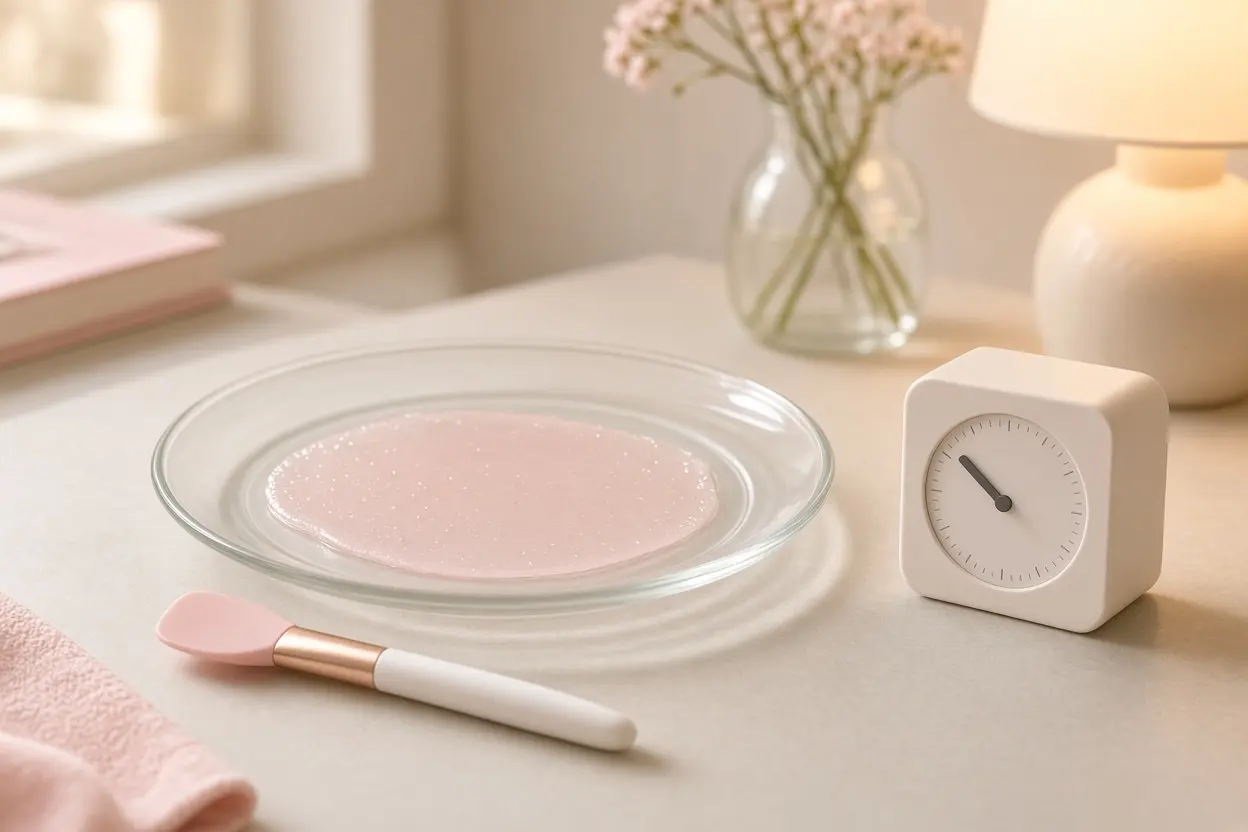
The MEDI-PEEL Red Lacto Collagen Wrapping Mask is not a sheet. You brush on a layer, let it dry into a film, then peel it away without rinsing. The catalog lists hydrolysed collagen at a brand-stated 300 Da, lactobacillus extract and rosehip oil, and it claims moisture retention for up to 100 hours. That 100-hour figure is a brand claim, not an independent finding.
Collected Korean-user feedback on this exact 70 ml mask gives a more useful picture than the marketing does. Many reviewers describe a visible glow and smoother, tidier-looking texture after peeling, and several say makeup the next day went on and lasted better. Most found removal painless and not irritating, and they noted that a small amount covers the face, so the tube lasts. The reservations are consistent, though. The apply, dry and peel routine takes roughly 20–30 minutes, which leads many to use it only weekly. Results also depend on technique: too thick and it dries slowly, too thin and it peels badly, and going back over a drying area spoils the film. A minority, including people who used it consistently, reported noticing nothing beyond mild softness. Some found the silicone brush spread a thinner, more even layer than fingers did.
Choose it if you want a weeknight treatment that fits between dinner and bed, and you are willing to practise the application. Skip it if fiddly routines put you off, because every reservation above is about effort.
Daily contact instead of weekly: gel toner pads
Biodance’s Collagen Gel Toner pads come in two catalog forms. The 60-pad, 140 ml jar is built around 243 Da collagen, oligo hyaluronic acid and Galactomyces ferment filtrate. The two-jar set of 60 pads each lists 100,000 ppm collagen water alongside elastin, a five-peptide complex, SYN-COLL and adenosine. Both are gel-coated pads designed to reduce friction compared with cotton pads. They are short-contact daily steps, not substitutes for a long-wear mask, but they deliver consistent, everyday hydration that a four-sheet box cannot.
Collagen in a cleanser: keep expectations small
The Collagen Mask To Foam Cleanser (150 ml) clings briefly as a mask, then foams. The listed formula leads with glycerin and amino-acid-type surfactants, sodium cocoyl glycinate and sodium methyl cocoyl taurate. Any collagen it contains rinses away within minutes. Collagen does not appear by name in the catalog’s ingredient record, so check the position on the carton if collagen is why you are buying it. Judge it as a cleanser first. Our guide to choosing a Korean cleanser for sensitive skin explains how to read surfactant lists like this one.
Patch testing a collagen mask and reading the safety labels
A long-wear mask is the format where a patch test matters most. It sits against your face for hours, and you cannot rinse away a reaction you only notice in the middle of the night.
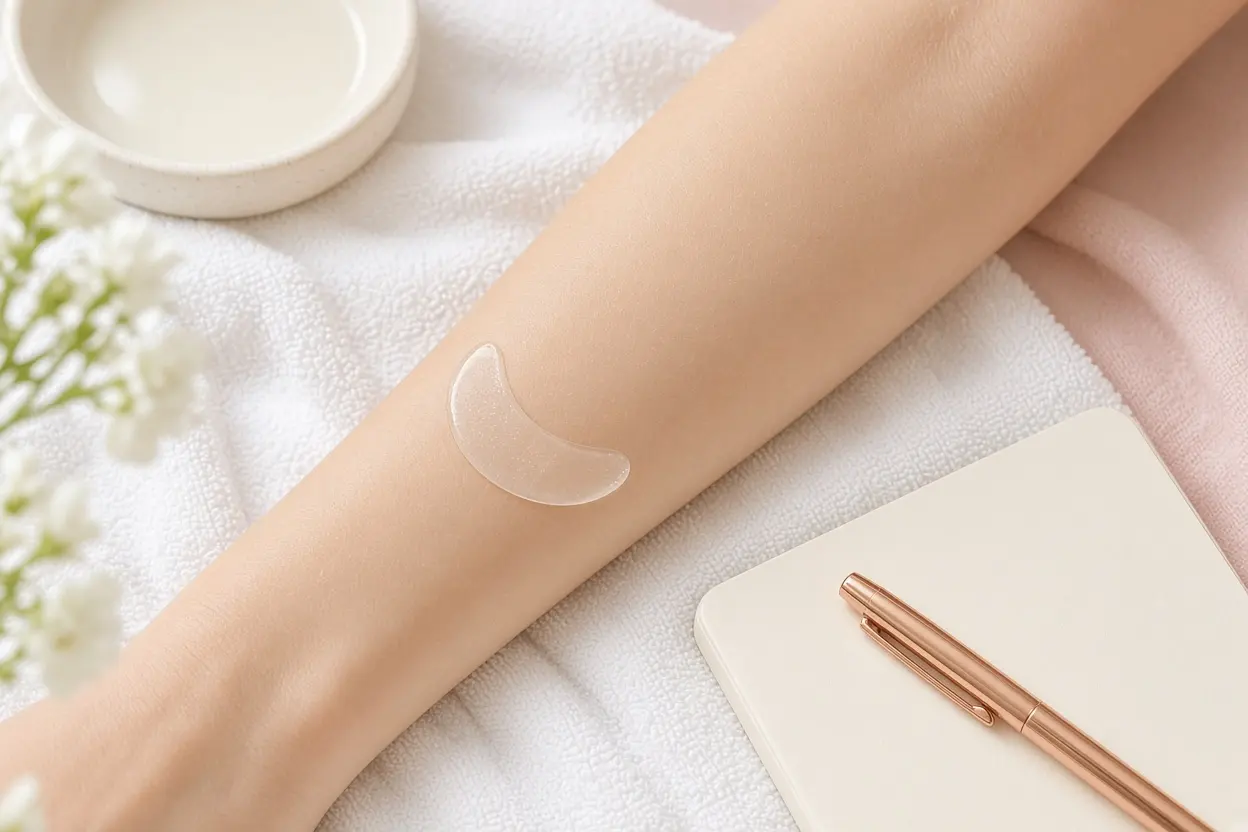
The American Academy of Dermatology recommends applying a new product twice daily for seven to ten days to a quarter-sized area that will not be rubbed or washed, such as the underside of the arm or the bend of the elbow [8]. It also advises leaving the product on for as long as you normally would [8]. For wash-off products such as a cleanser, the guidance is about five minutes or as long as the instructions say [8].
Adapting that to a hydrogel mask
A four-sheet box will not support twice-daily testing for a week and a half, so be realistic. The eye and mouth cut-outs are a practical test piece. Place one on your inner arm for the full wear time you plan to use, and repeat over several days if you have the material. This is a partial check, not the full protocol. If your skin reacts easily, combine it with a careful look at the ingredient list.
If redness, itching or swelling appears, the AAD advises washing the product off gently as soon as possible and not using it again [8]. A cool compress or petroleum jelly can relieve the skin, and a severe reaction that does not settle may need a dermatologist [8]. The AAD also notes that products with plant-based botanical ingredients may still contain fragrance-related ingredients, which is relevant to Cera-Nol’s list of extracts [8].
What the badges do and do not mean
- “Free from 19 controversial ingredients” and EWG ratings are screening labels from retailers or ingredient databases. They help with comparison, but they are not safety approvals.
- Regulatory status: under US law, cosmetic products and ingredients other than colour additives do not need FDA approval before going on sale [6]. “On the shelf” does not mean “tested on skin like yours”.
- Hypoallergenic is a marketing term without a guarantee. Your own patch test outranks it.
Once the test is clear, the next decision is simple. Match the mask to how your skin feels this week, put the session on a night you will actually be home, and browse the full masks and treatments edit only if you need a format these three do not cover.
Frequently Asked Questions
Does the Biodance collagen mask actually increase collagen?
There is no evidence that it does. Native collagen is too large to cross the skin barrier, which is why cosmetics use small hydrolysed fragments. These fragments mainly bind water at the surface and help reduce moisture loss. Expect plumper, smoother-looking skin for a day or so, not rebuilt collagen.
How long should I leave the Bio-Collagen Real Deep Mask on?
Follow the insert in your own box. Retail listings quote everything from a few hours to overnight, and they cannot all reflect the current batch. For the Hydro Cera-Nol version, retailer instructions give 3–4 hours in the daytime or until transparent, or overnight. If you are new to it, a daytime session first lets you check how your skin responds to long contact.
What is the difference between Bio-Collagen and Hydro Cera-Nol?
Both are 34 g hydrogel sheets sold in boxes of four. Bio-Collagen is marketed around low molecular weight collagen, hydration and pore appearance. Hydro Cera-Nol centres on a five-ceramide blend, panthenol and oligo hyaluronic acid for comfort and barrier support. Pick Bio-Collagen for calm skin that looks flat and Cera-Nol for skin that feels tight or flaky.
Should I rinse my face after removing a Biodance mask?
The usual approach is to pat any leftover essence into the skin rather than rinse it off, then apply moisturiser if your skin wants it. If the residue feels tacky on oily skin, a splash of lukewarm water is fine. The insert on your box takes priority over any general advice.
Are Biodance masks safe for sensitive skin?
No label can guarantee that. The "free from 19 ingredients" and EWG claims are screening labels, not approvals. Hydro Cera-Nol's list includes rose water and several botanical extracts, and the Bio-Collagen catalog listing does not state the collagen's source. Patch test a cut-out piece on your inner arm for your planned wear time before using either mask on your face.
Is the MEDI-PEEL wrapping mask a good substitute if I'm short on time?
It is a reasonable one if you can spare about 20–30 minutes and are willing to practise. Collected Korean-user feedback describes a visible glow and better next-day makeup. It also notes that application depends on technique and that a minority notice little change. It is a different format, not a faster version of a hydrogel sheet.