
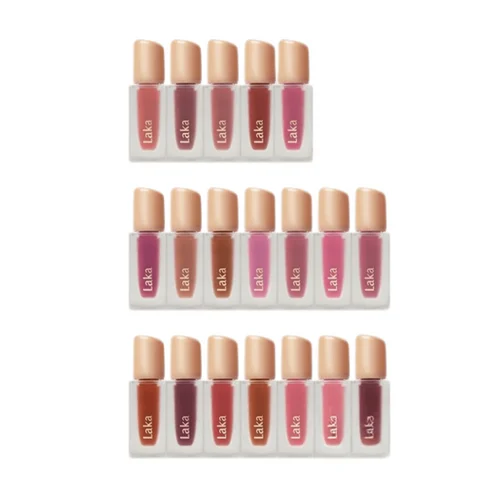
Laka Dream Beam Highlighter is a color cosmetic, not a skincare routine or contour product. Its job is to place reflective color on selected areas so light creates dimension. The result depends on shade, particle size, skin depth, base makeup, tool and lighting.
The former launch post exposed editor code and used “holy grail,” first-day sales, ratings and an unverified staff quotation as proof. This guide uses the current Laka product specification and separates brand claims from observable makeup technique.
Current product identity
Laka’s current Korean product page identifies Dream Beam Highlighter as a 2.8g powder manufactured in Korea. It instructs users to take an appropriate amount with finger, brush or puff and spread gently.
The official page lists a 36-month shelf period from manufacture and 24 months after opening, subject to the package received. It also gives standard warnings for redness, swelling, itch, wounds, children and direct sunlight.
Three shades compared
| Shade | Reflection | Useful test |
|---|---|---|
| 01 Natural Beam | Beige/skin-like glossy light | Does the base disappear into skin or turn ashy? |
| 02 Pink Beam | Translucent pink shift | Does pink read fresh, icy or emphasize redness? |
| 03 Water Beam | Cool blue/icy shift | Does the blue stay intentional across lighting? |
Shade descriptions are relative. Swatch the actual current option and inspect the reflect rather than the pan alone.
Natural Beam: closest to conventional highlight
Natural Beam is the most straightforward option for a beige or skin-adjacent reflection. On some skin depths it may merge subtly; on others the base can appear pale.
Test at the cheekbone and under daylight. A hand swatch can show reflect but not facial texture or undertone.
Use a small brush for controlled placement or finger for a denser spot.
Pink Beam: color and light together
Pink Beam adds a pink reflect rather than functioning as a full blush. On fair or cool skin it may look integrated; on deeper or warm skin it can create a deliberate contrast.
Place it above or partly over blush and evaluate whether the two colors harmonize. Heavy application can turn a sheer shift into a visible stripe.
Pink reflection is a makeup preference, not a claim about skin tone or gender.
Water Beam: an editorial cool shift
Water Beam creates an icy blue reflect. It can suit graphic, cool-toned or editorial looks, but it is less neutral than the word “water” might suggest.
Check warm indoor light, daylight and flash. Blue reflect can disappear head-on and become strong at an angle.
Use deliberately on cheekbones, inner eye or other label-permitted areas without assuming every face area tolerates the same application.
Highlighter is not contour
Highlighter attracts attention by reflecting light. Contour visually recedes an area through a matte or low-reflective shadow color. One product cannot perform both at the same point.
Reflect on the top of a cheekbone can make the area appear projected, but it does not physically sculpt the face or alter bone structure.
Use separate placement logic and avoid calling shimmer powder “contouring to the gods.”
Particle finish and skin texture
Reflective particles reveal differently across pores, dryness, fine lines and base makeup. This does not mean textured skin is wrong; it means directional light emphasizes surface variation.
Use less product, a softer brush and targeted placement when a smooth sheen is preferred. A denser finger application produces a stronger beam.
Do not over-exfoliate to make highlighter look filtered. Adjust the makeup technique.
Prepare the base
Apply skincare and sunscreen adequately, then let layers settle. Foundation and powder change how highlighter grips and reflects.
On a dewy base, the powder may look more fused but can move. On a matte powder base, it may be brighter or more textured. Test the complete stack.
If the product skips, use a clean tool and lighter pressure rather than repeatedly rubbing.
Finger, brush or puff
A fingertip gives concentrated pickup and warmth but less precision. Wash hands first. A small tapered brush creates controlled cheekbone placement; a fluffy brush diffuses.
A puff can press the powder into a base, but use a clean section and minimal amount. Do not share tools.
Tap off excess before touching the face. Build in thin layers because removal is harder than addition.
Placement choices
Common areas include upper cheekbone, brow bone, cupid’s bow and inner eye, but the label and eye-area suitability matter. Nose-tip highlighting can emphasize shape and texture.
Turn the face under light before adding more. A highlighter may be invisible front-on and intense in motion.
There is no required “feminine” or “gender-neutral” placement. Makeup is available to anyone, while technique follows the desired effect.
What hyaluronic acid and chamomile mean here
The listing highlights hyaluronic acid and chamomile extract within a powder formula. Their presence does not make the compact a hydrating serum or treatment.
Finished formulation, ingredient amount and exposure determine effect. Powder can still look dry on a flaky base.
Chamomile and botanical origin do not guarantee allergy-free use. Review the full ingredient list and stop after reaction.
Understanding the 18-hour claim
Japanese official product information reports that the powder passed a clinical long-wear test of about 18 hours. The available summary does not provide every test condition, participant detail, comparator or endpoint.
This supports reporting a brand test claim, not a universal no-retouch promise for every workday, humidity level or skin type. Remaining reflect, even color and transfer are different endpoints.
Wear-test the shade under personal conditions and record fading, migration and texture.
What changes wear
Oil, sweat, friction, masks, hair, phone contact, foundation, setting spray and application amount all affect wear. Blue and pink shifts may appear to fade when lighting changes.
Carry a clean small brush when a touch-up matters. Blot oil gently before reapplying rather than building powder over a wet surface.
Remove at the end of the day with an appropriate makeup remover and gentle cleanse.
Sales and ratings are not product evidence
The former article claimed a five-figure first-day preorder total and a near-perfect rating without a dated platform record or review count. Those numbers have been removed.
Current official Korean product information shows only a small live review count at the time checked. Dynamic ratings change and should not be copied as evergreen proof.
Popularity can indicate discovery, not shade match, wear or safety.
Unverified staff quotations
The former article attributed launch comments to an alleged Laka staff member without a source page, title or recording. That quotation is not retained.
Brand claims should be linked to an official release or current product page and clearly attributed. A quote cannot provide evidence beyond the underlying test.
Gender-inclusive brand positioning can be discussed from official campaigns, but it does not establish product performance.
Storage, hygiene and replacement
Keep the compact closed and away from direct sunlight. Use clean fingers and tools. Do not add oil or setting spray to the pan.
Follow the printed expiry/PAO on the exact package. Discard after unusual odor, color, texture, contamination or reaction.
Powder does not mean contamination is impossible, especially with damp tools.
Flash photography and video
Reflective particles can appear much brighter under direct flash than in daylight. Water Beam may read almost neutral from one angle and distinctly blue when the camera or face moves.
Test with the actual camera and event lighting before a wedding, stage or video shoot. Apply to one side first and compare at normal viewing distance. A highlighter that is subtle to the eye can create a sharp stripe in flash.
Color grading and beauty filters can alter reflect, so unfiltered test footage is the useful reference.
Application on dry or mature-looking texture
Prepare dryness with moisturizer and allow sunscreen/base makeup to settle. Avoid placing dense shimmer directly over scaling or repeatedly polishing the area with a stiff brush.
A small amount on the smoothest upper cheek area may create more dimension than a wide band. Cream beneath powder can intensify shine but may increase movement and texture.
Fine lines and pores are normal. The goal is a chosen optical effect, not erasing skin structure. Remove gently without prolonged rubbing.
A direct pre-purchase checklist
- Exact 2.8g Dream Beam product and selected shade.
- Reflection tested across skin tone and lighting.
- Highlighter role separated from contour and skincare.
- Tool and placement chosen for desired intensity.
- 18-hour statement treated as a bounded brand test claim.
- Full ingredient list and known allergies reviewed.
- Expiry, PAO and storage understood.
Laka Dream Beam Highlighter can create subtle beige light, a pink shift or an icy blue beam. Its value lies in exact color and controlled reflection—not revolutionary promises, invented sales proof or the idea that powder becomes skincare.
Choose the shade only after seeing its reflect on skin before buying; a compact photograph cannot show the full angular color shift.
Sources
- Laka Official: Dream Beam Highlighter Specification
- @cosme Official Product Information: Natural Beam and Wear Claim
- FDA: Using Cosmetics Safely
- FDA: Cosmetics Labeling Claims
- FTC: Advertising Claims and Endorsements
- Current EK Laka Dream Beam Highlighter listing
Frequently Asked Questions
What are the Laka Dream Beam Highlighter shades?
The current range has 01 Natural Beam, 02 Pink Beam and 03 Water Beam, producing beige/skin-like, pink and cool blue reflections respectively.
Is Dream Beam Highlighter also a contour?
No. Highlighter reflects light and visually projects an area; contour creates a receding shadow. Use separate products and placement when both effects are wanted.
Does hyaluronic acid make this highlighter skincare?
No. It remains a powder color cosmetic. Ingredient presence does not replace moisturizer or prove a treatment effect in the finished formula.
Does Laka highlighter last 18 hours without touch-ups?
Official Japanese product information reports an approximately 18-hour long-wear test, but the public summary lacks all conditions. Individual wear varies with base, oil, friction, amount and environment.
How should I apply Dream Beam Highlighter?
Use a clean finger, brush or puff to apply a small amount gently to selected high points. Check the reflect by turning under light and build gradually.