
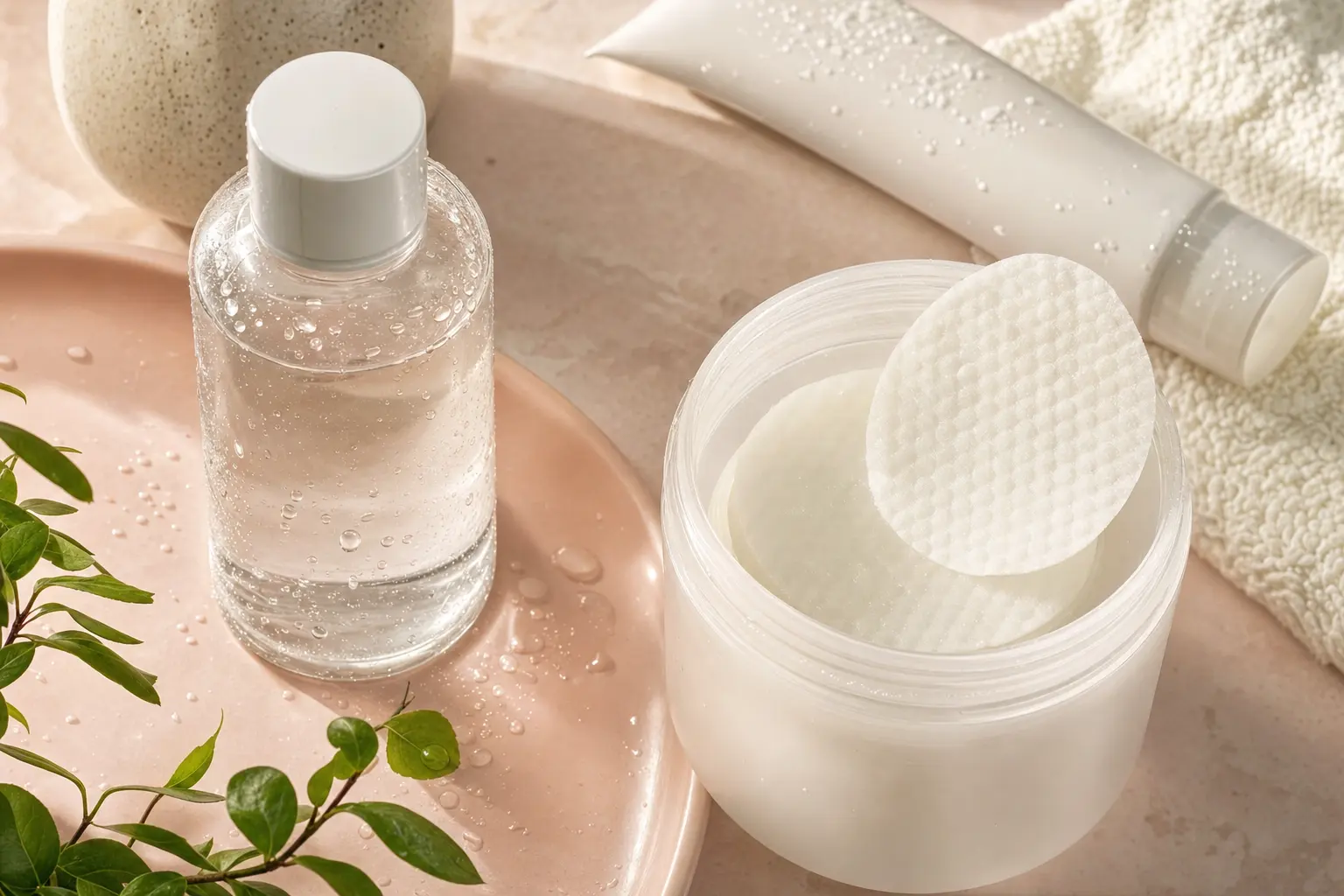
Searching for clarity on korean toner pads vs liquid toner? This friendly K-beauty insider guide breaks down the practical differences, safety notes, and how to pick the right format for your skin and lifestyle.
Whether you want a fast, pre-soaked pad for exfoliation and convenience, or a gentle bottled toner for daily hydration and layering, this article gives step-by-step routines, ingredient tips, and real-use scenarios so you can decide with confidence.
What are toner pads and liquid toners? — Basics and purpose
Toner pads are pre-soaked, single-use or multi-use rounds made from cotton, gauze, or pulp that deliver a measured dose of a toner formula directly to the skin. They became widely used in Korean beauty for convenience, portion control, and multitasking: many pads combine hydrating solutions with gentle chemical exfoliants or calming actives so a single swipe can tone, exfoliate, and prep the face for serums and moisturizers [1][3].
Liquid toners explained
Liquid toners are formulas stored in bottles meant to be applied with clean hands or a reusable cotton pad. In K-beauty, they are primarily hydrating and preparatory: they help rebalance pH after cleansing, add a light layer of moisture, and improve absorption of subsequent skincare layers. Dermatology resources emphasize that bottled toners’ main benefits are hydration and product prep rather than medical treatment, and that simpler toners can be used daily as a gentle step in both AM and PM routines [2].
How they function differently
- Delivery: Pads physically deliver the product with friction and often a textured side for gentle mechanical assistance; liquids rely on patting or sweeping with hands or a reusable pad.
- Formulation focus: Pads commonly include active exfoliants (AHA/BHA/PHA) or brighteners, while bottled toners often emphasize hydrating and barrier-supporting ingredients.
- Portion control: Pads give a pre-measured dose and reduce wasted product that can be absorbed by loose cotton rounds [1].
Both formats prepare the skin for treatment products, but pads frequently add an extra function—exfoliation or brightening—while liquids tend to be everyday hydrators and pH balancers [2][3].
Key ingredient differences: acids, hydrators, and soothing actives
Understanding ingredients is essential when comparing toner formats. Toner pads often combine multiple targeted actives—chemical exfoliants like alpha hydroxy acids (AHAs), beta hydroxy acids (BHAs), gentle polyhydroxy acids (PHAs), and brighteners such as niacinamide—so a single pad can exfoliate, tone, and brighten. Bottled toners more frequently feature humectants and barrier-supporting agents like hyaluronic acid, panthenol (B5), ceramides, and botanical soothe agents for daily moisture and repair.
Acids and exfoliants
Pads commonly include AHA or BHA to slough away dead skin cells; some use PHA for gentler, hydrating exfoliation. Because the pad format adds physical contact and a pre-measured dose, acids can feel more potent, so usage frequency and patch testing are recommended. Dermatology guidance advises caution and patch testing when using acid-containing products [2].
Hydrating and barrier ingredients
Liquid toners often focus on rehydrating the skin and supporting the lipid barrier. Ingredients like low- and high-molecular-weight hyaluronic acid provide immediate plumping, while panthenol and ceramide blends reinforce barrier recovery. These bottled toners are safe for daily layering, including morning routines and makeup prep.
Soothers and trend ingredients
Korean formulas have embraced soothing agents like centella extract and peptides, plus newer trend ingredients that support skin repair. Pads can include these too, but when combined with exfoliants you need to balance the actives for your skin’s tolerance. When in doubt, look for simpler bottled toners to build tolerance before stepping up to active-containing pads.
- Common pad actives: AHA, BHA, PHA, niacinamide, brightening extracts
- Common liquid toners: hyaluronic acid, panthenol, ceramides, botanical extracts
Choosing by skin type: sensitive, oily, dry, and acne-prone
Choosing between pads and bottled toners depends heavily on skin type, sensitivity level, and whether you’re treating issues like acne or dehydration. Pads are efficient for targeted concerns—exfoliation, oil control, texture smoothing—while bottled toners often prioritize hydration and barrier support suitable for frequent use.
For sensitive or reactive skin
If your skin is prone to redness, barrier damage, or rosacea-like sensitivity, start with a simple, alcohol-free liquid toner that focuses on hydration and recovery. Avoid daily use of acid pads at first; instead, patch test and introduce low-frequency use (e.g., once weekly) and monitor for irritation. Dermatology recommendations highlight patch testing for acid-containing products before widespread use [2].
For oily or acne-prone skin
Those with oily or acne-prone skin often benefit from pads containing BHAs for deeper pore exfoliation and oil regulation. Use them 1–3 times weekly depending on tolerance; overuse can disrupt the barrier and cause rebound oiliness. Bottled toners with lighter humectants can be used daily to keep skin hydrated without heaviness.
For dry or mature skin
Dry or mature skin typically needs gentle hydration and barrier repair. Liquid toners rich in humectants and barrier lipids provide a soft, plumping base. If you want exfoliation, choose PHAs or very gentle AHA serums in rotation rather than aggressive daily acid pads, and always follow with occlusive moisturizers to lock in hydration.
- Sensitive: start with liquid toner; patch test pads
- Oily/acne-prone: consider occasional BHA pads + daily hydrating toner
- Dry/mature: hydrating bottled formulas; gentle exfoliation only as needed
How to use them: step-by-step AM and PM routines
One of the most common questions is how to layer pads or liquids in a routine. Both formats belong after cleansing and before serums and moisturizers, but application technique and timing differ slightly. Below are step-by-step routines for morning and evening, with tips for integrating pads safely.
AM routine (everyday prep)
- Cleanse with a gentle cleanser to remove oils and impurities.
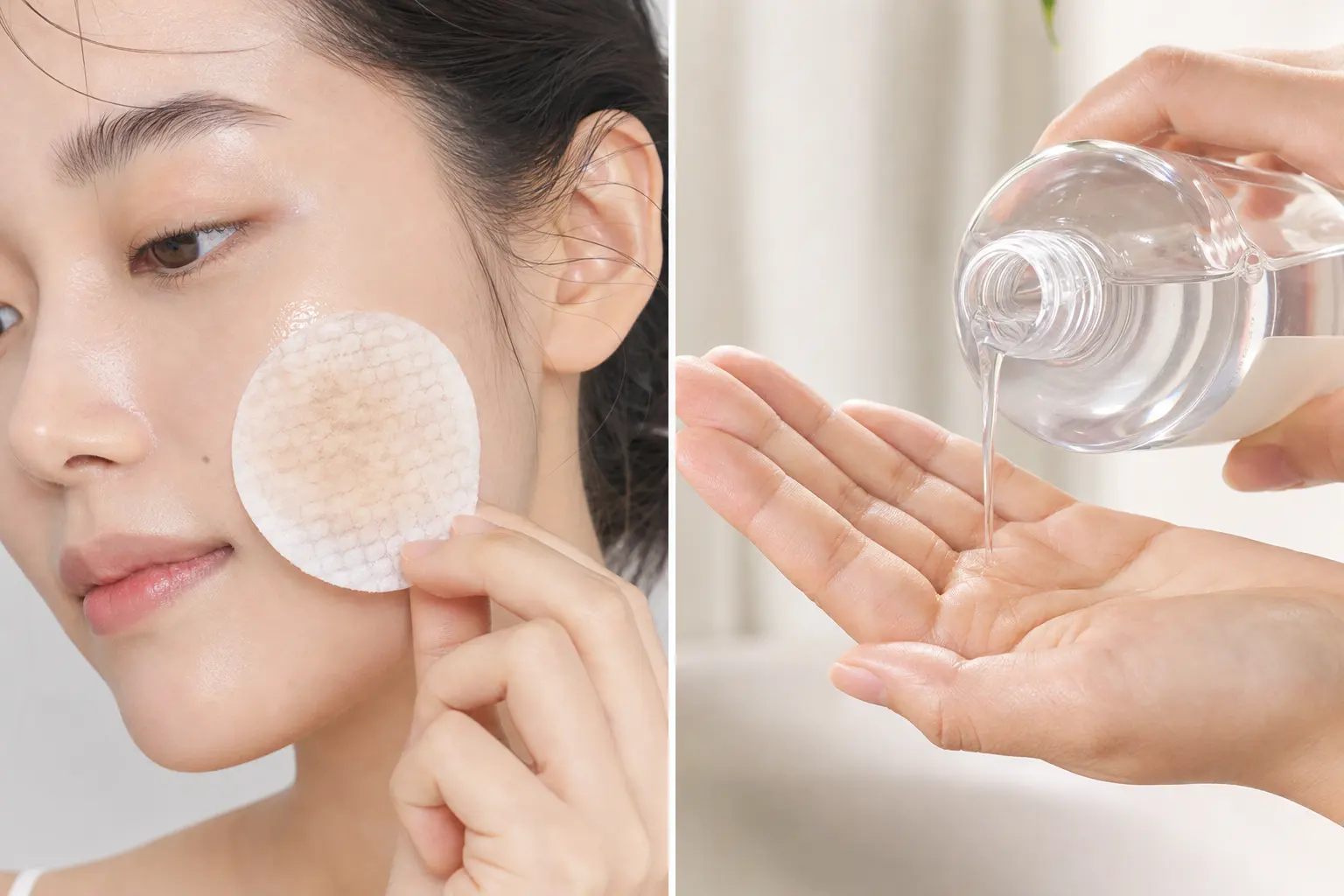
- Apply liquid toner: pour a small amount into clean palms, cup your face, and gently pat until absorbed. This adds instant hydration and helps serums sink in.
- If using a pad in the morning (for oil control or quick exfoliation), use a pad only if your skin tolerates it and you have no active irritation. Use sunscreen afterward—acid use can increase sun sensitivity.
- Follow with lightweight serum and SPF as final step for sun protection.
PM routine (treatment and recovery)
- Double-cleanse if wearing makeup or sunscreen: oil-based cleanser, then water-based cleanser.
- If using a chemical exfoliant pad, swipe gently across face according to the product’s instructions; do not over-rub textured sides.
- After pads or a bottled toner, apply treatment serums (retinoids or targeted actives) and then a richer moisturizer to support recovery.
Technique tips: when applying liquid toners with hands, press and hold briefly to help absorption. For pads, use light pressure and avoid sensitive areas around the eyes. Always finish with sunscreen in the daytime whenever acids are used, and patch test new active pads following dermatology guidance [2].
Exfoliating pads: safety, frequency, and patch testing
Many pads on the market combine chemical exfoliants with a textured surface, which creates both chemical and mild mechanical exfoliation in one step. While this results in visible smoothing and brighter skin for many users, it also raises safety considerations—overuse or mixing too many exfoliating actives can damage the skin barrier and cause irritation.
Patch testing and introducing acids
Always patch test an acid-containing pad on a small area (behind the ear or inner forearm) for 24–48 hours before applying to the whole face. Dermatology sources advise testing because even well-formulated toners have limits and can cause sensitivity in some individuals [2]. If any burning, stinging, or unusual redness appears, discontinue use immediately.
Recommended frequency
Start conservatively: once per week for sensitive skin, 1–3 times per week for normal/combination skin, and up to every other day for oilier, tolerant skin. If you notice persistent irritation, flaking, or increased sensitivity, reduce frequency and emphasize barrier repair with ceramide and panthenol-rich products.
Common mistakes and how to avoid them
- Mixing too many actives: avoid using strong retinoids, AHA/BHA pads, and harsh scrubs all in the same 24–48 hour window.
- Over‑rubbing: pads are meant for gentle sweeping; pressing or scrubbing increases irritation risk.
- Skipping sunscreen: acids increase sun sensitivity—always apply SPF after morning use.
When used thoughtfully, exfoliating pads are an efficient way to manage texture and brightness. Respect your skin’s barrier, build tolerance slowly, and pair exfoliation days with barrier-supporting skincare to maintain healthy skin function.
Sustainability, hygiene, and waste: pros and cons of pads versus bottles
Toner pads are convenient, but they do raise sustainability and hygiene questions. Pre‑soaked pads reduce waste from multiple cotton rounds and provide a measured dose that avoids excess product absorption into cotton, which some users find wasteful. However, single-use pads generate disposable waste unless a brand uses compostable materials or offers reusable pad options.
Hygiene considerations
Pads are often more hygienic than communal use of a bottle plus shared cotton rounds because each pad is used once and disposed. That reduces the chance of cross-contamination, especially when you travel or share products. Some pad packages include a built-in drip reservoir to keep remaining pads saturated and reduce bacterial growth risk by minimizing exposure to air.
Sustainability trade-offs
If sustainability is a priority, consider these factors: packaging materials (recyclable tubs vs single-use sachets), whether the pads are compostable, and the total lifecycle impact of manufacturing. Bottled toners typically generate less single-use waste per application, especially when used with reusable cotton pads or applied by hand. But bottled formulas can be over-poured, which leads to waste—pads avoid that by dosing precisely [1].
Practical tips to reduce impact
- Choose pads labeled compostable or made from sustainably sourced fibers when possible.
- Use liquid toners with hands or a washable reusable pad to cut down on disposable cotton use.
- Buy concentrated or larger sizes if you prefer bottled toners to lower packaging per milliliter.
Ultimately, the right choice balances convenience, hygiene, and environmental values. If you love pads for travel and targeted treatments, alternate them with bottled toners and opt for brands that prioritize compostable materials or refill systems when available.
Practical scenarios: when to pick pads and when to stick with liquid toners
Think of pads and liquid toners as tools in your routine toolbox. Each has use cases where it excels. Here are scenario-based recommendations to help you choose the most practical option for your lifestyle and goals.
Travel and on-the-go routines
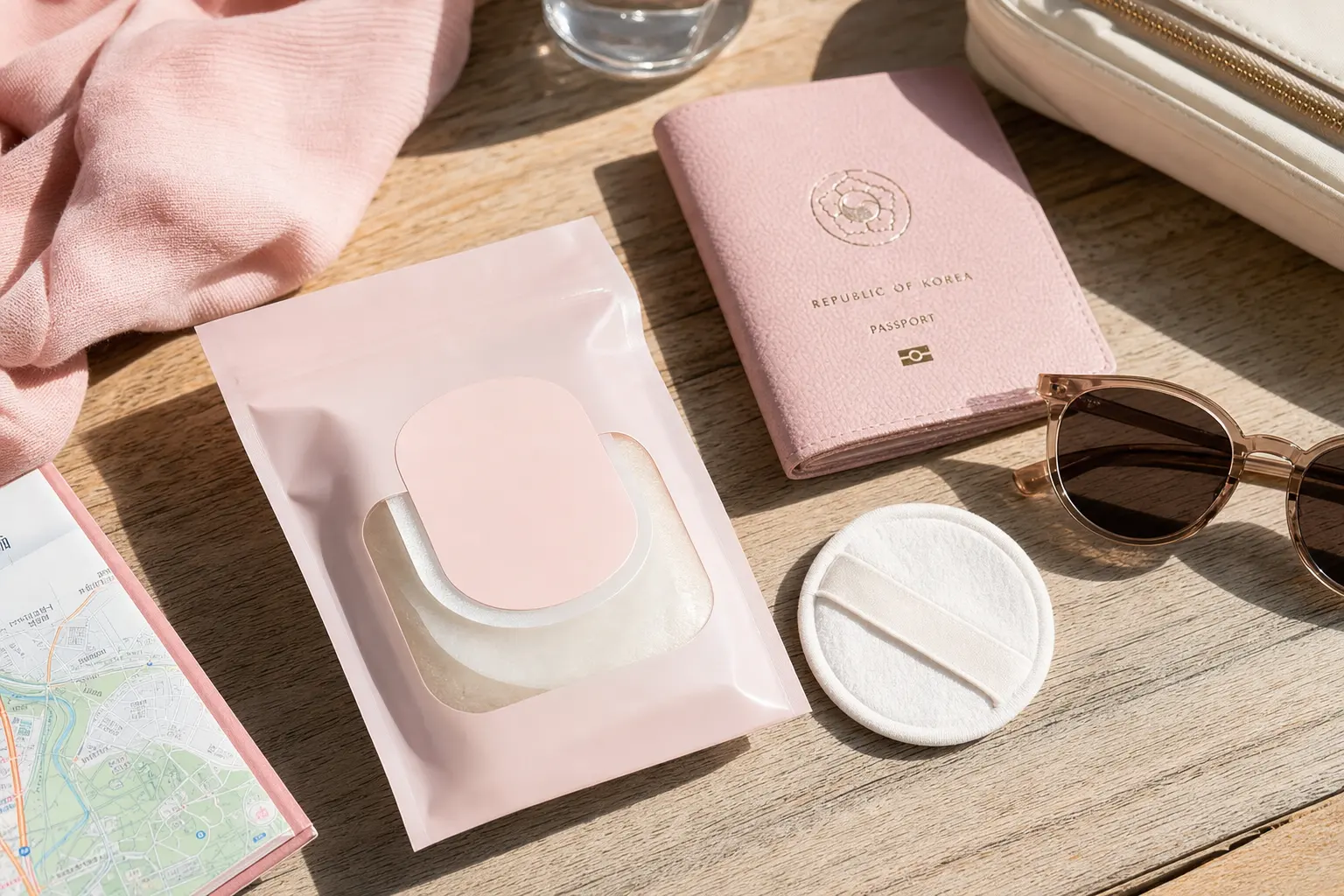
Pads are unbeatable when you need a no-fuss, spill-proof option. They simplify airport security, eliminate the need for additional cotton rounds, and make quick refreshes easier during flights or hot days. For travel, pick pads that multitask—hydration and light exfoliation—so you carry fewer products.
Busy mornings and layering makeup
If you want a smooth canvas for makeup, a lightweight liquid toner applied by patting with hands creates a hydrated base that helps makeup sit evenly. Save pads for nights when you need texture control or targeted treatment rather than daily makeup prep.
Building tolerance and sensitive skin strategies
When introducing acids or active brightening, start with bottled toners that contain gentle humectants to help strengthen the barrier. Once tolerance improves, add a weekly or biweekly pad with a mild acid. This staged approach reduces the risk of irritation and respects dermatology advice to patch test actives [2].
Professional or in-clinic routines
In clinical or esthetician-led treatments, pads can offer consistent dosing and predictable exfoliation levels. However, for daily at-home maintenance and long-term barrier repair, a hydrating liquid toner combined with targeted serums is often recommended.
- Choose pads for targeted exfoliation, travel, or quick texture fixes.
- Choose bottled toners for everyday hydration, layering, and barrier repair.
- Mix formats strategically: liquids for daily care, pads for treatment days.
Use scenario planning rather than binary thinking—many routines benefit from both formats used on different days or for specific needs.
How to shop Korean toners and spot the right formula
Shopping for K-beauty toners can feel overwhelming because many products are marketed as multitasking. Focus on ingredient lists, texture, and intended use rather than marketing claims. This section gives concrete shopping tips and a checklist to evaluate both pads and bottled formulas.
Quick shopping checklist
- Identify the primary function: hydration, exfoliation, soothing, or brightening.
- Check the active concentration indicators: look for AHA/BHA/PHA for pads and humectants/barrier ingredients for liquids.
- Note potential irritants: high alcohol denat content or overly strong acids if you have sensitive skin.
- Packaging: airtight tubs vs pump bottles vs sachets—pick what preserves formula stability and fits your lifestyle.
Reading labels and ingredient order
Ingredients are listed by concentration. If an acid appears high in the list on a pad product, assume the exfoliation is significant and plan for less frequent use. For bottled toners, key humectants like hyaluronic acid or glycerin often appear near the top, indicating a hydration-first formula.
Product testing and trial tips
When possible, sample before committing: look for mini sizes or trial sets to see how your skin reacts over a week. Patch test acid pads for 24–48 hours and introduce bottled toners into your daily routine for several days to judge tolerance. If you have barrier concerns, prioritize products that list ceramides, panthenol, or fatty acids to support lipids.
Remember that K-beauty emphasizes layering and gentle progression. Start simple, then introduce treatment pads with clear purpose and measured frequency to see the best results while keeping your skin healthy.
For targeted treatments, keep a pad for spot or weekly use and a daily liquid toner for morning hydration and evening recovery. This combination offers flexibility without overloading the skin.
Frequently Asked Questions
Are toner pads better than liquid toners for oily skin?
Toner pads with BHA or oil-balancing actives can help oily or acne-prone skin by clearing pore buildup and smoothing texture. However, they aren't always 'better'—liquid toners with lightweight humectants can maintain hydration without heaviness and support long-term barrier health. Use pads 1–3 times per week depending on tolerance and pair them with a daily hydrating toner to avoid over-drying the skin.
Can I use toner pads every day?
Daily use depends on the pad's formulation and your skin tolerance. Pads that contain strong AHAs or BHAs usually work best a few times a week to prevent barrier disruption. If a pad contains a gentle PHA or primarily hydrating ingredients, some people tolerate daily use—but patch testing and monitoring for irritation are important steps before making it part of your everyday routine [2].
Do pads replace serum or moisturizer?
Pads do not replace serums or moisturizers. Pads can exfoliate and prep the skin, which helps serums and moisturizers absorb better, but they lack the concentrated actives or emollients found in serums and creams. Treat pads as a targeted prep or treatment step and follow with your usual serums and moisturizing layers for complete care.
Are toner pads more hygienic than bottled toners?
Pads can be more hygienic on a per-use basis since each pad is typically single-use and reduces risk of cross-contamination. However, sustainability and packaging hygiene depend on the product design—airtight packaging and proper storage matter. Bottled toners applied by clean hands can also be hygienic and produce less single-use waste when paired with reusable application methods.
How should I introduce an acid pad into my routine safely?
Start with a patch test for 24–48 hours, then use the pad once per week for two weeks to gauge tolerance. If your skin shows no irritation, increase frequency slowly to 1–3 times weekly depending on your skin type. Avoid combining strong actives like retinoids or other acids on the same nights, and always apply SPF during the day when using acids [2].