The About Me Be Clean Tone Up Sun is one of the more searched Korean tone-up sunscreens outside Korea, partly because it belongs to a small group of vegan, mineral-only sun products that also carry a brightening claim. Most descriptions of it repeat the marketing line. This guide reads the product from its published ingredient list instead, explains what each part of the formula does, and is honest about who it suits and who it will not.
One disclosure first: EmpressKorea does not currently stock this product. It is sold through the brand’s own Korean shop and domestic retailers. We have kept this guide because the questions readers ask about it, mineral versus organic filters, tone-up versus tint, whitening claims, and how to remove a pigmented mineral film, apply to the tone-up sunscreens we do carry, which are compared at the end.
What the product is, according to the brand
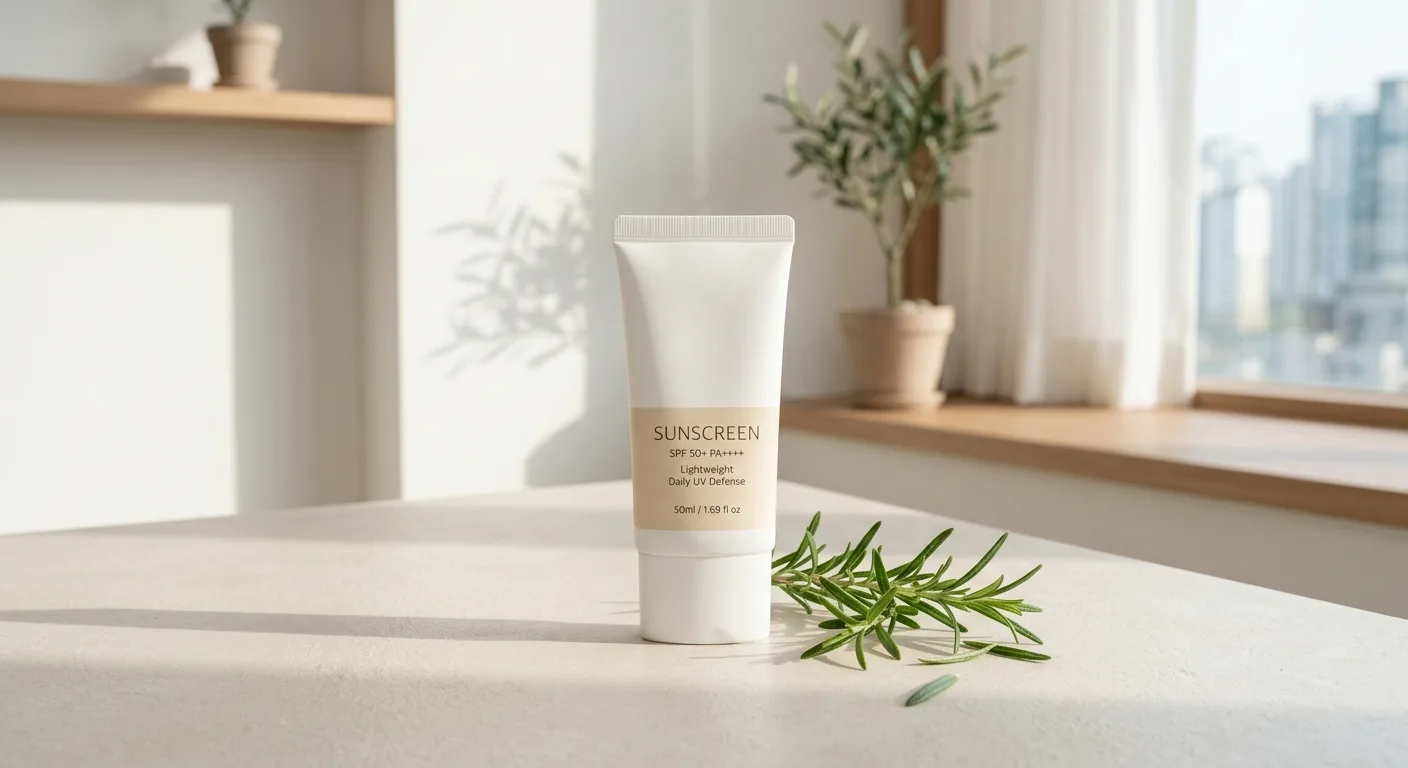
About Me, a Korean brand positioned around clean, vegan formulations, sells the Be Clean Tone Up Sun as a 50 ml, SPF50+ PA++++ mineral sunscreen with a natural tone-up. The official page describes it as a non-nano mineral sunscreen, vegan certified, reef-safe and “10-free”, and lists it as a functional cosmetic for both UV protection and whitening. Named key ingredients are niacinamide, rice bran oil, yuja extract and rosemary leaf oil, and the brand’s suggested use is a full-face application after the last skincare step, on areas exposed to sun.
Those are the claims. The ingredient list is more informative, because it shows how the sun protection, the tone-up and the comfort features are each built.
Reading the ingredient list
The UV filter system
Titanium dioxide is the second ingredient after water, and it is the only UV filter present. Titanium dioxide attenuates UVB and short-wave UVA by absorbing and scattering, and in the EU and Korea it may be used at up to 25 percent. The “non-nano” description means the primary particles are above 100 nanometers, which is the size range where the mineral scatters visible light as well as UV. That is a deliberate trade: larger particles are the reason some consumers choose the product, and also the reason it cannot be invisible on skin. As the Smijs and Pavel review explains, only particles well below the wavelength of visible light look transparent.
Two further label entries support the filter without being filters. Alumina, aluminum hydroxide and triethoxycaprylylsilane are the surface coatings that make titanium dioxide hydrophobic, reduce its photocatalytic activity and keep it dispersed. Polyhydroxystearic acid is the dispersant that stops coated particles clumping into larger, whiter aggregates. Butyloctyl salicylate is an emollient solvent used to boost measured SPF and improve pigment spreading; it is not an approved UV filter. Benzotriazolyl dodecyl p-cresol is a UV absorber added to protect the formula and its botanicals from light degradation in the tube, a common stabilizer that people sometimes mistake for a chemical sunscreen active.
The tone-up
Yellow, red and black iron oxides appear at the end of the list. These are the same pigments used in foundation, added in small amounts to warm the white of the titanium dioxide toward a beige. The combination produces the “natural tone-up” effect: a semi-opaque, matte veil that lightens and evens the complexion by about half a shade on fair to light-medium skin. Because the pigment is lighter than medium-deep and deep skin, the same veil produces a grey or pink cast there. Tone-up is a finish category, not a bug, and buyers should choose it knowingly.
The whitening claim
Niacinamide is the ninth ingredient, high enough to suggest a functional level. Korea’s functional-cosmetic system lets a brand notify a whitening claim when it uses an ingredient recognized for that category at an approved concentration, and niacinamide is the most common route. It is reasonable to expect a mild, gradual effect on uneven tone with consistent use, and unreasonable to expect a sunscreen to act as a dedicated brightening treatment. The primary job is UV protection, which is itself the strongest anti-pigmentation measure available.
Comfort and skin-feel ingredients
Calamine, a blend of zinc oxide with a trace of iron oxide, is included at a low level for its soothing reputation and its slight pink tint; at this position on the list it contributes to color and skin feel rather than to UV protection. Ceramide NP and phytosphingosine are barrier lipids added for the sensitive-skin audience. Silica, polymethylsilsesquioxane and a dimethicone crosspolymer create the matte, powdery finish and blur, while caprylic/capric triglyceride, rice bran oil and coco-caprylate/caprate keep the pigment film from feeling dry. Rosemary leaf oil, yuja extract and bitter orange flower water are botanical additions that give the product its scent profile without a listed perfume; reactive users should patch test these.
Tone-up versus tinted versus invisible: which one do you want?
| Finish type | How it is made | Effect on fair skin | Effect on deep skin | Typical filter | Best use |
|---|---|---|---|---|---|
| Tone-up (this product) | Titanium dioxide plus a small amount of iron oxide | Brightens half a shade, matte | Visible grey or pink cast | Mineral or hybrid | No-makeup days on fair to light-medium skin |
| Tinted or skin tint SPF | Iron oxides matched to shade families | Sheer coverage in a chosen shade | Works if the shade range reaches your depth | Organic, hybrid or mineral | Light coverage plus SPF, any depth with the right shade |
| Invisible | Organic filters only, no pigment | Transparent | Transparent | Organic | Daily wear under makeup at any depth |
| Sheer mineral | Micronized coated titanium dioxide or zinc oxide, no added pigment | Slight brightening | Faint cast | Mineral | Reactive skin that tolerates a soft veil |
Who it suits, and who should choose something else
Good fit: oily or combination skin that wants a matte finish; sensitive or post-procedure skin that prefers a single mineral filter; anyone who dislikes the eye sting of watery organic-filter essences; fair to light-medium skin that wants a bare-skin day without foundation.
Poor fit: medium-deep and deep skin tones, where the pigment will not disappear; very dry skin, because silica and elastomer powders can accentuate flaking; people who want a dewy or glass-skin finish; and anyone who needs water resistance for sport or swimming, which the brand does not claim.
How to apply a mineral tone-up sunscreen
- Apply as the final skincare step, after moisturizer has fully absorbed. Pigmented mineral creams pill over wet serums.
- Use the full amount. SPF is tested at 2 milligrams per square centimeter, about two finger-lengths for the face. Applying half the dose to reduce the tone-up also halves the protection, in which case a sheerer product is the better answer.
- Dot on the forehead, cheeks, nose and chin and press outward with fingertips or a damp sponge rather than rubbing, which streaks iron oxides.
- Blend past the jawline and onto the neck, otherwise a tone-up sunscreen creates a visible line.
- Allow it to set for a few minutes before powder or makeup; mineral films need less wait time than organic filters but benefit from setting before friction.
- Reapply every two hours outdoors and after sweating, as both the American Academy of Dermatology and Korea’s regulator advise. Over makeup, a transparent stick or cushion avoids disturbing the base.
Removing it properly
A tone-up mineral sunscreen is a pigmented, silicone-elastomer film built to stay put. Water alone leaves most of it behind, and a foaming cleanser alone may leave a faint residue in pores and along the hairline. The published comparison by Chen and colleagues found that cleansers handled non-water-resistant sunscreen adequately, but the more tenacious the film, the more a cleansing oil earned its place. The practical routine is an oil or balm massaged on dry skin for about a minute, emulsified with lukewarm water until milky, rinsed, then a mildly acidic foam. Our cleansing oil versus foam cleanser guide explains the chemistry.
Comparable tone-up and mineral sunscreens available now
Each of the products below is in stock at EmpressKorea, and each answers one of the reasons people search for the About Me product.
The JOODOC Daily Mild Mineral Sunscreen is the closest formulation match: a fragrance-free, 100 percent mineral SPF50+ PA++++ cream with a natural tone-up, 3 percent niacinamide for the same whitening logic, ceramide NP, panthenol and seven hyaluronic acid weights. It has completed primary irritation and eye-comfort testing and is positioned for sensitive and family skin.
The ETUDE SoonJung Director’s Mineral Filter Sun Cream is the option for people who want the non-nano mineral filter without a tone-up: particles above 100 nanometers, a low-irritant formula with panthenol and madecassoside, SPF50+ PA++++ confirmed in human application tests, and a soft cream finish with only slight brightening.
The ETUDE SoonJung Director Tone Up Correcting Sun Cream is the tone-up alternative for sensitive skin: a pink-beige tint, a low-pH, minimalist SoonJung formula and SPF50+ PA++++. Like the About Me product, it is best on fair to light-medium skin and should be tried on the jawline in daylight.
The Realbarrier Peach Fit Tone-Up Sun Cream uses zinc oxide with a peach-toned pigment chosen to brighten transparently rather than whiten, has a measured SPF above 50 and a UVA protection factor of 21.4, and is tested for eye-area comfort. It also carries Korea’s triple functional registration for UV, brightening and wrinkle care.
Where tone-up sunscreen fits in a Korean routine
Tone-up sunscreen replaced foundation on ordinary days for many Korean users, which is why the category exists; it sits at the end of the morning routine and at the start of the night cleanse. If your aim is protection without any pigment, our no-white-cast sunscreen guide explains which filter systems are transparent by chemistry, and the wider question of why Korean sun care earned its reputation is covered in this evidence-based overview. The full current range, with ingredient lists, is in our Korean sunscreen collection.
Read as a formula, the About Me Be Clean Tone Up Sun is a competent, honest mineral tone-up: one filter, a modest pigment load, a real niacinamide level and a comfort package for reactive skin. Whether it is right for you depends almost entirely on your skin depth and the finish you want, not on the claims on the front of the tube.
Sources
- ABOUT ME official shop: Be Clean Tone Up Sun product page and full ingredient list
- Smijs and Pavel, Nanotechnology, Science and Applications 2011: Titanium dioxide and zinc oxide nanoparticles in sunscreens: focus on their safety and effectiveness
- ChemLinked: South Korea functional cosmetic regulation
- Regulation (EC) No 1223/2009 on cosmetic products, Annex VI: List of UV filters allowed in cosmetic products
- Seoul Economic Daily, June 2026: Higher SPF isn’t always better, Korea’s drug safety agency says
- American Academy of Dermatology: How to apply sunscreen
- Chen et al., Journal of Cosmetic Dermatology 2020: The optimal cleansing method for the removal of sunscreen: water, cleanser or cleansing oil?
- U.S. Food and Drug Administration: Sunscreen: how to help protect your skin from the sun
Frequently Asked Questions
Is About Me Be Clean Tone Up Sun a mineral or chemical sunscreen?
Mineral. The ingredient list contains titanium dioxide as the only UV filter, and the brand describes it as a non-nano mineral sunscreen. Two other names on the label can confuse people: butyloctyl salicylate is a solvent that boosts SPF and helps disperse the pigment, and benzotriazolyl dodecyl p-cresol is a stabilizer that protects the formula itself from light. Neither is an approved sunscreen active in Korea or the EU.
Does it leave a white cast?
It is designed to leave a deliberate, tinted lightening rather than a chalky white film, using yellow, red and black iron oxides to warm the titanium dioxide base. On fair to light-medium skin that reads as a soft, matte tone-up. On medium-deep and deep skin the same pigment reads as a grey or pink cast, because tone-up sunscreens are, by definition, lighter than the skin they sit on. If you want an invisible finish, choose an organic-filter sunscreen instead.
Why does a sunscreen carry a whitening claim in Korea?
Korea regulates sunscreen, whitening and anti-wrinkle products as functional cosmetics, and a single product can be notified for more than one claim if it contains an approved ingredient at an approved level. The whitening claim here comes from niacinamide, which the Ministry of Food and Drug Safety recognizes for that category. It is an ingredient disclosure rather than a promise of visibly lighter skin; sun protection is the primary function.
Is it suitable for acne-prone or sensitive skin?
The formula is built for that audience: a single mineral filter, no fragrance allergens listed as perfume, calamine, ceramide NP, phytosphingosine and silica for a matte feel. Two cautions apply. Rosemary leaf oil, bitter orange flower water and yuja extract are botanical additions that a minority of reactive users may not tolerate, so patch test. And a matte, pigmented mineral film should be removed fully each night to avoid congestion.
How should I remove a tone-up mineral sunscreen?
With an oil or balm first, then a mild foam. A published cleansing comparison found that ordinary cleansers removed non-water-resistant sunscreen well, but films containing pigment and silicone elastomers, like this one, are more reliably lifted by an oil cleanser followed by a second cleanse. Massage the oil on dry skin for about a minute, emulsify with lukewarm water until milky, rinse, then foam.
Can I buy About Me Be Clean Tone Up Sun at EmpressKorea?
Not at the moment. It is sold in Korea through the brand's own shop and domestic retailers, and we do not currently list it. This guide exists because readers ask about the product, and the same formulation logic applies to several tone-up and mineral sunscreens we do stock, which are shown further down with their own tested SPF and PA values.