
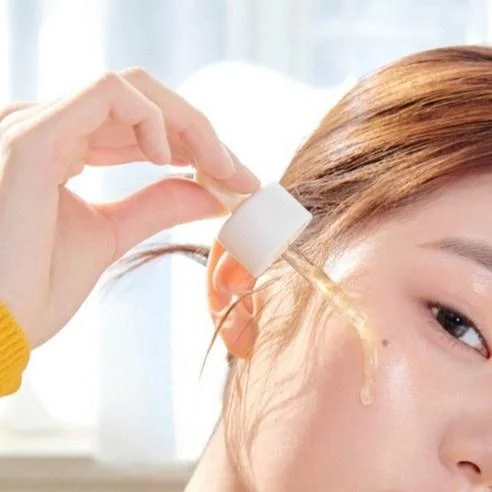
A skincare routine should change for a reason that can be named. A bad reaction needs immediate attention. Persistent dryness may require a gentler cleanser or richer moisturizer. Acne treatment needs an adequate trial. Seasonal change may require a texture adjustment. None of these automatically requires a complete product overhaul.
The former article copied another publisher’s author and image credit, attributed advice to unverified experts, and told every reader without exfoliation to add it while alternating chemical and manual methods. That advice has been removed.
Four signs and first actions
| Sign | First action | Do not assume |
|---|---|---|
| 1. Persistent burning, itching, swelling or rash | Stop suspected new cosmetic; assess urgency | “Purging” or proof that it works |
| 2. Ongoing tightness, flaking or cracking | Simplify cleansing and improve moisture support | More exfoliation is needed |
| 3. Defined concern not improving | Check diagnosis, directions, adherence and trial length | The newest product is automatically stronger |
| 4. Climate, medication or life context changed | Adjust one role or texture | Every step must be replaced |
Sign 1: a persistent or escalating reaction
Brief sensation can occur with some labeled products, but persistent burning, intense itching, hives, swelling, blistering or a spreading rash is not a beauty milestone. Stop the suspected new cosmetic and follow appropriate medical advice.
AAD notes that skincare, makeup, removers and tools can cause contact dermatitis. If several products were started together, the cause becomes difficult to identify.
Breathing difficulty, facial/tongue swelling, eye involvement or severe symptoms require urgent care. Do not conduct a home re-challenge after a serious reaction.
Reaction, irritation and “purging” are not synonyms
Irritation can include burning, redness, scaling and tenderness. Allergic contact dermatitis may itch, swell or appear after repeated exposure. Acne can fluctuate for many reasons.
“Purging” is frequently used online to excuse any worsening. Only certain actives and conditions make an initial acne-pattern change plausible, and persistent or unusual symptoms still require reassessment.
Record product, location, timing, amount and photos under consistent light. A clinician may recommend patch testing when allergy is suspected.
Return to a simple baseline
Remove optional new products. Use a familiar gentle cleanser, moisturizer that has been tolerated, and sun protection appropriate to exposure. Continue prescribed treatment only as directed and contact the prescriber if it appears involved.
Do not add a “barrier serum,” exfoliating toner and calming mask simultaneously. A crowded rescue routine is not a baseline.
Allow symptoms to settle and seek care when they do not.
S.NATURE cleanser: judge removal and comfort
S.NATURE Blanche Cleanser 260ml is a current gel cleanser example. Its role is cleansing, regardless of botanical and award language.
Use lukewarm water and fingertips without scrubbing. If skin remains tight or irritated, adjust amount, frequency, water temperature and formula rather than washing more aggressively.
Sign 2: persistent dryness or tightness
Dryness can reflect environment, cleanser, long hot showers, frequent washing, retinoids, acne medication, fragrance, age or a skin condition. Flaking is not an instruction to scrub.
AAD recommends gentle, fragrance-free care for very dry skin and creams or ointments rather than lighter lotion when more occlusion is needed. Apply moisturizer to slightly damp skin.
Cracking, bleeding, severe itch or dryness that persists after self-care needs professional evaluation.
CURECODE cream: test a richer texture
CURECODE Double Barrier Cream 80ml is a current richer moisturizer example for dry/sensitive positioning.
Change the moisturizer role before buying several hydrating liquids. Full-formula tolerance still matters; “barrier” in the name is not a diagnosis or universal repair guarantee.
Sign 3: a defined concern is not improving
First define the concern: inflammatory acne lesions, dry patches, uneven-looking tone, or sunscreen pilling. “No glow” is too vague to evaluate.
Check whether the product targets that concern, was used according to directions and had an appropriate trial. AAD advises giving many acne treatments six to eight weeks to see improvement rather than changing every week.
No improvement can indicate wrong product, poor adherence, wrong diagnosis or a concern that needs prescription care. It does not prove the skin “became immune.”
Do not change treatment every week
Rapidly rotating acne actives can irritate and produce new variables. Use one treatment plan consistently and assess at defined checkpoints.
Medication order, frequency and combinations should follow the prescriber. Moisturizer may improve tolerability for drying acne treatments.
Scarring, painful deep lesions or persistent acne warrants dermatology care rather than an endless cosmetic audit.
Sign 4: the environment or body changed
Humidity, cold, heating, air conditioning, mask use, exercise and travel change product feel. Hormonal shifts, pregnancy, medication, procedures and illness can change needs or permitted actives.
Adjust one variable: lighter or richer moisturizer, different water resistance, less cleanser in a dry season, or a different texture under makeup.
Ask a qualified clinician about pregnancy, nursing, prescriptions, procedures and new disease rather than relying on a generic “clean” list.
ROUND LAB sunscreen: protection remains a constant
ROUND LAB Birch Juice Moisture Sunscreen 50ml is currently listed as SPF50+ PA++++ with a moisturizing finish.
Season may change finish preference, but outdoor UV protection still requires adequate application and reapplication. Choose another authorized sunscreen if this texture no longer fits; do not simply omit protection.
Expiry and product deterioration
Check printed expiry and period-after-opening information. Store products away from excessive heat and moisture, keep caps closed and do not add water.
Discard after unusual odor, color, texture, separation, foreign material or suspected contamination. A product can deteriorate before a date after poor storage, while an old unopened date does not justify calling it poison without evidence.
Record opening date on the package when useful.
Exfoliation is not a routine requirement
The former article advised adding exfoliation and alternating chemical and manual methods. That can stack irritation without a defined need.
Do not exfoliate burning, peeling, cracked or inflamed skin. Acne guidance often recommends avoiding irritating toners and exfoliants during treatment.
If exfoliation serves a specific texture goal, choose one method, start cautiously, avoid active overlap and stop after persistent irritation.
How to change one variable
- Write the problem and baseline date.
- List every current product, prescription and frequency.
- Choose one suspected or inadequate role.
- Preserve the rest of the stable routine.
- Patch-test the replacement when appropriate.
- Use according to directions for a defined interval.
- Record outcome and decide keep, stop or seek care.
Patch testing has limits
AAD suggests testing a new skincare product on a small area twice daily for seven to ten days when appropriate. This can reveal some contact reactions.
It cannot predict every facial reaction, acne response or cumulative allergy. Do not patch-test products whose directions make that unsafe, and do not re-test after severe allergy.
Introduce one main leave-on product at a time even after a small-area test.
Track with consistent evidence
Use the same light, camera, distance, time and makeup status. Record discomfort, itch, lesion count or flaking instead of only “better” and “worse.”
Note menstrual cycle, medication, travel and other major changes without assuming causation. Product response is only one variable.
A diary helps a clinician and prevents repeated failed experiments.
When to seek professional care
Seek urgent help for severe allergy, breathing difficulty, extensive blistering, infection signs or eye involvement. Arrange dermatology care for recurring rash, severe dryness, painful/scarring acne or a changing lesion.
Cosmetics cannot diagnose or treat every cause of redness, pigmentation or breakouts. Do not delay care by buying another “detox” product.
Bring product names, ingredient lists, dates and photos to the appointment.
Medication and procedures change the audit
Prescription retinoids, acne medicines, topical steroids, chemotherapy, radiation, laser procedures, peels and surgery can change dryness, sensitivity, infection risk and permitted products. Follow the treating clinician’s written plan rather than a generic post-procedure routine.
Tell the prescriber about over-the-counter acids, retinoids, benzoyl peroxide, botanical products and supplements. Do not restart them because redness has briefly settled. Ask when cleansing, moisturizer, sunscreen, makeup and active treatment may resume.
When a medication seems to cause a reaction, do not stop a necessary prescription without contacting the prescriber unless emergency instructions require it. Record timing, dose, application area and other products. A coordinated change protects both treatment benefit and skin safety.
Product recommendations after procedures must match the exact procedure and healing stage; “barrier repair” marketing alone is not sufficient clearance.
A routine-change checklist
- Is this a reaction, persistent symptom, unmet goal or changed context?
- Is any prescribed treatment involved?
- What one variable will change?
- What evidence and interval will judge success?
- Are exfoliation and duplicate actives excluded?
- Is sunscreen maintained?
- What symptom triggers medical care?
A good routine change is small enough to interpret and important enough to solve a named problem. Skin does not need a dramatic “reset”; it needs a stable baseline, appropriate time and a clear exit when symptoms require care.
Sources
- American Academy of Dermatology: Contact Dermatitis Clues
- AAD: Relieving Dry Skin
- AAD: Skin Care Habits That Worsen Acne
- AAD: Testing Skincare Products
- FDA: Using Cosmetics Safely
- Current S.NATURE Blanche Cleanser listing
- Current CURECODE Double Barrier Cream listing
- Current ROUND LAB Birch Juice Sunscreen listing
Frequently Asked Questions
Should I change my whole skincare routine if I break out?
No. Identify recent changes, preserve necessary prescribed care and return to a simple tolerated baseline. Change one variable at a time unless severe reaction requires stopping several suspected products.
Is burning a sign that skincare is working?
Persistent burning, redness, itching, swelling or scaling is a reason to stop and reassess, not proof of efficacy. Severe or rapidly worsening symptoms need medical care.
How long should I try an acne product?
AAD advises that many acne treatments need about six to eight weeks to show improvement. Follow exact directions or a clinician’s plan and avoid switching treatments every week.
Do I need to add exfoliation when my routine stops working?
No. Exfoliation is optional and can worsen dry, peeling, irritated or acne-treated skin. Use it only for a defined goal and one method at a time when tolerated.
When should a skin reaction see a dermatologist?
Seek care for persistent or recurring rash, severe dryness, painful/scarring acne, infection signs or uncertain diagnosis. Severe allergy, breathing difficulty, facial swelling or eye involvement can require urgent care.