A history of Korean cosmetics needs more than a list of dynasties, ingredients and successful products. The central question is what each source can establish. A ceramic box, household encyclopedia, advertisement, patent, company anniversary page and export table record different actors and different kinds of evidence.
The former article connected Three Kingdoms morality, royal whitening rituals, ginseng, rice water, German BB cream, traditional soaked cloth, cushion compacts, ten-step routines and Hallyu into one smooth story. Most transitions lacked a source, and several modern product claims were projected backward into the past.
A source hierarchy for cosmetics history
| Source | Strongest use | Main limitation |
|---|---|---|
| Excavated or collected artifact | Material, form, context and use hypothesis | May not preserve contents or typicality |
| Household or medical text | Recorded knowledge, terminology and prescription | Does not prove widespread use or efficacy |
| Advertisement/package/magazine | Market language, audience and visual culture | Persuasive, selective and commercially framed |
| Company archive/patent | Corporate dates, development and claims | Priority and impact need independent checking |
| Law, regulation and statistics | Official categories, duties and measured flows | Categories change and omit informal practice |
Start with a claim ledger
Write every historical statement as a row: claim, date range, place, actor, source, source date, exact quotation or object record, and confidence. Separate “documented,” “inferred,” “reported by company” and “unverified.”
This prevents a source about one elite object from becoming a claim about all Korean women or a modern ingredient study from becoming evidence about historical results.
Artifacts establish objects and contexts
The National Museum of Korea describes a Goryeo celadon tortoiseshell-pattern box found with an oil bottle, lidded containers, mirror and needle case and considers it a women’s cosmetic-tool set. The object supports the existence of assembled grooming containers and a particular material culture.
It does not reveal every substance once held inside, the user’s exact routine, frequency, class prevalence or biological effect. “Considered a cosmetic tool” should remain an attribution, not be rewritten as certainty.
Provenance is part of the evidence
Record excavation context, collector, acquisition date, restoration and museum catalog history. An object excavated as a set has different evidentiary value from separately purchased containers later grouped by type.
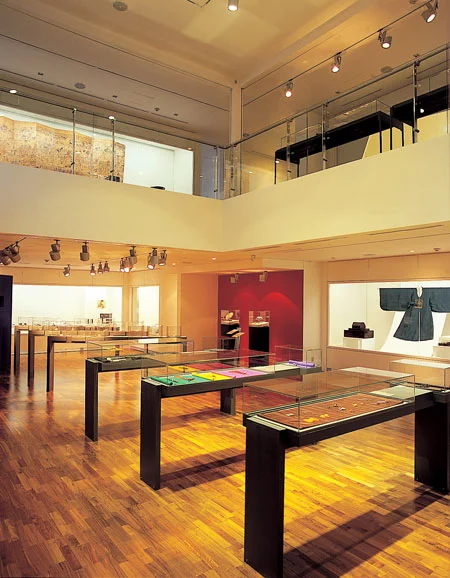
The National Museum’s 1987 exhibition of Pacific Museum holdings and later donations also documents the history of collecting and presenting cosmetic culture, not only the original age of objects.
Container form cannot identify a recipe alone
A bottle may have held oil, fragrance, medicine or another liquid. Residue analysis, inscriptions, find context and comparison strengthen identification. Shape resemblance to a modern serum bottle is not evidence of the same formula.
Photography should include scale, multiple views and catalog number. Decorative quality can indicate taste or status but not a national beauty ideal by itself.
Texts record selected knowledge
Yi Bingheogak, born in 1759, compiled the household encyclopedia Gyuhap Chongseo in 1809 amid a learned family and difficult household circumstances. The work covers food, clothing, rural life, medicine and customary knowledge.
Citing the title as a “beauty book” erases that larger structure. A recipe must be located in the exact edition, section and wording before it is used as cosmetic evidence.
Editions and translations can change meaning
Gyuhap Chongseo survives in manuscript and woodblock variants held by several institutions. Researchers should identify the edition, transcription and translator. A modern paraphrase may normalize measurements or ingredient names.
Historical terms such as powder, rouge, oil, wash or medicine do not always map cleanly onto today’s foundation, serum or sunscreen categories.
A prescription is not a behavior survey
Household instructions show what an author considered worth recording. They may reflect elite literacy, regional access, ideal practice or copied knowledge. They do not show how many people followed the instruction.
To estimate practice, combine texts with household inventories, purchase accounts, containers, paintings, court records, oral history and later ethnography, while acknowledging gaps.
Visual sources are constructed images
Portraits, murals and genre paintings can show hair, color, tools and social presentation. Artistic conventions, restoration, patron expectations and symbolic choices shape the image.
A pale painted face is not a direct measurement of skin tone, outdoor labor or moral belief. Comparative visual analysis needs dated works and genre context.
Avoid one national beauty ideal
Korea across centuries included different courts, regions, classes, occupations, ages and gendered practices. Claims that appearance served as a measure of character or that pale skin always meant status require period-specific sources and evidence of who voiced them.
A prescriptive elite statement cannot be universalized to the whole population. Counterexamples and silence belong in the account.
Ingredient continuity is not formula continuity
Ginseng, green tea, rice, mung bean or camellia may appear in food, medicine, grooming and modern cosmetics. The shared noun does not establish the same species, plant part, processing, concentration, vehicle or use.
A modern standardized extract in an emulsion is not simply an ancient preparation with better packaging. Each formula needs its own evidence.
Modern efficacy cannot validate historical practice
An antioxidant assay for green-tea extract does not prove that a historical rinse prevented aging. A clinical trial of a modern ginseng cream does not prove an old household preparation had the same exposure.
Use modern science to explain possible mechanisms only after clearly separating material identity, dose, formula and study endpoint.
Do not invent lineages for product formats
The claim that sheet masks descend from traditional soaked cloth requires dated intermediary evidence. Similar actions—placing wet material on skin—can arise independently and do not prove a continuous technological lineage.
BB cream’s European development and Korean commercialization also need separate sources for invention, reformulation, naming, marketing and diffusion. “Roots in Korean history” is not a substitute.
Company archives document industrial history
Amorepacific’s current anniversary history states a 1945 founding, a dedicated cosmetics research laboratory in 1954, monthly beauty magazine Hwajanggye in 1958 and door-to-door sales in 1964. These are useful dated corporate claims.
They should be cited as company records and cross-checked with newspapers, registrations, surviving magazines, factory records and competitors before being framed as national “firsts.”
Advertisements show desired consumers
Advertising reveals product names, prices, channels, imagery and the benefits companies wanted buyers to value. It does not prove those benefits occurred or that every consumer accepted the message.
Compare advertisements across brands and decades. Note publication audience, paid placement, copywriter language and retouched imagery.
Packaging is historical evidence
Labels record ingredient conventions, volume, manufacturer, claims and typography. Packaging changes can reveal regulation, technology, distribution and target market.
A collector’s unopened box needs date verification; later reproductions and anniversary editions can mimic older design. Lot and trademark records may help.
The cushion is a bounded case study
Amorepacific states that IOPE Air Cushion Sunblock launched in 2008 using urethane foam to hold a low-viscosity foundation/sunscreen/skincare formula. The company also publishes a development sequence for cell-trap and later sponge technologies.
This supports a detailed corporate product history. Claims of world-first status, sales impact and category transformation should be attributed to the company and tested against patents, trade press, competitor launches and market data.
Regulation changes what counts as a product
MFDS currently defines cosmetics by mild action and separates general from functional cosmetics. Functional categories and responsible-seller review duties are legal structures of the modern period.
Do not label a Joseon preparation “functional cosmetic” or “SPF” retrospectively. Apply the law in force at the product’s date and distinguish cosmetic, quasi-drug and medicine categories.
Statistics need codes and denominators
Production, import, export and online-sales data can establish scale, but the researcher must record commodity code, currency, nominal versus real value, destination, period and revisions. “K-beauty exports” may include different product baskets across reports.
A trade surplus does not explain why consumers bought, how brands profited or which routines they followed. Combine quantitative and qualitative evidence.
Hallyu is one distribution mechanism
Entertainment exposure can create recognition, search and endorsement effects. It does not prove product efficacy or that consumers adopt a Korean routine. Historical analysis should separate media exposure, retail availability, translation, price and repeat purchase.
Celebrity skin images include makeup, lighting, editing and professional care. They are promotional visual sources, not evidence of a national complexion.
The ten-step routine is a modern narrative
A list of ten categories can describe one merchandising or educational framework, but it is not a census of Korean households and should not be projected backward. Routines vary by person, season, budget and treatment.
Find the earliest dated uses of the phrase, who popularized it and how retailers adapted it. That is a history of a narrative, distinct from a history of daily practice.
Preserve disagreement and absence
Historical sources conflict. Company dates may differ between anniversary pages, museum identifications may be probabilistic and translations may disagree. Report the discrepancy instead of selecting the most dramatic version.
Absence of evidence is not evidence that a practice never occurred, but it also cannot support a confident claim. Mark the boundary.
A reusable research checklist
- Define the claim narrowly.
- Find the earliest primary source.
- Record provenance, edition, date and actor.
- Separate description from interpretation.
- Cross-check company and government claims.
- Do not infer efficacy from ingredient presence.
- Identify who is missing from the record.
- State uncertainty and alternative explanations.
No product cards are shown
This is a methods article, not a historical endorsement of current products. Linking ginseng, rice, cushion or “traditional” products would imply continuity or authenticity that each SKU must independently establish.
Current shopping recommendations belong in exact-product guides with current formula and stock evidence.
The practical verdict
Korean cosmetic history is richest when discontinuities remain visible. Artifacts, texts, companies, regulations and statistics can be connected, but not collapsed into a myth of ancient wisdom naturally becoming modern K-beauty.
Good history attributes claims, dates categories and distinguishes material evidence from marketing. It gives readers a method for checking the next captivating story rather than another unsourced origin tale.
Sources
- National Museum of Korea: Goryeo celadon cosmetic-tool box
- National Museum of Korea: 1987 cosmetic-culture exhibition record
- Academy of Korean Studies: Yi Bingheogak
- Academy of Korean Studies: Bingheogak collected works and editions
- Amorepacific corporate history milestones
- Amorepacific: Cushion development account
- MFDS: Functional cosmetics categories and review
- MFDS: Cosmetics definition, regulation and management
Frequently Asked Questions
Does a Goryeo cosmetic container reveal the exact product inside?
Not by itself. Form, associated objects, inscriptions, residue analysis and excavation context support identification, but recipe and frequency require additional evidence.
Is Gyuhap Chongseo a Joseon beauty manual?
It is a broad household encyclopedia compiled in 1809, covering food, clothing, rural life, medicine and customs. Any cosmetic passage must be cited by exact edition and section.
Can a modern ingredient study prove an ancient recipe worked?
No. Species, processing, concentration, vehicle, dose and endpoint must match. A modern standardized extract cannot validate a historical preparation automatically.
Did ancient soaked cloth directly lead to sheet masks?
That continuity needs dated intermediary evidence. Similar actions do not by themselves prove a direct technological lineage.
How should company “first” claims be used?
Attribute them to the company, then cross-check patents, registrations, newspapers, trade press and competitor records before treating priority as independently established.