Cosmetic expiration dates are product- and market-specific. A blanket rule such as “throw everything away after three years” is not reliable because labels, formulas, packaging, use patterns, and regulation differ. The first source is always the exact product label.
Some packages show a fixed expiry or minimum-durability date. Others show an open-jar symbol followed by a period such as 6M, 12M, or 24M, meaning the stated number of months after opening. Some U.S. cosmetics may show neither because federal law does not require expiration dates for every cosmetic, although the manufacturer remains responsible for product safety and shelf life.
Four different markings shoppers confuse
| Marking | What it means | What to do |
|---|---|---|
| Expiry or use-by date | A fixed date stated for that exact product | Do not use beyond it unless authoritative product guidance says otherwise |
| Minimum durability | Date until the product should retain its intended function under proper storage | Follow the printed date and storage conditions |
| Open-jar PAO, such as 12M | Recommended usable period after first opening | Record the opening date and count forward |
| Batch or lot code | Manufacturing traceability identifier | Use it for manufacturer or recall questions, not as a guessed expiry |
A package may carry more than one of these. Market-specific stickers may translate or supplement the original label. Read the container, carton, leaflet, and authorized local sticker before using a code-decoding website.
What the U.S. FDA says about cosmetic shelf life
The U.S. Food and Drug Administration defines shelf life generally as the time a cosmetic can be expected to look and act as intended and remain safe. The duration varies by product type, use, and storage.
U.S. law does not require every cosmetic to carry a specific shelf life or expiration date. Manufacturers are nevertheless responsible for product safety, and FDA considers shelf-life determination part of that responsibility. A missing printed date is therefore not permission to keep a product indefinitely.
Some personal-care products are drugs under U.S. law. Sunscreens and acne treatments are examples; makeup or moisturizer with SPF can be both cosmetic and drug. Drug products are subject to stability and expiration-date requirements. Follow the printed expiry on an SPF product rather than applying a general cosmetic estimate.
How the EU period-after-opening rule works
EU cosmetics law requires a date of minimum durability for applicable products. When minimum durability exceeds 30 months, the fixed date is generally not mandatory; instead, the label indicates the period after opening during which the product can be used safely, unless PAO is not relevant.
The PAO uses an open-jar symbol followed by months or years. “12M” means 12 months after first opening. It does not mean the product was manufactured 12 months ago, and it does not establish the unopened shelf life by itself.
Single-use products, sealed systems that do not open in the ordinary way, and products not at risk of deterioration may be treated differently. Use the symbol on the exact package, not a screenshot of another size or market version.
Why cosmetics change over time
FDA lists several mechanisms. Fingers can introduce bacteria or fungi into jars. Preservatives can break down. Mascara wands repeatedly contact the eye area and return to the tube. Water-and-oil emulsions can separate. Bathroom moisture can support microbial growth.
Products can also dry, harden, crack, change color or texture, and develop an unusual smell. Heat, sunlight, air, and temperature changes accelerate some changes. A hot car is a particularly poor storage location.
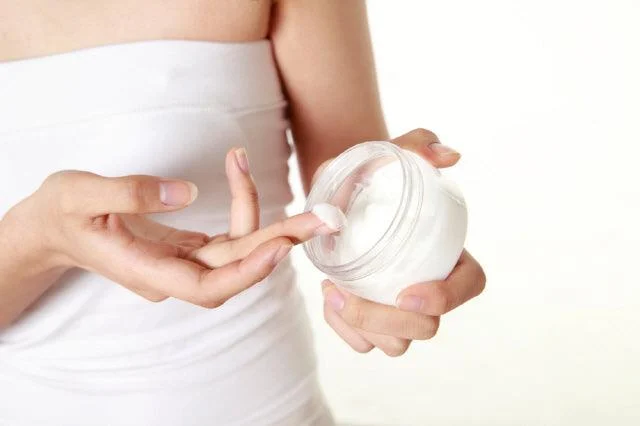
Packaging affects exposure. A pump can limit direct finger contact but does not make a formula timeless. A jar increases the importance of clean hands or a clean spatula. A tube may reduce exposure while still allowing air and moisture through repeated use.
Eye cosmetics need stricter attention
FDA notes that eye-area cosmetics tend to have shorter shelf lives and that eye infections can be serious. It reports that manufacturers commonly recommend discarding mascara two to four months after purchase because the wand is exposed repeatedly to microorganisms.
Follow the mascara manufacturer’s exact instruction when it is shorter. Do not add water or saliva to revive dry mascara. Stop using eye makeup during an eye infection and discard the products used around the time of infection.
Do not share eye makeup. Keep applicators clean and do not use a lip product around the eyes unless it is specifically intended and labeled for eye use. PAO does not override contamination or infection history.
Sunscreen and acne products can follow drug rules
In the United States, sunscreen and some acne products are regulated as drugs rather than ordinary cosmetics, or as both drugs and cosmetics. They require expiration dating tied to stability expectations.
An expired sunscreen should not be assumed to provide its labeled protection. Replace it according to the printed expiry and storage directions. Heat exposure, such as prolonged storage in a hot vehicle, is another reason to question product integrity.
Korean or other imported sunscreens may carry original and destination-market labels. Confirm which version is being sold and read the authorized local information. Do not derive an expiry from the SPF number, PA rating, or batch code.
Category estimates are secondary, not primary
Online charts often assign a fixed lifespan to lipstick, toner, cream, foundation, or serum. These can be reminders, but they are not product-specific evidence. Packaging, preservation, formula, testing, and directions vary within every category.
Use this hierarchy:
- Fixed expiry or minimum-durability date on the exact product.
- PAO symbol and current manufacturer directions.
- Market-specific authorized label or leaflet.
- Manufacturer support using the exact batch or lot code.
- General category guidance only when product-specific information is unavailable.
Never replace a clearly printed date with a longer internet estimate. A general “cream lasts two years” statement cannot overrule a product labeled for a shorter period.
Signs to discard a product early
- Unexpected or unpleasant change in smell.
- Color change not explained by normal settling or label instructions.
- Separation that does not remix as the product is designed to do.
- Drying, hardening, cracking, clumping, or applicator blockage.
- Foreign material, visible growth, swelling, leakage, or damaged seal.
- Use during an eye infection or known contamination event.
- Unexpected redness, burning, rash, or another reaction.
Do not taste or continue applying a questionable cosmetic to test it. Stop use, preserve the packaging and batch information when reporting a problem, and contact a healthcare professional for a significant reaction.
Storage and hygiene that protect shelf life
Store cosmetics according to the label, away from excessive heat and direct sunlight. Bathrooms can be humid; close containers promptly and keep them away from standing water. Do not leave products in a hot car.
Wash hands before use. Use a clean spatula for jars and clean reusable tools at an appropriate frequency. Avoid pumping a mascara wand repeatedly, which moves air through the tube. Never share products that contact eyes or lips directly.
Keep the cap, carton, or a clear photo of the label when important information is printed there. For refill systems, do not mix old residue with a new refill unless the manufacturer instructs that process and the container has been cleaned as directed.
A simple tracking system
Write the opening date on a small label or keep a private note with the product name, size, batch code, opening date, PAO, and fixed expiry. Recording the exact option helps when several similar products are open.
Review open products periodically. A quarterly check can identify forgotten mascara, old sunscreen, nearly empty jars, and formulas whose smell or texture changed. Do not wait for a yearly cleanout when the label specifies a shorter PAO.
Buy sizes you can realistically finish. A large bottle is poor value when the PAO ends before normal use. Samples and minis can be useful for products used infrequently, although single-use packaging follows its own instructions.
International K-beauty label checks
Korean products may show dates in year-month-day order or carry Korean text indicating manufacture or use-by information. Do not infer which date type is printed without an accurate translation. A manufacturing date and an expiry date are not the same.
Check the official product documentation or authorized seller information when the label is unclear. Give the manufacturer the exact product and batch code. Avoid anonymous calculators that claim to decode every brand without showing authoritative data.
When ordering from EmpressKorea, verify the delivered product name, option, seal, label, and any destination-market information before opening. Contact support if the item or date information appears inconsistent with the listing.
Bottom line
Cosmetic expiry is a label-and-condition decision, not a universal three-year countdown. Fixed dates, PAO, product category, drug status, storage, hygiene, and contamination history all matter.
Follow the shortest authoritative limit that applies. Discard sooner when the product changes or becomes contaminated. Recording the opening date is a small habit that makes every later decision easier.
When the label remains unclear, stop guessing and ask the manufacturer or authorized seller using the exact product name and batch code.
Sources
- U.S. Food and Drug Administration: Shelf Life and Expiration Dating of Cosmetics
- U.S. Food and Drug Administration: Using Cosmetics Safely
- EU Cosmetics Regulation, Article 19
- UK Office for Product Safety and Standards: Consumer Cosmetics Guidance
Frequently Asked Questions
Do all cosmetics expire three years after manufacture?
No. Shelf life varies by product, packaging, use, storage, and regulatory market. Follow the exact fixed expiry or minimum-durability date and the PAO symbol where provided. A generic three-year rule cannot override a shorter product label.
What does the open-jar 12M symbol mean?
It means the product’s stated period after opening is 12 months under appropriate use and storage. Count from the first opening date, not purchase or manufacture. Discard sooner after contamination, infection, or abnormal changes.
Is a batch code the expiration date?
Not automatically. A batch or lot code is primarily a traceability identifier. Ask the manufacturer or authorized seller for product-specific interpretation rather than relying on an anonymous decoder. Keep the code for recalls or complaints.
How long should I keep mascara?
Follow the manufacturer’s label. FDA notes that manufacturers commonly recommend discarding mascara two to four months after purchase because the wand is repeatedly exposed to microorganisms. Discard it sooner if dry, contaminated, or used during an eye infection.
Can I use a cosmetic before its expiry if it smells different?
No. A fixed date assumes proper storage and normal product condition. Stop using a cosmetic after an unexpected smell, color, texture, separation, foreign material, damaged seal, or reaction even when the printed date has not passed.