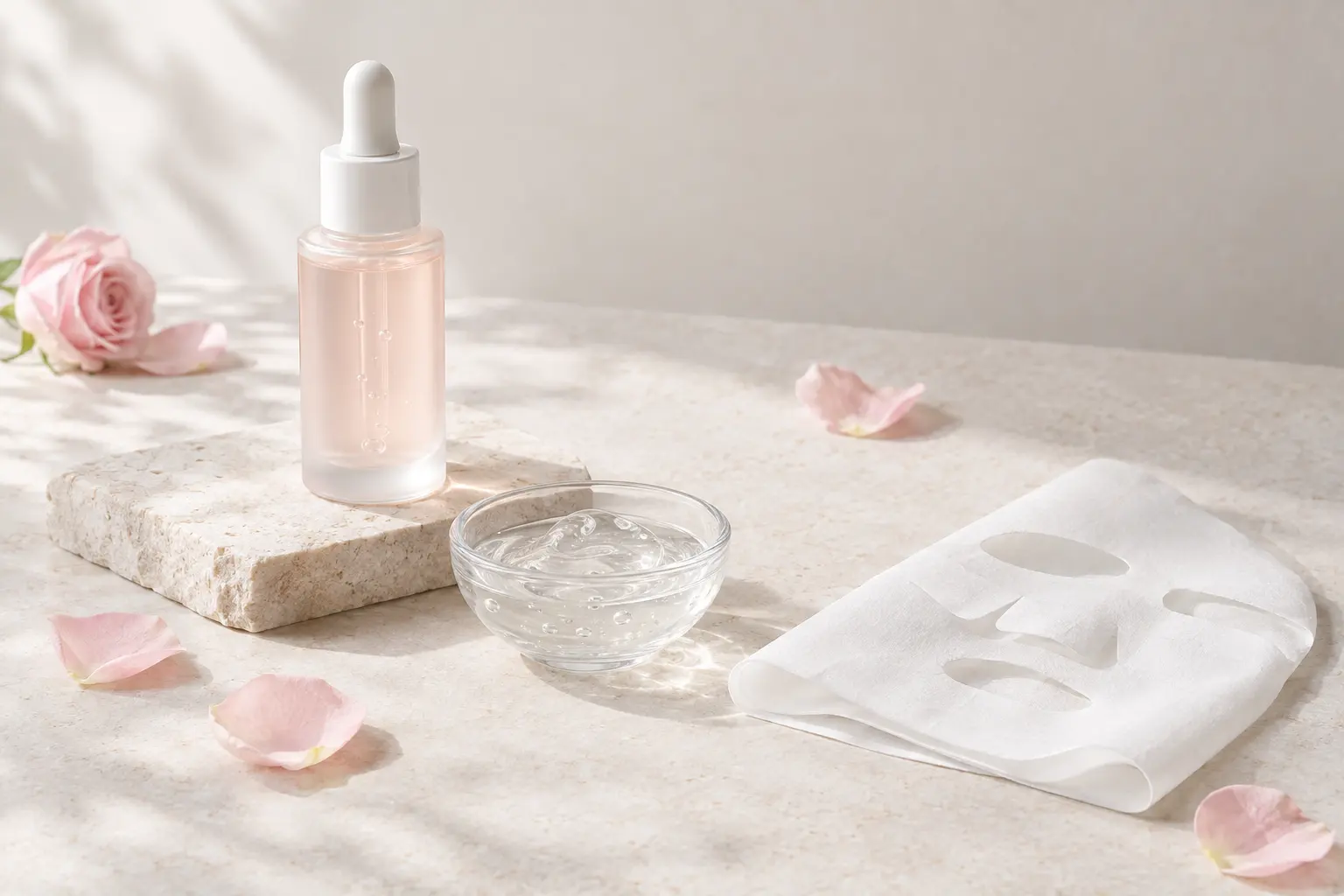
This ISOI Bulgarian rose serum guide starts with a practical dilemma: you want more even-looking skin, but the brightening serum, lifting serum and rose masks all seem to promise a fresher complexion. Their shared ingredient story makes them look more interchangeable than their intended jobs suggest.
Choose the brightening serum when uneven tone is your priority, the lifting serum when firmness matters more, and a mask when you specifically want a masking step. Then consider size and formula suitability. The useful question is not which product contains the most compelling rose story; it is which purchase answers a need your current routine leaves unresolved.
ISOI Bulgarian rose serum guide: choose the job first
Start by separating three things that can all get described as dullness: uneven color, an unsatisfying surface appearance, and a perceived loss of firmness. You do not need to diagnose your skin to shop sensibly. You do need to decide which change would make the purchase worthwhile, because the products here are positioned around different cosmetic goals.
ISOI Brightening Serum 35ml is the most directly relevant starting point for a tone-focused routine. Its catalog description specifically identifies dark spots, uneven tone, arbutin and a vitamin C derivative. That gives it a clearer match to this concern than choosing a lifting product simply because both contain Bulgarian rose oil. This is a relevance judgment, not a claim that it outperforms the other formulas in a comparative trial.
A comparison by intended purpose
| Option | Documented emphasis | When it makes sense | Main trade-off |
|---|---|---|---|
| ISOI Brightening Serum 35ml | Dark spots and uneven tone; catalog-listed arbutin and vitamin C derivative | You want one ongoing, tone-focused serum step | The description does not establish a guaranteed fading schedule |
| ISOI [NEW] Brightening Serum (Rose PDRN Blemish Serum) 15ml | Brightening and the appearance of post-acne marks | You prefer a smaller initial commitment | Smaller capacity is not evidence of a different strength |
| isoi Bulgarian Rose Refresh Mask 80g | Gel-mask moisture, soothing and smoother-looking texture | You specifically want a short masking session | Its 10-minute positioning is not a dark-spot fading deadline |
| ISOI Intensive Lifting Serum, 35ml | Firmness and wrinkle appearance, with secondary brightening | Your main concern is elasticity rather than marks | The lifting language does not establish structural correction |
The sheet-mask alternative, ISOI Bulgarian Rose Blemish Care Mask 10sheets*20ml, belongs in a separate format decision. Consider it if you prefer individual sheet applications, not because its connection to the serum proves that the two deliver identical results.
If you cannot name your priority yet, resist buying a serum and both masks together. Write down the single outcome you want to assess first. That makes browsing the serums and essences category more useful: you are looking for a defined role, rather than assembling several products around the same attractive ingredient.
What Bulgarian rose and Rose PDRN actually tell you
The rose name is an ingredient-family clue, not a complete formulation explanation. ISOI’s published ingredient list for its 70ml Rose PDRN Brightening Serum names damask rose flower water, damask rose flower oil and damask rose flower extract separately [1]. These are distinct entries, so a claim about rose water should not automatically become a claim about rose oil.
That distinction matters when comparing the serum with the Refresh Mask’s catalog claim of 70% Bulgarian rose water. A high percentage of flower water does not disclose the percentage of rose oil, nor does it tell you how much of a separate brightening ingredient is present. Avoid using the largest botanical percentage as a shortcut for the most effective product.
Read the supporting formula, not just the headline
The same published serum ingredient list includes arbutin, niacinamide, 3-O-ethyl ascorbic acid, ferulic acid, glycerin, betaine, panthenol and several hyaluronic-acid-related ingredients [1]. It therefore documents a multi-ingredient formula rather than rose oil alone. However, that page describes a different capacity from the featured 15ml and 35ml bottles; it is useful background, not automatic proof that every bottle has an identical ingredient list.
For ISOI Brightening Serum 35ml specifically, the catalog identifies arbutin as a functional brightening ingredient and a vitamin C derivative as part of its brightening positioning. Those are more decision-relevant details than the rose sourcing story. The catalog does not supply their percentages, so it cannot support concentration-based comparisons with the lifting serum or masks.
- Ingredient identity: tells you what the formula contains.
- Concentration: would help establish how much is present, but is not disclosed for these brightening ingredients.
- Finished-product testing: would address what the complete formula achieved under specified conditions.
- Your purchase decision: should use the evidence available without treating one of these categories as a substitute for another.
Keep PDRN claims within their evidence
The published Rose PDRN serum list includes sodium DNA [1]. That establishes the presence of a named ingredient in that documented formula; it does not reveal its concentration, molecular characteristics or the size of any visible benefit. The name alone cannot tell you how the product compares with another serum.
Neither the featured descriptions nor the readable formula document establishes that these topical cosmetics reproduce a clinical procedure. Do not buy the brightening serum expecting that equivalence. Buy it if its tone-focused purpose makes sense for you, with Rose PDRN treated as a formulation feature rather than a shortcut to a promised result.
The same restraint applies to rose oil itself. A distinctive origin or elaborate extraction story can explain brand identity, but it is not a measurement of how far a finished serum will fade a particular mark.
Brightening serum: choosing between 15ml and 35ml
If uneven tone is your main concern, the next decision is commitment rather than complexity. ISOI Brightening Serum 35ml is described as a plant-derived brightening formula with Bulgarian rose oil, Rose PDRN, arbutin and a vitamin C derivative. Its clearest role is as the dedicated brightening product in your routine, not as a universal answer to every change in skin appearance.
The smaller option, ISOI [NEW] Brightening Serum (Rose PDRN Blemish Serum) 15ml, is also positioned around dark spots, uneven tone and post-acne marks. Its featured description does not provide the same ingredient detail as the 35ml listing. The similar names justify comparing them, but not asserting exact formula equivalence without the matching ingredient lists.
When the smaller bottle is the better purchase
Suppose you have an established routine but have never bought this serum. You are interested in its brightening purpose and unsure whether you want a full-size commitment. The 15ml option is the more restrained purchasing choice, provided its current price makes sense to you. That is a financial and practical recommendation, not a claim that a small bottle is a formal efficacy test.
By contrast, the 35ml option makes more sense when you already know the exact formula fits your preferences and want more product. Capacity alone does not tell you how many weeks either bottle will last: that depends on the label-directed amount and your actual usage. Avoid comparisons that invent a fixed number of applications.
- Choose 15ml for lower volume commitment: useful when you are still deciding whether the product earns an ongoing place.
- Choose 35ml for a planned serum step: more capacity without adding another format to your routine.
- Compare price per milliliter only after confirming the formula: divide each current price by its stated capacity.
- Do not infer an upgrade from the title alone: the 35ml description also refers to Rose PDRN despite lacking the same bracketed naming.
For a reader ready to choose a tone-focused serum, ISOI Brightening Serum 35ml is the lead option here because its documented purpose and named brightening ingredients fit that decision. No application texture, absorption speed or makeup compatibility is established by the supplied description, so those should not be assumed as additional selling points.
The sensible reason to move up in size is confidence in the product’s place in your routine. It is not the hope that buying more will make the formula work faster.
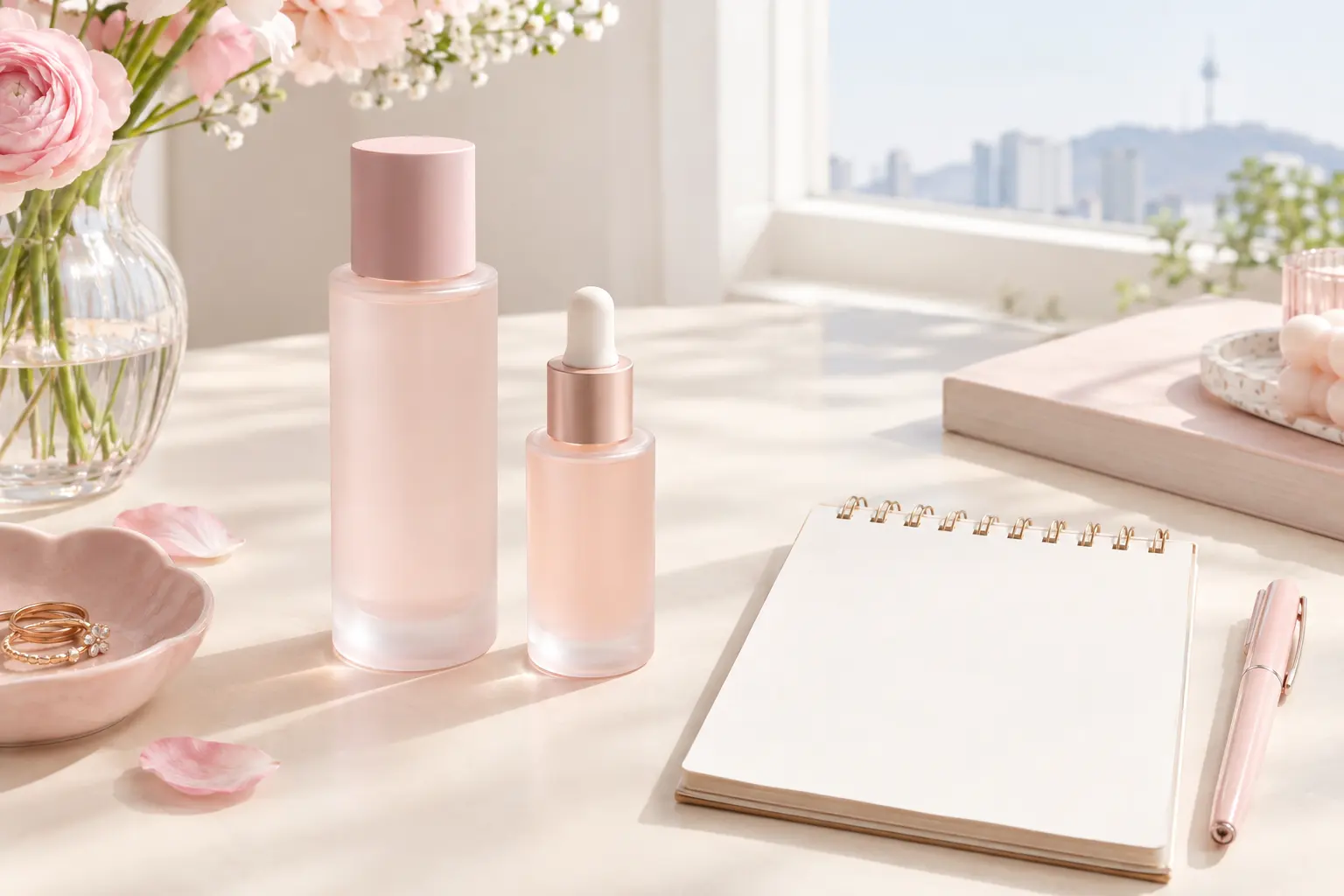
Rose masks: a different format, not a stronger serum
The two rose masks answer different format preferences. isoi Bulgarian Rose Refresh Mask 80g is described as a gel mask containing 70% Bulgarian rose water, with a 10-minute moisture, tone and texture proposition. ISOI Bulgarian Rose Blemish Care Mask 10sheets*20ml is presented as an individual sheet-mask format with blemish-care and moisture claims.
Neither description establishes that masking is a more intensive version of the brightening serum in a measurable, dose-equivalent sense. The words concentrated and quick fix may sound decisive, but they do not tell you how much brightening active reaches the skin or how the results compare with repeated serum use.
Choose the gel mask for the masking experience you want
Consider a hypothetical reader who is satisfied with their regular serum but wants a separate, short skincare session when their face looks tired. The Refresh Mask fits that preference better than replacing a familiar serum purely to obtain another rose product. Its stated gel format and 10-minute positioning are concrete reasons to consider it; permanent pigment correction is not an established outcome of that short session.
The catalog also reports human-application testing for skin tone and texture and gives satisfaction figures. Those figures are manufacturer-style claims, not enough information to judge the strength of the trial. Without the study population, comparison conditions, measurement method and assessment timing, they should not decide your purchase.
Choose the sheet mask for individual applications
A published ingredient list for the Blemish Care Mask includes rose flower water, glycerin, betaine, trehalose, centella, heartleaf, allantoin and panthenol [6]. The readable list does not establish that the mask is simply the current Rose PDRN serum applied to a sheet. Treat the serum association in its description as positioning, not verified formula identity.
The published mask directions specify application after cleansing and toner, removal after 15–20 minutes, and gentle patting of the remaining serum [6]. That timing belongs to the sheet mask. It should not be copied onto the gel mask, whose complete application and removal directions are not supplied here.
- Gel preference: consider the Refresh Mask when its documented gel format is what you want.
- Sheet preference: consider the Blemish Care Mask when individual sheet applications suit your routine.
- Tone-first purchase: prioritize the brightening serum before adding a mask solely for overlapping claims.
There is also a practical quantity issue: the sheet-mask title states ten 20ml sheets, while a description field says one sheet. Resolve that discrepancy before ordering. When comparing masks and treatments, confirmed pack count is more useful than an apparent bargain based on an ambiguous listing.
When the Intensive Lifting Serum makes more sense
A brightening serum is not automatically the right choice just because your skin looks less fresh than you would like. If your priority is the appearance of firmness or wrinkles rather than uneven color, ISOI Intensive Lifting Serum, 35ml is the closer match by stated purpose. Its description centers on Bulgarian rose oil and the Naturo-9 Anti-Wrinkle Complex, with arbutin listed for brightening.
This is a shift in emphasis, not proof of superiority. The supplied information does not include the full composition of Naturo-9, ingredient concentrations or comparative results against the brightening serum. A proprietary complex name cannot establish which component contributes most, or how large a change you should expect.
Give firmness its own decision
Imagine you have only a few marks that do not particularly bother you, but the appearance of your cheek contour is the reason you are shopping. Choosing the brightening serum because it is more closely associated with the rose line would miss your actual priority. The lifting serum is the more coherent purchase because its claimed cosmetic role aligns with your concern.
Keep the expectation cosmetic. The catalog describes visible firming, tightening and wrinkle improvement, but the available material does not establish structural lifting or correction of sagging. If those are the results you would require to feel satisfied, this listing does not supply enough evidence to justify the purchase on that basis.
- A suitable reason to choose it: you want a serum positioned around firmness and wrinkle appearance.
- A secondary attraction: its catalog also lists arbutin and brightening claims.
- An unsupported reason: assuming Naturo-9 makes it stronger or more effective than the brightening serum.
- A reason to wait: you need detailed ingredient or testing information that the description does not provide.
The featured range includes another listing named isoi Intensive Lifting Serum (Core Elasticity Serum) 35ml. Both descriptions concern firmness and wrinkle appearance, but the naming overlap alone does not establish that the two listings represent different generations, different strengths or identical stock. Do not buy both expecting complementary functions.
One firmness-focused serum is a clearer starting point than a pair chosen around nearly identical promises. If tone is actually the concern you monitor most closely, return to the brightening option instead.
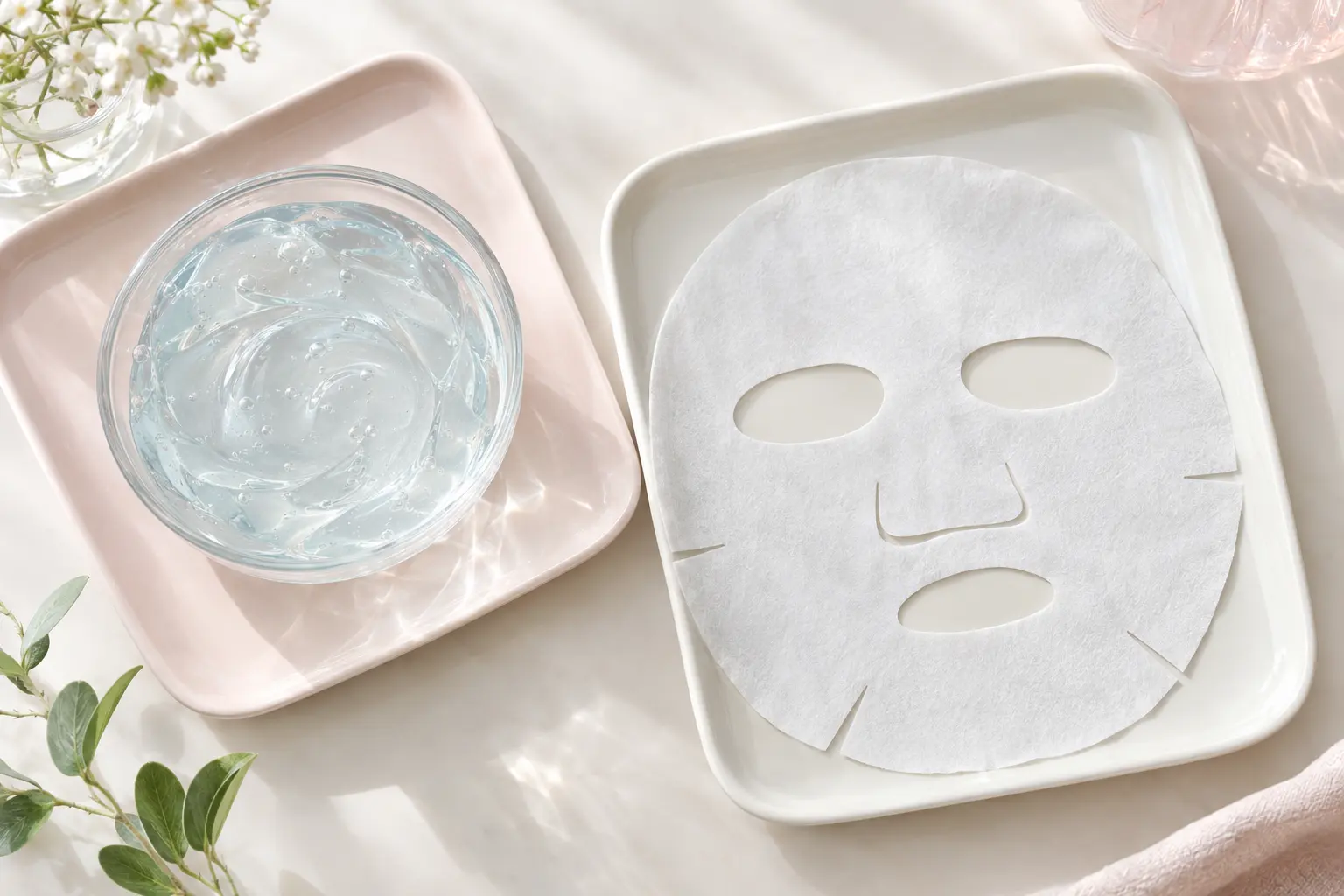
Sensitive-skin and functional claims: read them precisely
Several featured descriptions use reassuring terms such as gentle, natural, clean or suitable for sensitive skin. Those are product-positioning claims, not comparative evidence showing that one rose formula is the least irritating. They also do not tell you whether a particular ingredient matches restrictions you already follow.
The published Rose PDRN serum ingredient list names citronellol and geraniol and explicitly identifies them as constituents naturally present in plant-derived essential oils [1]. This is a useful distinction: an ingredient can originate within an essential oil rather than being separately added under a fragrance heading. Natural origin does not mean that the ingredient is absent.
Make one exact-label check
If you already avoid rose oil, fragrance constituents or another listed botanical, do not let a sensitive-skin description override that restriction. Review the complete ingredient list and directions for the exact product you will receive, including any precautions relevant to your established care plan. For a known allergy or skin condition, use your clinician’s ingredient guidance rather than selecting by the word clean.
The 35ml brightening description also claims EWG verification. The available readable research does not independently confirm the current status of that exact package, so the claim should not be treated here as a verified certification or a guarantee of personal compatibility. It is not a reason to rank the serum as gentler than the masks.
What functional cosmetic means in this context
South Korea’s Cosmetics Act includes products aiding skin whitening and wrinkle improvement within its definition of functional cosmetics [8]. That legal category explains why translated Korean product descriptions may pair brightening language with wrinkle-improvement language.
The lifting serum is described in the catalog as dual-functional for whitening and wrinkle improvement. The brightening serum is also described as a functional cosmetic. Those descriptions do not, by themselves, supply the exact product’s regulatory documentation or demonstrate the scale of a visible result.
Read these terms as specific claim categories rather than a hierarchy in which functional automatically means stronger. For shopping purposes, the better question remains whether the stated function matches your priority and whether the exact formula meets your requirements. A seal or category name cannot make that decision for you.
Build a routine that lets you judge the serum fairly
Once you have chosen a product, give it a clear job. A tone-focused serum purchase becomes difficult to assess if you simultaneously replace your cleanser, add both masks and change your moisturizer. Keeping the rest of your established routine consistent is an evaluation strategy: it leaves fewer competing explanations for whatever you notice.
The featured serum descriptions do not provide complete dosing or frequency directions. There is therefore no sound basis here for prescribing a fixed number of drops, a twice-daily schedule or a universal layering order. Follow the package directions rather than importing instructions from another rose product.
Define the outcome before you start
For the brightening serum, decide whether you are assessing the appearance of a particular post-acne mark, overall unevenness or a more general impression of brightness. Those are different observations. A face that looks fresher overall does not necessarily establish that one established mark has changed.
For the lifting serum, keep the assessment aligned with its stated cosmetic purpose. Look at the same area under similar conditions instead of switching between wrinkles, contour and brightness whenever one seems more favorable. For a mask, record the short-session experience separately from what you observe during an ongoing serum routine.
- Record a baseline: use the same lighting, camera distance and facial position if you choose to take photographs.
- Change one product at a time: avoid introducing the serum and a new mask together merely because they share rose branding.
- Separate usability from outcome: whether you enjoy a step and whether its target concern changes are different questions.
- Avoid an invented deadline: the supplied serum information does not establish when your own visible result should appear.
These notes will not turn home observation into a clinical trial, but they can make a repurchase decision less impressionistic. They are particularly useful when deciding whether to move from the smaller brightening bottle to the 35ml format.
Also ask whether another serum is actually the missing step. If your shopping list keeps alternating between brightening and basic moisture, browse the moisturizer category separately before committing. Clarifying the role you need is more valuable than stacking several products whose benefits sound similar in a short description.
Before checkout: confirm the formula, quantity and commitment
The final purchase decision should be narrower than the initial search. You are choosing one product for one main role, then deciding how much of it to buy. That approach avoids turning a rose-serum question into an unnecessarily large routine replacement.
For a tone-focused first purchase, compare the 15ml and 35ml brightening options on confirmed formula information and current price. For a firmness-focused purchase, resolve which lifting-serum listing you intend to order. For a mask purchase, prioritize the application format and confirmed quantity rather than trying to equate mask essence volume with bottled-serum value.
A short purchasing checklist
- Exact identity: match the full product name, capacity and ingredient information, especially where Rose PDRN wording differs.
- Pack contents: clarify whether the Blemish Care Mask order contains the ten sheets named in the title or the single sheet mentioned elsewhere.
- Comparable value: use price per milliliter for confirmed comparable serum formulas, and price per confirmed application for sheet packs.
- Order terms: review the delivery estimate and destination-specific customs information shown for your order rather than assuming a universal shipping or duty arrangement.
The Refresh Mask is identified as 80g; do not convert that weight into an assumed liquid volume to make a neat price comparison. Likewise, ten 20ml sheets should not be treated as 200ml of the bottled brightening serum. The formats and documented formulas are not established as equivalent.
If you remain undecided between brightening and lifting, ask which concern you would still want addressed if the other stayed exactly the same. That answer should determine the serum. If neither concern is clearly important enough to justify a new step, postponing the purchase is a reasonable decision.
A mask can wait. Start with the product whose purpose you can explain in one sentence, and let the next purchase depend on a real unmet need rather than the appeal of completing a matching rose collection.
Frequently Asked Questions
Which ISOI Bulgarian rose serum should I choose for dark spots?
ISOI Brightening Serum 35ml is the most directly relevant option here because its description specifically targets dark spots and uneven tone and names arbutin and a vitamin C derivative. That makes it a better purpose-match than the lifting serum for a tone-first purchase. The supplied information does not establish a guaranteed fading timeline or comparative superiority.
Are the 15ml and 35ml ISOI brightening serums the same formula?
Exact formula equivalence is not established by the supplied descriptions. Both are positioned around brightening and Rose PDRN, but their descriptions provide different levels of ingredient detail. Compare the current ingredient lists before treating size as the only difference.
Does Rose PDRN serum work like a clinical PDRN treatment?
The available product information does not establish that equivalence. ISOI's published Rose PDRN serum ingredient list includes sodium DNA, but that list alone does not establish clinical-treatment-like outcomes [1]. Choose the cosmetic for its documented skincare purpose rather than an assumed procedural effect.
How long should I leave the ISOI Bulgarian Rose Blemish Care Mask on?
The published directions specify 15–20 minutes, followed by removal and gentle patting of the remaining serum [6]. Use the directions on your current package if they differ. Do not apply this timing to the Refresh Mask, which is a different product with separate instructions.
Can I use the ISOI brightening and lifting serums together?
The supplied information does not provide a tested combined regimen or establish that using both improves the result. For a first purchase, choose the one that matches your main concern and follow its directions. Consider another serum only if it would address a distinct need rather than duplicate an existing step.
Is the ISOI rose sheet mask the same as the brightening serum?
That is not established, despite the serum association in the mask's description. The published sheet-mask ingredient list includes rose flower water, glycerin, betaine and trehalose [6]. ISOI's published 70ml Rose PDRN serum list also names arbutin, niacinamide and sodium DNA [1]. Treat the sheet mask as its own product rather than as a measured substitute for the bottled serum.