An old cosmetic is not dangerous simply because its packaging looks dated, and a newly purchased product is not safe merely because it is “fresh.” Safety depends on formula, preservative system, packaging, manufacturing, storage and what happened after opening. Dates and symbols are evidence, but they need correct interpretation.
The former article claimed that named pathogens are common in expired makeup, refrigeration extends eye-cream efficacy, active ingredients generally lose potency, and Empress Korea guarantees newer stock, maximum efficacy and fewer reactions through direct manufacturer relationships. None of those seller-wide promises was substantiated.
Four clocks can apply to one product
| Mark or record | What it means | What to do |
|---|---|---|
| Expiration / use-by date | Manufacturer’s labeled end date under stated conditions | Do not use beyond it |
| PAO jar symbol, e.g. 12M | Months considered suitable after first opening | Record opening date |
| Batch or lot code | Traceability for a production batch | Use for recall/manufacturer inquiry |
| Personal opening record | Your actual exposure history | Write date on package or inventory |
| Visible/sensory condition | Changes that can precede a date | Stop and investigate or discard |
U.S. cosmetic dating is not one universal rule
FDA states that ordinary U.S. cosmetics are not generally required to print expiration dates. Manufacturers remain responsible for determining shelf life and substantiating safety. A missing date is not proof of indefinite life.
Products that are also drugs follow drug rules. Sunscreens and acne treatments with regulated active claims require stability and expiration information. Read the complete label category, not only the front name.
What the PAO symbol means
Under EU cosmetic rules, products for which durability after opening is relevant carry an open-jar symbol and a period such as 6M, 12M or 24M. The countdown starts when the product is first opened, not when it was manufactured or purchased.
PAO assumes normal storage and use. Heat damage, contamination or an abnormal change can make a product unsuitable earlier.
Batch codes are for traceability
A batch code lets a company identify manufacturing records and affected units during a recall. It may contain encoded production information, but there is no universal consumer decoding scheme across brands.
Third-party batch-code websites can be incomplete or wrong. Ask the manufacturer or responsible seller using the exact lot and product name when dating is unclear.
Why formulas change over time
FDA lists exposure to air, light, temperature and moisture; emulsion separation; drying; odor and color changes; and preservative degradation among shelf-life factors. Oxidation, evaporation and ingredient interactions can alter performance even without visible microbial growth.
Different formulas age differently. A dry pressed powder, water-rich cream, mascara and anhydrous balm should not receive one universal replacement schedule.
How contamination enters
FDA identifies contaminated raw materials, water, manufacturing, ineffective preservation, inadequate packaging, shipping/storage and consumer use as possible routes. Dipping fingers into a jar, sharing, dirty applicators and adding water all increase exposure.
Contamination is possible before the labeled end date and is not guaranteed after it. Consumers cannot identify every microorganism by sight or smell, which is why recalls and manufacturer instructions matter.
Do not name a pathogen without testing
The old article treated named bacterial contamination as an expected feature of expired makeup. Without sampling and laboratory methods, a user cannot know whether a product contains bacteria, yeast, mold or no harmful contamination.
Discarding a suspicious product is sensible; diagnosing its organism at home is not. Keep the package and lot information if an adverse event or recall investigation may follow.
Eye products deserve tighter hygiene
FDA notes that eye-area cosmetics tend to have shorter useful lives and manufacturers often recommend replacing mascara within two to four months. Each wand return introduces exposure, and eye infections can be serious.
Do not share eye products, use retail testers without single-use applicators, or add water or saliva to dried mascara. Discard products used during an eye infection and wait until the area has healed.
Jars, pumps and tubes have different exposure
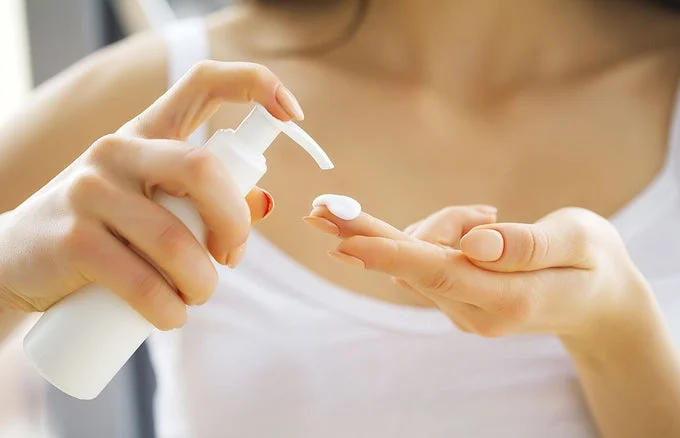
A pump or narrow nozzle generally limits repeated contact with the bulk formula. A wide jar is repeatedly exposed to fingers and air. A dropper can touch skin and return residue if handled carelessly.
Wash hands, use a clean dry spatula and avoid touching nozzles to skin. Packaging reduces risk only when used as designed.
Powders are not immortal
Low-water pressed powders may support less microbial growth than creams, but brushes transfer oil, moisture and cells. Binders can oxidize, fragrance can change and a wet brush can alter the pan.
Clean tools, keep the compact dry and replace powder that smells abnormal, grows visible material, changes performance or has been exposed during infection.
Sunscreen expiration is a protection issue
Sunscreen is a drug in the United States. Use the labeled expiration and storage instructions. Heat exposure in a car, separation or packaging damage can make reliability uncertain.
Do not assume a normal smell means SPF remains verified. When protection is in doubt, replace it rather than relying on an untested dose.
“Natural” and preservative-free need no special exemption
Water-containing natural cosmetics still need microbial control. A preservative-free claim may require packaging, low water activity, short use period or another protection strategy; it does not mean the product stays safe indefinitely.
Plant extracts and essential oils can oxidize or trigger allergy. Natural origin is separate from stability and tolerance.
Storage instructions outrank refrigerator folklore
Store products according to the manufacturer, generally closed and away from excess heat, direct sun and moisture. A bathroom may be convenient but can expose products to humidity and temperature cycling.
Do not refrigerate eye cream or cosmetics merely to extend life unless the manufacturer directs it. Cold can change viscosity, emulsions and applicator performance, while moving products in and out creates condensation.
Travel and hot-car exposure
Cars, checked luggage, sunny windows and heaters can expose products to extremes. One brief event does not have a universal outcome, but prolonged heat can degrade preservatives and alter texture.
Inspect packaging for swelling, leakage and separation. Contact the manufacturer when a temperature-sensitive product had significant excursion.
Discard signals before the date
- Unexpected sour, rancid or otherwise changed odor.
- New discoloration, spots or visible growth.
- Separation that does not remix as the label indicates.
- Gas, swelling, leaking or package deformation.
- Unexpected thinning, thickening, graininess or drying.
- New stinging, rash or eye irritation.
- A recall matching the product and lot.
Do not taste or repeatedly test a suspicious product on skin. A date is not permission to ignore a physical warning.
What does not automatically mean spoilage
Some products settle by design and instruct shaking. Natural color variation, airless-pump startup or crystals in a temperature-sensitive balm can have legitimate explanations. Compare with package directions and brand guidance.
When uncertain, provide the manufacturer with photos, lot, purchase source, storage history and opening date. Do not crowdsource a safety conclusion from appearance alone.
A simple cosmetic inventory
- Record product, shade/variant and lot.
- Photograph expiration and PAO symbols.
- Write the opening date on removable tape.
- Note storage location and unusual heat events.
- Set a reminder before PAO or expiration.
- Audit eye products and shared tools monthly.
Inventory supports use-before-waste without claiming every product must be discarded on an invented universal schedule.
Buying less can improve turnover
Choose package size by realistic frequency, not cost per milliliter alone. A smaller product fully used within its safe period can cost less than a large bargain discarded half full.
A high price, luxury brand or “quality” label does not guarantee longer shelf life. Packaging and validated formulation matter.
Returns, recalls and seller questions
Before opening, photograph a damaged seal, leak or unreadable date and contact the seller. Ask for exact dating policy, lot verification and return terms. Do not accept seller-wide claims of direct sourcing or newest stock without order-specific evidence.
Monitor FDA and brand recall notices. Match product, lot and distribution details rather than discarding unrelated products with a similar name.
What to do after a reaction
Stop the product and seek medical care when needed. Preserve the container, ingredient list, lot, receipts and photos. FDA accepts reports of rash, redness, burns, hair loss, headache, infection and other unexpected cosmetic reactions.
Emergency symptoms such as breathing difficulty, facial swelling, severe eye pain or vision change require urgent care. Do not re-challenge a severe reaction to prove causality.
No product cards belong here
This is a safety and inventory guide, not a reason to replace old products with unrelated new ones. A product card would imply that purchasing a particular cosmetic solves shelf-life management.
Use the same date, storage and contamination checks for every purchase, including products bought from Empress Korea.
The practical verdict
Cosmetic age is one factor in a chain of evidence. Read expiration and PAO correctly, record opening, protect packaging, clean applicators and act on recalls or abnormal changes. Never add water or saliva.
“Fresh” is not a safety certification, and an old batch code is not proof of danger. The exact product label, storage history and observed condition provide the defensible decision.
Sources
- FDA: Shelf life and expiration dating
- FDA: Microbiological safety and cosmetics
- FDA: Eye cosmetic safety
- FDA: Allergens in cosmetics
- FDA: Reporting a cosmetic complaint
- FDA: Product testing of cosmetics
- EU Cosmetic Products Regulation: durability and PAO
- American Academy of Dermatology: Testing products
Frequently Asked Questions
Is a batch code the same as an expiration date?
No. A batch or lot code is primarily for traceability. Ask the manufacturer when the label does not clearly provide dating information.
What does the open-jar 12M symbol mean?
It is a period-after-opening indication: the product should generally be used within 12 months after first opening under normal storage and use.
Can I keep cosmetics longer by refrigerating them?
Only when the manufacturer instructs it. Unplanned refrigeration can change texture or emulsions and introduce condensation; it does not reset expiration or PAO.
Should I throw away a product before its date if it smells different?
Yes, an unexpected odor, color, texture, separation, gas, leak or reaction can make a product unsuitable before its labeled date. Stop using it and contact the manufacturer if needed.
What should I save after a cosmetic reaction?
Keep the container, lot, ingredient list, receipt, photos, opening date and storage history. Stop use, seek care as needed and report the event to the responsible company or FDA.