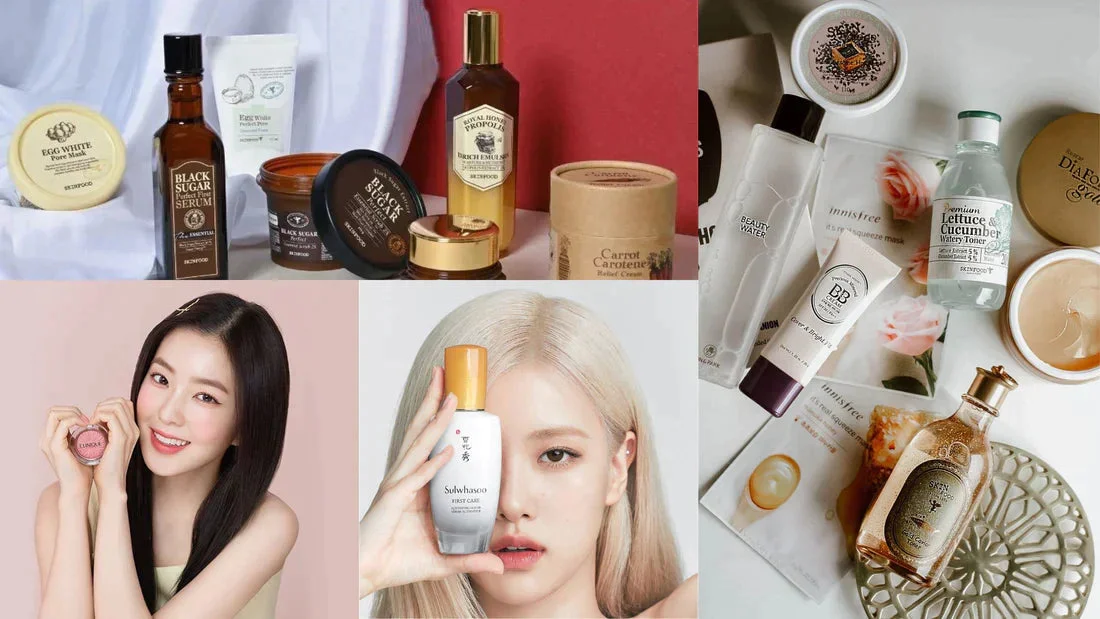
K-Pop, dramas, films, webtoons, food, fashion and beauty circulate through a shared global attention system often called Hallyu, or the Korean Wave. A music video can expose a makeup look; a drama can trigger a product search; an artist campaign can send fans to a retailer.
That pathway is plausible but not automatic. The former article called K-Beauty and K-Pop symbiotic, treated all Korean skincare as natural and multi-step, and implied celebrity visibility explained product effectiveness. This analysis separates each stage and its evidence.
The discovery-to-repurchase funnel
| Stage | Possible Hallyu influence | Evidence needed |
|---|---|---|
| Exposure | Artist, drama, video or social image | Reach and audience data |
| Interest | Search for look, ingredient or brand | Search lift with baseline and period |
| Consideration | Reviews, tutorials and retailer comparison | Qualified visits and product engagement |
| Purchase | Campaign, affiliate link or store availability | Attributed conversion and margin |
| Use | Trying the exact shade/formula | Directions, tolerance and returns |
| Repurchase | Product earns a routine role | Cohort repeat rate without launch distortion |
What the 2025 Overseas Hallyu Survey measured
MCST and KOFICE surveyed 26,400 people aged 15–59 who had experienced Korean cultural content across 28 regions. Data were collected online from November 29 to December 27, 2024.
The scope covered 12 areas: drama, entertainment, movies, music, animation, publishing, webtoons, games, fashion, beauty, food and Korean language.
This is a large international survey, but it is not a random sample of every person worldwide. The screening for Hallyu experience and online method should travel with the results.
K-Pop and beauty are distinct associations
When respondents encountered the word Korea, K-pop was the first concept for 17.8%, followed by Korean food at 11.8%, dramas at 8.7%, beauty at 6.4% and movies at 5.6%.
This shows K-pop’s salience within the surveyed population. It does not show that 17.8% bought cosmetics or that music caused the beauty association.
A respondent can value multiple Korean categories even though the question asks for the first one recalled.
Mainstream perception varies by category
The same release reported that respondents perceived food as having reached mainstream popularity at 53.7%, music at 51.2%, beauty at 50.8% and drama at 49% in their respective countries.
“Mainstream popularity” was defined around broad public awareness and local product availability. It is a perception measure, not audited retail market share.
Country-level results differ, so a global average should not set one launch strategy.
Exposure can create search vocabulary
Content gives audiences names for colors, finishes, hairstyles, brands and routines. Subtitles, credits, fan translation and creator tutorials can turn a visual look into searchable terms.
Misidentification is common. A fan post may name the wrong shade or assume every product on a vanity was used. Search results can attach a current generation to an old scene.
Brands should publish exact, dated product credits when they want a look to be shoppable.
Streaming and social platforms reduce distribution friction
YouTube, short-form video, streaming services and social feeds let Korean content travel without traditional broadcast schedules. Algorithms can expose related beauty content immediately after music or drama engagement.
Algorithmic recommendation is not neutral proof of popularity. Paid placement, watch time, prior behavior, region and platform incentives influence visibility.
Measure unique reach and downstream action rather than treating view count as product demand.
Celebrity campaigns are advertising
An artist can be a global ambassador, campaign model, gifted recipient, affiliate or independent user. These relationships need correct labels.
FTC guidance requires clear disclosure of material connections in U.S.-directed influencer advertising. An endorsement must be honest and cannot convey an objective claim the advertiser could not support directly.
Fame is not evidence that sunscreen was applied adequately, a serum treats disease or a foundation shade fits every fan.
Looks are team productions
Album art, stage performance and drama scenes involve makeup artists, hairstylists, lighting, lenses, editing, wardrobe and post-production. The visible result cannot be assigned to one cosmetic without credits.
Stage makeup prioritizes camera, distance, heat and performance. It may be heavier or less wearable than a daily look.
Recreate the color and placement, not an imagined bare-skin transformation.
Fan communities add context and risk
Fans translate interviews, compare screenshots, organize group orders and share swatches. They can surface information faster than official localization.
They can also repeat unsourced rumors, pressure purchases or expose personal/order data. Community trust does not guarantee seller authorization or product authenticity.
Link primary sources and label speculation as speculation.
Beauty purchase is not cultural loyalty
Enjoying Korean music does not obligate anyone to buy Korean cosmetics. A fan can separate support for an artist from a paid brand campaign.
Marketing should avoid implying that a purchase proves fandom, identity or moral support. This can be especially manipulative for young audiences.
Offer product information and a no-purchase path.
Product evidence remains product-specific
After discovery, verify exact name, generation, shade, size, ingredients, directions, warnings, evidence and seller. Korean origin does not guarantee naturalness, gentleness or effectiveness.
Skincare ingredient research cannot be transferred to every finished product. Makeup photographs cannot prove long wear. Consumer reviews cannot diagnose a skin condition.
Introduce one leave-on product at a time and stop after a reaction.
Shade inclusivity can change through public feedback
Global creators have highlighted when Korean complexion ranges fail deeper or olive skin tones. Viral feedback can prompt brands to expand ranges.
This is a productive Hallyu interaction when brands test real undertones, maintain inventory and avoid token launches. A larger shade count alone does not guarantee even quality.
Measure sell-through and returns by shade without using customer images beyond consent.
Cross-category conversion needs attribution
A brand may see search or sales rise around a music release, drama placement or ambassador announcement. To infer effect, compare baseline, region, campaign exposure, stock, price and other promotions.
Correlation at the same time can reflect seasonality, a retailer sale or unrelated viral review.
Use controlled links, campaign codes and incrementality tests while respecting privacy.
Repurchase is the stricter test
Fandom can drive a collectible first purchase. Repurchase suggests the product’s shade, formula, price and availability earned a role after the campaign.
Track repeat cohorts after the discount and gift period. Exclude replacements and duplicate bundle purchases when measuring routine retention.
A high launch number with low repeat rate is a media success, not necessarily a durable beauty product.
Regional differences matter
Hallyu categories, platforms and beauty retail differ across the Philippines, Indonesia, United States, Japan, France and other markets. Language, climate, skin-tone range, regulation and import cost shape purchase.
Use country analysis rather than assuming a K-pop audience everywhere wants the same cushion or sheet mask.
Local creators and customer service should have authority to correct global copy.
Negative perceptions and fatigue
High visibility can create fatigue, stereotyping and backlash. Excessive “K-” labeling may flatten diverse creators and products into one commercial identity.
Brands should avoid cultural superiority, beauty-standard pressure and undisclosed saturation. Product quality and honest service matter after novelty fades.
Survey favorability should not erase people who are indifferent or critical.
Product placement needs a verifiable chain
A cosmetic visible in a drama or music video may be paid placement, production property, an artist’s own item or an incidental background object. The image alone does not identify the commercial arrangement.
For a shoppable credit, archive the episode/timecode or official image, exact product and shade, brand confirmation, talent/production approval and disclosure required by the destination market. Do not infer that every cast member used or endorsed it.
When a product is fictional or packaging was altered for production, say so. Wrong credits create returns and can expose a campaign to deceptive-advertising complaints.
Translations shape beauty meaning
Korean product and beauty terms may be transliterated, translated literally or adapted for a market. “Whitening,” “tone-up,” “trouble,” “functional cosmetic” and “glass skin” can carry different legal and cultural meanings in English.
Subtitles and fan translations prioritize space and readability; retailer labels have legal duties. Keep entertainment translation separate from product claims and use the current market package.
Localizers should flag language that implies disease treatment, skin-color hierarchy or guaranteed transformation.
Survey percentages require denominator discipline
Before quoting a Hallyu percentage, identify who was eligible, sample size, countries, collection period, question wording and whether multiple responses were allowed. A share of content users is not a share of a nation’s population.
Changes between years may reflect new regions, expanded sample sizes or questionnaire changes as well as real opinion shifts. Compare like with like and read the user guide.
Survey results can guide hypotheses; they should not be used to target individuals or claim guaranteed demand.
Responsible fan and customer data use
Campaigns may collect handles, selfies, shade data, location, purchases and fandom interests. Collect only what is needed, explain purpose and sharing, protect it, set retention, and provide deletion controls.
Do not infer sensitive traits or health conditions from fan behavior. Keep minors out of profiling or apply the relevant heightened protections.
Community participation should not require public disclosure of skin concerns or purchase history.
A responsible collaboration checklist
- Artist/creator relationship and material connection disclosed.
- Exact product, shade, generation and market identified.
- Objective claims supported independently of endorsement.
- Young audiences and purchase pressure considered.
- Regional labels, shades, inventory and support ready.
- Campaign reach separated from incremental sales and repurchase.
- Customer and fan data minimized and protected.
K-Pop and K-Beauty share attention, platforms and commercial partnerships, but neither is proof of the other’s quality. Hallyu can open the door; the exact product, transparent campaign and repeat customer decide what lasts.
Sources
- MCST/KOFICE: 2025 Overseas Hallyu Survey Results
- KOFICE: 2025 Overseas Hallyu Survey Report Archive
- KOFICE: International Cultural Exchange Research
- MFDS: 2025 Korean Cosmetics Export Results
- FTC: Disclosures 101 for Influencers
- FTC: Endorsement Guides
- FDA: Cosmetics Labeling Claims
Frequently Asked Questions
Does K-Pop make K-Beauty popular?
It can increase awareness and search through shared platforms and campaigns, but causation varies by market. Manufacturing, retail, price, product quality and other media also matter.
What did the 2025 Hallyu survey say about K-Pop and beauty?
Among 26,400 Hallyu-experienced respondents across 28 regions, 17.8% first associated Korea with K-pop and 6.4% with beauty. The sample and question do not measure cosmetic purchases caused by music.
Does a K-Pop idol endorsement prove a cosmetic works?
No. It can document a campaign or personal experience, but objective safety and efficacy claims require separate product-specific evidence and proper advertising disclosure.
How can brands measure Hallyu-driven beauty sales?
Use baseline comparisons, controlled links/codes, regional exposure, stock and promotion controls, incremental conversion and later repurchase—not view count alone.
Are K-Beauty products always natural and gentle?
No. Korean cosmetics use diverse natural-derived and synthetic ingredients and range from mild moisturizers to potent actives. Evaluate the exact formula and individual response.