
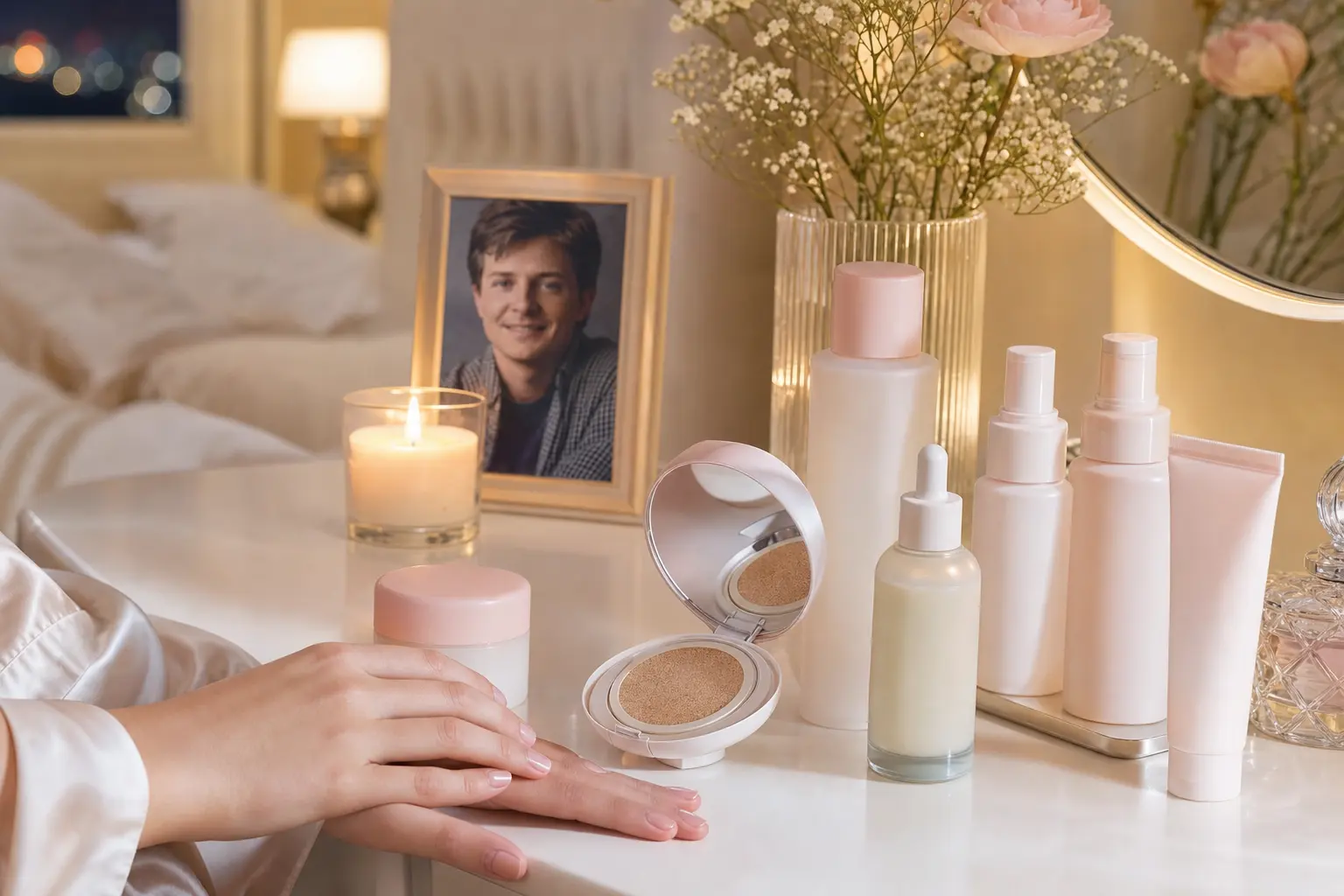
When people search for Michael J Fox, they often think of time-travel movies and quick one-liners. But his real legacy runs much deeper: decades of living publicly with Parkinson’s disease and building a global movement around research, resilience, and hope.
At EmpressKorea, we see beauty as part of that same conversation. Your skincare shelf, your makeup bag, and your nighttime routine can quietly reflect the same courage, adaptability, and kindness to yourself that Michael J Fox has embodied. This guide connects his story with practical K-beauty and lifestyle tips so you can build rituals that support you on your hardest days, not just your highlight reel.
Michael J Fox, Parkinson’s & Redefining What Strength Looks Like
Michael J Fox was diagnosed with early-onset Parkinson’s disease in 1991 when he was just 29 years old, at a point when his acting career was exploding. He chose to keep the diagnosis private for several years, finally speaking publicly about it in 1998. That decision transformed him from a beloved actor into one of the most recognizable advocates for people living with chronic illness.
Instead of stepping away quietly, he founded The Michael J. Fox Foundation for Parkinson’s Research in 2000. Since then, the organization reports having funded over three billion dollars in research programs. Those efforts range from large biomarker initiatives to tools that help track symptoms and progression, all with the goal of understanding the condition more deeply and pushing science toward better treatments.
Even as his symptoms progressed, he stayed visible. He continued acting, writing books, and appearing in interviews, openly showing tremors and speech changes rather than hiding them. In 2020 he retired from full-time acting, yet in January 2026 he surprised many fans by returning for a guest role in the third season of the series Shrinking. That moment, covered widely, became more than a casting announcement; it was a reminder that people living with serious health challenges still create, work, and show up in new ways at different stages of their lives.
Why this matters to beauty and wellness
So what does this have to do with the moisturizer on your bathroom shelf? Quite a lot. Michael J Fox’s story is a masterclass in three ideas that intersect directly with skincare and lifestyle:
- Consistency over perfection: He has been showing up for research, policy, and storytelling for decades, through better and worse days, which mirrors how skin and health respond to simple routines done regularly.
- Visibility over hiding: By letting the world see his reality, he challenges the idea that beauty equals flawlessness or lack of struggle.
- Community over isolation: His foundation, patient councils, and advocacy networks show how shared experiences can be powerful, just like online and offline K-beauty communities that trade tips, encouragement, and real-skin photos.
For anyone building a skincare or self-care routine, especially if you live with health challenges, this perspective is liberating. Your ritual doesn’t have to be twelve steps, perfectly executed, with poreless filter-ready skin at the end. It can be two or three gentle steps that help you feel more like yourself before bed. It can be choosing textures and packaging that are easier to hold on tough days. It can be accepting that some weeks your face will look tired, puffy, or inflamed, and you are worthy of care anyway.
In the next sections, we’ll use Michael J Fox’s approach to resilience and advocacy to rethink how you build your own beauty and lifestyle rituals—grounded, gentle, and realistic.
From Parkinson’s Awareness to Everyday Self-Care: What We Can All Learn
Living with Parkinson’s is a full-body experience. It can involve tremors, stiffness, fatigue, sleep changes, and shifts in mood or energy. While everyone’s experience is different, advocates like Michael J Fox constantly emphasize that life doesn’t stop at diagnosis. Instead, it becomes a series of adjustments: new routines, different tools, reevaluated priorities, and better support systems.
That mindset is surprisingly close to what sustainable self-care looks like for everyone, with or without a chronic diagnosis. Many of us push our bodies with long workdays, constant screens, and stress, then expect a single serum to fix everything overnight. In reality, skin often reflects internal strain—lack of sleep, tension, and emotional burnout can show up as dullness, breakouts, redness, or flaky patches.
Big-picture lessons from Michael J Fox’s advocacy
Watching how Michael J Fox and his foundation talk about Parkinson’s can gently guide how we approach our own daily care:
- Take small steps seriously: The Foundation funds a wide range of research, from large longitudinal studies to everyday symptom-tracking tools. In your life, small daily actions matter: cleansing every night, removing sunscreen, or taking a five-minute stretching break.
- Value early attention, not late panic: His story underscores the importance of noticing symptoms early and staying engaged with health. For skin, that could mean addressing irritation, sensitivity, or sudden dryness sooner rather than pushing through with harsh products.
- Think in systems, not silos: Parkinson’s doesn’t affect just one body part; it’s systemic. Beauty isn’t only about a single bottle either. Sleep quality, diet, stress, hormones, and environment all play into how your skin behaves.
- Advocacy is self-respect: Just as he has advocated for policy and research funding, advocating for your needs with doctors, family, or even your own schedule is a form of self-care.
For K-beauty lovers, this means thinking beyond the next trending essence and instead asking, “What does my body actually need this week?” Maybe it’s less exfoliating and more barrier support. Maybe it’s accepting that your routine needs to shrink for a while because you are exhausted or unwell. Maybe it’s asking for help opening jars or applying sunscreen to hard-to-reach areas.
Parkinson’s awareness efforts in recent years have also highlighted economic and emotional burdens. A recent report flagged that in 2024, Parkinson’s was estimated to cost the United States tens of billions of dollars. That number reflects more than medication—it speaks to caregiving, lost work, and daily adaptations. From a lifestyle and beauty perspective, this reminds us that many people juggling health issues may not have endless time, energy, or budget for elaborate routines. Accessibility, affordability, and simplicity become forms of inclusion.
Translating that to your own shelf looks like this: choose multi-tasking products, prioritize what genuinely helps your skin, and release the pressure to own every trending item. Beauty should support your life, not become another performance.
Gentle, Low-Effort K-Beauty Routines for Days When You’re Struggling
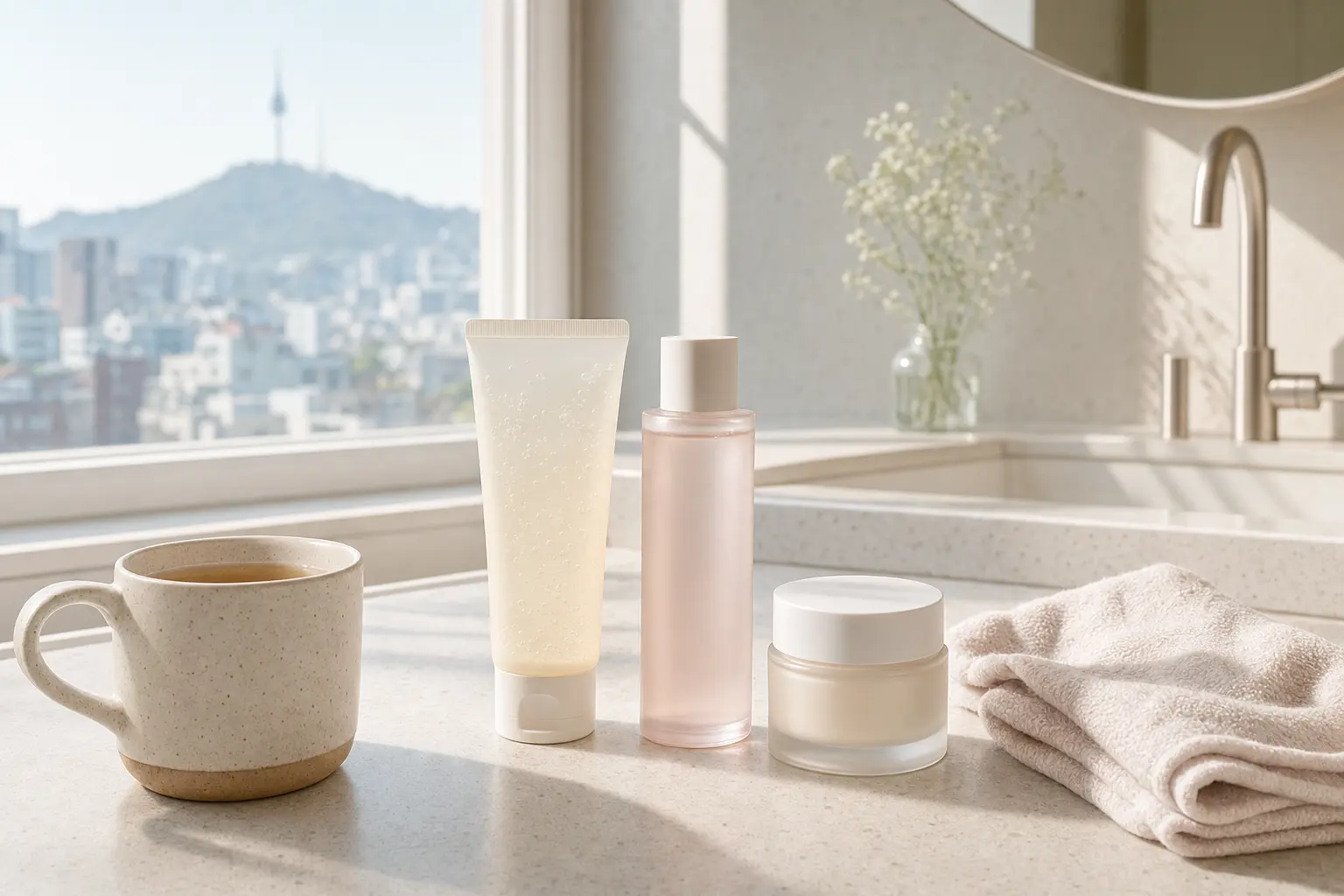
Some days, even washing your face can feel like a project. Whether you are navigating chronic illness, mental health dips, hormonal swings, or simple burnout, you deserve routines that fit your energy level instead of demanding more from you. Learning from the way Michael J Fox has adapted his career and life over time, we can design skincare rituals that flex with you.
K-beauty is famous for multi-step routines, but at its heart, it is about skin health and comfort. A three-step routine done gently is closer to that spirit than a ten-step routine you dread. The trick is choosing products that are forgiving, hydrating, and easy to apply.
Build a “hard days” routine
Create a minimal backup routine you can follow almost on autopilot. Consider organizing a small basket or tray just for this purpose so you don’t have to think.
- Step 1: Soft cleanse: Use a low-foaming, non-stripping cleanser that rinses easily and doesn’t require long massaging. Gel or milk textures are ideal for tired hands and sensitive skin.
- Step 2: One hydrating layer: Replace multiple toners and serums with one hydrating essence or light lotion that offers humectants like glycerin and soothing ingredients like centella or panthenol.
- Step 3: Simple barrier cream: Finish with a mid-weight moisturizer that spreads easily and locks in hydration without being greasy, so you are comfortable lying down.
On better days, you might add exfoliation, ampoules, or targeted brightening formulas. On rough days, your only non-negotiable might be removing sunscreen and applying moisturizer. That is more than enough.
Texture and packaging tips inspired by accessibility
People with Parkinson’s often navigate tremors and stiffness, making tiny droppers and stiff caps frustrating. If you live with hand pain, coordination challenges, or just hate fiddly packaging, borrow the same logic:
- Look for pump bottles instead of droppers.
- Choose soft tubes you can squeeze, rather than heavy glass jars.
- Prefer spreadable creams and milky lotions over hard balms that need warming up.
- Use silicone spatulas or clean cotton buds if dipping fingers into jars is tricky.
If you want a ready-made set to live in your “low energy” basket, you can keep a gentle toner, a soothing cream, and a no-fragrance cleanser together so there is zero decision fatigue when you are exhausted.
Most importantly, be willing to rewrite your personal rules. If your energy collapses by 9 p.m., try moving your full skincare routine to late afternoon when you still feel functional. Michael J Fox’s return to television in 2026 was not a full-time comeback but a guest role that fit his reality. Your skincare and self-care can be structured the same way—purposeful, but on your terms.
Adaptive Makeup Tips for Shaky Hands and Low-Mobility Days
Makeup can be a mood-lifter, a creative outlet, or a way to feel more like yourself before facing the world. But if you experience tremors, joint pain, or fatigue, the standard tutorials that assume steady hands and twenty spare minutes can feel discouraging. Looking at how Michael J Fox has leaned into help and adaptation—using support teams, assistive tools, and adjusted expectations—can inspire a friendlier makeup approach.
Adaptive beauty is not about hiding symptoms; it is about designing a routine that lets you participate in the fun with less frustration. That might mean changing textures, tools, or even the areas you choose to emphasize. Korean makeup trends already lean toward soft, blurred, forgiving looks rather than razor-sharp lines, which makes them perfect for days when precision is limited.
Makeup strategies that forgive wobbles
Try swapping products that require tiny, controlled movements for ones that are more “squish and smudge” friendly:
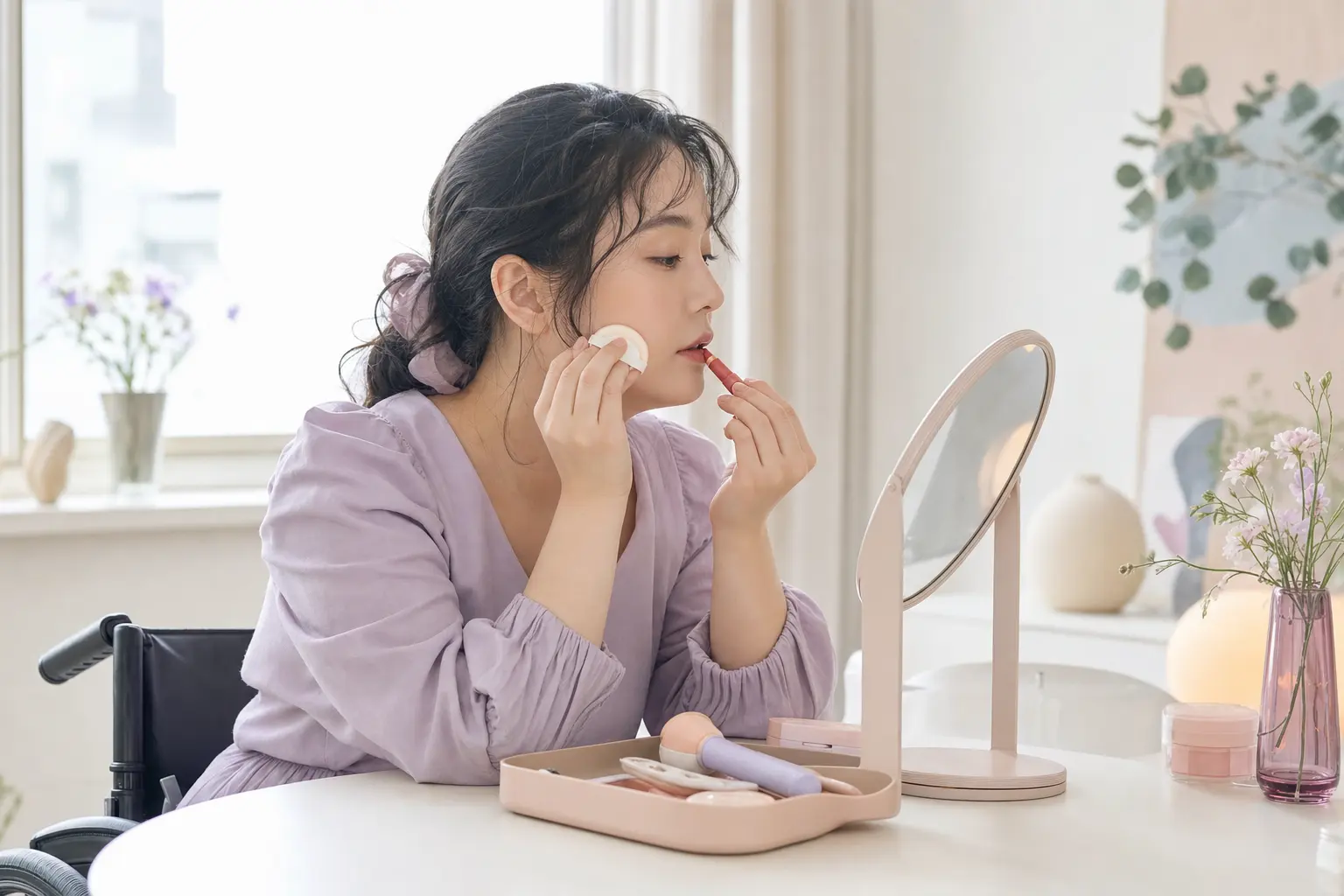
- Base: Use cushion foundations or tinted moisturizers applied with a puff. Pressing and tapping motions are easier to control than swiping with brushes.
- Eyes: Trade skinny liquid liners for soft pencils or shadow sticks. Smudge them along the lash line and blend with a fingertip or cotton bud.
- Cheeks: Choose cream blush in sticks or tubes. Tap onto cheeks and diffuse quickly; if placement isn’t perfect, sheer textures are more forgiving.
- Lips: K-beauty style blurred lips are ideal. Apply a tint to the center of the lips, blend out with a finger, and embrace soft edges.
False lashes, tightlining, and intricate winged liner are always optional. You can look polished with mascara, a touch of shimmer across the lid, and healthy-looking skin. Focus your limited energy on the one feature that makes you feel most confident—maybe that is glow, brows, or lips.
Tools and setups that make things easier
Just like assistive devices can make daily living with Parkinson’s more manageable, a few tweaks to your beauty setup can lower frustration:
- Use a tabletop mirror so you can rest your elbows and stabilize your hands.
- Choose shorter brushes or chubby pencils that feel easier to grip.
- Keep your products in a shallow tray or organizer so you are not reaching deep into drawers.
- Sit down while doing your routine to conserve energy and reduce shaking from fatigue.
On days when makeup feels impossible, lean into skincare that creates comfort and visible freshness—a hydrating toner, a soothing cream, and a good lip balm can be your full “look.”
Michael J Fox has consistently spoken about accepting help and acknowledging limitations without losing his sense of self. Makeup can work the same way for you. Adjusting products and techniques is not giving up; it is choosing to participate in beauty on terms that respect your body’s needs.
Mindful Aging: What Michael J Fox Teaches Us About Lines, Flare-Ups and Real Skin
In a culture obsessed with anti-aging, it is striking to watch someone age on screen without chasing the illusion of agelessness. Michael J Fox’s public life has included visible tremors, posture changes, and the normal lines and textures of a person in their sixties. He has not disappeared from public view because of these changes; instead, he has continued to show up for interviews, documentaries, and now a recent TV return.
K-beauty can sometimes feel at odds with this, given how many products talk about “turning back the clock.” But the deeper philosophy in many Korean routines is about supporting skin so it is comfortable, resilient, and luminous at every stage of life, not erasing all signs of experience. The shift from “anti-aging” to “pro-aging” or “age-positive” beauty is very much in line with what we see in Michael J Fox’s approach to visibility.
Rethinking aging through a kinder lens
Instead of seeing each new line or pigment spot as a problem, consider them as part of your personal timeline. Chronic conditions like Parkinson’s may accelerate certain visible changes—muscle tone shifts, texture, drooping—but those changes do not erase your personality or value. The goal of skincare becomes comfort and confidence: less stinging, less tightness, less flaring after every product, and more days where your skin feels like a cooperative part of you rather than an enemy.
In the K-beauty world, a few ingredient categories are commonly known to support this type of skin resilience:
- Humectants like glycerin and hyaluronic acid, which help attract and hold water in the upper layers of the skin.
- Barrier-supporting ingredients such as ceramides, cholesterol, and fatty acids that may help the skin stay supple and less reactive.
- Soothing botanicals like centella, green tea, and mugwort extracts, widely used in Korean formulations to calm visible redness and discomfort.
- Gentle retinoid alternatives or low-level retinoids, chosen carefully and introduced slowly, for those who want to address fine lines with less risk of irritation.
Think of these not as tools to erase your age, but as support systems that help your skin handle everyday stressors more comfortably.
Building a pro-aging K-beauty ritual
Try structuring your routine around three priorities rather than chasing every trending active:
- Hydration: Use layers of watery toners or essences to help your skin look plumper and more elastic, which naturally softens the appearance of lines.
- Protection: Daily sunscreen is still one of the most effective ways to slow new visible photo-damage. Choose textures you love so you will actually apply them consistently.
- Repair: Night creams or sleeping masks that focus on barrier care and soothing can make a visible difference in how you wake up looking and feeling.
Just as Michael J Fox has chosen to keep his story public rather than chasing a glossy, edited image, you can decide that your goal is not to look 25 forever but to look like yourself—well-rested where possible, cared for, and authentically your age.
Allow yourself to take photos and be seen even on days when your skin is flaring or you feel swollen or tired. Over time, this builds a kind of inner muscle: the same courage that long-term advocates demonstrate when they step onto a stage or camera with visible symptoms. That courage might be the most beautiful part of your routine.
Community, Compassion and Advocacy: How Beauty Routines Can Support Bigger Causes
The Michael J. Fox Foundation is not just a funding body; it is a community hub. Through programs like Team Fox, research studies, and patient councils, it brings together people with Parkinson’s, caregivers, scientists, and supporters. In recent years, the foundation has also stepped up policy advocacy, with leadership and community members joining advisory councils and lobbying for research funding. Awareness is never just about one person—it is about shared effort.
For beauty lovers, it is easy to see skincare as purely personal and consumer-based. But if we borrow a page from the advocacy playbook, our routines can become small centers of meaning and connection. The way you talk about beauty, the influencers you follow, and the comments you leave all contribute to what is considered “normal” and “aspirational.”
Making your beauty space more inclusive
Think about how you can quietly model the values that Parkinson’s advocacy has made so visible: empathy, realism, and respect for different bodies. Some ideas:
- Normalize real skin: Share photos or reviews that show texture, pores, and occasional flare-ups instead of only filtered results.
- Center comfort: Celebrate products because they feel gentle, accessible, or calming—not only because they produce dramatic before-and-after shots.
- Respect people’s limits: Avoid shaming anyone for not doing elaborate routines. Simple, accessible self-care is valid.
- Listen to disabled voices: Seek out content creators who talk openly about chronic illness, mobility, or neurodivergence in relation to beauty, and take their tips seriously.
If you personally care about Parkinson’s awareness, your beauty rituals can also become quiet reminders to stay informed and engaged. You might write a small note on your mirror with a personal affirmation, keep a bracelet or token from a fundraising event near your vanity, or use your birthday or a product empties milestone as a cue to learn more about current research efforts.
Emotional regulation through ritual
Advocacy work, like the kind Michael J Fox participates in, is emotionally intense. It involves grief, frustration, hope, and long timelines. Many people in such spaces talk about the need for grounding rituals—simple activities that anchor them when news is overwhelming.
Your skincare routine can serve that same role on a smaller scale. The sound of water, the feeling of a soft towel, the scent of a favorite cream, and the repetitive motion of patting in essence can all signal to your nervous system that you are safe in this moment. While they are not a substitute for professional mental health care, these sensory cues can create pockets of calm in a busy or stressful day.
Over time, this kind of grounded self-care can make it easier to stay engaged with the causes you care about, whether that is Parkinson’s research, disability rights, or mental health awareness. You are not choosing between caring for yourself and caring about the world; you are building the resilience to keep doing both.
Comfort Rituals: Nostalgia, Movie Nights and K-Beauty Masks
For many fans, the name Michael J Fox is inseparable from nostalgic comfort watches—time-travel adventures, quirky sitcoms, and the kind of warm, upbeat storytelling that feels like a safe place to revisit. On tough days, curling up with a familiar movie or series can be a legitimate act of self-soothing. Pairing that with simple K-beauty rituals turns it into a full-body comfort experience.
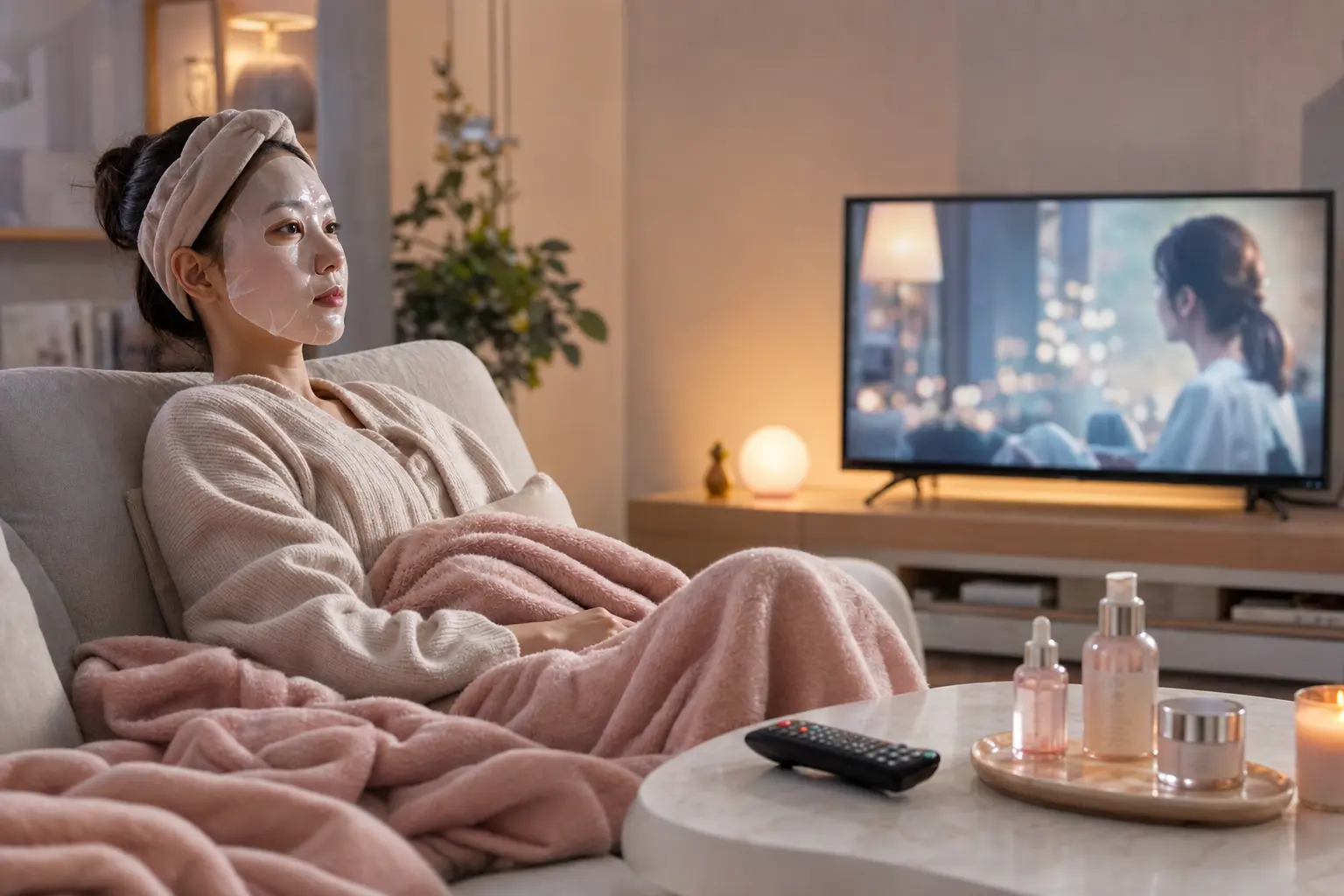
Instead of treating skincare as another task on your to-do list, try folding it into movie night. You might apply a wash-off mask before pressing play, or layer a sleeping pack during the final credits. The goal is to associate self-care with pleasure and relaxation, not chore energy.
Building a Michael J Fox-inspired self-care evening
Here is how you can turn a casual watch into a small ritual:
- Pick your comfort content: Choose a film or episode that makes you feel safe and uplifted. Rewatches are perfect because there is no pressure to follow every plot detail.
- Set a gentle lighting mood: Dim lights or use warm lamps so your nervous system can unwind. Avoid harsh overhead lighting that highlights every pore and line while you are trying to relax.
- Choose one “treat” product: This might be a sheet mask, a hydrating ampoule, or a rich sleeping cream reserved for evenings when you want extra comfort.
- Engage multiple senses: A soft blanket, a warm drink, and a lightly scented cream (if you tolerate fragrance) can create a multi-sensory cocoon.
For some people, particularly those living with chronic conditions like Parkinson’s, evenings can bring heightened symptoms such as stiffness or fatigue. A movie night ritual that does not require leaving the house, dressing up, or being “on” for anyone else can be deeply restorative.
Masking without pressure
Sheet masks and wash-off packs are fun, but they can also become sources of guilt if you hoard them and never feel “relaxed enough” to use them. Release the idea of a perfect spa night. Apply a mask even if you are wearing old pajamas, your hair is messy, and your dishes are not done.
Consider keeping a small pouch of “movie masks” near your TV or bed—hydrating, low-irritation options you can grab without thinking. Apply one during opening credits, remove or pat it in halfway through, and then simply enjoy the rest of the story. These tiny rituals do not change the realities of illness or stress, but they can create islands of softness in the middle of difficult weeks.
Michael J Fox’s return to acting in 2026 was meaningful partly because of the emotional comfort his presence has given people for decades. Letting yourself lean into that comfort, while simultaneously nurturing your skin, can be a way of honoring both your inner child and your present-day, complex self.
K-Lifestyle Wellness Habits for Real Life, Not Perfection
Watching Michael J Fox’s multi-decade journey with Parkinson’s, one thing stands out: sustainability. His advocacy, foundation work, and public storytelling have unfolded over years, not weeks. That kind of long-term engagement requires realistic pacing, rest, and the willingness to adjust. K-lifestyle wellness—beyond skincare—can adopt the same philosophy to support you through your own long seasons.
You do not need a radical 5 a.m. routine or intense detox to feel more grounded. What you need is a handful of small, repeatable practices that fit into your life the way it actually is today, including your job, family, health, and financial realities. Korean lifestyle trends often emphasize this softer, ritual-based approach rather than extreme transformation.
Simple habits that pair with your beauty routine
Consider layering micro-habits onto things you are already doing, such as cleansing your face or applying cream. Over time, these can create a protective emotional cushion, much like ongoing advocacy protects long-term research funding:
- 30-second breathing: While your cleanser is on, pause and take five slow breaths instead of rushing. Feel your feet on the floor and your hands on your face.
- Gratitude line: As you pat in toner, mentally name one thing your body allowed you to do today, no matter how small.
- Light stretching: While your mask is on, do gentle neck rolls or shoulder stretches to counteract screen posture.
- Digital boundary: Use the start of your nighttime routine as a cue to put your phone on do-not-disturb or airplane mode.
These tiny add-ons cost nothing and take almost no extra time, but they can significantly change how your routine feels—from rushed maintenance to a real moment with yourself.
Being kind to your future self
Michael J Fox’s foundation is built around thinking years ahead—funding studies, building data tools, and influencing policies that will matter down the line. You can echo that in a much smaller and more personal way by leaving “gifts” for your future self.
For example, set up a bedside basket with lip balm, hand cream, and a gentle facial mist so that even if you skip your main routine, you can do a mini version without leaving bed. Refill your favorite moisturizer before it is empty so you are not stuck on a bad week trying to scrape the bottom of the jar. Pre-fold soft towels or reusable cotton pads so you do not have to hunt for anything on low-energy nights.
Most importantly, let go of all-or-nothing thinking. You are not failing your routine if you only manage sunscreen and lip balm today. People living with Parkinson’s and other chronic conditions know that stability is a moving target; you adjust as needed. Carry that compassion into how you judge your wellness habits. A small practice done with kindness will always serve you better than a perfect plan abandoned out of guilt.
Frequently Asked Questions
When was Michael J Fox diagnosed with Parkinson’s disease and when did he go public?
Michael J Fox was diagnosed with early-onset Parkinson’s disease in 1991 at the age of 29, during the height of his acting career. He chose to keep the diagnosis private for several years while he processed the news and considered its impact on his life. In 1998, he publicly disclosed his condition, becoming one of the most recognizable faces of Parkinson’s awareness. His decision to be open helped reduce stigma and encouraged many others to talk about their own health challenges.
What is The Michael J. Fox Foundation and how much research has it funded?
The Michael J. Fox Foundation for Parkinson’s Research is an organization he launched in 2000, focused on accelerating scientific progress toward better treatments and, ultimately, a cure for Parkinson’s. The Foundation funds a wide range of research programs, including biomarker studies, clinical tools, and large multi-year initiatives that track the condition over time. According to its own public reporting, it has now directed over three billion dollars into research efforts. In addition to funding, the Foundation also supports education, policy advocacy, and community-building for people affected by Parkinson’s.
Is Michael J Fox still acting or involved in public work today?
Michael J Fox retired from full-time acting in 2020, largely because Parkinson’s symptoms made the demands of regular production schedules very challenging. However, he remains deeply involved in advocacy, writing, and public appearances related to Parkinson’s awareness and research funding. In January 2026, he made a notable return to screen acting with a guest role in the third season of the series Shrinking, his first television performance since retirement. That appearance was widely covered and used as an opportunity to reignite conversation around Parkinson’s and ongoing research efforts.
How does Parkinson’s disease typically affect daily life?
Parkinson’s is a progressive neurological condition that can affect movement, coordination, and other functions, though experiences vary widely from person to person. Common symptoms include tremors, stiffness, slower movement, balance issues, and sometimes changes in sleep, mood, or speech. These challenges can influence everything from work and household tasks to hobbies and self-care activities like skincare and makeup. Many people find that adapting routines, using assistive tools, and leaning on community support helps them continue doing the things they love, even if the way they do them changes over time.
Can K-beauty routines help people living with chronic illness or high stress?
K-beauty routines cannot treat or cure medical conditions, but they can provide gentle support for skin that is stressed by lifestyle, environment, or certain medications. Many Korean formulas focus on hydration, barrier care, and soothing ingredients, which may help skin feel more comfortable and look less fatigued. Just as importantly, the ritual itself—cleansing, patting, masking—can become a grounding, sensory experience that offers a few minutes of calm in a difficult day. Anyone with a medical condition should still work closely with their healthcare team and patch-test products carefully, choosing routines that match their energy levels and specific skin needs.
What are some realistic self-care ideas inspired by Michael J Fox’s resilience?
Michael J Fox’s story highlights the power of consistency, adaptability, and community, which translate well into realistic self-care. You might build a minimal “hard day” skincare routine with just cleansing, one hydrating step, and moisturizer so you can still care for yourself when energy is low. Pairing simple beauty rituals with comforting activities, like nostalgic TV or movie nights, can turn them into emotional anchors rather than chores. Finally, treating yourself with the same compassion you would offer someone living with a chronic condition—allowing flexible routines, rest, and help from others—can be one of the most transformative wellness shifts you make.