
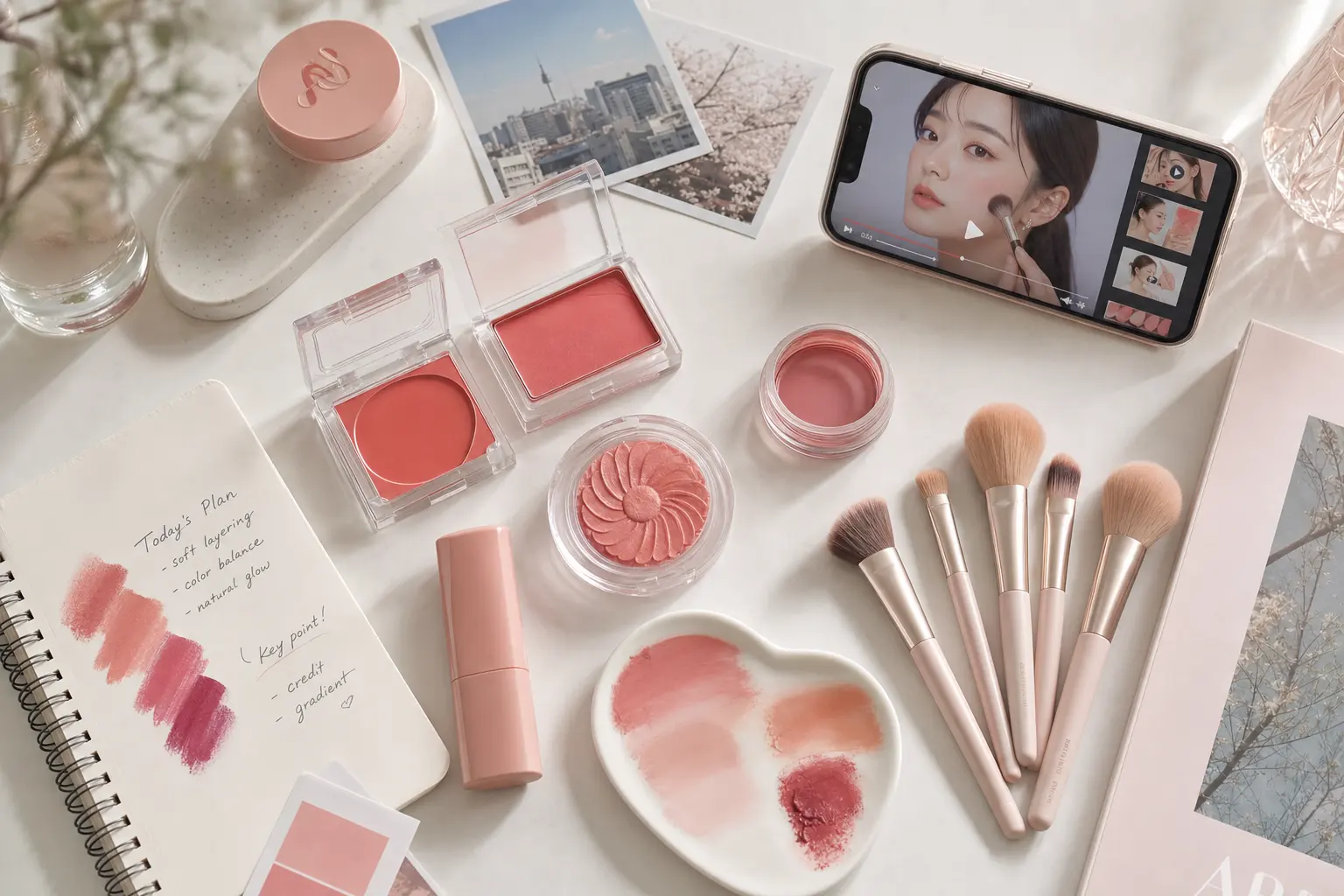
Here is your Jackie update: if your FYP has been full of transition blush, apology statements, and heated comments, you are not alone. From Painted by Esther’s viral technique to Patrick Ta’s new products and Jackie Aina’s review, the beauty community has been unpacking big questions about credit, ethics, and who really benefits when a look goes mainstream.
As a K-beauty-focused community, we are watching this closely because the same social media cycle that turns a technique into a launch also drives Korean makeup trends. Let’s break down what actually happened, what the controversy is really about, how it impacts people with deeper skin tones, and how you can still enjoy creative blush looks—K-beauty style—while being a more conscious beauty fan.
Jackie update: how the transition blush drama started
To understand this current wave of conversation, we have to rewind to late May 2026, when Patrick Ta Beauty launched a dedicated “Transition Blush” line. The launch included a Transition Blurring Blush Duo, a Liquid Transition Brightening Blush, and a dual-ended Transition Brush, all positioned around creating a seamless gradient of color on the cheek. On paper, it was a smart response to a very visible trend: soft, sculpted blush that connects seamlessly from the under-eye area to the cheek and sometimes toward the temple.
Before this launch, creator Ngozi “Painted by Esther” Edeme had already popularized a highly recognizable version of this look on social media. Her tutorials showcased a specific placement—using blush almost like a contour and color corrector in one—along with the now widely used term “transitional blush.” Her content resonated especially with deeper skin tones who often struggle to find base and blush techniques that look smooth and intentional rather than patchy or overly bright.
When the brand used similar language and centered a whole product system around the idea, a lot of beauty fans immediately connected it back to Esther’s work. The problem? Many felt the launch marketing did not sufficiently acknowledge the creator whose name had become tied to the technique. This concern landed in the middle of the broader 2025–2026 shift in consumer expectations—where viewers increasingly care about who gets credit, who gets paid, and how brands behave when they profit from community-grown trends.
The timing that made this blow up
Two factors amplified the situation. First, spring and early summer feeds are already primed for blush content; this is the season of sun-kissed looks, soft sculpting, and colorful cheeks. Second, social media is faster than ever at turning a technique into a product category, and people are more alert to patterns of uncredited borrowing—especially from Black creators and creators of color.
So when a high-profile brand attached new packaging, new names, and high production marketing to a technique heavily associated with a specific Black creator, the community paid attention. That attention set the stage for every voice that entered the discussion afterward, including Jackie Aina’s, to be intensely scrutinized.
What happened between Patrick Ta, Painted by Esther, and Jackie Aina?
When people ask what actually happened between Patrick Ta, Painted by Esther, and Jackie Aina, they are really talking about several overlapping events rather than one isolated incident. First, Painted by Esther had been building visibility around her transitional blush technique through consistent tutorials and viral videos. Her content did not just show placement; it explained why the method worked, especially for textured skin and deeper tones, and used language that viewers adopted in their own posts.
Then, the Patrick Ta Transition Blush line launched with similar terminology and a strong push across social platforms. Many viewers who knew Esther’s work felt the resemblance instantly. She publicly expressed concern and disappointment, emphasizing that the technique she helped popularize was being commercialized without what she viewed as proper recognition. This was not just about one product; it was about a pattern of techniques created and refined in community spaces later being codified and monetized by brands.
In the midst of this, Jackie Aina posted a review and tutorial using the new blush products. Jackie has long been a major figure in beauty, with a large audience and a reputation for championing deeper skin tones. Her video focused mainly on how the products performed and how they looked on her skin, with less engagement—at least in that initial content—with the unfolding attribution conversation surrounding Painted by Esther.
Why Jackie Aina’s involvement became a flashpoint
Because Jackie is so influential, many viewers expected her to directly acknowledge or expand on the concerns about credit and creator treatment as part of her coverage. When that did not happen in the way some hoped, a portion of the community interpreted her review as sidestepping the issue. The backlash was not only about the products themselves, but about how big creators choose to engage—or not—when brand launches are connected to debates around fairness and recognition.
It is important to note that there is no publicly confirmed information about any financial relationship between Jackie and the brand for that specific video. Without transparent disclosures beyond the platform’s usual tools, viewers were left to speculate, which added more fuel. What we know for sure is that her content landed at a highly sensitive moment, and that timing made her role in the conversation impossible to ignore.
Did Patrick Ta copy a technique, and what does the apology change?
A big question circling beauty TikTok and comment sections has been whether Patrick Ta “copied” the transitional blush technique or tried to own it. The verified information we have is that the brand named their products around a concept that was already strongly associated with Painted by Esther in the eyes of many users. They then marketed a system of blush and tools optimized for that gradient, lifted-cheek effect that people were already practicing at home.
From a legal standpoint, makeup placement techniques are notoriously hard to own. They are rarely protectable in the way a patent for a formula might be. However, the controversy here is not about legal rights; it is about community ethics. Many viewers feel that when a technique can clearly be traced back to a specific creator’s educational work, especially a Black creator, brands have a responsibility to publicly credit and, ideally, fairly compensate that labor.
In mid-June 2026, Patrick Ta issued a public statement and apology addressing the reaction to the launch. The statement acknowledged the wider concerns about recognition and the feelings expressed by Painted by Esther and her supporters. For some consumers, this was a step in the right direction—a sign that the brand was listening to feedback instead of ignoring it. For others, it raised bigger questions about why reconciliation and credit so often arrive only after backlash, rather than being baked into the strategy from the beginning.
How much does an apology actually fix?
An apology can be meaningful, particularly when it comes with concrete actions such as crediting the original creator in future campaigns, inviting them into paid collaborations, or adjusting how the brand describes the technique. However, an apology does not erase the initial hurt or the sense that an opportunity—both for visibility and for income—may have been missed.
For thoughtful buyers, this situation highlights a few ongoing issues: who sits in the room when trend-based launches are planned, how social-media-native looks are translated into products, and whether the creators who build the language and excitement around techniques are present in those business decisions. None of this makes gradient blush itself “bad”—but it does inform how people choose to support, question, or skip certain launches going forward.
Where Jackie Aina fits in: influencer responsibility in 2026
Any honest Jackie update has to talk about why her role became so central to this debate. Jackie Aina has spent years building trust with viewers who feel underrepresented by mainstream beauty. Her channel, with millions of subscribers as of May 2026, has often spotlighted inclusivity gaps, shade range issues, and the experiences of Black consumers in the industry. That history means people expect her to handle brand controversies with a particularly sharp lens.
When she reviewed the transition blush products during the very peak of the discussion, many fans wanted not just performance notes but contextual commentary. Some viewers felt that focusing primarily on wear and finish while the community was loudly debating credit created a disconnect. Others pointed out that creators can be put in difficult positions: speaking too early without full information can backfire, while saying nothing can also feel unsettling to audiences.
Another layer is the constant question of sponsorship and compensation. Viewers asked whether Jackie had been paid for the content, which shaped how they interpreted her neutrality or enthusiasm. As of the available information, there has been no public confirmation that the video in question was sponsored. That uncertainty is part of why conversation has shifted toward demanding stronger, clearer disclosure across the industry whenever creators have financial ties to what they are reviewing.
The evolving standard for big creators
The bar for influencer responsibility in 2026 is very different from what it was even a few years ago. Beauty fans are not only judging how well creators blend foundation; they are paying attention to what they do when a brand is under critique, whose voices they amplify, and how transparently they discuss access and compensation. This is especially true for creators who themselves have advocated for fairness and diversity—it means their audiences hold them to that same critical standard.
For K-beauty lovers, it is a useful reminder that our favorite reviewers in the Korean space face similar expectations. When you watch content about new cushion foundations, glass-skin routines, or gradient tints, it is fair to ask: Is this sponsored? Are smaller, often local creators being credited when their techniques or routines go viral? The Jackie conversation simply makes those questions louder and more visible.
What the transition blush debate means for darker skin tones
Beyond the drama, there is a real and important conversation about how blush trends show up on deeper complexions. Transitional blush and blush draping have been especially popular among people with darker skin because they can softly sculpt the face without the harshness of cool-toned contours that may read as grey. When executed thoughtfully, a gradient from under-eye to cheek can help unify base, color correct, and add radiance in a single, blended zone.
Painted by Esther’s popularity came in part from the way she demonstrated placement and shade choice for rich skin tones, using deeper berries, warm corals, and reds that stayed vivid without turning ashy. For many viewers, seeing that technique reflected in a mainstream product launch felt like a rare moment where brand innovation was catching up to what was already working for them. The frustration was that the recognition piece did not match the sense of representation.
Jackie Aina’s review also centered darker skin, which is typically a positive for viewers who rely on her as a shade and undertone reference. But because the underlying conversation was about crediting a Black creator for intellectual and creative labor, her decision to focus mostly on application and finish left some fans wishing for a stronger bridge between product performance and the equity concerns raised by the community.
How this connects to K-beauty and shade inclusivity
In the K-beauty world, blush products have historically skewed lighter and more pastel, designed around soft-focus looks on fair to medium skin. That is slowly changing as global demand pushes for more inclusive shade ranges and as more international customers shop Korean formulas. Techniques like blush draping can work beautifully on deeper skin with K-beauty products, but only if the colors are rich enough and the undertones are right.
When browsing Korean cheek colors for a gradient look, people with deeper tones may want to focus on formulas that build coverage rather than sheer out too quickly, and on shades described as brick, terracotta, plum, or deep rose. Layering a richer cream under a slightly lighter powder can help mimic that transition effect while ensuring the color still shows up. The bigger picture: this controversy is another reminder that trend adoption must happen alongside real progress in shade diversity, or deeper skin tones will keep being talked about more than they are fully served.
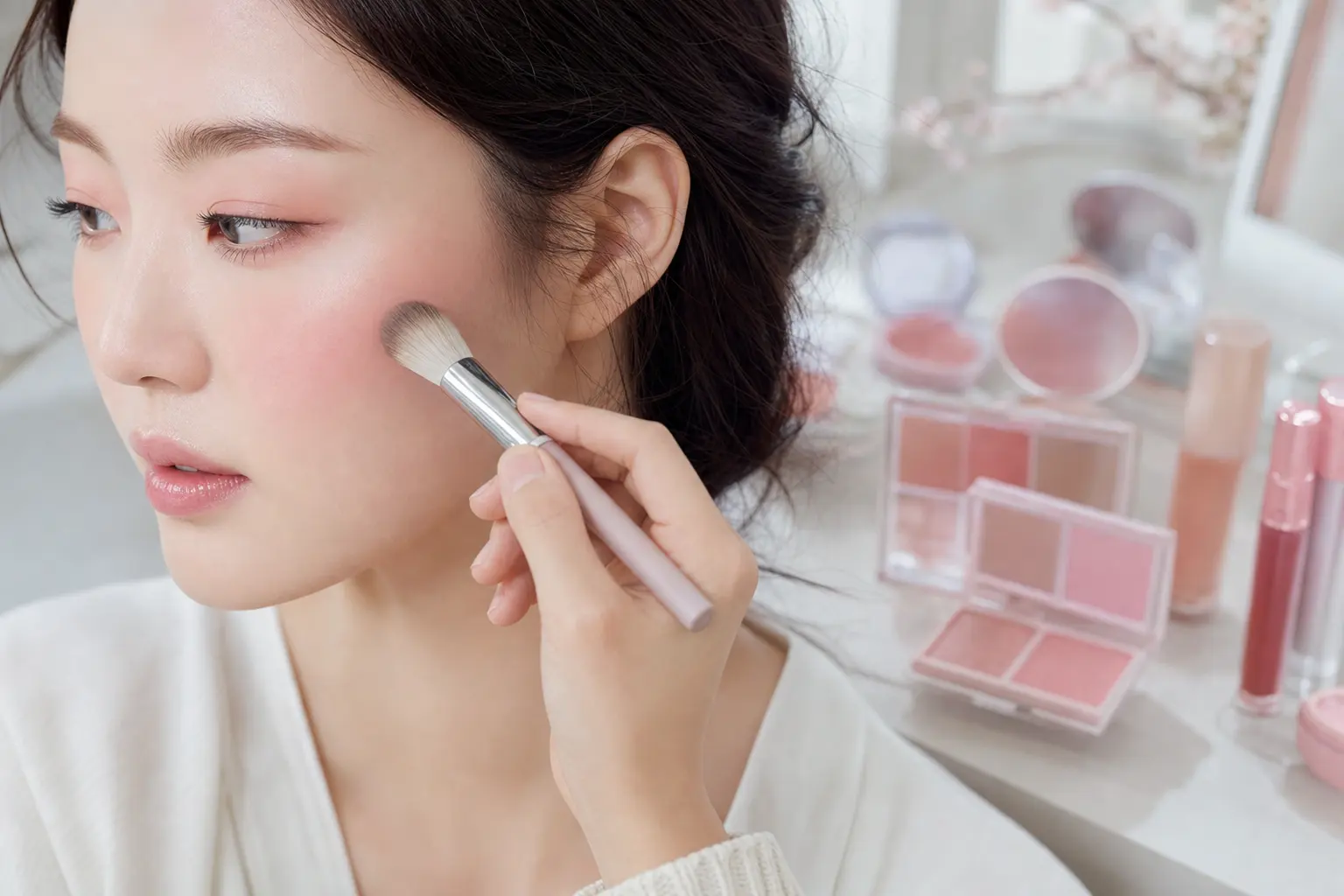
K-beauty take: Korean-style blush draping and soft sculpting
Zooming out from the Jackie update, it is worth asking how all of this intersects with Korean makeup trends. Korea has had its own long-standing love affair with blush, from youthful, center-of-the-cheek looks to soft sculpting styles that subtly reshape the face without heavy contouring. The current Korean approach often leans into watercolor diffusion, blurred edges, and strategic placement that mimics a natural flush while balancing facial proportions.
Where Western transitional blush often stretches from the under-eye toward the temples, K-beauty interpretations may keep the focus slightly lower and more central, especially for everyday looks. Another difference is how strongly Korean artistry integrates blush with base products; you will see artists mixing liquid blush with foundation or cushion products to create customized tints that appear to live within the skin rather than sit on top of it.
At the same time, there is a growing wave of Korean creators who are experimenting with bolder draping inspired by runway and social media. They might pull rosy tones up toward the outer eye for a lifted effect or combine blush with subtle contour under the cheekbone to shape the face in two layers. This mirrors some aspects of what Painted by Esther popularized, even if the language and exact placements differ.
Key differences in the Korean approach
- Texture-first thinking: Korean blush launches often prioritize creamy, skin-melting textures or finely milled powders that blur texture. This pairs well with high-resolution cameras and close-up content popular in Seoul’s beauty community.
- Soft color stories: Many shade ranges are built around neutral roses, milk-tea browns, and muted corals that are easy to layer without looking harsh, which can make gradient looks more forgiving.
- Base integration: Rather than selling entire technique systems, Korean artistry tends to integrate new trends into existing routines—using the same cushion, same concealer, but tweaking placement and density.
For K-beauty fans, the lesson from the transition blush drama is that trend-driven launches can be exciting, but we do not necessarily need a whole new system to play with placement. Korean makeup style encourages experimenting with what you already own: sheer tints, multi-use sticks, and soft-focus powders can all be repurposed for your own personalized draping, as long as you are mindful of crediting the creators who inspire you.
How to try a transition blush look with Korean products
If you are intrigued by the gradient cheek trend but want to explore it through a K-beauty lens, you absolutely can. You do not need products labeled for transitional blush specifically; what you need is a pairing of formulas and shades that blend easily and flatter your undertone. Cream or liquid formulas are your best friends for the base layer, topped with a coordinating powder to set and blur.
Start by choosing two blush shades in the same color family: one slightly deeper and one slightly lighter or brighter. The deeper shade becomes your “anchor” closer to the center of the cheek or slightly under the cheekbone; the lighter shade will live closer to the under-eye area or upper cheek, depending on your face shape and comfort level. If you are medium to deep, this might mean a rich brick underlay with a warm coral flush above; if you are fair to medium, a muted rose underlay with a peachy top layer can be beautiful.
Step-by-step Korean-inspired gradient cheek
- Prep the base: Apply your regular skincare, SPF, and preferred foundation or cushion. Aim for a natural-satin finish so creams can melt in without grabbing.
- Place the deeper tone: Using a small brush or sponge, tap your deeper cream or liquid blush onto the outer half of the cheek, keeping it slightly below the highest point. Blend inward toward the center of the face, not too close to the nose.
- Add the lighter blush: Take your lighter or brighter blush and apply it to the upper cheek area—either just below the under-eye for a lifted look or at the very top of the cheek for a soft, youthful effect. Gently blend it into the edge of the deeper shade so you cannot see a line.
- Set and blur: If you used creams, lightly tap a matching powder blush over the area, focusing more on the outer edge to create a soft-focus halo. A finely milled translucent powder right at the transition line can also smooth things out.
- Balance the rest of the face: Keep eye and lip color in conversation with your blush. Matching tones—like warm browns or rosy nudes—create a cohesive look that feels intentional rather than overly experimental.
Common mistakes include using shades that are too far apart in depth, which creates stripes instead of a gradient, or placing the brighter shade too close to the nose, which can make the face look congested. Take a cue from Korean artists: apply in thin layers, check your look in natural light, and do tiny adjustments rather than big, dramatic strokes. If a particular creator’s educational content helped you master the technique, consider tagging them and crediting their method when you share your results.
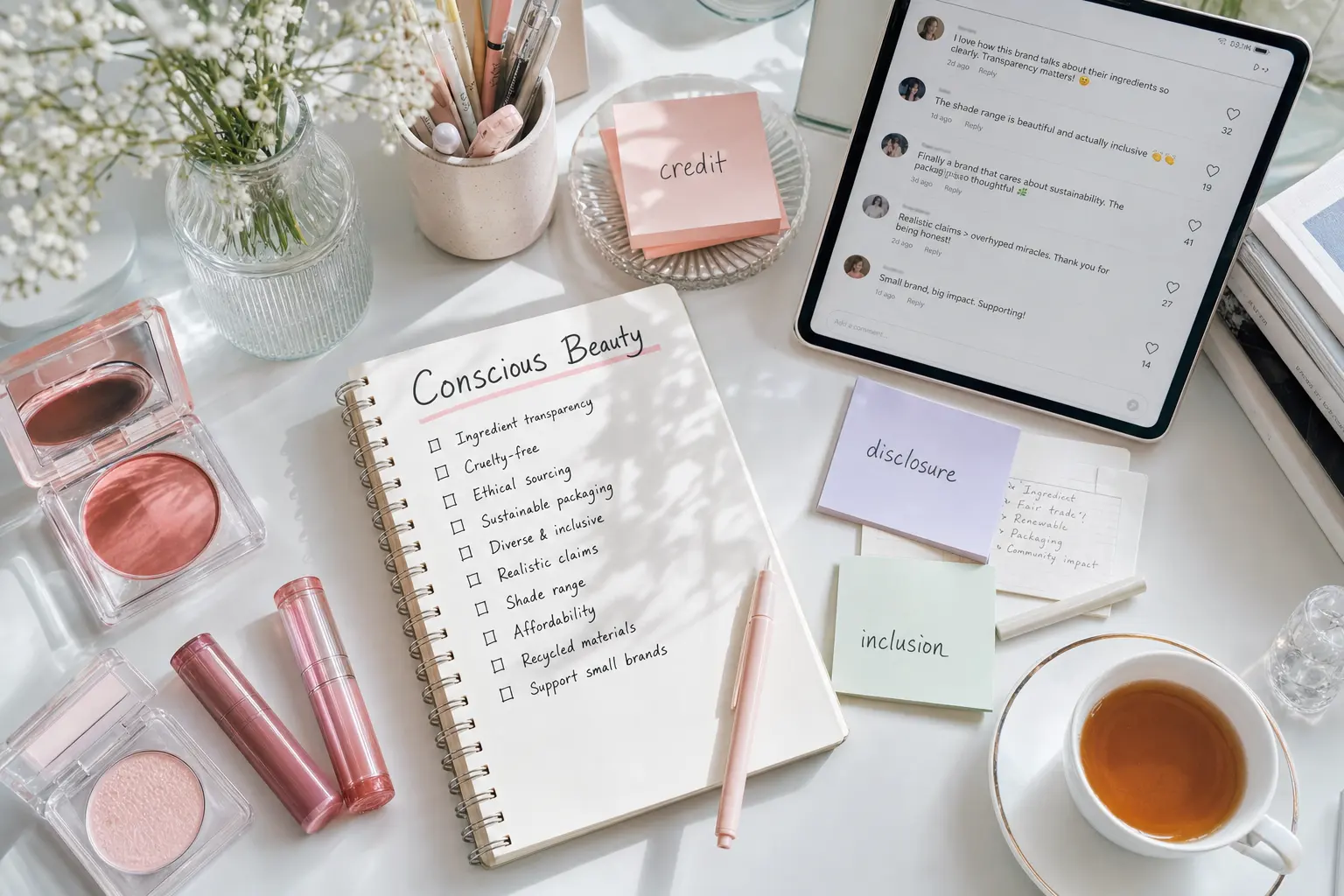
Ethical beauty buying checklist for thoughtful K-beauty fans
After any big influencer conversation, many K-beauty lovers want to know how to align their shopping with their values without giving up the joy of trying new looks. The transition blush debate is ultimately about power: who has it, who does the creative labor, and who profits. While individual consumers cannot fix everything, you have more influence than you might think, especially when your choices are informed and intentional.
One place to start is by paying attention to how brands talk about techniques in their marketing. When a product is clearly built around a social-media-born method—whether that is blush draping, cloud skin, or a specific base routine—look for signs that the original educators are being named, credited, or visibly involved. In 2026, many shoppers see silence as an answer in itself, which is why some launches spark joy and others spark backlash.
What you ask from influencers also matters. When you notice a creator reviewing a product that is part of a controversy, it is reasonable to expect clear sponsorship disclosure and at least some acknowledgment of the conversation, especially if they have built their platform on advocacy. That does not mean every video must be a deep dive, but it does mean that ignoring community concerns entirely is likely to feel out of touch.
Your conscious beauty checklist
- Check credit: Does the brand acknowledge the creators who popularized the technique behind this product?
- Look for inclusion: Are deeper skin tones and a range of features represented in campaign imagery and shade offerings?
- Watch disclosures: Do your favorite influencers clearly state when content is sponsored or when products were gifted?
- Support educators: Consider engaging with and supporting the creators who actually teach you techniques, whether by boosting their content, buying their collaborations, or crediting them when you recreate looks.
- Stay curious, not cynical: It is possible to love a new blush trend and still ask tough questions. Curiosity leads to better buying decisions than guilt alone.
As social platforms keep accelerating the cycle from trend to hashtag to product line, situations like the one involving Patrick Ta, Painted by Esther, and Jackie Aina are unlikely to be the last. For K-beauty fans, the goal is not to avoid every controversy, but to develop a sharper lens. That way you can enjoy your gradient cheeks, cushion bases, and glossy tints knowing you are also honoring the people and communities who shape the looks you love.
Frequently Asked Questions
What exactly happened between Patrick Ta, Painted by Esther, and Jackie Aina?
The situation centers on a product launch built around a gradient blush technique that many viewers associate with creator Painted by Esther. When Patrick Ta Beauty released a Transition Blush line using similar language, critics argued the marketing did not adequately recognize her role in popularizing the look. Jackie Aina then posted a review of the products without deeply engaging the credit debate, which some viewers saw as a missed opportunity given her platform. The overlap of these events sparked broader discussion about creator credit, brand responsibility, and influencer accountability.
Did Patrick Ta copy or try to own the transitional blush technique?
The available information shows that Patrick Ta Beauty named and marketed products around a concept that was already strongly linked in the community to Painted by Esther’s educational content. Makeup application methods are rarely protected in a formal legal sense, so the debate is less about legality and more about ethics. Many people feel the brand should have proactively credited or collaborated with her from the start, especially given how recognizable her tutorials were. The later apology acknowledged concerns about recognition, but opinions differ on whether it went far enough.
Did Patrick Ta apologize for the backlash around transition blush?
Yes, in mid-June 2026, Patrick Ta issued a public statement responding to the backlash around the Transition Blush launch. The message acknowledged the broader concerns about creator recognition and the reactions from Painted by Esther and her supporters. For some consumers, this was an important step that indicated the brand was listening. Others feel that real change requires more than a statement, such as ongoing credit, paid collaborations, or changes in how trend-based launches are developed.
Was Jackie Aina paid to review the Transition Blush products?
There is no publicly confirmed information proving that Jackie Aina was paid specifically for her Transition Blush review. Because sponsorship and gifting are so common in the beauty space, viewers often question financial ties whenever a launch is controversial. In the absence of detailed disclosure beyond standard platform tools, audiences are left to interpret tone and timing on their own. This uncertainty is one reason why many fans are now calling for even clearer and more consistent transparency from all large creators.
Are transition-style blush products good for darker skin tones?
Gradient blush and blush draping can work beautifully on darker skin tones when the shades are deep and rich enough. Many people with deeper complexions appreciate how these techniques can softly sculpt the face while adding warmth and radiance. Challenges arise when shade ranges are limited or undertones are too cool, which can make the skin look grey or dull. For best results, deeper skin tones often do well with warm reds, berries, and terracotta shades layered in thin, blended layers rather than very pale or pastel colors.
How should creators be credited when a viral makeup technique becomes a product?
While there is no single rulebook, many in the beauty community believe brands have an ethical duty to recognize the educators who made a technique popular. That can include naming them in marketing, inviting them into paid collaborations, and giving them a seat at the table when products inspired by their work are developed. Clear, public credit helps ensure that creative and educational labor is not treated as free fuel for commercial launches. For viewers, supporting brands and creators that prioritize this kind of transparency is one way to encourage better industry norms.